1. What is a Stability Ball and why is it the "secret weapon" for your core?
Are you punishing your body with hundreds of crunches every day on the floor, only to end up with a sore lower back and an abdomen that hasn’t improved at all? The mistake does not lie in your effort, but in the fixed plane where you are training. When practicing on a regular mat, it is very easy for the body to "cheat" by borrowing force from the hip flexors or thigh muscles.
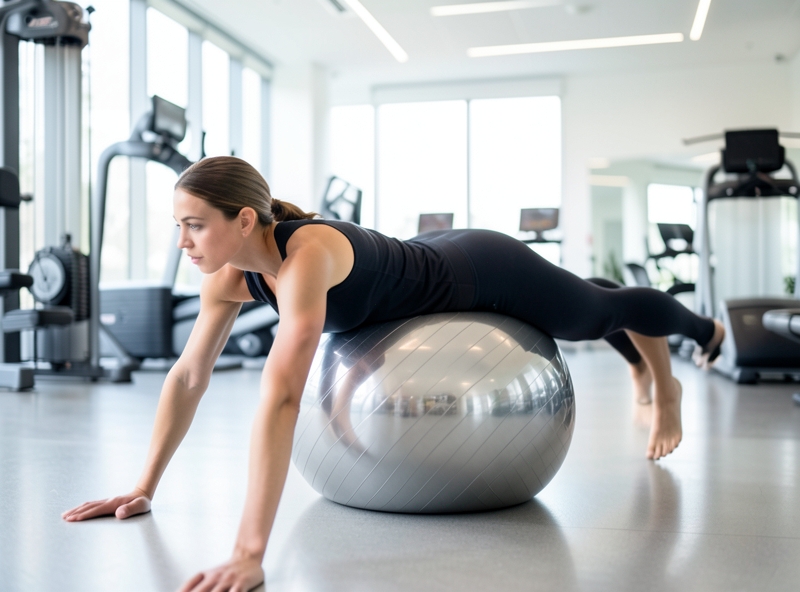
This is exactly where the Stability Ball (exercise ball) comes in and completely changes the game. More than just an inflatable rubber ball, this device acts as an active instability system. When you perform any movement on the ball, your center of gravity is constantly shifting, forcing your body to react immediately to keep from falling over.
"Training your abs on the floor is like driving a car on a straight and flat road. Training with a Stability Ball is like driving through the sharpest curves – where every sense and every deepest muscle fiber is forced to awaken to maintain control."
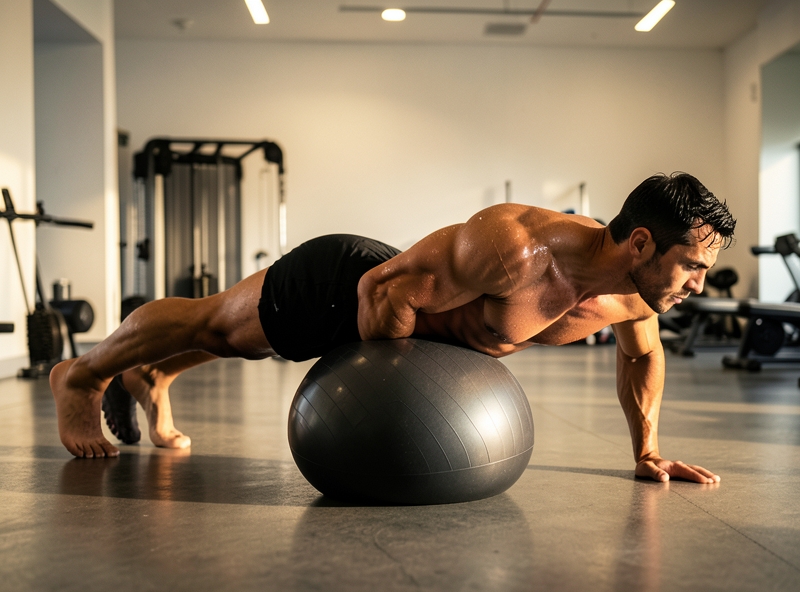
The ultimate secret of the Stability Ball lies in its ability to activate the deep core muscles – including the transversus abdominis and the spinal stabilizing muscle groups running along the lower back. These muscle groups act as a "natural corset," keeping your posture upright and protecting your spine from injury. Unless you place your body on an unstable surface, these deep muscle groups will remain asleep forever.
To clearly see the superiority, let's put these two methods on the scale:
| Comparison Criteria | Training on a Regular Mat | Training with a Stability Ball |
|---|---|---|
| Mechanism of Action | Moving on a fixed plane, easy to use momentum to cheat force. | Continuous 360-degree moving surface, completely eliminating momentum. |
| Muscle Activation Level | Focuses only on superficial muscles (such as superficial six-pack muscles). | Simultaneously activates superficial muscles as well as deep core muscles and stabilizing muscles. |
| Pressure on the Spine | Easily causes great pressure on the lower back vertebrae if practiced with incorrect posture. | Supports and cradles the natural physiological curve of the spine, reducing spinal disc pressure. |
| Calorie Burning Efficiency | Moderate, due to the limited number of muscle fibers involved in the movement. | Outstanding, because the entire body has to constantly brace itself to maintain balance. |
Integrating a Stability Ball into your training program is not just a change of equipment, but a **leap forward in performance**. By forcing your body to adapt to instability, you are building an extremely solid core foundation, improving proper upright posture, and creating a flat, toned abdomen from deep within.
2. Improving Posture and Enhancing Spine Flexibility
Over 80% of office workers are damaging their spines every day by sitting with poor posture on comfortable but "static" chairs. When you relax your body on a fixed surface, the entire weight of your upper body is placed on the L4-L5 and L5-S1 discs, creating immense mechanical pressure. Consequently, dull lower back pain appears, leading to a hunched shoulder posture and forward head projection.
The breakthrough solution does not lie in temporary pain relievers, but in restoring the body's natural balance through a stability ball. Replacing a regular chair with an exercise ball creates an unstable environment, forcing the body to constantly make micro-adjustments to maintain balance. This is the golden key to activating the deep muscles.
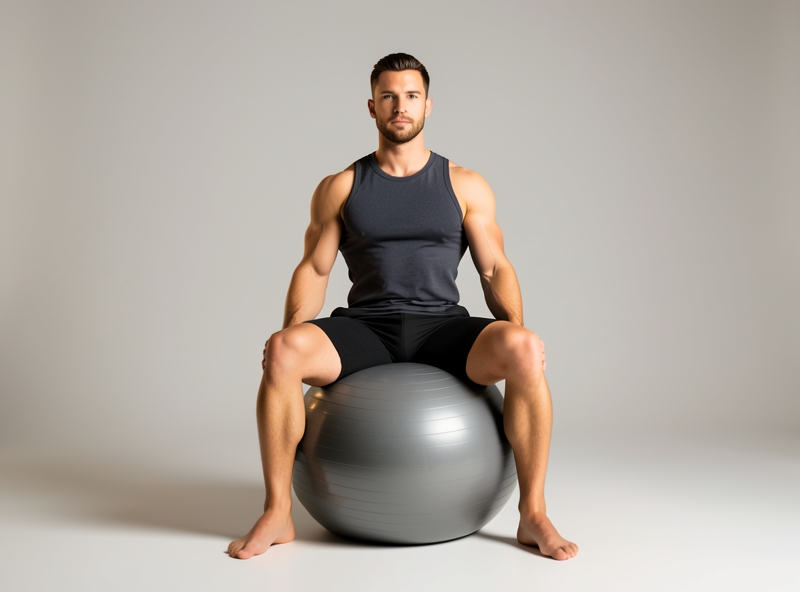
Deep muscle groups such as the transversus abdominis and multifidus act as a "biological back brace" protecting the spine. When sitting on a stability ball, these muscles are forced to work at 100% capacity. This continuous activation not only helps reduce direct pressure on the vertebrae but also forms a habit of keeping the back straight naturally without you having to force yourself to remember.
| Comparison Criteria | Traditional Office Chair | Active Movement Stability Ball |
|---|---|---|
| Core Muscle Activation | Passive, abdominal and back muscles are relaxed, leading to weakening. | Constantly active, increasing endurance for deep muscle groups. |
| Pressure on Spinal Discs | Highly concentrated in the lumbar region, easily causing herniation. | Evenly distributed thanks to the flexible movement of the hips. |
| Posture Improvement | Easy to lean forward, causing a hunched back and forward head posture. | Automatically aligns the ear - shoulder - hip axis. |
In addition to improving daily sitting posture, a stability ball is also an excellent tool for stretching. Performing back extension stretches on the ball helps open up the chest and stretch vertebrae that have been compressed after hours of work. This process stimulates blood circulation along the spinal cord and enhances joint fluid flow, helping spinal discs hydrate and recover elasticity quickly.
"A flexible spine is the foundation of a youthful body. Transitioning from passive sitting to active movement with a stability ball is a simple yet most sustainably effective step to eliminate chronic back pain at its root."
With just 15 to 20 minutes of exercise or by replacing your chair with a stability ball for 2 hours a day, you will notice a significant change: a lighter stride, a confident upright posture, and especially a sense of relief, no longer being tormented by lower back pain at the end of the workday.
3. Suggested Optimal Core Activation Exercises with a Stability Ball
Thousands of crunches on a hard floor every day usually yield only two results: a dull lower back ache and a still-flabby midsection. The core was not designed for isolated movement on a fixed plane. The original function of this muscular system is to resist rotation, resist flexion, and maintain stability for the spine. When you place your body on the instability of a Stability Ball, you force the deepest muscle fibers, such as the transversus abdominis and multifidus, to contract continuously to maintain balance, resulting in superior activation.
| Exercise | Primary Target Muscle Groups | Muscle Activation Index (EMG) vs. Hard Floor |
|---|---|---|
| Stability Ball Plank | Rectus abdominis, transversus abdominis, shoulders | Increased by over 45% due to continuous balance micro-adjustments |
| Ball Crunch | Rectus abdominis (upper portion), obliques | Increased by 38% thanks to an extended range of motion (ROM) |
| Feet-Elevated Glute Bridge | Glutes, hamstrings, erector spinae | Increased by 50% pressure, forcing the hamstrings and glutes to control the ball |
| Jackknife | Lower abs, hip flexors, deep core | Comprehensive activation, requiring maximum multi-joint coordination |
"The secret to unlocking core power lies not in how many times you crunch, but in how you control your body's wobble on an unstable surface."
To optimize effectiveness and completely eliminate the risk of lower back injury, you must master the Proper Core Bracing Technique before starting the exercises. Do not just "suck in your stomach" by pulling your belly button in and holding your breath. Instead, imagine you are about to take a direct punch to the stomach: brace your entire abdominal wall 360 degrees (including the front abs, sides, and lower back) while maintaining a steady breathing rhythm from your diaphragm.
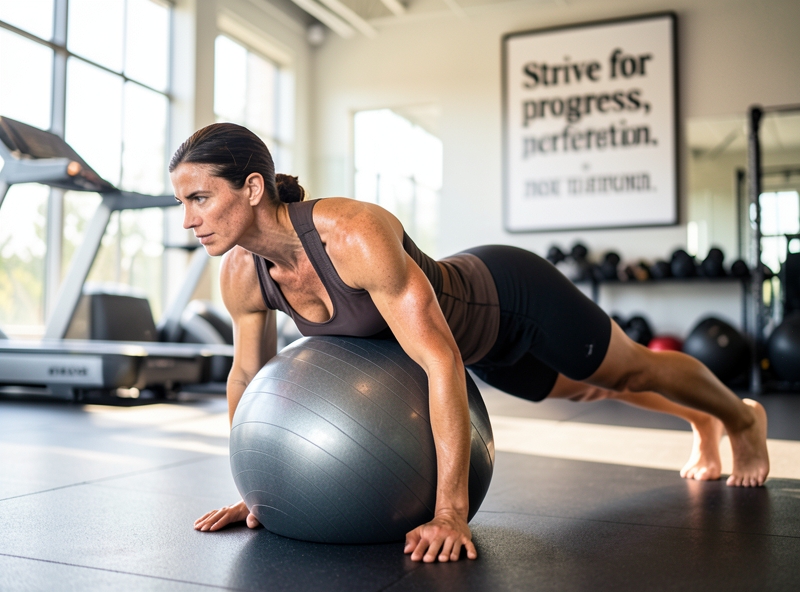
Exercise 1: Stability Ball Forearm Plank
This exercise upgrades the traditional plank to a whole new level, turning the shoulder joints and elbows into highly challenging mobile pivot points.
- Execution Technique: Place both forearms on top of the ball, hands lightly interlaced or parallel. Step both feet back, shoulder-width apart to increase stability (narrow your feet once mastered). Push your shoulders away from your ears, keeping your head, back, and heels in a straight line.
- Breathing Pattern: Inhale deeply through your nose into your lower abdomen, exhale slowly through your mouth through pursed lips (hissing breath) while actively tightening your core even further. Do not hold your breath to avoid a sudden increase in blood pressure.
Exercise 2: Ball Crunch
Unlike floor crunches that limit the range of motion, the curvature of the Stability Ball allows the spine to stretch naturally backward before contracting, enhancing the isolation effect of the rectus abdominis.
- Execution Technique: Sit on the ball, walk your feet forward until your lower back is fully supported on top of the ball. Place your hands lightly behind your head or crossed over your chest (do not pull on your neck). Lower your upper body backward to stretch your abs, then use your abdominal strength to curl your chest toward your pelvis. Lock your hips, moving only your upper back.
- Breathing Pattern: Inhale as you lower back to stretch the abs; exhale forcefully through your mouth as you curl up to the highest point.
Exercise 3: Glute Bridge on Ball
This movement directly targets the posterior chain including the glutes, hamstrings, and lower back core, preventing lower back arching that causes fatigue and soreness.
- Execution Technique: Lie flat on your back on a mat, place both heels on top of the ball, knees bent at about a 90-degree angle. Place your arms flat by your sides for balance. Press your heels firmly down into the ball, squeeze your glutes and core to lift your hips off the floor until your body is straight from knees to shoulders. Keep the ball from rolling sideways.
- Breathing Pattern: Inhale as you lower your hips with control (do not let your glutes touch the floor completely); exhale and squeeze your glutes as you push your hips up high.
Exercise 4: Stability Ball Jackknife
An advanced exercise that requires coordinated movement between a stable upper body and a dynamically moving lower body.
- Execution Technique: Start in a high push-up position, placing your shins or the tops of your feet on top of the ball. Keep your entire upper body as solid as a wall. Use your lower abs to roll the ball, pulling your knees toward your chest, slightly elevating your hips. Then, slowly extend your legs back, returning the ball to the starting position.
- Breathing Pattern: Inhale as you extend your legs with control to roll the ball back; exhale decisively as you tuck your knees to pull the ball toward your chest.
4. Guide to Choosing Ball Size and Safety Precautions During Training
Choosing the wrong exercise ball (Swiss Ball) size is the most common mistake, leading over 70% of practitioners to experience lower back pain and postural misalignment within the very first week. A ball that is too high leaves the knee joints dangling, losing their point of support; conversely, a ball that is too low forces the hip joints into deep flexion, putting extreme pressure on the spinal discs. To turn the ball into a powerful assistant for your core and flexibility, you need a size that is accurate to the centimeter.
| User Height (cm) | Optimal Ball Diameter (cm) | Standard Testing Posture (Knee & Hip Joints) |
|---|---|---|
| Under 150 cm | 45 cm | Knee angle bent at exactly 90 degrees when sitting upright, with soles of the feet completely flat on the ground. |
| 150 cm - 165 cm | 55 cm | Thighs parallel to the floor, hips not lower than the knees. |
| 165 cm - 180 cm | 65 cm | Optimizes the activation of abdominal, gluteal, and erector spinae muscles. |
| Over 180 cm | 75 cm | Ensures the cervical and lumbar spine maintain their natural physiological curves. |
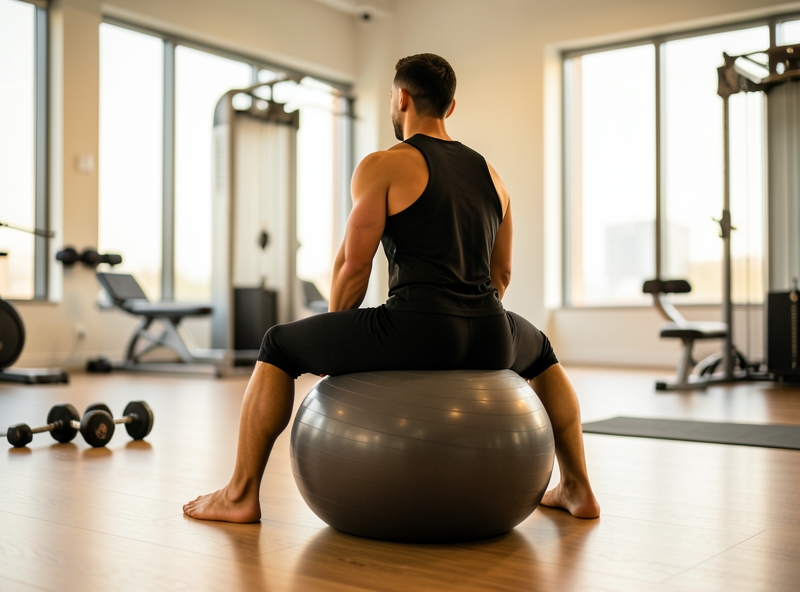
In addition to size, safety in training is the thin line between a toned body and a serious injury. When your entire body weight is placed on an air-filled ball, any carelessness can result in hard, impactful falls.
"A quality exercise ball will never burst like a balloon when punctured; it will deflate slowly to protect your spine."
Please strictly follow these three core safety principles before starting any exercise:
- Check Anti-Burst technology and pressure: Only choose balls labeled with specialized anti-burst features and high load capacity. When inflated, the ball should have moderate elasticity - pressing your finger in should sink it by about 2-3 cm. A ball that is too tight will cause sudden loss of balance, while one that is too soft eliminates the core muscle activation benefits.
- Thoroughly clean the training space: A sharp grain of sand, a paper clip, or a small wood splinter on the floor can rip the ball open under body pressure. Always sweep the training area clean and prioritize using a specialized mat underneath.
- Use a high-traction surface: Stay away from slippery granite floors or highly polished, un-treated wooden floors. The friction between the ball's surface and the floor is what keeps you from sliding and falling freely during complex movements like ball-foot planks or Glute Bridges.
5. Conclusion
Don't let lingering back pain or an unbalanced posture define your limits. Many people relentlessly pursue heavy weights or exhausting cardio workouts, yet forget the most fundamental foundation of all movement: core stability.
A stability ball is not just a regular workout tool; it is an extremely effective posture correction filter. When sitting or performing exercises on the ball, your body is forced to constantly make micro-adjustments to maintain balance. This process directly activates the deep core muscles surrounding the spine — muscles that are completely "shut down" when you sit on plush office chairs.
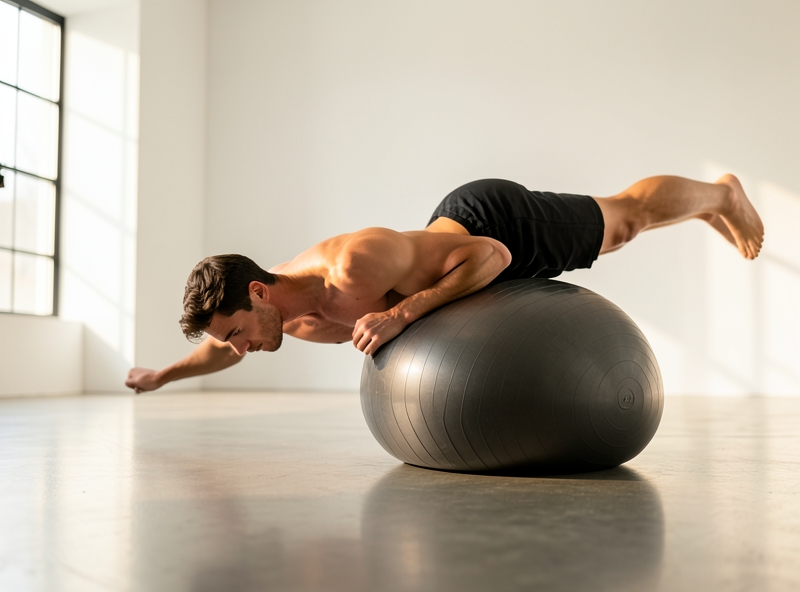
"True strength lies not in the size of your external muscles, but in the ability to control and stabilize your body's center of gravity against any instability."
Integrating a stability ball into your daily life and fitness routine — whether using it to replace your 8-hour office chair or doing 15-minute supplementary exercises — is the smartest investment to relieve spinal disc pressure and shape your body curves naturally. Start today to build a flexible, strong, and confident body from the core.