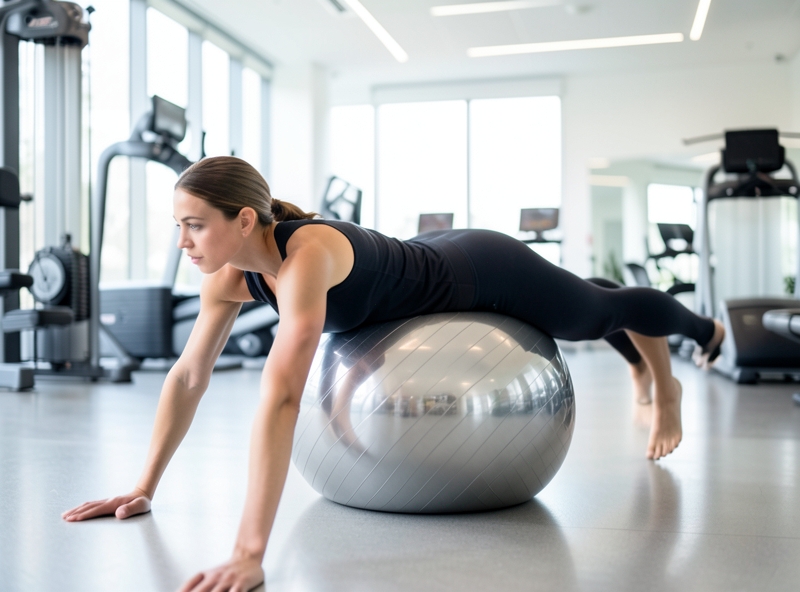
1. What is Isometrics? Definition of Strength from Stillness
Have you ever pushed weights to the point where your knees buckled and your shoulders screamed, yet your muscles still hadn't reached their maximum activation threshold? Do you plunge into high-intensity cardio sessions in hopes of burning fat, only to end up with exhaustion and lingering injuries? The truth is, to build a steel-like muscular system and rock-solid joints, you don't necessarily have to be in constant motion.
Isometrics (Static muscle contraction) is the ultimate key that redefines the entire classic training mindset. This is a muscle activation method in which muscle fiber length does not change and the joints remain completely motionless. Imagine pushing against a reinforced concrete wall with all your might: not a single centimeter of movement occurs, but your entire body is shaking, every muscle fiber tightening to its absolute limit under immense pressure.

The ultimate power of Isometrics lies in its ability to recruit motor units (motor unit recruitment). Sports science has proven that when performing maximum static contractions, the central nervous system can recruit up to 95% of muscle fibers, a figure far superior to conventional dynamic exercises. This brings three core benefits to the body:
- Absolute joint safety: Completely eliminates friction and impact forces at the joints, making it extremely suitable for those recovering from injuries or wishing to protect joint cartilage to the maximum.
- Deep muscle activation: Directly targets stabilizer muscle groups that are often neglected in standard dynamic exercises.
- Increased Time Under Tension (TUT): Maintains a constant state of tension in the muscles, forcing muscle fibers to adapt and grow without requiring excessively heavy weights.
"The stillness in Isometrics is not a state of rest, but the condensation of a storm of energy inside the body, where neurological and muscular strength merge as one."
| Comparison Criteria | Isometrics (Static Contraction) | Isotonics (Dynamic Contraction - Regular Weights) |
|---|---|---|
| Joint Movement | None at all (0 degrees) | Continuous contraction and extension |
| Pressure on Joint Cartilage | Minimal, maximum safety | High, increases risk of wear and tear over time |
| Muscle Fiber Recruitment | Up to 95% (Peak nervous system activation) | About 80% - 85% |
| Main Goal | Enduring stamina, stability, joint protection | Muscle hypertrophy, explosive strength |
Without the need for flashy gyms with million-dollar machines, Isometrics proves that: with just your body weight, a solid point of support, and a determined will, you can completely restructure your physique and build an unbeatable musculoskeletal system from absolute stillness.
2. The Scientific Mechanism: How Holding a Pose Still Builds Muscle
Spending hours lifting weights, sweating profusely, yet your biceps remain "stuck in place" while your knee joints start protesting with cracking sounds. Do you think that you must move, flex, and extend for muscles to grow? This is a classic myth that is limiting your physique. Modern sports science proves the opposite: standing still and tensing your body – also known as Isometrics (static training) – is a "secret weapon" that triggers muscle growth at the cellular level, which conventional dynamic exercises often miss.
"Muscles don't have eyes to see how many weight plates you are lifting. They only feel tension and the time spent under that tension."
The secret lies in these two core physiological mechanisms:
1. Maximum Muscle Fiber Recruitment (Motor Unit Recruitment)
When you lift and lower a dumbbell (Isotonic), the central nervous system constantly adjusts the number of participating muscle fibers depending on the angle of movement. At the joint "dead zones", the tension on the muscle decreases significantly. But with Isometrics, when you hold a position at the point of maximum tension, the brain is tricked into thinking the body is facing an immovable obstacle. To survive, the nervous system is forced to maximally activate high-threshold motor units (High-Threshold Motor Units) – which contain the fast-twitch muscle fibers (Type II) with the greatest potential for size growth. You are not moving, but inside, a fierce "general mobilization" of forces is taking place.
2. Time Under Tension (TUT)
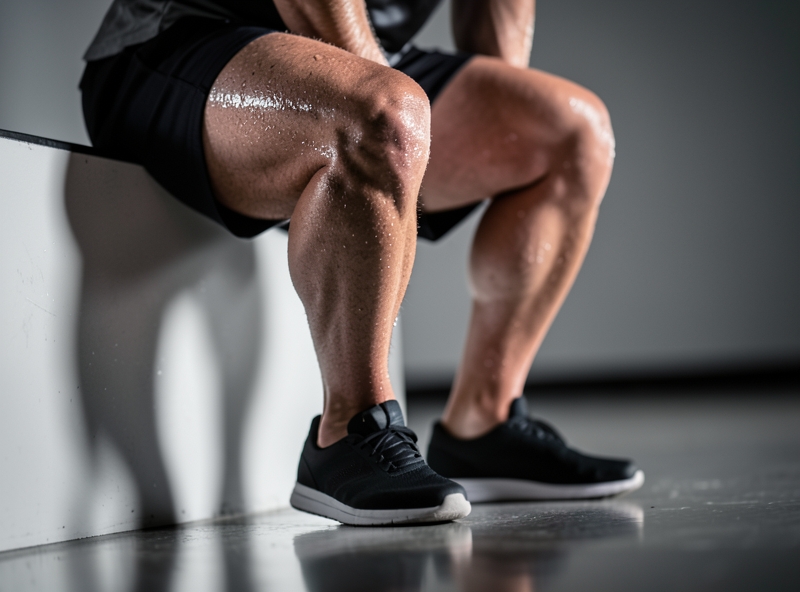
To stimulate the muscle protein synthesis process, muscles need to reach a threshold of biochemical fatigue. In a typical 30-second weight training set, the actual time the muscle undergoes maximum tension is only about 10 seconds due to momentum and rest phases in between. With Isometrics, TUT is 100%. If you hold a Plank or Wall Sit for 45 seconds, that entire 45 seconds is time the muscle is locked in a state of extreme tension. This continuous muscle contraction temporarily restricts blood flow, creating a local oxygen-deficient environment (hypoxia). This is the trigger for the accumulation of lactic acid and metabolites (metabolic stress) - the most powerful chemical signals that prompt the body to secrete growth hormones GH and IGF-1 to rebuild bigger, stronger muscles.
To clearly see the outstanding difference in muscle isolation efficiency, look at the visual comparison table below:
| Comparison Criteria | Dynamic Training (Isotonic - Flexion/Extension) | Static Training (Isometric - Holding still) |
|---|---|---|
| Actual Time Under Tension (TUT) | Interrupted by momentum and joint blind spots. | Continuous 100% of the exercise duration. |
| Fast-Twitch Muscle Fiber Recruitment (Type II) | Only strongly activated during the explosive force phase. | Continuously activated when reaching the neurological fatigue threshold. |
| Joint Stress | High (easy to injure due to joint wear and tear during movement). | Extremely low (absolutely safe for injury rehabilitation). |
| Muscle Group Isolation Ability | Moderate (secondary muscle groups often assist in carrying the load). | Maximum (locks movement, forcing a target muscle group to work). |
Thanks to this absolute isolation mechanism, Isometrics completely eliminate "cheating" through momentum. When you cannot use momentum for assistance, every muscle fiber is forced to work on its own, facing the tension head-on and breaking through old limits.
3. A Shield for Your Joints: Why Isometrics Are Safe and Effectively Protect Joints
Every time you lower the weight in a traditional Squat or Bench Press, your joints are enduring a silent, destructive pressure. This is the combination of inertia and shear force – the two leading causes of cartilage wear, ligament tears, and joint capsule inflammation. Isometrics emerge as the ultimate saving solution: maximizing muscle activation without moving the joint even a single millimeter.
Imagine your body is like a race car. Conventional dynamic training is like constantly slamming on the brakes and then accelerating, causing the suspension system (the joints) to shake and degrade rapidly. Meanwhile, Isometrics is like pressing the gas pedal to the floor while the car is in neutral (N). The engine (muscles) roars at full capacity, but the drivetrain and wheels (joints and ligaments) are completely freed from the pressure of sudden movement.
| Biomechanical Criteria | Dynamic Training (Isotonic) | Static Training (Isometrics) |
|---|---|---|
| Shear Force on Joints | Very high (changes with the angle of movement) | Nearly 0 (completely eliminated) |
| Inertia | Constantly variable, easily causing sudden injuries | Completely eliminated |
| Synovial Fluid Flow | Interrupted due to dynamic muscle contraction pressure | Steady increased circulation, nourishing joint cartilage |
| Fast-Twitch Muscle Fiber Activation (Type II) | Requires very heavy weights | Achieved at an absolutely safe threshold |
The elimination of shear force is the golden key that makes Isometrics the "king" of injury rehabilitation. When you hold a static position against resistance, compressive force is distributed evenly across the entire joint surface instead of concentrating on a single weight-bearing point as during movement. This helps protect sensitive meniscus areas and prevents the progression of arthritis.
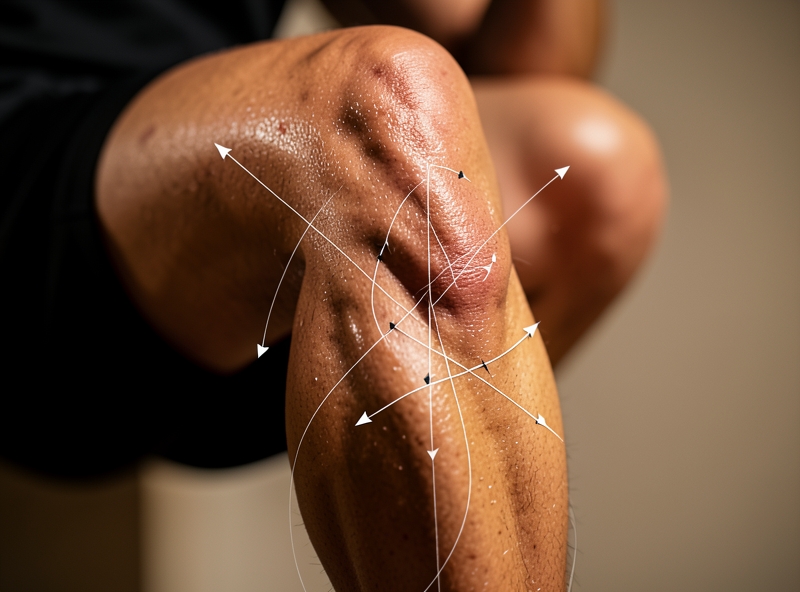
Not stopping at protection, Isometrics also actively remodels the connective tissue system around joints through specific biological mechanisms:
- Stimulating Collagen Proliferation: Prolonged static muscle contraction creates a continuous tension on tendons and ligaments. This tension sends chemical signals that activate fibroblasts, accelerating the synthesis of type I collagen to reinforce ligaments, making them thicker and more resilient.
- Increasing Bone Density according to Wolff's Law: Even without movement, powerful static compression still generates small bioelectric currents (piezoelectricity) in the bone. This process stimulates osteoblasts to active, enhancing the deposition of calcium and minerals, making bones denser and effectively preventing osteoporosis.
- Re-establishing Neuromuscular Mapping: For post-injury individuals, the brain often tends to "lock" the muscle groups surrounding the painful area for protection. Static training helps re-establish neural connections, allowing muscles to exert force again without triggering pain signals from the central nervous system.
"Isometrics is not just a training method; it is a biomechanical regenerative therapy capable of strengthening damaged connective tissues without leaving any side effects on the joint cartilage surfaces."
By integrating static holds like Wall Sits, Planks, or pushing with maximum force against an immovable object, you are building a solid biological armor system. This method helps you both maintain peak athletic performance and extend the lifespan of your joints by decades, despite all the challenges of time and the natural aging process.
4. Guide to Building an Effective Isometrics Routine for Everyone
Do you rush into the gym, lifting heavier weights every week, but your joints start cracking and your muscles hit a plateau? The mistake most people make is ignoring static strength. Isometrics (static muscle contraction) training is the "secret weapon" Olympic athletes use to build a steel joint system, a super-strong core, and rapidly increase muscle fiber density without moving a single millimeter.
To optimize energy flow and maximally activate fast-twitch muscle fibers, you need to precisely perform the 4 classic Isometric exercises below under absolute tension control.
| Exercise | Target Muscle Group | Specifications (Sets x Time) | Proper Breathing Technique |
|---|---|---|---|
| Plank (Elbows) | Entire core, shoulders, glutes | 3 - 4 sets x 45 - 60 seconds | Breathe shallowly through your nose, squeeze your core (maintain Bracing technique) instead of holding your breath. |
| Wall Sit | Quadriceps (Quads), glutes, hamstrings | 3 - 4 sets x 30 - 60 seconds | Inhale deeply through your nose, exhale slowly through your mouth to maintain intra-abdominal pressure. |
| Hollow Body Hold | Rectus abdominis, obliques, hip flexors | 3 sets x 20 - 40 seconds | Exhale completely to pull your ribs down, maintaining short, steady breaths through your chest. |
| L-sit | Lower abs, hip flexors, shoulders, triceps | 3 - 5 sets x 10 - 20 seconds | Inhale deeply before lifting, maintaining a light, rhythmic breath hold at the peak of the movement. |
"Muscle strength is not only measured by the weight you can push away, but is also proven by your ability to resist force and lock your body down at mechanical sticking points."

To achieve the highest transition efficiency, the application of Isometrics must not be random but must follow smart integration protocols into your current resistance program:
- Activation Method: Perform 1-2 sets of moderate-intensity Plank or Wall Sit right during your warm-up. This helps the central nervous system wake up dormant muscle fibers, preparing them for heavy Squats or Deadlifts afterward.
- Alternating Combination Method (Static - Dynamic Superset): Immediately after completing a heavy set of Squats, step straight into a Wall Sit and hold for 30 seconds. This metabolic overload will force your quads to grow beyond their normal limits.
- Finisher Method: Use the Hollow Body Hold or L-sit at the end of your workout as a finisher to exhaust the last energy reserves of your core muscle group, stimulating natural growth hormone production.
5. Conclusion: Harnessing the Power of Stillness to Elevate Your Physical Health
Many fitness enthusiasts often fall into the trap of flashy movements and heavy mechanical weights, only to wonder why their joints still ache and their physical performance has hit a plateau. The truth is, the pinnacle of strength is not about how fast you move, but about your ability to control your body as solidly as a rock against any external force. Isometrics (isometric training) is the golden key that unlocks that inner strength.
Not merely supplementary exercises or post-injury rehabilitation methods, isometric contraction is the core foundation for building an unbreakable movement system. By maximizing the recruitment of muscle fibers without changing muscle length or placing wear-and-tear pressure on joint cartilage, Isometrics creates a solid protective shield for the shoulders, knees, and spine. This is why professional athletes always possess extremely high bone density and resilient tendon-muscle systems despite enduring intense daily impacts.

"Enduring strength is not born from rushed movements relying on momentum. It is forged when you force your mind and muscles to stand firm, endure, and overcome pressure in absolute stillness."
From the Editorial Board's perspective, we highly recommend that you shift your training mindset today. Instead of trying to perform another quick but poorly-formed set of weights, spend the last 10 minutes of your workout performing isometric variations such as Wall Sits, Planks, or Isometric Split Squats. The secret to success lies in perseverance measured in seconds under maximum muscle tension.
When you learn to master stillness in the gym, you not only elevate your physical fitness to a whole new level, but you also equip your body with outstanding injury resistance. Patiently maintain a frequency of at least 3 times per week, feel every muscle fiber tremble under pressure, and experience your physical foundation being reborn from deep within the roots.