1. What is Uniform Dressing? Concept and Origins of the Trend
Have you ever stood helplessly before a packed closet only to exclaim, "I have nothing to wear"? Do you spend 20 minutes every morning trying on and changing out of five different outfits, only to leave the house feeling drained and worried about being late?
This isn't merely fashion confusion. Psychology calls it Decision Fatigue. Every micro-choice—like matching a shirt with a pair of pants—depletes your brainpower before you even start the most important work of the day. The ultimate solution to this invisible exhaustion is Uniform Dressing: a strategy for simplifying your wardrobe by establishing a signature outfit formula that is uniquely yours.
Many people mistakenly believe that repeating an outfit formula is a sign of boredom or a lack of creativity. But take a look at some of the world's most brilliant minds and powerful icons:
- Steve Jobs: An Issey Miyake black turtleneck, Levi's 501 jeans, and New Balance sneakers—an immortal visual identity associated with the birth of world-changing products.
- Mark Zuckerberg: A dark gray T-shirt paired with a hoodie—a statement of absolute focus on core value rather than outward appearance.
- Anna Wintour: The global fashion icon—decades of devotion to A-line printed dresses, colorful stone necklaces, and legendary nude Manolo Blahnik pumps.
These individuals do not lack the budget to own the latest luxury collections. They choose Uniform Dressing because they understand that clothing is the ultimate visual signature. By eliminating the morning selection chaos, you free up thousands of hours of thought, reserve energy for strategic decisions, and build a consistent, trustworthy presence.
"You will find life much lighter and more efficient when you establish a 'uniform' for yourself. It is not the tyranny of routine, but the freedom to liberate your mind."
Originating from the high functionality of military and workwear, Uniform Dressing has evolved into a sophisticated lifestyle philosophy as it entered modern fashion. This concept helps you restructure your entire wardrobe experience through distinct values:
- Time optimization: Completely eliminates hesitation, saving an average of 15–30 minutes every morning.
- Personal brand reinforcement: Helps people instantly recognize you through a signature silhouette or fixed color palette.
- Financial optimization: Stops impulse buying, allowing you to focus your budget on high-quality, timeless pieces.
2. Core Benefits: Decision Optimization and Identity Shaping
Every morning, do you stand in front of a jam-packed closet yet still feel like you have "nothing to wear"? Spending 20 to 30 minutes deliberating, trying on, and constantly changing clothes is not merely a waste of time. It is a process of silent decision fatigue taking place right before you step into negotiations or strategic decisions of the day. Building a precise fashion style is not about chasing trends, but a solution to optimize resources and establish your own visual authority.
Here are 3 core benefits that transform fashion from a consumer expense into a long-term strategic investment:
1. Freeing Up Brain Capacity and Saving Precious Time
The human brain has a limit on the number of high-quality decisions it can make in a day. When you simplify and systemize your wardrobe according to a clear style formula, you eliminate hundreds of unnecessary micro-decisions.
- Save over 180 hours per year: Instead of wasting 30 minutes a day coordinating outfits, a standardized wardrobe helps you complete your look in just 3 to 5 minutes.
- Preserve energy for important work: Devote your full mental clarity to business, leadership, and creative decisions instead of exhausting yourself over choosing the right tie or pair of shoes.
- Eliminate morning anxiety: Pre-prepared confidence helps you start the day with a proactive and calm demeanor.
2. Optimizing Budget and Moving Towards a Sustainable Lifestyle
Fashion's middle-income trap lies in items bought on impulse that are worn only once. An in-depth style mindset based on the Cost-Per-Wear (CPW) metric helps you master your personal finances.
The formula to calculate the true value of clothing:
CPW = Total Item Value / Actual Number of Wears
A high-end tailored shirt priced at 10,000,000 VND that is worn 200 times will have a CPW of just 50,000 VND/wear. Meanwhile, a fast-fashion shirt priced at 1,000,000 VND worn only twice and then left in the closet has a CPW of up to 500,000 VND/wear. Smart style management helps you cut down on fashion waste, stop throwing money away on worthless items, and directly contribute to a sustainable consumption chain.
| Comparison Criteria | Impulse Shopping (Fast Fashion) | Strategic Wardrobe (Signature Wardrobe) |
|---|---|---|
| Shopping Psychology | Chasing short-term trends, fleeting emotions | Investing based on utility and material durability |
| CPW Metric | Very high (due to low frequency of wear) | Completely optimized (high rewear frequency) |
| Environmental Impact | Increases textile waste, squanders resources | Minimizes excess consumption, promotes sustainability |
| Personal Image | Disjointed, inconsistent, easily blend into the background | Sharp, consistent, and iconic |
3. Building a Sharp Personal Brand and Asserting Your Status
Personal image is a non-verbal communication channel operating 24/7. The perception that the public, partners, and colleagues have of you is formed in just the first 7 seconds of contact. Fashion and style are the very tools that give you complete control over that message.
A precisely designed style delivers:
- Reliable consistency: A polished, cohesive appearance creates a sense of professionalism, discipline, and exceptional self-management ability.
- Easily recognizable personal signature: Helps you stand out in a crowd without saying a word. Your outfit becomes your own unique "visual signature" in every encounter.
- Activating subtle power: When you wear clothing that truly reflects your intrinsic values and competence, natural confidence radiates, creating an immense psychological advantage in any negotiation.
Optimizing your style is not vanity. It is a strategy to enhance life performance, protect personal finances, and build an intangible yet priceless brand asset for your career.
3. 4 Steps to Building a Standard 'Personal Uniform'
A packed closet yet still "nothing to wear" is the classic tragedy of the modern consumer. The harsh truth: you don't lack clothes, you lack a system. Spending 15–30 minutes every morning picking an outfit not only drains your decision-making energy (decision fatigue) but also leaves your personal image faded and inconsistent.
Building a "Personal Uniform" is not a restriction, but the pinnacle of freedom. This wardrobe streamlining strategy helps you always present your best self with minimal effort. Below is the precise 4-step process to establish your own style framework.
Step 1: Decode Your "Self-Matrix" (Lifestyle & Body Proportions)
Don't start with shopping; start by analyzing your real-life data. The mismatch between the clothes in your closet and your daily reality is the main cause of waste.
- Analyze your 80/20 lifestyle matrix: Accurately list the proportion of time you spend on each activity: Office (60%), Client meetings (20%), Coffee/Casual outings (15%), Formal events (5%). Your wardrobe must accurately reflect these proportions instead of being filled with glamorous party outfits worn only once a year.
- Assess your body strengths and weaknesses: Be honest in front of the mirror. Do you have slender shoulders, a small waist, or long legs? Conversely, which areas do you prefer to conceal? A standard personal uniform must be built on the principle of maximizing your strengths and subtly disguising flaws.
Step 2: Define Your "Signature Look" – The Constant Style Formula
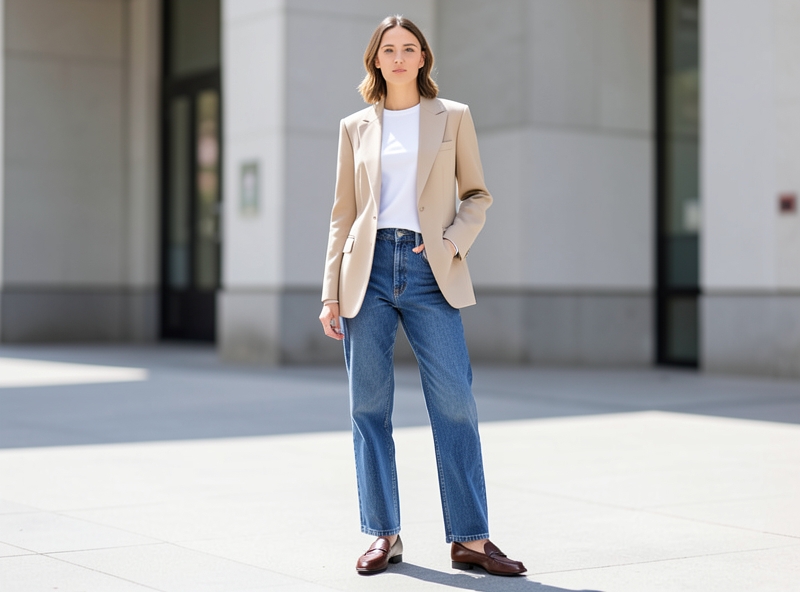
A "Signature Look" is a combination of 2-3 fixed items, creating a distinctive silhouette that makes you instantly recognizable from afar. Once you've found your ideal formula, simply replicate it with variations in color or fabric.
| Target Style | Suggested "Signature Look" Formula | Hero Pieces |
|---|---|---|
| Minimal Power | Oversized Blazer + Crewneck T-shirt + Straight-leg Jeans | Structured tailored blazer, Patent leather loafers |
| Effortless Chic | Silk/poplin button-down shirt + High-waisted wide-leg trousers | Drapey premium blouse, Pointed-toe pumps / Stilettos |
| Smart Casual | Knitwear/Polo shirt + Chinos/Tailored Trousers | Fine-gauge knit top, Minimalist white sneakers |
Step 3: Establish a Personal Color Palette
Color is the first thing that catches a person's eye. Wearing the wrong undertone can make your skin look dull and tired. Conversely, a precise color palette turns every item in your closet into endless mix-and-match possibilities.
To build the perfect personal uniform color palette, apply the 3-core-color-group rule:
- Base Colors (60%): Black, navy blue, cream, gray, or earthy brown. These are the colors for trousers, coats, suits—items that take up visual space.
- Secondary Colors (30%): White, beige, light gray, soft blue. Ideal for T-shirts, button-downs, and inner layers.
- Accent Colors (10%): Burgundy red, emerald green, mustard yellow. Reserved for accessories like scarves, handbags, belts, or lipstick to create striking highlights.
"Style is not about the number of clothes you own, but about a deep understanding of what truly belongs to you."
Step 4: Prioritize Quality Fabric & Fit over Quantity
A $100 outfit with a precise fit and high-quality fabric always beats a $1,000 wardrobe filled with fast fashion items that wrinkle and lose shape after a few washes. The essence of a "personal uniform" is sustainability and timelessness.
Shift your mindset from "expense shopping" to "value investing" based on the CPW (Cost Per Wear) metric:
A blazer priced at 6,000,000 VND worn 200 times a year costs an actual 30,000 VND per wear. Meanwhile, a trendy shirt costing 600,000 VND worn only twice before sitting in the closet costs 300,000 VND per wear.
Focus your budget on natural fabrics with good structure, such as wool, cashmere, heavy-weight cotton poplin, silk, or premium linen. Take any clothing that doesn't fit perfectly to a tailor to adjust the waistline, hem length, or shoulders. A millimeter-perfect fit is the sole line separating someone who knows how to dress from a style icon.
4. Secrets to keeping your 'personal uniform' style fresh and versatile
The ultimate nightmare for someone pursuing a "personal uniform" style isn't running out of clothes to wear, but feeling like a cartoon character stuck in the exact same outfit day in and day out. Is saving 15 minutes of indecision every morning worth the visual boredom? The answer is yes, if you master the art of micro-variations.
Wearing the same formula doesn't mean wearing the exact same piece of cloth. The most sophisticated fashion icons don't alter the "blueprint"; they change the visual touchpoints and surface textures built upon an existing framework. Below are 3 outfit-upgrading techniques to keep your personal uniform looking sharp, fresh, and adaptable in every situation.
1. The "Signature Accessories" Technique
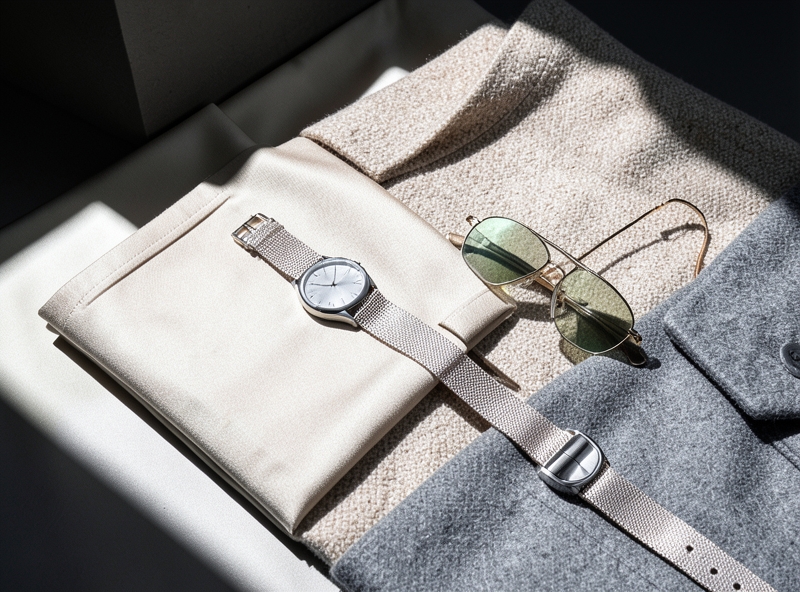
Think of your basic outfit (like a white t-shirt paired with black suit trousers) as a neutral canvas. Accessories then act as a Visual Pivot, capable of shifting up to 80% of the vibe of the entire look. You don't need to change your clothes; you're changing the message behind them.
- Watches: A classic square-dial leather watch instantly transforms the outfit into a polished, powerful look. Conversely, an integrated steel bracelet or sporty rubber strap brings back a modern, casual feel.
- Eyewear: Thick acetate frames add an intellectual vibe, while aviator sunglasses bring a rugged, edgy appeal.
- Metal Jewelry: Don't over-accessorize. Choose one statement piece—a bold signet ring, a minimal chain bracelet, or hoop earrings. The way metal catches the light will shatter the monotony of monochromatic blocks.
2. Seasonal Fabric Variations: Same Silhouette, Different Texture
Maintaining the same silhouette while pivoting fabrics according to the weather is a subtle flex of refined taste. Using the same formula of "Blazer + Trousers," the visual and tactile experience transforms entirely when you switch the fabric.
Cold seasons favor substantial, textured fabrics with strong shape retention like Wool, Flannel, Tweed, or Velvet to evoke warmth and structure. As summer arrives, that exact same silhouette is reborn in lightweight Linen, Silk, Cotton Poplin, or Tencel. The natural drape and unique light reflection of each fiber play tricks on the eyes, completely erasing any perception of repetitiveness.
3. Formal/Casual Tuning: Adjusting Formality on the Base Formula
A well-curated personal uniform formula should allow you to dial formality up or down as easily as adjusting a volume knob. The secret lies in High-Low Mixing—blending formal pieces with casual elements.
| Formality Level | Adjustment Formula (Base framework: Blazer + Trousers) | Aesthetic Vibe |
|---|---|---|
| High Formal (Partner meetings, formal events) | Combine a crisp stiff-collar poplin shirt + Patent leather Oxfords/Loafers + Cufflinks. | Sharp, authoritative, absolute professionalism. |
| Smart Casual (Everyday work) | Replace the dress shirt with a knit tee or polo + Matte leather Derbies. | Polished, modern, approachable. |
| Relaxed Casual (Weekends, casual outings) | Roll up the blazer sleeves + Swap trousers for straight-leg Chinos/Jeans + Minimalist leather sneakers. | Effortless, casual, yet structured. |
"A personal uniform is not a cage that imprisons creativity. It is the ultimate canvas to highlight the wearer's demeanor and subtle details."
Don't rush to abandon the convenience of a personal uniform out of fear of hearing "you wear the same thing every day." Once you master signature accessories, fabric contrast, and formality tuning, your daily outfit will no longer feel like a boring repetition, but rather a steadfast personal statement standing timeless amidst changing trends.
5. Conclusion
Every morning standing in front of a packed closet yet still exclaiming "I have nothing to wear" – that is not a fashion crisis, it is choice paralysis. Uniform Dressing (signature style) emerges not to bind creativity, but as the ultimate declaration of confidence and high-level self-awareness.
When you clearly identify your core values, you will stop being manipulated by thousands of short-term trends. A carefully defined "personal uniform" is a visual signature – where your style transcends the passage of time to become a distinct legacy mark.
Don't wait for a "perfect" moment to redefine yourself. Start your journey to unleash your personal style today with concrete actions:
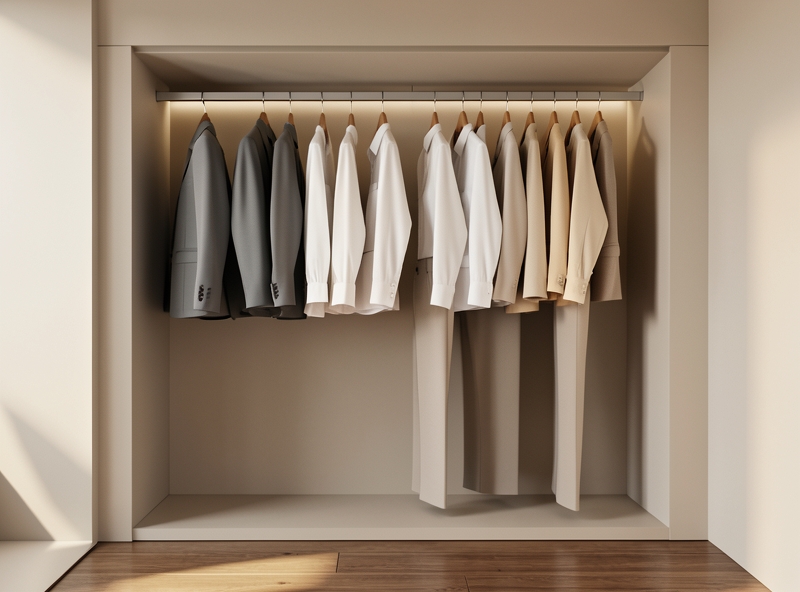
- Strategic audit and decluttering: Ruthlessly eliminate 80% of the items you haven't touched in the last 6 months. Keep only designs that bring absolute confidence and flatter your silhouette.
- Establish a core formula: Find the "armor" that makes you feel most confident (for example: Oversized Blazer + White T-shirt + Straight-leg jeans). This will be your mental anchor on busy days.
- Prioritize structure and materials: Focus your budget on precise tailoring and premium fabrics. A perfectly fitted design always carries far more weight than ten trend-chasing outfits.
"When you stop dressing to please the crowd and start wearing confidence born from self-understanding, that is the moment your personal style is officially born."
Style does not lie in the quantity of clothes you own, but in the confidence and consistency of every appearance. Audit your wardrobe and experiment with a minimalist formula today – the smallest step that will create the biggest turning point for your look and stature.