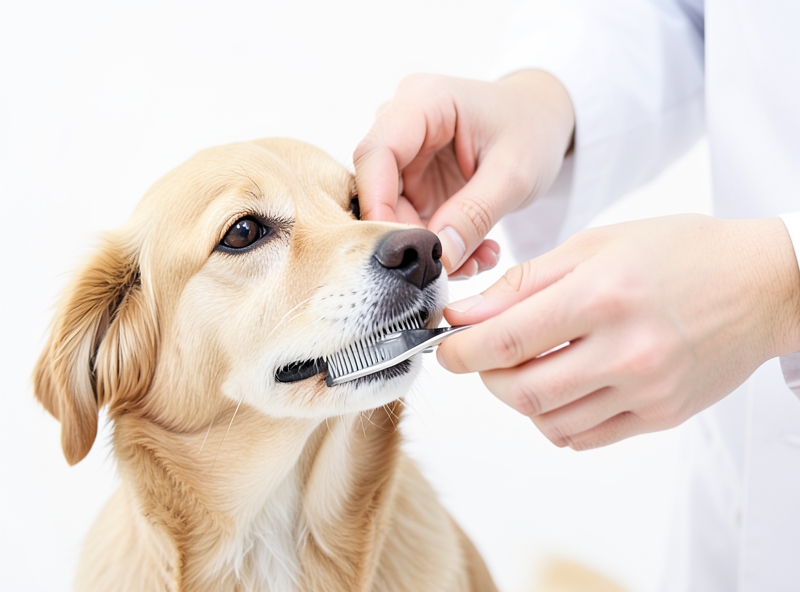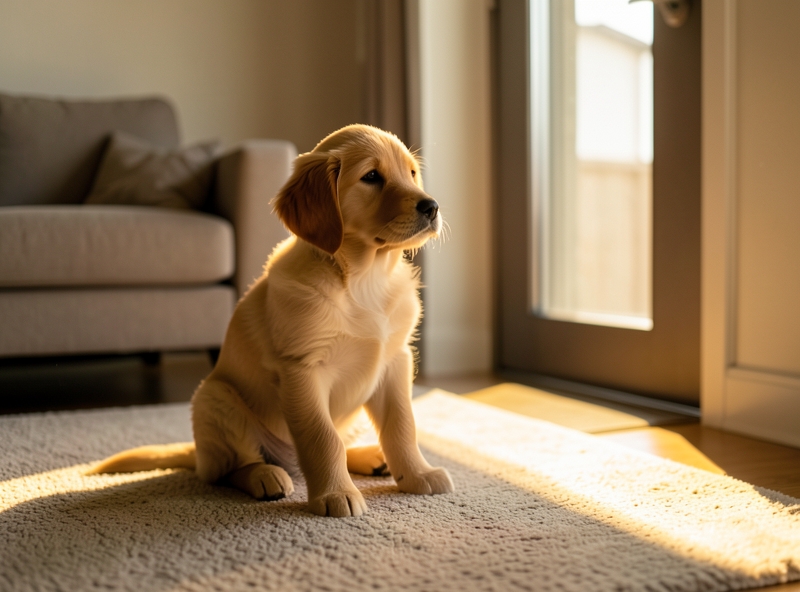
1. Understanding Psychology: Why Are Puppies Scared When Left Home Alone?
Have you ever stepped out the door for work, only to have your heart sink at the sound of a heartbreaking "cry" echoing from inside? I used to be just like you, standing frozen in the hallway, wondering if I was raising a puppy or holding a "child" who refused to let go. In reality, this is a classic manifestation of Separation Anxiety – a psychological state that almost every puppy experiences at some point in their life.
Imagine being in a foreign environment, without a phone, without a map, and the only person you know suddenly vanishes. That feeling of panic is exactly what your puppy is experiencing. Instead of calling your name, they express it through their own "language," which can sometimes leave us caught between laughter and tears when we return home.
| Sign | Specific Expression | The Puppy's Message |
|---|---|---|
| Vocalizations | Loud barking, long howling, or continuous whimpering as soon as the owner leaves. | "Don't leave me, I'm so scared!" |
| Destruction | Chewing up flip-flops, scratching wooden doors, tearing apart toilet paper rolls. | "I need to release this extreme stress." |
| Elimination | Accidents on the floor despite being previously well-trained. | "My body is losing control because I'm panicking so much." |
"A puppy's fear isn't stubbornness; it's the survival instinct kicking in when their only 'pack' – which is you – disappears from sight."
Why do they react so violently? The core lies in the pack instinct inherited from their ancestors. In nature, a puppy separated from the pack meant death. When you bring them home, you naturally become the "alpha," the source of life, and absolute safety. Your disappearance behind a door feels like a rupture in their survival connection. Over-dependence on the owner means they haven't yet learned how to practice self-soothing.
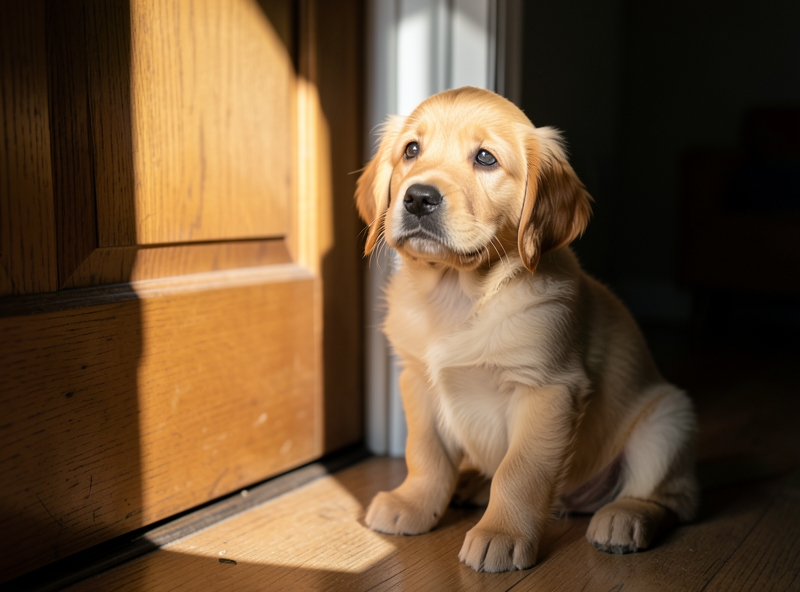
Many of my friends joke that their dogs are "taking revenge" for being abandoned by chewing up sofa pillows. But in reality, chewing on objects that carry the owner's scent (like shoes or clothes) helps them release endorphins – a temporary "happy hormone" to soothe their panic. Understanding this, we feel more compassion than anger when facing a messy living room after a long day of work.
Correctly identifying the psychology not only helps you maintain patience but is also a crucial stepping stone to beginning a training routine, helping your four-legged friend become more independent and confident in their own home.
2. Building a Safe Space and Independent Entertainment Habits
Data from the Association of Veterinary Behaviorists shows that 70% of behavioral issues, such as destructive chewing or persistent barking, stem from separation anxiety and a lack of intellectual stimulation. Establishing a "Safe Zone" is not about confinement, but about optimizing space based on a dog's natural denning instinct.
| Comparison Metric | Free Roam | Controlled Safe Zone |
|---|---|---|
| Cortisol Levels (Stress Hormone) | High (Easily overstimulated by noise) | Low (Sense of being protected) |
| Property Destruction Rate | ~65% (Based on field surveys) | <10% |
| Recovery Time Post-Stress | Slow (30-60 minutes) | Fast (10-15 minutes) |
A standard safe zone should include: a crate or playpen sized adequately for turning around, a comfortable bed, and a source of clean water. This is an "inviolable" area where the dog can retreat when feeling overwhelmed by sounds or the presence of strangers.
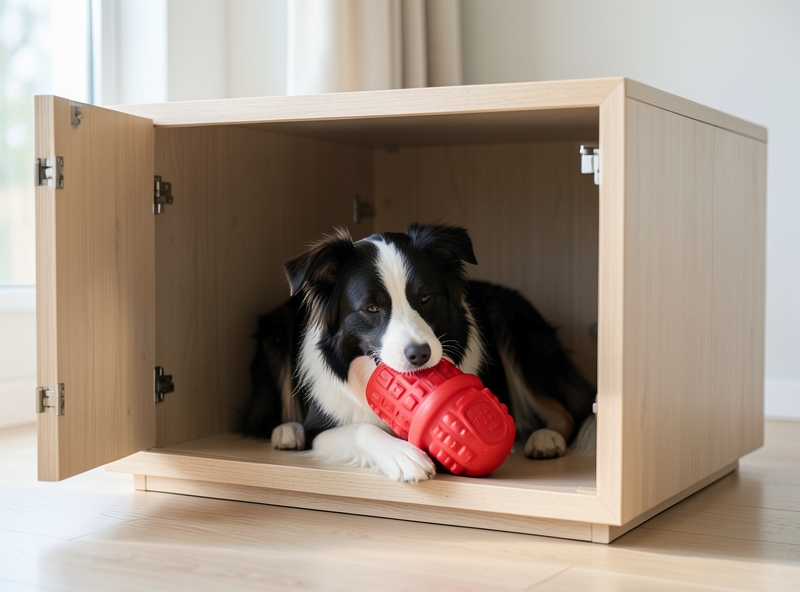
Alongside the physical space, independent entertainment habits should be formed through cognitive stimulation tools. Instead of providing food in a traditional bowl (which takes 2-3 minutes to consume), switch to chew toys or puzzles:
- Chew Toys (KONG Classic): Licking and chewing help release Endorphins. Testing shows that frozen food inside a KONG extends a dog's focus time from 5 minutes up to 30-45 minutes.
- Snuffle Mats: Stimulate the instinct to forage for food through scent, burning energy equivalent to a 15-minute walk while maintaining a calm, stationary state.
- Puzzle Toys (Levels 1-3): Force the dog to use its brain to find rewards, preventing cognitive decline in senior dogs and reducing excess energy in puppies.
"Maintaining 20 minutes of cognitive activity per day is equivalent to 60 minutes of physical exercise in calming a pet's nervous system."
Conclusion from experimental observations: Dogs trained to entertain themselves in a dedicated space have a higher capacity to adapt to environmental changes and are less dependent on the constant presence of their owners.
3. Desensitization Techniques for Departure Cues
Don't let your pets control your emotions with long howls or mournful eyes every time you pick up your keys. Separation Anxiety is actually a conditioned reflex. Your pet has "programmed" their brain to associate your departure preparations with impending loneliness. Your mission as a resilient trainer: You must break the source code of that anxiety immediately!
"Discipline in training is not punishment, but liberating your pet from the chains of unfounded fear."
The most common "triggers" include: the jingling of keys, the zipping of a jacket, or the act of sitting down to put on shoes. When these sounds echo, a dog or cat's heart rate begins to spike, and cortisol (the stress hormone) floods their body. If you leave right at that moment, you are the one confirming their fear is justified. Stop doing that and implement a thorough Desensitization technique.
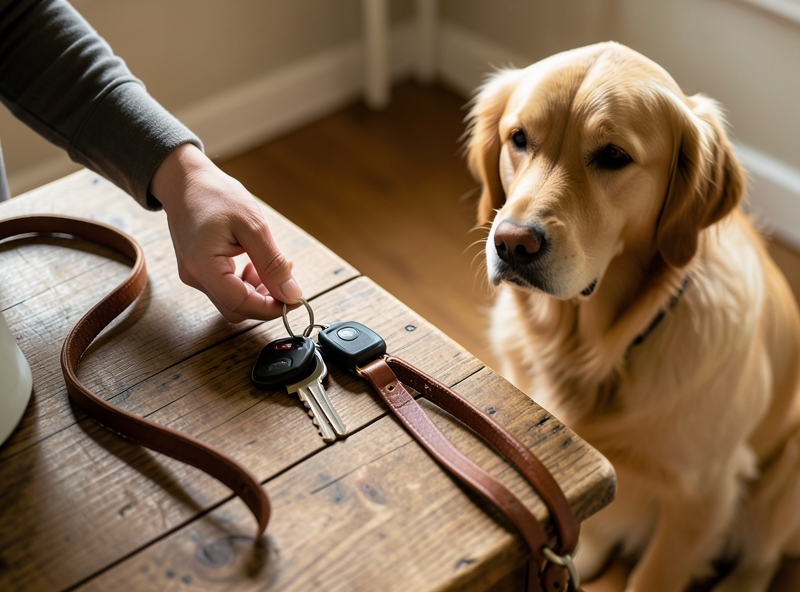
The essence of this technique is "Distraction and Normalization." You need to perform departure actions but ABSOLUTELY DO NOT LEAVE. Perform this dozens or hundreds of times until your pet considers them the most meaningless things in the world.
| Trigger Action | Common Owner Mistake | Standard Desensitization Technique |
|---|---|---|
| Picking up keys | Picking up keys and walking straight out the door immediately. | Pick up keys, walk around the house, then put them back and watch TV. |
| Putting on jacket/shoes | Giving a lingering goodbye with excessive petting. | Put on your jacket and shoes, then sit down to eat or read a book for 15 minutes. |
| Opening the main door | Turning back to comfort the pet when they start whining. | Open the door, stand outside for 30 seconds, then come back in and ignore the pet's excitement. |
The ultimate goal is to completely erase the association between "Cues" and "Absence." When you perform these actions without consequence (you don't disappear), their brain will automatically adjust back to a balanced state. Don't expect results overnight. This is a battle of persistence and iron discipline.
Action Plan: Implement Today!
- Step 1: List the triggers. Write down 5 actions that make your pet most frantic when you prepare to go out.
- Step 2: Saturation attack. Randomly perform those actions at least 10 times a day (e.g., pick up your handbag and then go into the kitchen to cook).
- Step 3: Maintain a "cold" attitude. Absolutely no eye contact, no talking, and no petting while performing these exercises.
- Step 4: Gradually increase intensity. Once the pet no longer reacts to the sound of keys, move on to opening the door and stepping out for 1 minute before returning immediately.
Remember: Your calmness is the best sedative for your pet. Don't let emotions override logic. Act now to create a healthy and confident living environment for your four-legged friend!
4. Progressive Training Roadmap for Absence
To prevent your "boss" from falling into a state of "drama" or depression every time they see you grab your car keys, we need a gradual "level up" strategy. Don't suddenly disappear for 8 hours; start with simulated departures to build your pet's confidence. The goal is to help them understand: "Human leaves, but Human will return—no need to panic!"
Before starting any training exercises, ensure you have "drained" all of your pet's excess energy. A dog that has just finished a 30-minute run or an intense game of fetch will tend to want to chill and sleep rather than scrutinize what their owner is doing. Expending energy helps stabilize their nervous system, reducing destructive behaviors caused by anxiety.
"A tired dog is a happy dog. Fill the morning with exercise before filling the time of absence with silence."
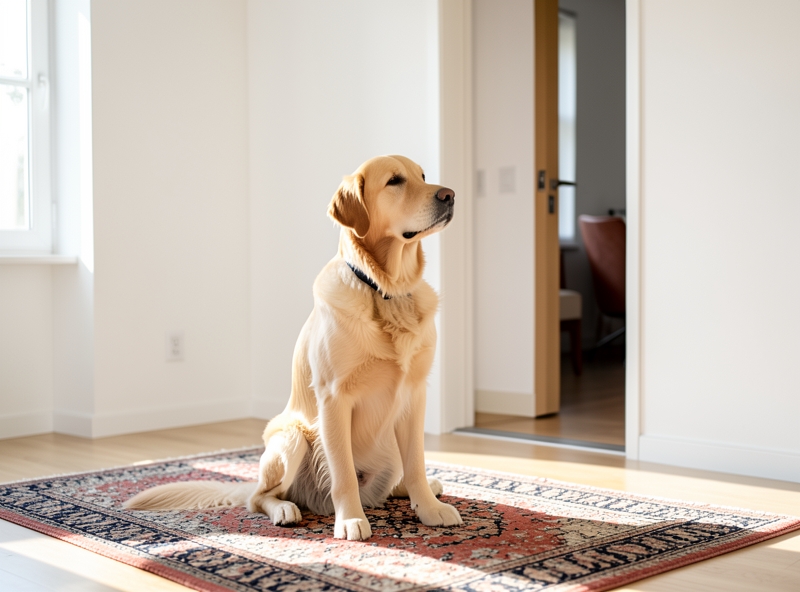
The golden rule during this phase is: "No hellos, no goodbyes". It might sound a bit harsh, but over-pampering or excessive reassuring before you leave only increases your pet's excitement and anxiety. Keep a "cool" demeanor, grab your bag, and walk out the door as if you're just taking out the trash for 5 seconds.
| Phase | Time Absent | Expected State |
|---|---|---|
| Warm-up | 5 - 30 seconds | The boss stays in place, no barking or scratching at the door. |
| Acceleration | 2 - 5 minutes | The boss starts looking for toys or lies down to relax. |
| Challenge | 15 - 30 minutes | The boss is completely calm and can go to sleep on their own. |
| Finish Line | 1 - 2 hours | Maintains a stable psychological state with no signs of separation anxiety. |
When you return, continue the "stranger on the street" tactic. Don't rush in for hugs and kisses while the boss is jumping up in excitement. Wait at least 5-10 minutes until they have truly calmed down, with all four paws on the ground and a stable mood; only then does a rewarding head pat have real educational value.
- Pro-tip: You can use "intellectual entertainment" toys (like treat-dispensing balls) right as you leave to distract their attention.
- Note: If your pet starts showing signs of anxiety at the 5-minute mark, step back to the 2-minute mark for the next session. Do not rush the process!
5. Frequently Asked Questions (FAQ)
Don't expect "instant" formulas or magical hacks that can transform an anxious dog into a calm entity overnight. Reality is much harsher than what rosy blogs often portray. Here are the most pragmatic perspectives on the concerns that pet owners often avoid the truth about.
How long does it take for a dog to get used to being alone?
The honest answer is: It depends on your "patience" (or lack thereof). There is no fixed timeline of 3 days or 1 week. It can take a dog anywhere from 2 to 4 weeks to start understanding that your departure is followed by a return. However, if you are inconsistent—training today and neglecting tomorrow—this process can drag on indefinitely. Don't look at the clock; look at the animal's behavior.
Should I use a surveillance camera?
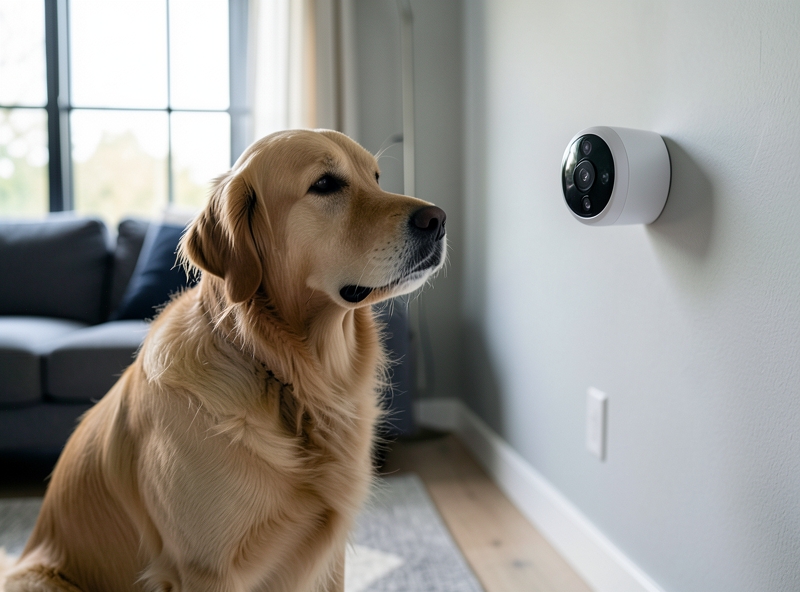
Many people spend millions on cameras just to sit and watch their dog destroy expensive shoes in real-time. A camera is only truly valuable when you use it to observe the "threshold of tolerance"—the exact moment the dog begins to feel anxious (licking lips, pacing, whining). If you only watch to satisfy curiosity or to scold through a speaker, it's a wasted investment. A camera helps you adjust training intensity, it is not a digital "nanny."
"Using punishment when a dog makes a mistake while alone is not only useless but also an act of ignorance. You cannot punish a physiological reaction caused by fear."
When is intervention from a veterinarian or behavior specialist needed?
Don't try to be a hero when your home is being destroyed or your pet shows signs of self-injury (scratching doors until paws bleed, chewing tails). If basic behavior modification measures don't yield results after a month, it's time to spend money on a specialist. The table below clearly distinguishes between "not yet adjusted" and "pathological":
| Signs | Requires Persistent Training | Requires Specialized Intervention |
|---|---|---|
| Noise | Occasional barking when seeing strangers pass the door. | Howling, constant whining without pause as soon as you close the door. |
| Destruction | Lightly chewing toys or rugs due to boredom. | Destroying door frames, biting hard objects, extreme attempts to escape. |
| Hygiene | Occasionally forgetting the spot due to unadjusted routines. | Uncontrolled urination/defecation due to panic despite thorough training. |
Finally, discard the "hit them so they learn" mentality immediately. Scolding or hitting a dog panicked by abandonment only makes them believe that the owner's return is another disaster. Persistence is not doing the wrong thing over and over; it is being steadfast with scientific methods even if the results are frustratingly slow.