1. Introduction: The Rise of the Tool Library Model in the Sharing Economy
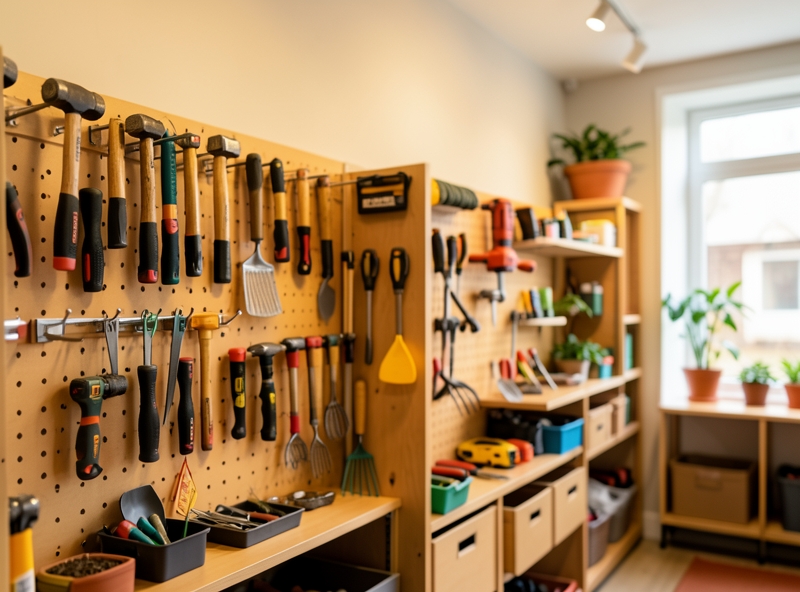
A standard hand drill has an average lifespan of about 10 years, but the total time it actually operates throughout that lifespan is a mere 13 minutes. Most of the remaining time, it sits idly in a corner of the storage room, gathering dust alongside a folding aluminum ladder, a car wrench set, or a high-pressure washer used only twice a year. Spending a large amount of money to own items that are rarely used is a waste of personal finance and creates a huge burden on global environmental resources.
"We don't need a drill. We need a hole in the wall."
The mindset of selfish ownership is gradually being shaken by a revolutionary concept: the Tool Library. Instead of buying and hoarding, modern communities are shifting strongly toward a sharing economy, where access is prioritized over ownership. This is not only a cost-saving solution, but also a civilized lifestyle, reshaping the face of sustainable cities.
| Comparison Criteria | Traditional Ownership Model | Tool Library Model |
|---|---|---|
| Upfront Cost | Very high (Outright equipment purchase) | Extremely low (Membership fee or daily rental) |
| Storage Space | Takes up closet and storage room space | Takes up no indoor space |
| Maintenance & Repair | Individuals bear responsibility and costs | The library system operates and maintains itself |
| Environmental Impact | Promotes resource extraction, e-waste | Optimizes product lifecycle, reduces emissions |

The rise of tool libraries in modern residential areas is not merely a passing trend. It thoroughly solves the pain point of living space in urban apartments - where every square meter is highly valuable. By digitizing tool catalogs and applying convenient borrowing and returning processes via mobile apps, this model makes borrowing a lawnmower or a plumbing toolkit as easy as borrowing a book.
When the burden of physical ownership is lifted, smart consumers not only keep money in their pockets, but also directly participate in minimizing the carbon footprint generated from heavy industrial manufacturing. That is the essence of smart consumption: Receiving maximum value with minimal resource consumption.
2. Practical Operation Mechanism of a Residential Library of Things
Have you ever spent millions of VND to buy a wall drill, a camping tent, or a high-pressure washer, only to watch them "sit silently" in the corner of your storage room for 360 days a year? Personal ownership of rarely used items silently drains your budget and occupies valuable living space. The Library of Things was born to thoroughly solve this pain point by shifting from a "personal ownership" mindset to "community access rights". For this model to run smoothly without falling into the "everybody's business is nobody's business" scenario, a standardized governance mechanism is mandatory.
Step 1: Establishing the Initial Inventory
A library of things cannot operate without a diverse and high-quality product catalog. The inventory source is formed from two main channels:
- Consignment and contributions from residents: Items that are still in good working condition (reaching at least 80% quality) but used by their owners less than 3 times a year will undergo technical evaluation before being cataloged. Contributing residents will receive "reputation points" or free membership for a certain period of time.
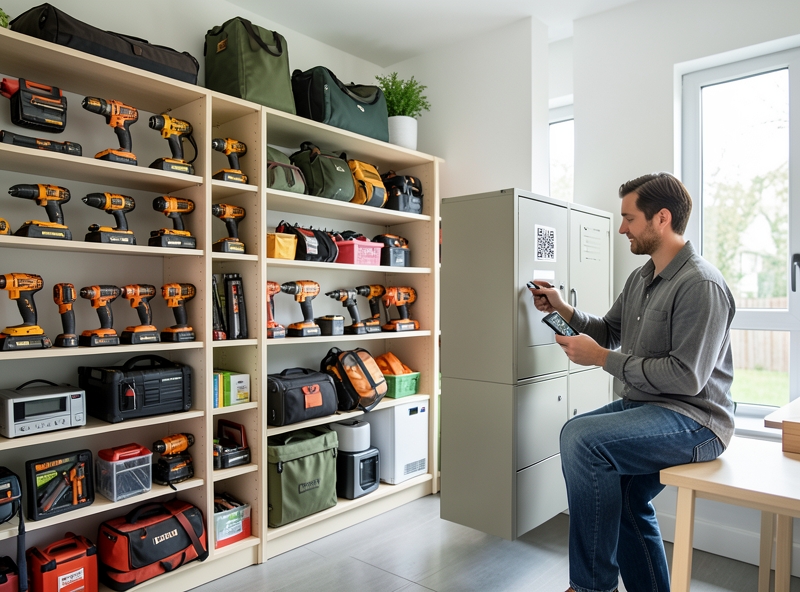
- New purchases from the collective fund: The management board allocates a portion of the utility budget or sustainable development fund to purchase specialized, highly durable, industrial-grade equipment (such as industrial vacuum cleaners, garden pressure washers, aluminum A-frame ladders) to optimize product life cycles.
Step 2: Digitized Booking, Check-out, and Check-in Process (The Workflow)
Convenience determines success. The entire operating process is optimized through the internal residential mobile application or the community's digital portal to completely eliminate complex administrative procedural barriers.
| Stage | System Process | Processing Time |
|---|---|---|
| 1. Booking | Residents access the app, check real-time equipment availability, select a time slot, and confirm the reservation. | Under 1 minute |
| 2. Check-out | Go to the library's Smart Locker area and scan the QR code provided on the app to open the locker containing the device. | 30 seconds |
| 3. Check-in | Place the device back in the locker, take a photo to confirm its working condition, and report on the app to end the borrowing session. | 2 minutes |
"Sustainability does not lie in empty slogans; it lies in establishing a smart system that makes sharing easier and more convenient than owning."
Step 3: Liability Rules and Standard Borrowing Duration
To maintain fairness and protect collective assets, a clear set of rules (Terms of Service) is automatically applied through the system:
- Maximum borrowing limit: Typically ranges from 24 to 72 hours depending on the type of equipment, ensuring continuous rotation of assets and preventing the hoarding of items in private homes.
- Maintenance responsibility: Borrowers are obligated to basic-clean the equipment after use. The system applies the "before and after photos" rule. Any damage arising from misuse of technical instructions will be handled by direct deduction from the user's deposit account.
- Late penalty mechanism: The system automatically triggers progressive hourly late fees for overdue returns without a valid reason or prior extension on the app.
Step 4: Regular Maintenance Contribution Mechanism (The Maintenance Fund)
Equipment cannot maintain its durability on its own without the hands of technicians. To operate sustainably, the library applies a financial model of "Small Contribution - Great Value". Each registered household pays a very small periodic monthly membership fee (or per-use deduction).
100% of this budget is used for: purchasing equipment insurance, hiring technicians for monthly periodic inspections, replacing natural wear-and-tear components (such as saw blades, dust filters, rechargeable batteries), and deep disinfection cleaning. This transparent financial mechanism ensures that every piece of equipment is always in perfect working condition and absolutely safe when it reaches the next resident.
3. Dual Benefits: Economic, Environmental, and Social Connection
Are you paying an expensive price for every square meter of housing just to store items you only touch once a year? Drills, aluminum ladders, repair toolkits, or bulky camping tents are silently "eating away" at your living space and your wallet. A modern green lifestyle is no longer about empty slogans about saving the Earth, but a pragmatic financial calculation that helps free up living space and reshape community bonds that are gradually cooling down in urban areas.
| Comparison Metric | Traditional Consumption Model | Green & Sharing Living Model |
|---|---|---|
| Cost of Ownership | Buying entirely new, bearing 100% of depreciation and maintenance costs. | Save up to 70% thanks to renting, borrowing, or sharing models. |
| Storage Space | Wastes space for rarely used items, causing clutter. | Optimizes space, keeping the home airy and minimalist. |
| Environmental Impact | Continuous carbon emissions from the manufacturing and disposal of old items. | Minimizes consumer waste and extends product lifecycles. |
By shifting from an ownership mindset to an experience and sharing mindset, each individual not only saves a significant budget but also directly reduces pressure on landfills. Limiting the purchase of single-use or low-frequency items helps cut down on plastic waste and non-biodegradable packaging, while significantly reducing the personal carbon footprint accumulated over the years.

The greatest value of this trend lies in rebuilding social relationships. In modern residential areas, where isolation is becoming an invisible disease, green initiatives act as a powerful catalyst:
- Library of Things: A place where residents can lend and borrow gardening tools, repair gear, or camping equipment, creating natural opportunities for interaction.
- Rooftop Community Garden: A self-cultivated green space that helps children understand the origin of food, while serving as a place for elders to share gardening experience, bridging the generation gap.
- Recycling and Second-Hand Exchange Fairs: Turning one person's "surplus" items into another's "treasures," sparking a spirit of mutual support and solidarity.
"Green living is not a sacrifice or a lack of convenience. It is the art of eliminating the superfluous to make room for financial freedom, peace of mind, and the most genuine human connections."
When each apartment reduces an unnecessary item, the entire apartment complex will have more space to breathe. When a group of residents sort waste at the source together or maintain a shared green space, they are not only protecting the environment but are also building a sustainable, humane ecosystem together—where prosperity is measured by the quality of life and neighborly bonds, not by the amount of possessions owned.
4. Common Barriers and Solutions for Maintaining Sustainable Models
Initial excitement is easy, but maintaining a green living model long-term is the real battle. Many green community projects, from self-managed urban gardens and neighborhood recycling stations to shared solar power systems, have quickly died out after just a few months of bustling operation. Starting with goodwill, but failing due to a lack of operational mechanisms.
To turn green living from a temporary movement into a resilient, self-operating ecosystem, we need to frankly look at the practical loopholes and apply the smart governance solutions below.
Three "Achilles' Heels" That Extinguish Green Initiatives
Why do sustainable models often run out of steam? The answer lies in the following three core barriers:
- The "tragedy of the commons" mentality: Low awareness of preserving shared property is the biggest barrier. When an item is collectively owned, the general tendency is to maximize personal utility while remaining indifferent to maintenance and cleaning.
- The plague of "ownerless" damage: Composting machines get jammed, central water filtration systems malfunction, shared gardening tools break... all happening "for unknown reasons." The lack of transparency in usage history quickly depletes maintenance budgets.
- Human resource burnout: Initial models usually rely entirely on the enthusiasm of a few core individuals. Lacking direct and dedicated management personnel, these pioneers quickly become overwhelmed and give up.
"Green living is not a fixed destination; it is a system that requires continuous maintenance. Without a management mechanism, every sustainable model will degenerate into new-generation waste."
Comparison Table: Shifting Mindsets in Sustainable Model Governance
| Arising Issues | Old Management Mindset (Prone to Failure) | Breakthrough Solutions (Sustainable) |
|---|---|---|
| Shared Equipment Damage | Calling for voluntary contributions to repair, assigning blame. | Digitalized Management: Scan QR codes to report incidents instantly, tracking maintenance history with software. |
| Poor Community Awareness | Posting ban signs, sending generic reminders on chat groups. | Establish a Code of Conduct: Clearly defining rights along with legal/financial responsibilities. |
| Lack of Operational Staff | Relying entirely on the self-discipline of single individuals. | Establish a Volunteer Management Board: Allocating clear roles, with a rotation mechanism and recognition of contributions. |
The Trio of Lifeline Solutions to Maintain Sustainable Models
To thoroughly resolve the above barriers, modern communities need to simultaneously apply a highly practical trio of solutions:
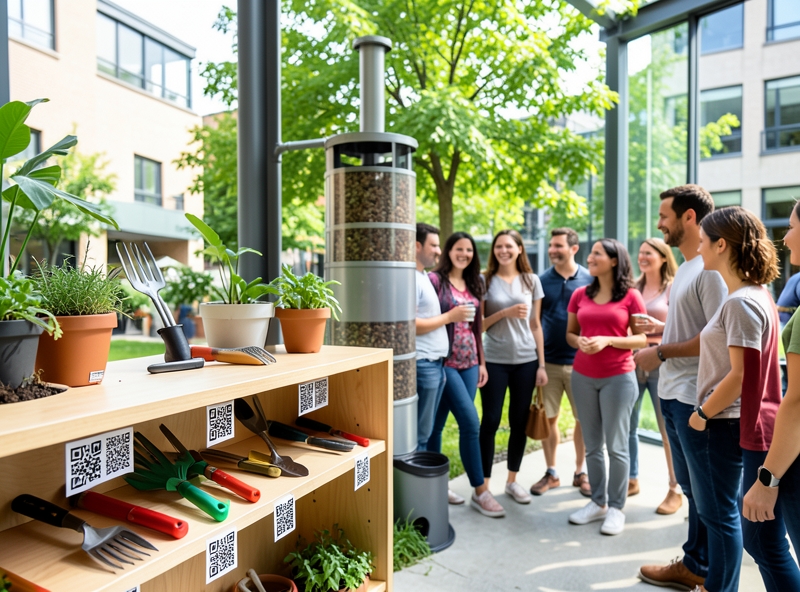
1. Apply digital technology to operations management: Simplify all processes with technology. Each shared device (such as waste shredders, water purifiers, shared bicycles) should have an identifying QR code. When using them, users only need to scan the code to register and report the equipment status. This creates absolute transparency, completely eliminating unexplained damage.
2. Establish a clear Code of Conduct with sanctions: Kindness needs to be shaped by a framework. Draft a brief set of rules, visualize them with images, and post them in common areas. This code needs to clearly specify: Who can use it, how to use it correctly, and specific steps to take when an incident occurs. Transparency of responsibility helps eliminate gray areas in behavior.
3. Establish a voluntary management board with a rotation mechanism: Do not place the burden on the shoulders of just a few people. Set up a management board consisting of volunteer neighborhood members, dividing tasks according to strengths (finance, engineering, internal communications). In particular, apply a rotation mechanism (e.g., every 3 or 6 months) to refresh energy, avoid burnout, and provide opportunities for all community members to experience ownership roles.
5. Conclusion
An electric drill has an average lifespan of decades, but its actual operating time throughout its entire life cycle is only 13 minutes. This paradox exists in millions of urban households: we are wasting money to own items when what we actually need is just their short-term utility. The Library of Things emerges not only as a lifesaver for our wallets, but also as a core link to reshaping a green lifestyle in modern cities.
This model shifts the mindset from "personal ownership" to "shared access," directly addressing the challenge of optimizing living space and reducing consumer waste. When an item is rotated to maximize its usage efficiency, the amount of carbon emitted during the production, packaging, and transportation of new products decreases exponentially.
| Comparison Indicator | Traditional Consumption Model | Shared Library of Things Model |
|---|---|---|
| Investment Cost | Very high (Buying brand new equipment that is rarely used) | Almost zero (Only paying a tiny maintenance fee) |
| Storage Space | Takes up space in closets, balconies, and family storage rooms | Frees up living space, keeping the home spacious and airy |
| Community Interaction | Isolated, with everyone living independently behind closed doors | Connected, increasing trust among members |
| Environmental Impact | Increases the pressure of electronic and plastic waste on landfills | Extends product life cycles, promoting a circular economy |
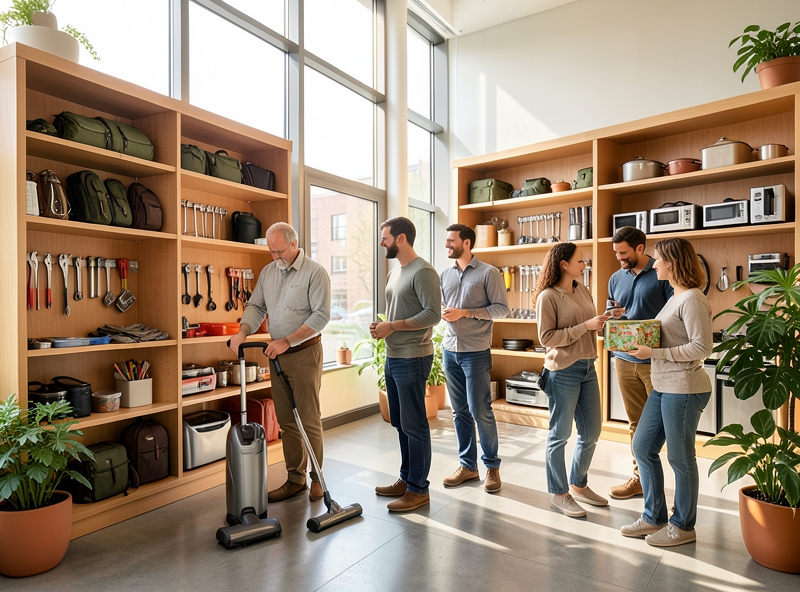
However, a library of things cannot run itself on empty slogans. The vitality of this model depends entirely on the symbiotic relationship between the Management Board and the Residents. The Management Board plays a creative role: establishing transparent borrowing and returning regulations, digitizing the management process with an internal application, and arranging scientific storage spaces. Conversely, the Residents are the lifeblood nurturing the model through their awareness of preserving shared property and their willingness to share their family's idle equipment.
"Sustainability does not come from a few individuals practicing a green lifestyle perfectly. It is created when millions of people perform small actions consciously together."
Scaling up libraries of things in residential areas is no longer a trendy experiment, but a strategic step to building solid circular cities. When the consensus of residents meets professional management capacity, we are not just sharing tools; we are sharing responsibility for a lower-carbon and more sustainable future for generations to come.