1. What is the 1/3 rule and why is it the 'key' to beauty?
Hey there, have you ever stood in front of the mirror, wearing expensive brand-name items but still felt something was "off," like you looked shorter or your body seemed boxy? Often, it's not because the clothes are bad, but because we are unintentionally breaking visual balance. In painting, photography, and even fashion, there is an underlying "code" for creating attraction: the 1/3 rule of proportion.
To put it simply, instead of dividing the body into two equal halves (a 1:1 ratio) with a cut line right at the middle of the belly, we divide the overall outfit into three parts. You choose either 1/3 or 2/3 of that length to place an accent point (usually the belt or the hem of the shirt). This is the closest variation of the "Golden Ratio" that Renaissance masters used to create immortal masterpieces.
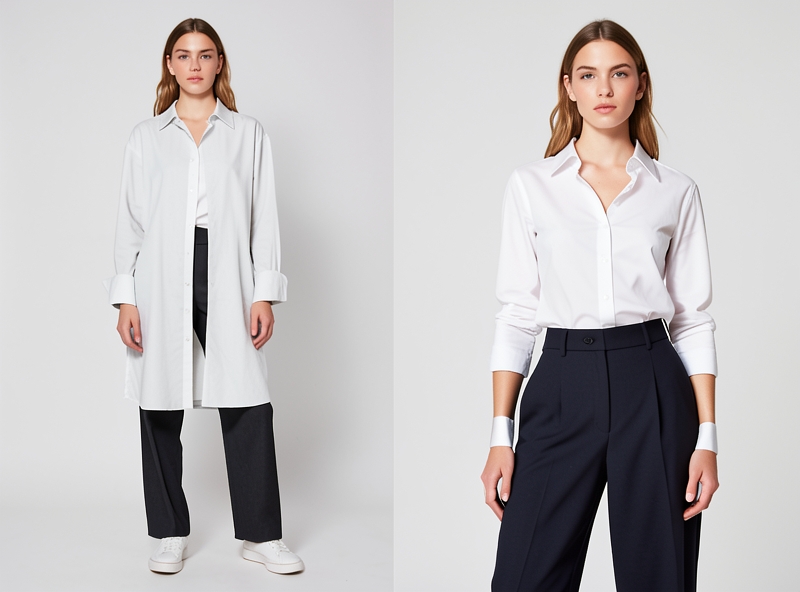
Why does the human eye "fall in love" with this asymmetry instead of a neat halfway line? Imagine a tree or a flower—nature never divides things perfectly. A 1:1 ratio creates a sense of stillness to the point of being dull, causing the viewer's gaze to get "blocked" right at the middle of the body, making you look shorter and wider. Conversely, the 1/3 ratio creates visual movement.
"Beauty does not lie in symmetrical perfection, but in how you trick the eye to create harmony."
In body shaping, this rule acts like a "magic wand" that helps correct natural flaws:
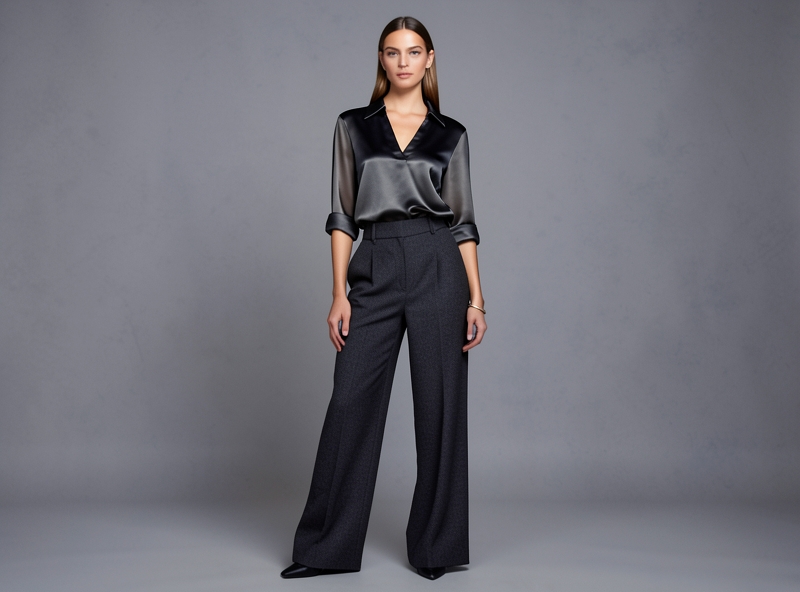
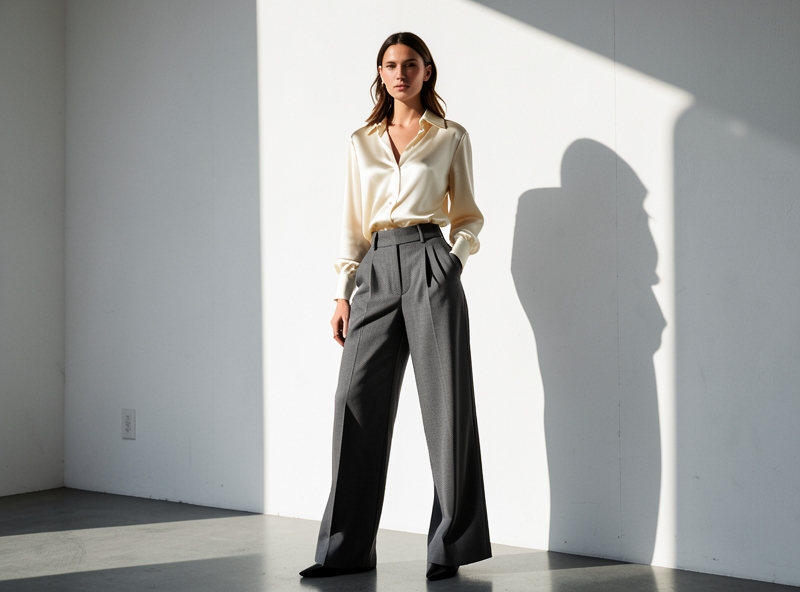
- Lengthening the legs: When you wear high-waisted pants (occupying 2/3 of the body length) and a short top (occupying 1/3), your legs seem to start right from under the bust.
- Defining the waist: The 1/3 dividing point often falls exactly at the smallest part of the torso, helping to highlight curves naturally without trying too hard.
- Creating elegance: Instead of a static rectangular block, this ratio breaks down the color patches on the outfit, making the overall look more dynamic and stylish.
Trust me, just by changing the habit of letting your shirt hang loose to doing a tuck-in or using a belt in the right place, you will see the "magic" happen immediately. It's not just clothes; it's the art of arrangement on your own body.
2. How it Works: Why the 1/3 Ratio Effectively "Hacks" Your Height?
In reality, the human eye is not a digital tape measure with absolute precision. When observing an outfit, our brain tends to scan from top to bottom and automatically looks for "break points" to determine body proportions. If you divide the body into two equal parts (a 1:1 ratio), the visual flow stops right in the middle, unintentionally emphasizing width and making the overall silhouette look significantly shorter. This is exactly why many people who aren't actually short still look "dwarfed" by their clothes.
The mechanism of the 1/3 ratio (also known as the rule of thirds in art and architecture) works by deceiving the eye regarding the position of the waist. When the upper body only occupies 1/3 of the total body length, the "horizon line" (waistline) is pushed much higher than it actually is. At this point, the brain defaults to the assumption that your legs begin at that high waist point, creating a highly convincing illusion of incredibly long legs.
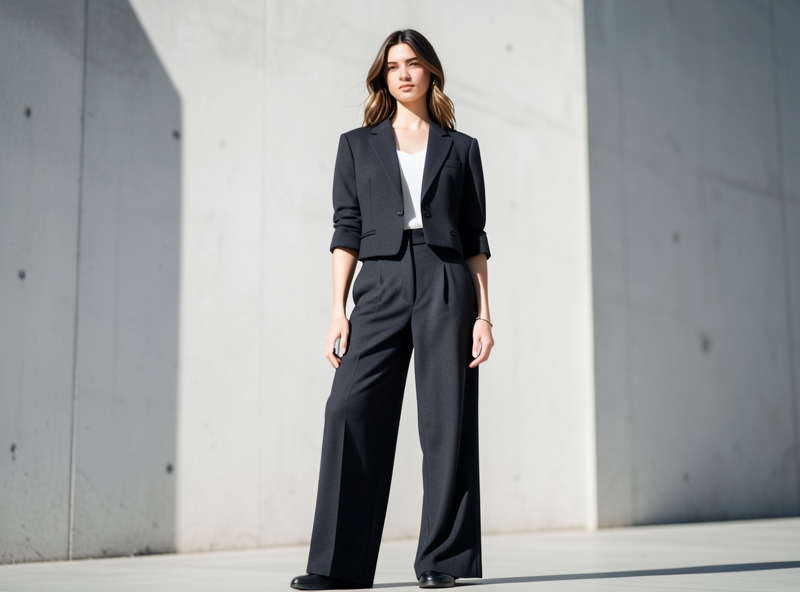
"In fashion, proportion is more important than actual measurements. You don't need to be 5'7" to look like a model; you just need to master the placement of the waistline to manipulate the observer's gaze."
Shortening the upper body doesn't just focus on the legs; it also provides a dual effect for the back. When the upper area is reduced, the back and shoulders look slimmer, avoiding a bulky feel. Let's look at the comparison table below to see the "magic" of proper proportioning:
| Proportion Division | Visual Effect | Perception of Stature |
|---|---|---|
| 1/1 (Balanced) | The body is split in half, the gaze is blocked in the middle. | The silhouette looks wider, feeling shorter than reality. |
| 1/3 (Golden) | Creates a continuous vertical line. | Legs look longer, back looks slimmer, highly stylish visual. |
To implement this mechanism most smoothly in daily outfits, we Gen Z usually prioritize "hero" items like high-waisted pants or high-waisted skirts paired with crop tops. These scientific highlights include:
- Blurring the real boundaries: Hiding the actual position of the hips helps you gain full control over how others "locate" your height.
- Optimizing the vertical line: The lower part occupying 2/3 of the area creates a seamless block of color or shape, allowing the eye to glide quickly from top to bottom without being obstructed by excessive details.
- Balancing the focal point: Reducing the upper body area makes the shoulders and chest look slender, giving the full "spotlight" to the legs.
It is this calculated asymmetry that creates a high-fashion look, providing an elite "height hack" while showcasing the wearer's sophisticated aesthetic without the need for towering high heels.
3. Classic Outfit Coordination Following the Golden 1/3 Ratio
Have you ever wondered why, with the same outfit, someone else looks "extra long" while you look a few inches shorter? The secret doesn't lie in actual height, but in how you divide your body proportions. The golden 1/3 ratio (also known as the rule of thirds) is the "key" to making legs look longer by dividing the outfit according to the standard: 1 part upper body and 2 parts lower body.
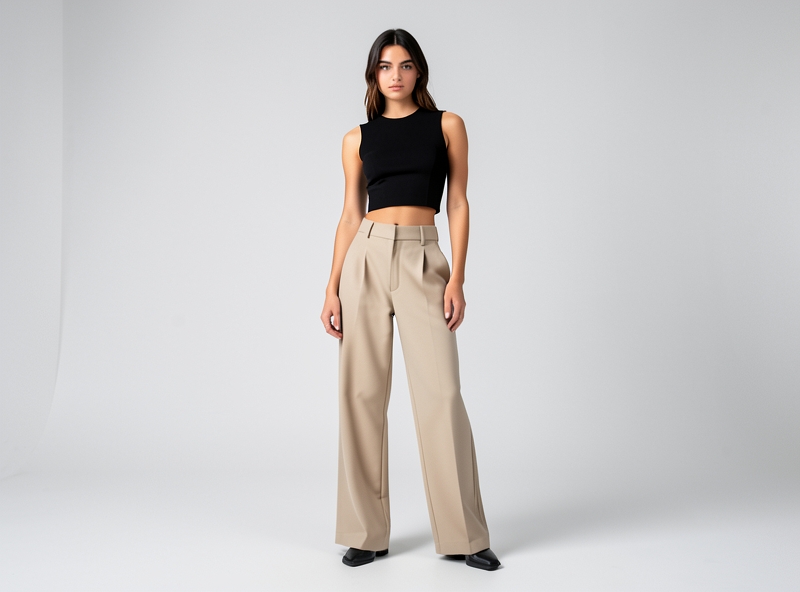
Topping the "body-hacking" charts for Gen Z is undoubtedly the combo of crop tops paired with high-waisted pants. This is the simplest way to redefine the waistline. When the hem of the shirt ends right above the navel and begins with a pair of wide-leg pants or a high-waisted skirt, the onlooker's vision will be "tricked" into thinking your legs start from a higher position than they actually do. This is the "undefeated" formula for perfect OOTD (Outfit Of The Day) photos on Instagram.
If you happen to stumble upon an oversized t-shirt or a loose-fitting shirt, the tuck-in technique will be a great lifesaver. Instead of letting the shirt hang loose creating a 1:1 ratio (making the torso long and legs short), try a full tuck or a "French tuck" (only tucking the front flap). To add an extra highlight and fix this 1/3 ratio, a thin or medium-sized leather belt will act as a perfect boundary line, helping the overall outfit look much neater and more stylish.
"In fashion, balance does not come from body measurements, but from how you coordinate the blocks and segments on your clothing."
Choosing the length for skirts and outerwear also needs to strictly follow this rule to maintain aesthetics:
- Skirts: Prioritize mini skirts (well above the knee) or maxi skirts (all the way down to the ankles). Avoid midi lengths that end right at the calf because they will split your legs in half, breaking the 1/3 ratio.
- Outerwear: When wearing long Blazers or Trench coats, the trick is to leave the coat open. The inner set must still be styled according to the high-waist + tuck-in formula so that no matter how long the coat is, your "2/3 leg ratio" is still clearly visible.
- Dresses: Choose designs with an Empire waist or use a belt to create your own 1/3 waist point.
By mastering the 1/3 rule, you not only dress well but also master your body structure through the language of fashion. You don't need expensive items; with just a bit of subtlety in arranging lengths, your appearance will become more graceful and stylish than ever.
4. Common Mistakes That Break Visual Balance
Don't be quick to believe those shimmering magazine photos or the sweet talk from salespeople claiming that "this style looks good on everyone." The reality is much harsher: most of us are turning ourselves into clunky "moving blocks" simply due to a lack of basic knowledge in visual mathematics. Fashion isn't just about fabric; it's a game of proportions, and here are the fastest ways to undermine your own appearance.
The most classic mistake is the obsession with "hiding the belly" using shirts that are too long and left untucked. Many people mistakenly believe that a hem covering the buttocks will help conceal a less-than-toned midsection, but the result is a disastrous shortening of the legs. When the shirt length is nearly equal to the visible pant length, you are forcing yourself into a 1:1 ratio—a visual catastrophe that makes the body look split in half and twice as heavy.
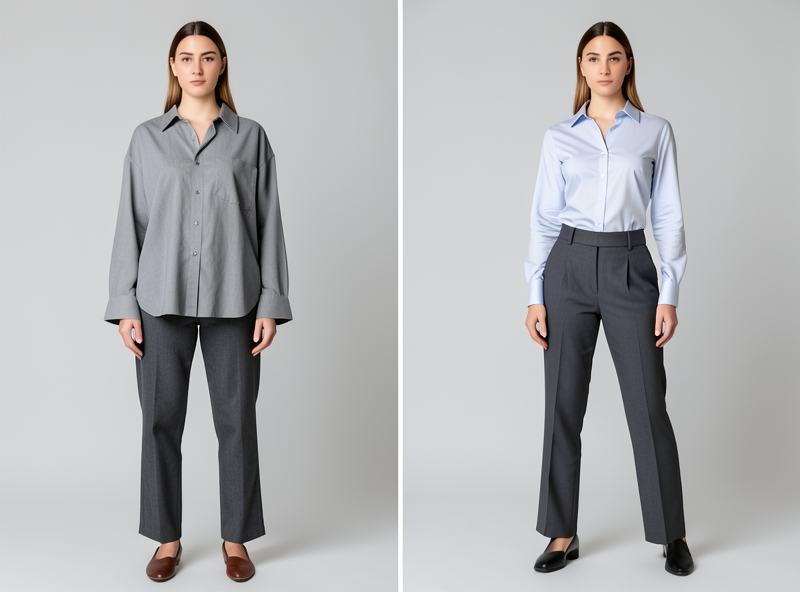
Next is the blind rise of nostalgic trends like low-rise pants. Unless you possess the long legs of an international supermodel, low-rise pants combined with a wide belt right at the hips are a "death sentence" for your physique. This accessory unintentionally creates a fatal horizontal line, dividing the body into two exactly equal parts. In design, 1/2 symmetry often creates a sense of stillness, but in fashion, it causes a feeling of confinement, making observers feel as though the wearer is at least 5 to 7 centimeters shorter.
"Don't blame your height when you are the one choosing to split your body in half with meaningless horizontal cuts."
| Common Mistake | Visual Consequence | Practical Advice |
|---|---|---|
| Shirt too long, untucked | Lowers the center of gravity, shortens legs. | Tuck it in or choose a cropped top. |
| Low-rise pants + Wide belt | Splits the body, creating a heavy feel. | Prioritize high waists to elongate the vertical axis. |
| Shoes contrasting in color with pants | Interrupts the visual flow at the ankle. | Choose shoes in the same tone as the pants/skirt. |
The consequences of choosing the wrong proportions don't stop at looking "less elegant." It also creates an illusion of weight. An outfit without an emphasis at the waist or with too many cluttered details breaking up the body will make you look "thicker" than you actually are. Those with an aesthetic and demanding eye will immediately recognize the sloppiness behind the "free style" label.
Looking at it fairly, no body is imperfect; there are only clothing choices that lack calculation. To achieve balance, stop chasing trends and start learning how to direct the observer's gaze along continuous vertical axes instead of harmful horizontal cuts.
5. Summary
Understanding and applying the 1/3 rule is not merely about following rigid styling formulas, but about how we establish a natural balance for the physique. In the philosophy of minimalist living, the most beautiful outfit is one that honors the wearer's essence without the need for ostentation or excessive accessories. By dividing body proportions reasonably, you will realize that with just the basic items already in your wardrobe, we can completely create a polished, elegant, and timeless look.
"Ultimate sophistication often lies in the most harmonious proportions, where each item fulfills its function and respects the natural structure of the body."
The core benefit this rule brings is the ability to optimize your wardrobe, helping you avoid the trap of wasteful shopping. When you master the mindset of proportions, you will focus on quality and fit instead of quantity. Confidence will come from the comfort of knowing you are wearing it right and looking good while maintaining peace of mind, without being swept away by superficial trends.

| Value Provided | Impact on Style | Consumer Benefits |
|---|---|---|
| Visual Balance | Creates the illusion of longer legs and a naturally slim physique. | Reduces the need to purchase complex body-correcting items. |
| Versatility | Easily adaptable with various types of outfits from office wear to street style. | Maximizes the utility of basic items. |
| Confidence | Eliminates concerns about physical imperfections through smart proportion distribution. | Focuses on the core value of inner confidence. |
Consider the 1/3 rule as a silent companion, a powerful yet incredibly simple secret. You don't necessarily have to follow it mechanically in every situation. Instead, experiment and adjust flexibly based on personal preference and your body's unique characteristics. When clothing serves its true purpose and brings peace of mind, that is when you reach the threshold of a smart and sustainable fashion lifestyle.
- Prioritize Materials: Choose natural fabrics so the silhouette holds firm according to the 1/3 ratio.
- Listen to Yourself: Comfort is always the top priority above all rules.
- Invest Smartly: Only own what is truly necessary and can be combined diversely according to the golden ratio.