
1. Overview of Procrastination: When Laziness is Just a Mask
You sit in front of the computer screen, the clock hands ticking closer to the deadline, but your fingers still unconsciously scroll through social media feeds. Guilt wells up, your chest tightens, yet you still cannot bring yourself to start working. This familiar scenario repeats day after day, turning life into a series of endless anxiety cycles. Most of us label ourselves as "lazy" or "terrible at time management" and turn to task management apps or the Pomodoro technique as a lifeline. But the result remains a round zero.
The truth is: Procrastination is not a time management problem, and it is certainly not laziness. Laziness is a state of apathy, of not wanting to do anything and being completely comfortable with that. On the contrary, procrastination is accompanied by intense mental torment, stress, and exhaustion. Procrastination is actually a failed defense mechanism of the brain against negative emotions.
| Distinguishing Characteristics | Laziness | Procrastination |
|---|---|---|
| Emotional State | Relaxed, anxiety-free, accepting of inaction. | Stressed, guilty, tormented, and extremely insecure. |
| Psychological Mechanism | Lack of motivation or energy to start. | Avoiding negative emotions (fear, overwhelm, self-doubt). |
| Core Solution | Activate energy, find meaningful goals. | Acknowledge and soothe short-term emotions before acting. |
From the perspective of behavioral psychology, procrastination is a failure in short-term emotional regulation. When facing a difficult, vague, or decisive task, our brain automatically associates that task with negative emotions such as: fear of failure, fear of judgment, or a sense of helplessness due to information overload. To protect you from this immediate discomfort, the limbic system (the primitive part of the brain responsible for survival responses) triggers the "fight or flight" reflex, prompting you to seek more pleasant stimuli for an instant dopamine release.
"We do not procrastinate to avoid work, but to avoid the unpleasant feelings that work arouses in us."

Every time you procrastinate by scrolling on your phone or cleaning your desk instead of writing that important report, the brain receives a short-term relief reward. The stress drops in an instant. It is this biofeedback mechanism that inadvertently reinforces the habit of procrastination, turning it into a conditioned reflex. You get trapped in a toxic loop: feeling overwhelmed -> avoiding to find temporary relief -> feeling guilty for neglecting work -> stress levels rising -> continuing to avoid at a more severe level.
To break the mask called "laziness", we need to shift our perspective from trying to control every single minute on our calendar to understanding and regulating our emotional state before acting. That is the foundational first step in the journey of deep and sustainable personal growth.
2. The Emotional Mechanism Behind Procrastination: The Battle Inside the Brain
You stand before an important project, the deadline is looming, but your fingers still unconsciously scroll through social media or tidy up an already organized desk. This is not laziness or a moral failing. In reality, you are the victim of a brutal biological war taking place right inside your skull: a head-on collision between short-term rationality and ancient survival instincts.
To permanently break this damaging loop, you need to clearly understand the two "opponents" directly controlling your behavior:
| Comparison Characteristics | Limbic System - "The Troublemaker" | Prefrontal Cortex - "The Planner" |
|---|---|---|
| Evolutionary Origin | Very ancient, highly developed since prehistoric times to help humans survive immediate threats. | The latest part of the brain to evolve, characteristic of human intelligence. |
| Operating Mechanism | Automatic, rapid, seeking instant gratification and avoiding all pain and stress immediately. | Slow, energy-intensive, responsible for logical thinking, long-term planning, and impulse control. |
| Reaction to Pressure | Signals "fight or flight", viewing work pressure as a life-or-death threat. | Tries to analyze the steps to take, calculating future benefits to drive action. |
When faced with a difficult task, your prefrontal cortex knows you need to work to achieve long-term goals. However, the limbic system immediately resists. It perceives the stress from that work as a "threat" and forces you to escape by choosing actions that provide instant dopamine, such as browsing your phone, playing games, or eating. The limbic system always wins in the short term because it operates automatically and faster.
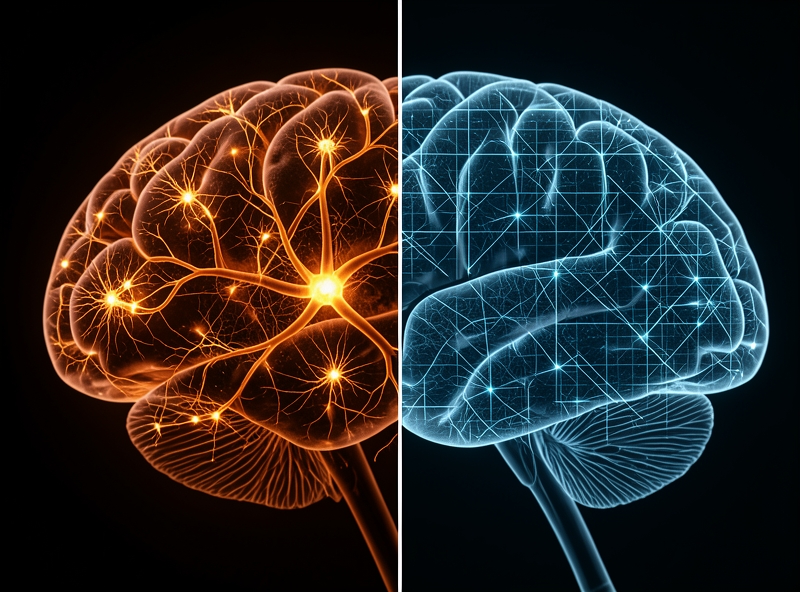
"Procrastination is not a time management problem, but a coping mechanism to deal with negative emotions associated with work."
Underneath the surface of procrastination are core emotional triggers that your limbic system is trying to protect you from:
- Fear of failure: When self-esteem is tied to performance outcomes, you would rather procrastinate to have an excuse to blame ("I failed because I didn't have enough time") than face the reality that your capacity has limits.
- Extreme perfectionism: Unrealistic standards create heavy pressure. The fear of not being able to produce a "perfect" product paralyzes you and prevents you from making the first strokes.
- Vague anxiety: When a task lacks a clear process, the brain automatically exaggerates the difficulty, transforming ambiguity into a direct sense of threat, causing you to repeatedly procrastinate to maintain a false sense of security.
- Task Aversion: A lack of personal meaning in work prevents the brain from finding any future reward, leading to a rejection of action.
To break this mechanism, the key does not lie in forcing yourself to be more disciplined through sheer willpower — which is easily depleted. Instead, you must learn to soothe the limbic system by breaking goals down to a ridiculously small level (eliminating the feeling of being threatened) and proactively facing negative emotions instead of trying to run away.
3. The Silent Psychological Consequences of Chronic Procrastination
You turn off your alarm for the third time, promising yourself you will start writing your business plan in fifteen minutes, but then find yourself mindlessly scrolling through social media as the clock strikes midnight. Procrastination is not simply a matter of poor time management. It is a failed coping strategy in the face of negative emotions like anxiety, fear of failure, and self-doubt.
When you choose to avoid work, your brain receives an immediate reward: short-term stress relief. However, the price you pay for this temporary compromise is an invisible yet brutal self-defeating loop that destroys your psychological framework.

This vicious cycle operates in a closed trajectory, self-nourishing and growing larger if not intervened in timely:
- Stressor Activation: A difficult task arises, triggering feelings of insecurity or fear of being judged.
- Immediate Avoidance (Procrastination): You choose to do something easier to find temporary comfort, tricking your brain into thinking you are safe.
- The Rise of Guilt: As time passes, the awareness of neglecting the task returns, accompanied by torment and self-reproach.
- Erosion of Self-Esteem: You begin to label yourself as a "failure", "lazy", or "useless", eroding belief in your personal self-efficacy.
- Reinforced Avoidance: With deeply damaged self-esteem, you feel even less capable of completing work, leading to continued procrastination in subsequent instances to escape that feeling of helplessness.
"Procrastination is essentially a faulty emotion regulation mechanism, where we prioritize short-term comfort over our own long-term benefits."
Modern psychological research has proven that the damage of this habit goes far beyond missing deadlines. Dr. Fuschia Sirois from the University of Sheffield has pointed out a direct link between chronic procrastination and serious health issues. When the body is constantly in a state of stress due to accumulated guilt, cortisol (stress hormone) levels rise continuously, weakening the immune system and increasing the risk of cardiovascular diseases.
| Affected Aspect | Short-term Manifestation | Long-term Psychological Consequence (Chronic) |
|---|---|---|
| Mental Health | Mild anxiety, restlessness before deadlines. | Generalized anxiety disorder, clinical depression, mental burnout. |
| Self-Esteem | Feeling slightly frustrated for not working productively today. | Shaping a distorted belief that one is incompetent, completely losing self-confidence. |
| Physical Health | Localized insomnia, mild headaches from staying up late to catch up on progress. | Chronic nervous strain, weakened immune system, cardiovascular and digestive diseases. |
To break this dangerous loop in your personal development journey, the first step is not to force yourself to work harder with brutal, iron discipline. Instead, you need to learn to accept and process the negative emotions that accompany work. Only when you stop judging yourself and start treating yourself with kindness when facing failure can the psychological knot of procrastination truly be untied.
4. Psychological Techniques to Take Immediate Action
Have you ever procrastinated on an important project, only to spend the whole day beating yourself up, yet the next day the same scenario repeats? This vicious cycle does not stem from laziness or a lack of willpower. Behavioral science has proven: Procrastination is actually a maladaptive coping mechanism for negative emotions such as anxiety, fear of failure, or overwhelming pressure. To break this invisible chain, you don't need more iron discipline; you need the following smart psychological intervention tools.
The "Self-Compassion" Technique: Breaking the Chains of Guilt
Many people believe that self-punishment and harsh self-criticism upon failure are ways to motivate themselves to move forward. The reality is quite the opposite. Guilt and shame are the very catalysts that make you continue to avoid work. When you torment yourself for wasting an entire morning, your brain enters a state of intense stress. To escape that stress, it chooses to... continue procrastinating.
The Self-Compassion technique requires you to take three steps to break this state:
- Accept reality without judgment: Acknowledge that you have procrastinated without labeling yourself as a failure.
- Normalize mistakes: Understand that losing focus or procrastinating is a human experience that everyone goes through.
- Kind self-talk: Instead of saying "I'm so useless," tell yourself: "I didn't optimize my time this morning. It's okay, now I will start over with 10 minutes of focused work."
"Self-forgiveness releases mental energy trapped in the past, directing all brain resources toward action in the present."
The 5-Second Rule and The 2-Minute Rule: Tricking Your Brain to Cross the Starting Line
The hardest part of any job is always starting. Our brains are wired to protect the body from things that consume energy or cause discomfort. If you hesitate for even more than a few seconds, your brain will conjure up hundreds of reasons for you to back out.
To overcome this obstacle, apply this golden rule duo:
| Technique | How It Works | Practical Application |
|---|---|---|
| The 5-Second Rule (Mel Robbins) | Count down 5 - 4 - 3 - 2 - 1 - Action to interrupt the prefrontal cortex's procrastination thoughts, forcing the body to move before fear can intervene. | When the alarm rings or when you are about to pick up your phone, count down and get up immediately. |
| The 2-Minute Rule (David Allen) | If an action takes less than 2 minutes, do it now. Or if the task is too big, commit to doing it for just 2 minutes and stop if you want to. | Open the document and write the very first sentence, or put on your running shoes. 90% of the time, you will keep going once you've started. |

Cognitive Reframing: Shifting from "Have to" to "Choose to"
The words you use directly shape your brain's attitude toward work. When you tell yourself: "I have to finish this report", or "I have to go to the gym", you are unconsciously placing yourself in the position of a forced victim. Coercion automatically triggers resistance and a subconscious desire to rebel (manifested by procrastination).
The Cognitive Reframing technique helps you regain control by changing your language structure:
- Instead of "I have to...", shift to "I choose to..." or "I want to...".
- Example: Instead of saying "I have to write this ad copy," say: "I choose to write this ad copy because I want to increase sales and prove my capability."
This linguistic shift transforms a stressful task into an active decision. You are no longer a victim of circumstance; you are the master of your own behavior.
Chunking Goals to Reduce Psychological Pressure
The biggest reason you stare at your computer screen unable to type a single word is because the goal is too massive. Writing a book, building a business plan, or losing 10kg are all goals that trigger the brain's defense mechanism because they are overwhelming.
Apply the Chunking technique to reduce goals to the absolute minimum (Micro-steps):
- Don't write "Create a marketing plan." Break it down into: "Write 3 sample headlines for the new campaign."
- Don't write "Clean the whole house." Break it down into: "Clear off the desk."
When the goal becomes extremely small and easy, the psychological barrier collapses. Every time you complete a micro-step, your brain releases Dopamine - the reward and satisfaction hormone. This very surge of Dopamine will create massive psychological momentum, naturally driving you to take the next small step.
5. Conclusion
How many notebooks have you bought, how many time management apps have you downloaded, only to watch them gather dust? The harsh truth is: procrastination has never been a time management problem, but a failure in emotional regulation. When you procrastinate, your brain isn't avoiding the task—it's avoiding the negative emotions like anxiety, fear of failure, or boredom that the task brings.

Imagine your rational mind is the rider, and your emotions are a six-ton elephant. When the elephant is terrified of a project that is too big, even the most detailed schedule becomes meaningless. Overcoming procrastination requires you to soothe the emotional elephant, rather than using the whip of self-blame to force it to move.
| Criteria | Old Mindset (Time Management) | Breakthrough Mindset (Emotional Regulation) |
|---|---|---|
| Approach | Create a packed schedule, forcing yourself into iron discipline. | Identify fears, soothing psychological pressure before starting. |
| Reaction to Failure | Self-blame, torment, creating a new stress loop. | Practice self-compassion, accepting mistakes to move forward. |
| Long-term Result | Burnout and continuing to procrastinate even worse. | Build a natural, sustainable habit of action. |
The journey of Persönlichkeitsentwicklung (personal development) does not require you to become an emotionless machine. Instead, practice patience and apply practical psychological techniques every day:
- Practice Self-Compassion: Forgive yourself for previous procrastination. Psychological research shows that people who forgive themselves are less likely to procrastinate next time.
- The 5-Minute Rule: Commit to working for just 5 minutes. Once the initial psychological barrier is broken, the brain naturally wants to finish the task.
- Emotional Labeling: When you want to procrastinate, pause for 10 seconds and accurately name your emotion (For example: "I am afraid this article won't be perfect"). Naming it helps the prefrontal cortex regain control over the panicked emotional brain.
"Discipline is not self-punishment, but the ultimate commitment to protecting your own peace of mind."
Every time you choose to face emotional instability instead of escaping into social media, you are building a new neural pathway in your brain. Be patient with yourself. The habit of action is not formed overnight; it is the result of small but consistent choices every day.