1. The Concept of "Home Cold Chain" and Its Importance in Food Preservation
Every week, millions of families unwittingly throw hundreds of dollars into the trash due to a classic misconception: treating the refrigerator as a magical box that can pause time. You buy premium cuts of beef, vibrant green organic vegetables, stuff them into the fridge, and believe they are safe. But just a few days later, the vegetables wilt, the meat turns dark, and a slimy film appears. The root cause lies not in the initial quality of the food, but in the breakdown of the "Home Cold Chain".
In the food industry, the cold chain is a process of continuous, optimal temperature control from the factory and refrigerated trucks to supermarket shelves. The Home Cold Chain is the continuation of that professional standard right inside your kitchen space. It is not simply about putting food in the fridge, but a closed-loop, uninterrupted management of temperature and humidity from purchasing, transportation, sorting, freezing, and thawing until the food hits the cooking pan.
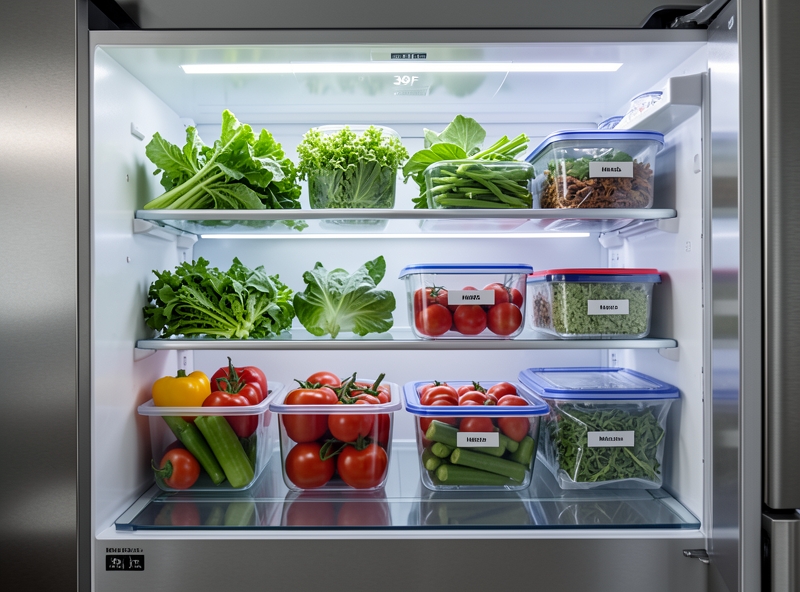
Current data shows that over 80% of households make critical mistakes in operating their internal cold chain, turning an expensive refrigerator into an "accelerator" for food spoilage:
- Thermal shock during transit: Leaving raw food at room temperature for more than 60 minutes after purchasing from the supermarket, allowing bacteria to double in count every 20 minutes.
- Overcrowding: Obstructs cold airflow, creating "thermal blind spots" where temperatures can rise to dangerous levels between 8°C and 12°C.
- Incorrect shelf placement: Storing milk on the refrigerator door (where temperature fluctuations are highest) or keeping raw meat on the top shelf, causing cross-contamination from dripping juices.
- Freezer Burn: Improper freezing breaks down cell structures and causes dehydration, rendering meat mushy and stripping away all nutrients during cooking.
"A single Salmonella bacterium can multiply into more than 16 million bacteria in just 8 hours at room temperature. A temperature interruption lasting even a few dozen minutes is enough to turn a nutritious meal into a health hazard."
Mastering and correctly establishing a home cold chain brings outstanding benefits, directly impacting your family's quality of life and finances:
| Comparison Criteria | Intuitive Preservation (No Cold Chain) | Applying Home Cold Chain |
|---|---|---|
| Freshness Duration for Produce | 3 - 5 days (Wilted, browned, degraded) | 14 - 21 days (Plump, retains crispness and sweetness) |
| Vitamin Retention Rate (C, B complex) | Decreases by 50% - 70% after 72 hours | Retains up to 90% of micronutrient content |
| Risk of Cross-Contamination | Very high (Bacteria thrive in uneven temperature zones) | Eliminated through microclimate zoning and humidity control |
| Food Budget Waste | 20% - 30% monthly loss due to spoilage | 100% optimization of ingredient utility |
The core key to the home cold chain lies in controlling two factors: precise temperature and relative humidity (RH). Each food group requires its own distinct "microclimate." Fresh meat and fish require a temperature range near the freezing point (-1°C to 0°C) to inhibit spoilage enzymes without rupturing cell walls. Meanwhile, green vegetables require high humidity (90% - 95%) at temperatures of 3°C - 5°C to prevent respiration and moisture loss.
Shifting your mindset from "stuffing food into the fridge" to "operating a home cold chain" is not just an upgrade in culinary skills. It is a protective shield for your family's digestive health, fully preserving the authentic flavor of premium ingredients, and a smart financial solution for modern consumers.
2. Setting standard temperatures for each refrigerator zone
You spend a fortune buying premium Wagyu beef or fresh organic vegetables, only for them to turn into a mushy, spoiled, or freezer-burned mess after just two days? Any heartbreaking kitchen scenario stems from a foolish mistake: blindly trusting the manufacturer's default temperature dial. A refrigerator is not a uniform cold box; it is a complex thermal ecosystem. Controlling every single degree Celsius is the boundary between a Michelin-quality dish and a food poisoning disaster.
| Zone | Standard Temperature | Preservation Mechanism & Suitable Foods |
|---|---|---|
| Freezer Compartment | -18°C to -15°C | Completely halts the growth of bacteria and microorganisms. Optimal for raw meat, seafood, ice cream, and long-term frozen storage. The -18°C benchmark ensures ice crystals form at their smallest size, preventing damage to meat cell structures. |
| Fridge Compartment | 1°C to 4°C | Inhibits bacterial multiplication without freezing food. Intended for cooked meals, milk, cheese, and meats for same-day consumption. Keeping the temperature below 4°C is the golden rule to avoid the "danger zone" (4°C - 60°C). |
| Crisper Drawer | 3°C to 5°C | Balances cold temperatures and high humidity (80-90%). Helps plant cells retain moisture, preventing leaf wilting or bitterness caused by "thermal shock." Ideal for leafy greens, root vegetables, and fresh fruits. |
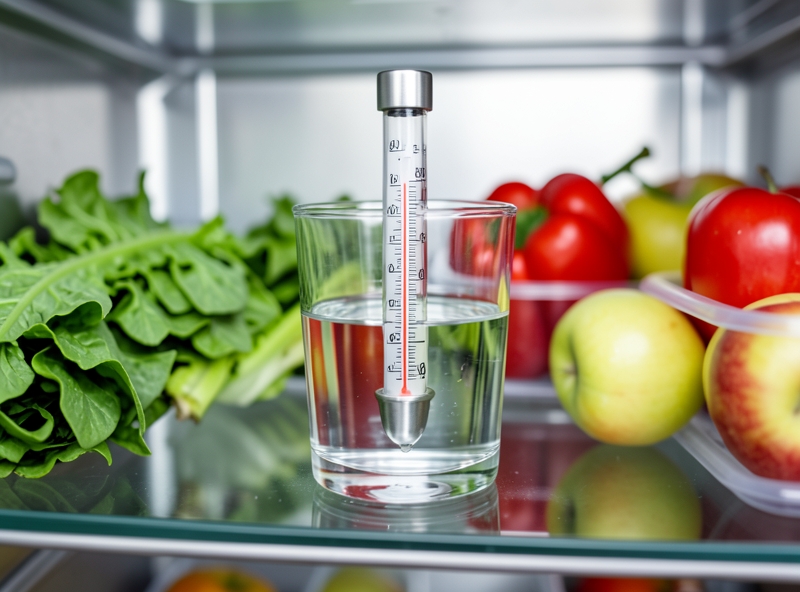
Don't be fooled by the external digital display on the door. That is merely the temperature of the air sensor and does not reflect the core temperature of the food. To master preservation techniques, you must measure the actual temperature using a dedicated thermometer (Dial or Digital Fridge Thermometer) by following these steps:
- Measuring the fridge compartment: Place the thermometer in a glass of clean water and set it in the middle of the fridge shelf for at least 8 hours (or overnight). The glass of water simulates food mass density, providing absolute precision.
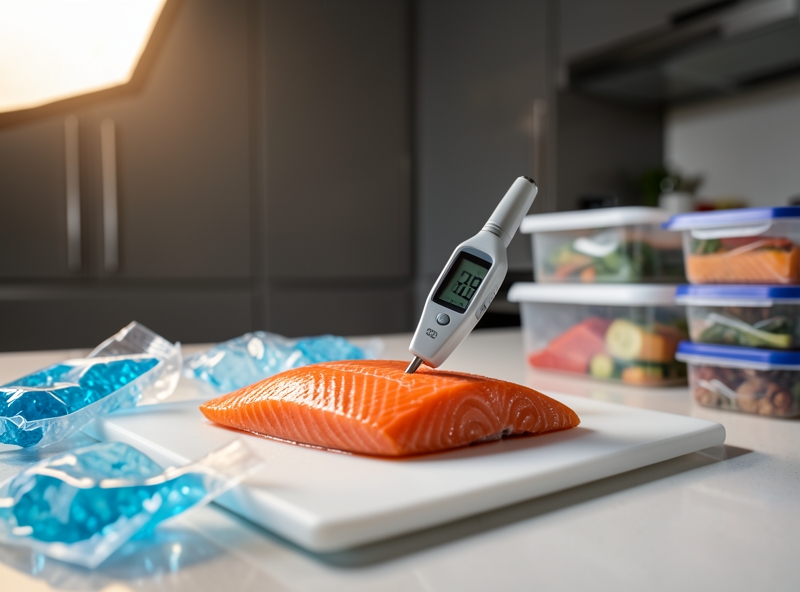
- Measuring the freezer compartment: Sandwich the thermometer between two bags of frozen food in the center for 6 hours before reading the temperature.
In many cases, even with the correct settings, food still spoils quickly. This stems from severe heat loss caused by daily habits and technical faults:
- Worn door gasket (Aging door seal): A deformed seal allows cold air to escape continuously. Testing tip: Clamp a bill in the door and close it; if it slides out too easily, the gasket is damaged and needs immediate replacement.
- Piling up food covering air vents: Obstructs convective cold airflow, creating unexpected "hot spots" where bacteria thrive. Always maintain the 70% capacity rule.
- Thermal shock from hot food: Placing a hot pot of food directly into the fridge raises the entire compartment's temperature to a dangerous level for several hours. Always cool food to room temperature before storing.
"Controlling refrigerator temperature is not just about food storage; it is the art of preserving nutrition and elevating the authentic flavor of every recipe."
3. Humidity Control Secrets to Maintain Freshness and Nutrition
Every week, how much of your grocery budget turns into waste because of soggy vegetables and waterlogged fruits? The refrigerator is essentially an "artificial desert" with continuously circulating cold air, ready to suck dry every single drop of water in food cells. When produce loses just 5% of its weight to wilting, it not only loses its crispness and juiciness, but its Vitamin C and polyphenol contents evaporate by up to 50%. Understanding and controlling humidity is not merely about keeping food fresh; it is the art of fully preserving precious nutritional value.
"Wilting produce is cells crying from dehydration; soggy produce is cells drowning in condensation. The secret of a professional kitchen lies in mastering the microclimate for every ingredient."
The most common mistake is tossing all food randomly into the fridge compartment. Harvested plants continue to "breathe." This respiration process releases water vapor and ethylene gas. Without precisely controlling the microclimate, you will unintentionally accelerate decomposition. The key lies in making the most of the tool at hand: the humidity slider on your refrigerator's crisper drawer.
| Humidity Setting | How It Works | Optimal Foods | Risk if Incorrectly Set |
|---|---|---|---|
| High Humidity (Vent completely closed) |
Retains all released water vapor, maintains humidity between 90-95%, and prevents air circulation. | Leafy greens (celery, kale, lettuce), fresh herbs, cucumbers, carrots, broccoli. | Without sufficient humidity, leafy greens will wilt, leaves will turn yellow, and they will lose all Vitamin C in just 48 hours. |
| Low Humidity (Vent completely open) |
Provides an escape route for water vapor and ethylene gas, preventing moisture buildup that causes rotting. | Juicy fruits & ethylene-emitting produce: Apples, avocados, bananas, pears, plums, strawberries, fresh mushrooms. | If the vent is closed, trapped ethylene gas will force fruits to overripe, turn soft and rotten, and grow mold extremely fast. |
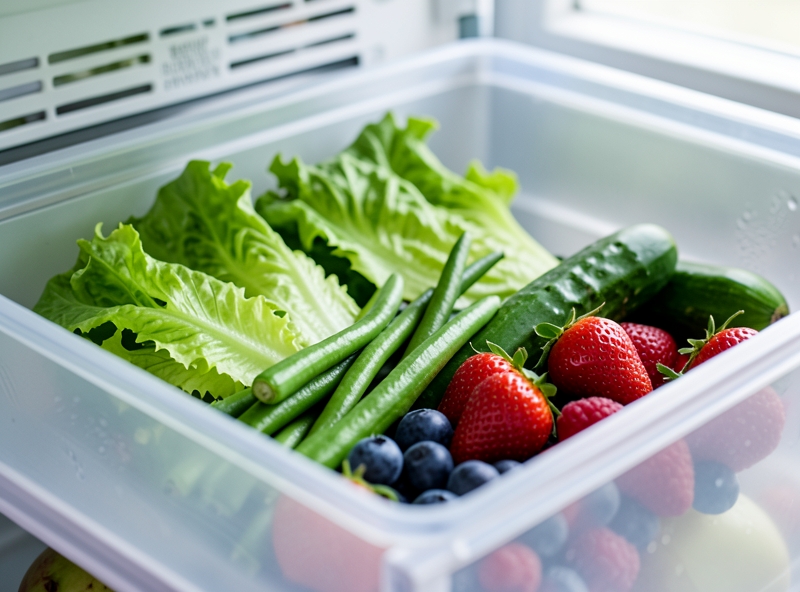
In addition to setting up the crisper drawer, you need to apply proactive humidity-balancing tips for sensitive groups of ingredients before storing them:
- The "Paper Towel Shield" technique for leafy greens: Wash thoroughly, drain completely, then line an airtight container or ziplock bag with a layer of paper towels before putting the greens inside. The paper towel will absorb excess surface moisture (the cause of sogginess and bruising) while maintaining just enough air humidity for the leaves to breathe.
- Breathable container strategy for mushrooms and berries: Straw mushrooms, enoki mushrooms, and strawberries are extremely sensitive to condensation. Store mushrooms in a brown paper bag instead of a plastic bag. For strawberries or blueberries, line the bottom of a vented plastic container with a paper towel and never wash them before storing.
- Blocking Ethylene with plastic wrap: Tightly wrap the stems of a bunch of bananas or individually wrap half-ripened avocados with plastic wrap. This prevents ethylene gas from spreading widely, helping to control ripening and preserve the perfect tenderness of the fruit flesh.
By precisely controlling humidity, you not only save a significant amount on your monthly grocery bill but also transform every family meal into a top-tier culinary experience with flavorful, juicy, and nutrient-packed fresh ingredients.
4. Smart Food Organization Principles to Optimize Cold Airflow
Did you know that over 40% of household food poisoning cases stem from improper refrigerator organization? Stuffing items wherever there's space not only causes your electricity bill to skyrocket because the motor has to run at full capacity, but it also turns your fridge into an incubator for cross-contamination bacteria. A refrigerator is not a uniform freezing box; it is a temperature ecosystem with air currents constantly circulating from top to bottom and back to front.
To master the art of food preservation, you need to operate your refrigerator based on a dynamic temperature stratification mechanism. Below is an expert-standard food distribution map to help double the freshness of your food:
| Storage Location | Ideal Temperature Range | Compatible Food Items | Risks of Improper Placement |
|---|---|---|---|
| Top Shelf | 4°C - 5°C | Cooked food, ready-to-eat meals, leftovers, opened canned goods. | Prone to spoilage if raw food with lower temperature requirements is placed here. |
| Middle Shelf | 2°C - 3°C | Fresh milk, yogurt, cheese, dairy products, butter, desserts. | Milk spoils quickly due to temperature fluctuations if moved to the top shelf. |
| Bottom Shelf | 0°C - 1°C | Raw meat, fish, fresh seafood (tightly packaged/wrapped in specialized plastic wrap). | Meat juices dripping and causing bacterial contamination to other areas. |
| Door Bins | 6°C - 10°C | Condiments, sauces, chili sauce, jam, bottled drinks, dry items with natural preservatives. | Milk or eggs spoil quickly due to constant exposure to ambient room air. |
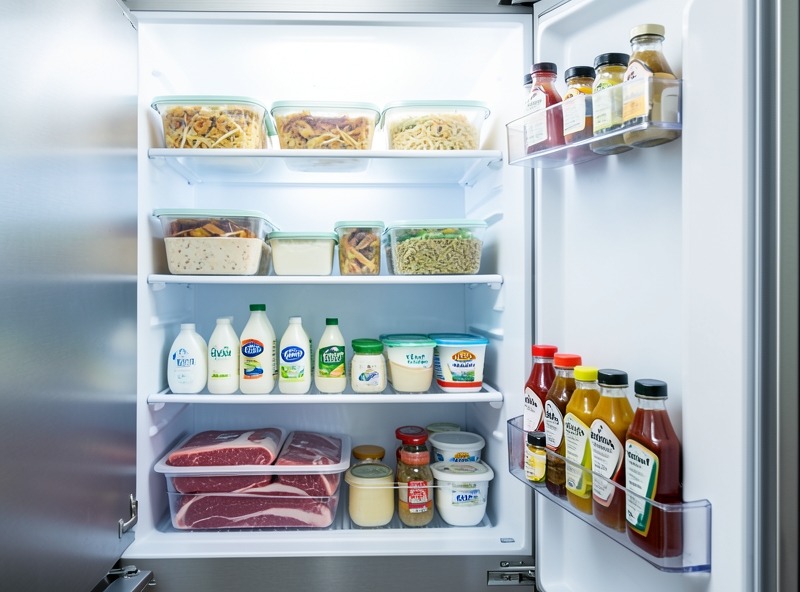
Looking at the distribution diagram, pay special attention to the cross-contamination danger zone. Fresh raw meat and seafood must be placed on the lowest shelf. According to gravity, if juices from raw meat containing harmful bacteria like Salmonella or E. coli leak, they will fall to the bottom of the fridge instead of dripping onto cooked dishes or raw vegetables on lower shelves.
"Organizing a refrigerator is not merely a spatial puzzle; it is an applied science of microbial control and thermodynamics."
Besides stratification, the following three golden rules determine 90% of the cold airflow's cooling efficiency:
- The 70/30 Breathing Room Rule: Fill a maximum of 70% capacity of your refrigerator. The remaining 30% empty space serves as a necessary "ventilation corridor" allowing the fan to circulate cold air. Overstuffing creates localized hot spots—where bacteria thrive rapidly even when the fridge is plugged in.
- Safe Distance of 3–5 cm: Maintain a minimum distance of 3 cm between food containers and avoid pushing food directly against the back wall of the fridge. Placing food against the back wall can cause localized freezing of fresh ingredients, block air vents, and lead to abnormal frost buildup.
- Odor and Moisture Seal Technique: Use heat-resistant glass containers or premium plastic containers with 4-sided locking rubber seals. This allows space-saving stacking while preventing moisture loss that dries out food, and eliminates the risk of food odors lingering in the cooling coil system.
Applying this organization strategy accurately not only doubles the freshness lifespan of your ingredients but also optimizes electricity costs, transforming your kitchen into a professionally operated and completely safe space.
5. Frequently Asked Questions (FAQ)
A small storage mistake can turn a fine dish into a "bacteria breeding ground" in just a few hours. Here are scientifically sound and practical answers from experts to help you fully protect both the flavor and nutritional value of your food.
The short answer is NO. Putting a steaming pot of soup or plate of meat directly into the fridge is a leading cause of indirect food poisoning.
When placing excessively hot food (above 60°C) into a cold environment, the internal fridge temperature spikes rapidly. This shift pushes surrounding food into the "Danger Zone" (4°C - 60°C)—where dangerous bacteria such as Salmonella or E. coli multiply exponentially every 20 minutes. At the same time, condensed moisture on container lids drips back down, creating an ideal damp environment for mold growth.
Expert standard procedure:
- Cool down quickly: Divide food into shallow glass or stainless steel containers to dissipate heat within 15–20 minutes at room temperature.
- Golden window rule: Transfer food to the refrigerator as soon as the temperature drops below 21°C, and never leave it out for more than 2 hours.
When a power outage occurs, the refrigerator door is your main line of defense for food safety. Every time you open the door, up to 30-50% of the accumulated cold air escapes.
Immediately apply these food safety contingency rules:
- Stick to the "Keep It Closed" rule: The refrigerator compartment remains safe for 4 hours if left unopened. A fully loaded freezer can maintain safe temperatures for up to 48 hours.
- Create high thermal mass: Pack raw meat and fish packages closely together in the freezer to create a "linked ice block" effect, helping them retain cold together.
- Harness gravity for cold air: Move ice gel packs or frozen water bottles to the top shelf of the fridge compartment. Heavier cold air naturally flows downward, extending vegetable protection for a few extra hours.
Microbial food spoilage does not always produce an obvious foul odor. Many bacterial toxins form without altering the original color or flavor. You need to carefully observe the structural indicators below.
"Temperature is the protective barrier for food, but humidity control is what preserves the authentic flavor."
| Food Group | Microscopic Spoilage Indicators (Improper Temp/Humidity) | Associated Health Risks |
|---|---|---|
| Fresh Meat & Seafood | Sticky slime layer forms on the surface, meat loses elasticity, and large ice crystals puncture muscle fibers (caused by freezing too slowly). | Listeria monocytogenes infection, causing digestive disorders and septicemia. |
| Green Leafy Vegetables | Leaves suffer from "cold injury / freezer burn" (temperatures too low) or become soggy, watery, and produce a sour smell (high unvented moisture accumulation). | Conversion of nitrates into toxic nitrites, posing risks to the digestive system. |
| Prepared Foods | Oil-water separation, appearance of yellow stains from fat oxidation, clumping, or a thin film of condensation inside container walls. | Risk of dangerous Botulinum toxin accumulation, even after reheating. |
| Bread & Cereals | Appearance of microscopic blue-green mold spots (high moisture) or dry, stale, crumbly texture due to loss of starch bonding (improper refrigeration temperature). | Contamination with Aflatoxin mycotoxins—a cause of long-term cumulative liver damage. |