1. The Concept of the Golden Ratio and Its Power in Living Room Interior Design
During journeys through the ruins of the Parthenon in Greece or when standing before Renaissance paintings in Florence, I realized there is an invisible thread connecting all eternal beauty. That is the number Phi (φ ≈ 1.618) – also known as the Golden Ratio. This is not merely a dry mathematical constant, but a code of nature, present in the structure of a Nautilus shell, the arrangement of sunflower petals, and even in the proportions of the human body. The repetition of this number across all things has created a standard of perfection that humanity has revered for centuries.
From an anthropological perspective, the human brain has a genetic tendency to be attracted to natural symmetry. We are programmed to feel secure and relaxed when faced with spaces that have a visual rhythm similar to our own biological structure. When stepping into a living room arranged according to the Golden Ratio, we immediately sense a feeling of "rightness" and luxury, even if we sometimes cannot explain it in words. That is the power of absolute harmony, where every object seems to find its natural place within the space.
"The Golden Ratio is not a forced rule of architecture; it is an echo of the universe replicated within artificial walls, creating a peaceful haven for the soul."
The most magical thing about applying the Golden Ratio is the liberation from financial pressure. The luxury of a room does not lie in the price of the sofa or the material of the wall stone, but in how we divide the space and arrange the layout. By following the 2/3 rule (a popular variation of Phi), you can transform a budget space into something sophisticated and deep without needing to invest in luxury furniture.
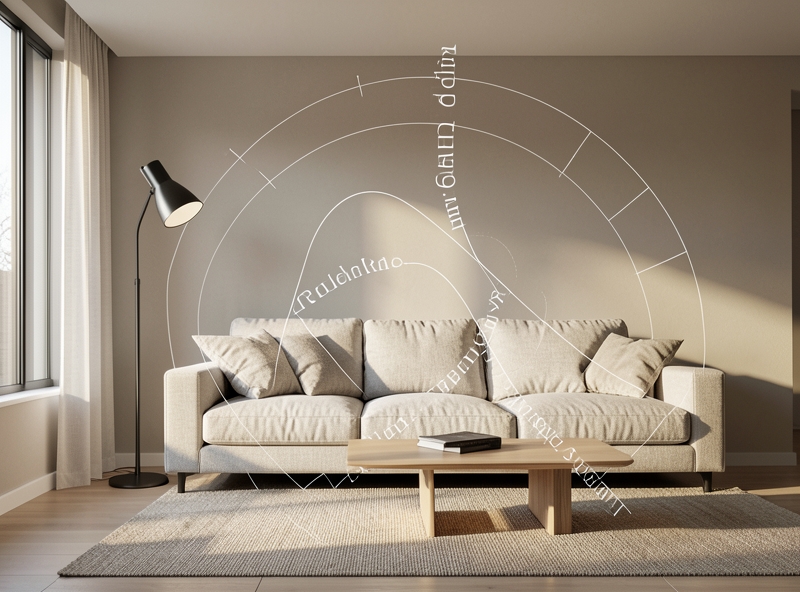
The power of the Golden Ratio in the living room is expressed through specific aspects, helping to subtly shape the homeowner's lifestyle:
- Visual Balance: Dividing the functional area and empty space according to a 60:40 ratio to create openness while remaining cozy.
- Natural Focal Points: The placement of coffee tables, wall art, or chandeliers at "golden points" helps unconsciously draw the eye.
- Aesthetic Sustainability: Spaces that adhere to natural proportions often possess timeless beauty, remaining unfazed by fleeting interior trends.
When applying the Phi number to interiors, we are not just decorating a house; we are re-establishing an original order of life, bringing a sense of belonging and a deep connection between humans and their living space.
2. The 60-30-10 Rule: Allocating Color and Space According to the Golden Standard
In my journeys through the ancient villages of Provence or the peaceful dwellings along the Ganges, I have realized that harmony never comes from coincidence. It is the result of an aesthetic instinct honed over centuries, which in modern design language, we call the 60-30-10 rule. These are not just dry numbers, but a "golden ratio" that helps the soul find sanctuary within its own living space.
Colors in a home are like the layers of a culture. To create a unified and profound whole, the distribution of proportions must follow a strict yet fluid hierarchy:
- 60% - Dominant Color (The Foundation of Serenity): Occupying the largest area, usually covering wall surfaces, ceilings, or wooden floors. This is the "backdrop" of life; neutral or pastel tones should be prioritized to create a sense of openness and to welcome natural light.
- 30% - Secondary Color (The Storyteller): Reserved for large furniture items such as sofas, curtains, or rugs. This color supports the dominant hue but is distinct enough to create a unique personality for the room, much like how traditional attire defines the identity of a land.
- 10% - Accent Color (The Melody of Emotion): Vibrant or contrasting splashes of color appearing on throw pillows, wall art, or handcrafted pieces. This 10% may be small, but it is the "soul"—the visual touchpoint that prevents the space from falling into monotony.
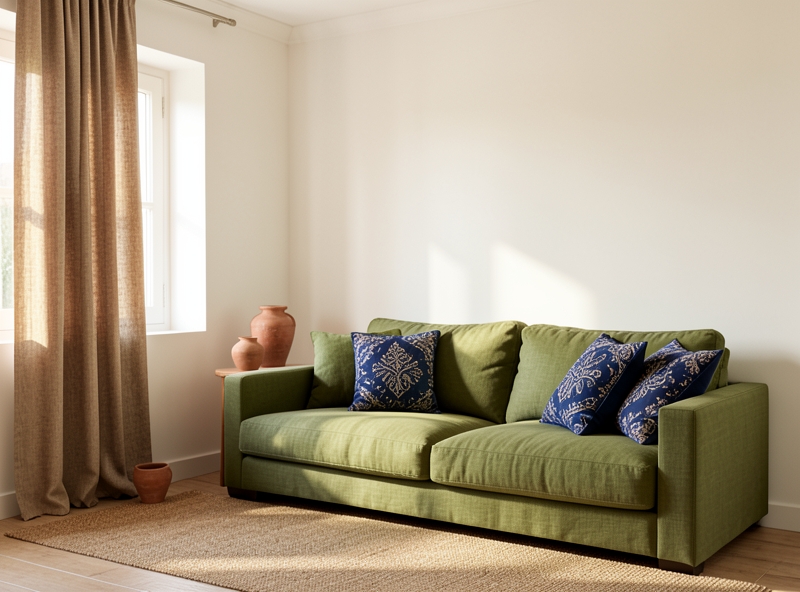
"Color is not just light; it is materialized emotion. Adhering to the golden ratio is how we respect the rhythm of the space."
However, this rule does not stop at color intensity. When applied to floor area, I often observe how the Japanese design empty space (Ma) – true resting points for the eyes. A floor with 60% open area helps the flow of energy (chi) circulate better, while highlighting the 30% dedicated to main furniture and 10% for exquisite decorative corners.
| Ratio | Application Component | Anthropological Value |
|---|---|---|
| 60% | Walls, floors, ceilings | Tolerance, the foundation of the family. |
| 30% | Sofas, cabinets, curtains | Connection, the intersection between members. |
| 10% | Vases, paintings, souvenirs | Personal memories and marks of expeditions. |
Applying the 60-30-10 standard helps us avoid greed in decoration. By leaving silences of color and space, we inadvertently create a peaceful "oasis" where people are not overwhelmed by too much visual information, thereby finding true relaxation after returning from every long journey.
3. Furniture Arrangement Techniques Using the 2/3 Principle
In journeys through the long corridors of Renaissance mansions in Florence or while observing how nomads arrange their tents amidst the vast steppes, I realized one truth: beauty does not come from filling space; it comes from proportion. The 2/3 principle, a vibrant variation of the "Golden Ratio," is the master key for humans to establish harmony between physical architecture and internal emotions.
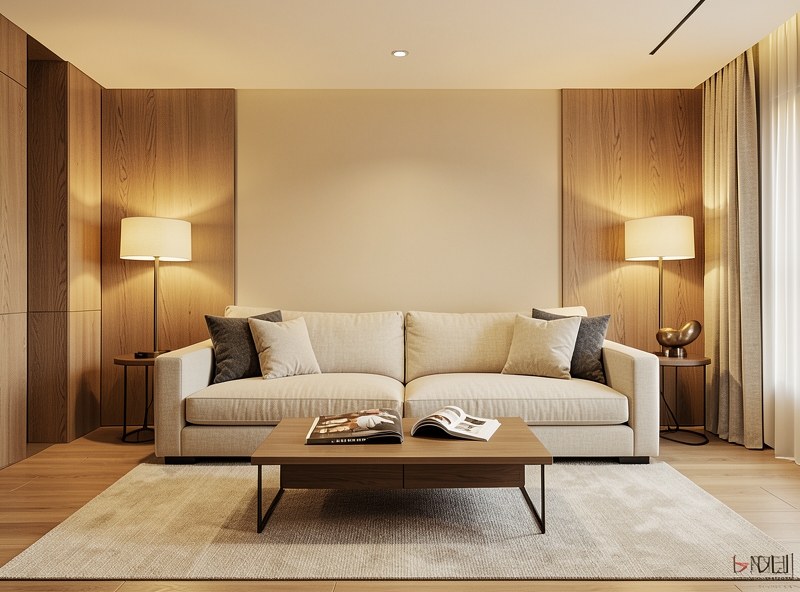
To create a smooth visual "flow," the length of the sofa should occupy approximately 2/3 of the length of the wall behind it. This is not merely a mathematical figure, but a way for us to respect the presence of empty space. When a sofa is too short, the wall becomes isolated; when a sofa is too long, the room falls into a state of suffocation. Continuing that rhythm, the coffee table – the heart of conversations – should have a length equivalent to 2/3 of the sofa's length. This hierarchy creates a stable geometric structure, helping the occupant's mind feel secure and tranquil.
"Arranging furniture is essentially the art of coordinating silence. A beautiful room is a place where objects do not overwhelm the breath of the space."
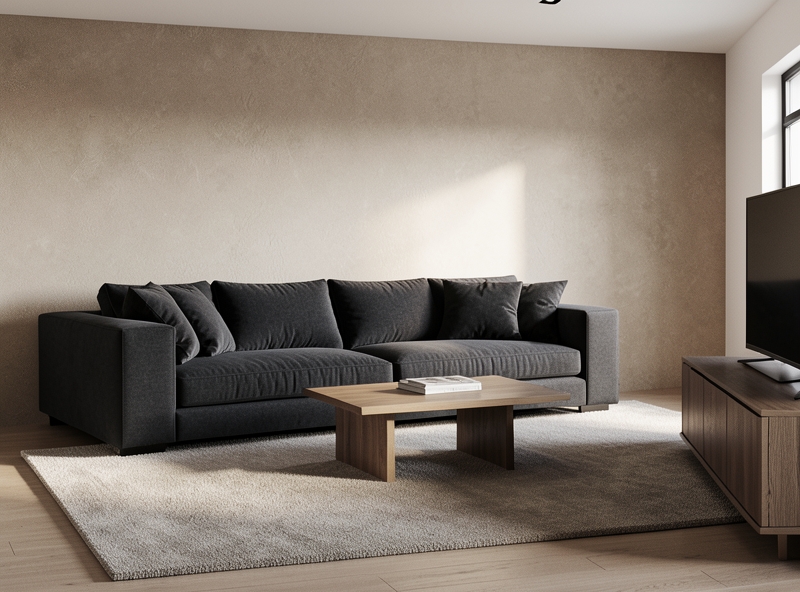
In the anthropology of residential space, the concepts of "solid" and "void" always coexist. To achieve absolute visual balance, the placement of rugs and TV stands should follow these technical guidelines:
- Area Rugs: Should not just be a scrap of fabric under the coffee table. An ideal rug should cover at least 2/3 of the seating area, enough to place the front legs of the sofa on top. This creates a distinct "island" of space, positioning the functional area without the need for partitions.
- TV Stands and Wall Sections: The TV stand should be longer than the TV by about 2/3 of the screen width. This difference creates a resting point for the eyes, avoiding a heavy feeling when looking at dry electronic devices.
- Void Volume Correlation: Let empty space occupy at least 1/3 of the movement area around main items. This is the "breathing space" for light and wind to circulate freely, similar to the way the Japanese cherish the Ma void in the art of arrangement.
Applying the 2/3 principle is not just a decorative technique, but a way for us to re-establish the order of nature within the modern home. When each object finds its correct size and position, the house is no longer a storage for furniture, but becomes a living entity, nurturing the souls of travelers after every long journey.
4. Optimizing Wall Decoration and Lighting Using the 1.618 Ratio
Throughout the long miles from ancient Greek city-states to wooden houses along the Mediterranean coast, I have realized that harmony is never the result of chance. The number 1.618 – the Golden Ratio – is not just a dry mathematical constant, but a code of nature that humans have empathized with and integrated into living spaces for thousands of years in search of visual peace.
"The true beauty of a home lies in the balance between empty spaces and touches of light, where every object finds its own 'gravity' through the divine proportion."
In modern interior decoration practice, applying this ratio begins with the rule of hanging paintings at a height of 5/8 from the floor. Instead of hanging by intuition, the center point of the artwork should be at 61.8% of the wall height. This is the "visual golden point," where the gaze of a traveler entering the room will naturally rest without putting pressure on the neck muscles or eyesight. This arrangement recalls the horizon in Renaissance paintings, creating a sense of solidity and inclusiveness for the room.
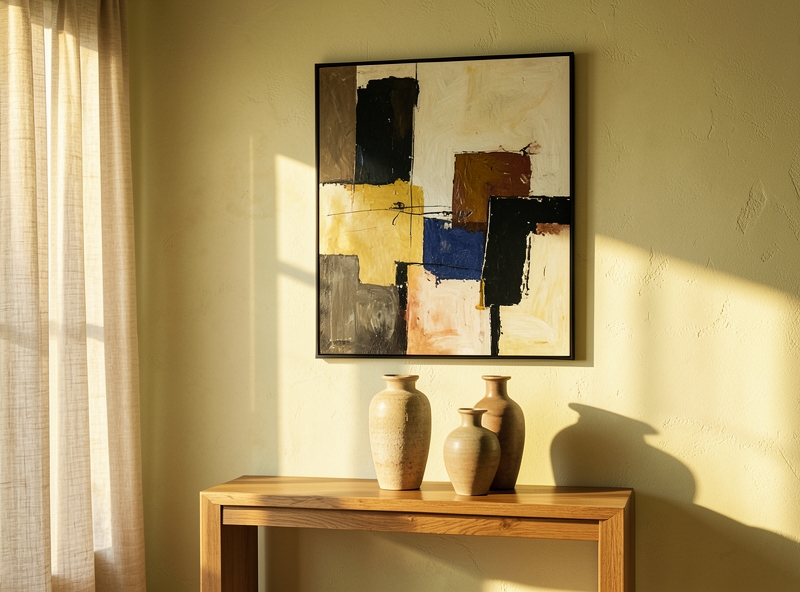
Continuing the flow of the 1.618 ratio is the mindset of grouping items in odd numbers (The Rule of Three). In anthropology, the number 3 often represents a perfect cycle: beginning, development, and end. When arranging ceramic vases, candles, or souvenirs from far-off lands, group them into trios of different heights. This discrepancy creates a "visual triangle," preventing monotony and promoting a more fluid energy flow within the static space.
Finally, the depth of a home is not determined by its area, but by how we control shadows through light. Below is how to distribute light based on a visual optimization mindset:
- Corner Lighting: Place floor lamps or uplights in hidden corners to dissolve the boundaries of square walls, creating a sense of infinitely expanding space like mysterious caves lit by torchlight.
- Layering Light: Combine overall lighting (Ambient lighting) with accent lighting (Accent lighting) in a 1.618 ratio of intensity to create "eloquent" shadows that honor the material structure.
- Stop-point Lighting: Use spotlights on the arranged odd-numbered groups of items, turning each corner of the house into a narrative display scene.
| Decorative Element | Application of 1.618 Ratio | Emotional Effect |
|---|---|---|
| Wall Paintings | Center point at 5/8 of wall height (from the floor). | Stability, intuitiveness, and relaxation. |
| Object Arrangement | Group by odd numbers (3, 5, 7) with different sizes. | Vibrancy, naturalness, and depth. |
| Lamp Lighting | Focus on corners and visual highlights. | Coziess, mystery, and spatial expansion. |
Respecting these ratios does not stifle creativity; on the contrary, it creates a solid framework for the homeowner's personal touch to shine in the most subtle way. When light and layout meet at the 1.618 point, the house is no longer inanimate brick and stone walls, but becomes a living entity, retelling the story of aesthetic taste and the understanding of the laws of beauty.
5. Summary
Traveling through routes from rammed-earth villages in Morocco to minimalist apartments nestled in the heart of Northern Europe, I realized that mathematics is not just dry numbers on a blueprint. It is the pulse of space, the silent harmony between humans and the places they inhabit. Applying geometric proportions to architecture is essentially how we recreate the order of the universe within four walls, bringing visual balance and a deep sense of peace to the homeowner's soul.
"In the arrangement of a home, mathematics is the language of structure, but emotion is what writes the vibrant chapters."
Understanding and applying mathematical rules in interior decoration brings undeniable practical values:
- Visual balance: Proportions like 60-30-10 or the Golden Ratio help the human eye easily perceive space without being overwhelmed or feeling cluttered.
- Functional optimization: Calculating area and distance based on anthropometrics ensures convenience in the daily life of every family member.
- Affirming aesthetic taste: Using mathematics as a foundation helps homeowners feel more confident when making interior selection decisions, creating a cohesive whole with depth and timeless sustainability.
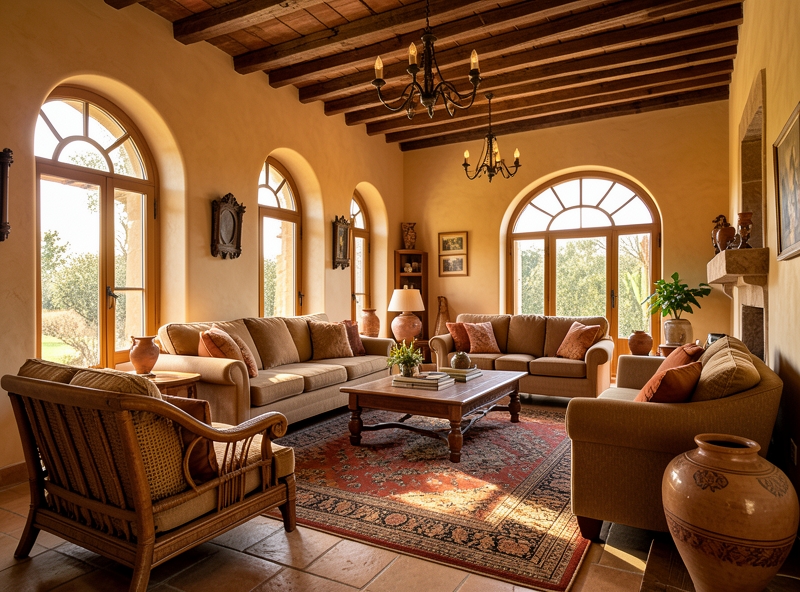
However, always remember that all rules should only serve as a compass, a dedicated guide rather than iron cages stifling creativity. A true home does not need to be perfect in the way of an architectural textbook; it needs to reflect the personality and breath of the occupant. Be flexible in your variations, letting your instincts and sensitivity speak alongside logical calculations. That is when you truly create an aesthetic sanctuary, where every small corner tells a private and passionate story.