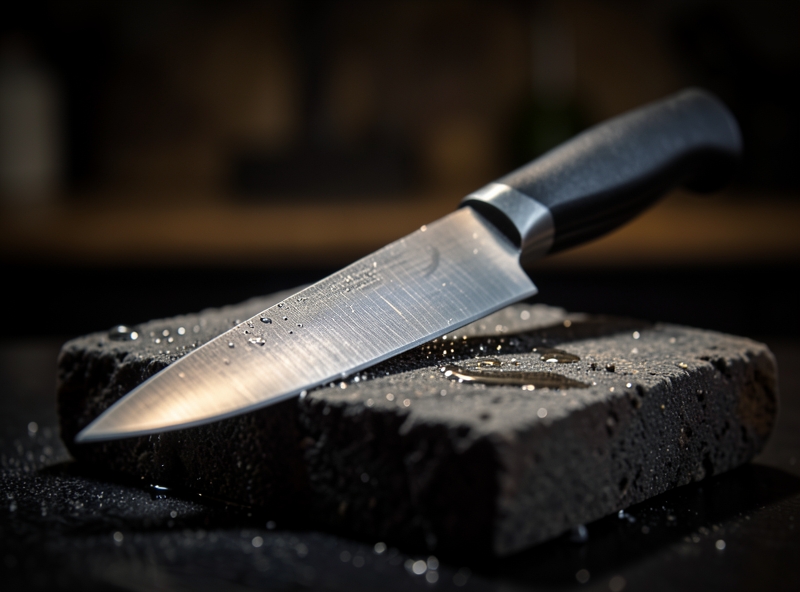
1. Overview of the Art of Knife Sharpening and the Importance of Sharpness
How many times have you had to strain and exert force just to cut a tomato, only to end up with a crushed mess leaking juices all over the cutting board? Or the burning sensation in your eyes when slicing onions simply because a dull blade is crushing the onion cells instead of slicing through them? That is when you realize your kitchen knife has lost its soul.
A dull knife blade not only ruins the texture of your food but is also the single biggest hidden danger in the kitchen. When a knife loses its sharpness, you are forced to apply more downward pressure. The harder you press, the less control you have over its direction, leading to disastrous slips. Conversely, a razor-sharp blade will glide effortlessly, cutting cleanly through every fiber of meat, preserving the natural juices within ingredients, and delivering precision performance like a professional chef.
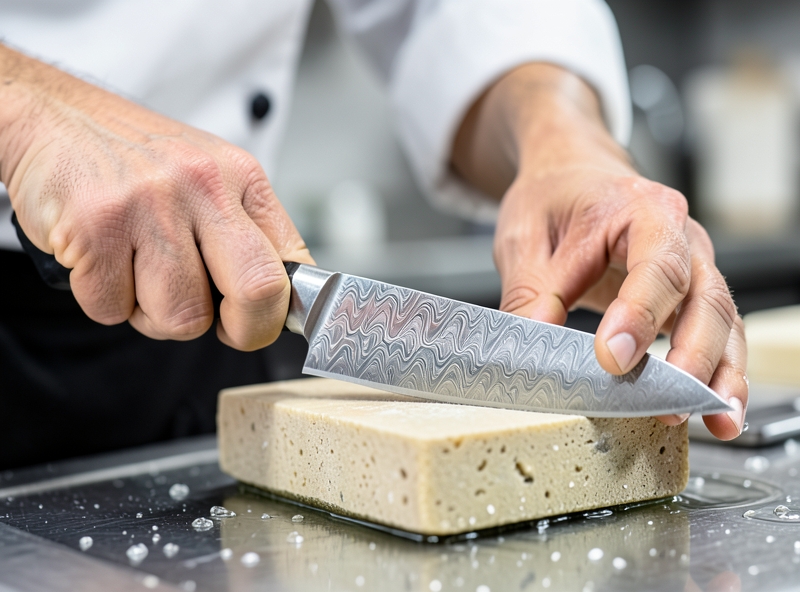
Many people are willing to spend a significant budget on expensive Japanese or German knife sets, only to neglect them as they dull over time out of reluctance to perform maintenance. Knife sharpening is not merely a tedious household chore; it is the art of maintaining performance and protecting your long-term investment. Understanding the sharpening angle, selecting the right whetstone, and feeling the steady stroke of steel will help you preserve the knife's perfect edge for years to come.
"A sharp knife is an extension of the chef's hand. When the tool achieves perfection, food preparation is no longer prep work; it becomes an inspiring, therapeutic experience."
To clearly see the superior difference, look at how a properly maintained blade completely transforms your cooking experience:
| Comparison Criteria | Using a Sharp Knife | Using a Dull Knife |
|---|---|---|
| Applied Cutting Force | Extremely light and effortless, gliding naturally using the knife's weight and sharpness. | Requires pressing hard, applying significant pressure from the wrist and shoulder. |
| Food Quality | Preserves cellular structure, retains moisture, creates smooth and clean cuts. | Gets crushed, leaks juices, loses nutrients, and becomes deformed. |
| Safety Level | Very high. The knife follows the intended path without slipping. | Extremely dangerous. The blade easily slips off smooth food surfaces. |
| Prep Time | Reduces ingredient preparation time by 50%. | Time-consuming, exhausting, and frustrating while cooking. |
Therefore, learning how to properly sharpen and maintain your knives is the first step to elevating your culinary skills from basic to a true art form.
2. Standard Sharpening Angles for Different Kitchen Knife Steel Types
Many people are willing to spend hundreds of dollars on a high-end knife, only to accidentally ruin it after just a few sharpens using guesswork. A blade that dulls quickly, chips, or loses its original sharpness isn't due to poor steel quality, but rather because of using the wrong standard sharpening angle. Every type of steel has a distinct "tolerance threshold" and crystalline structure, requiring a precise contact angle on the whetstone to reach its full potential.
"The sharpening angle doesn't just determine immediate sharpness; it is the absolute balance between ultimate keenness and the long-term durability of the blade."
Understanding the steel material of your knife is the key to setting the perfect sharpening angle:
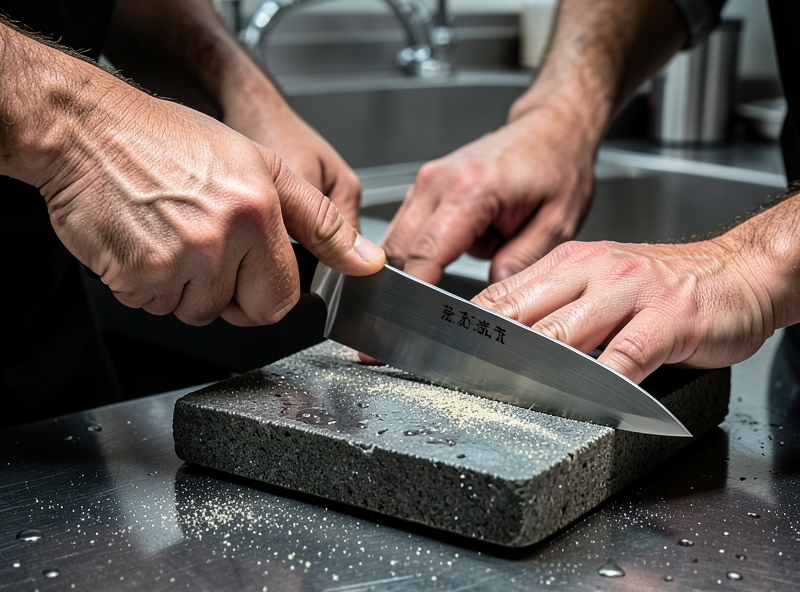
- Japanese Knives (High-Carbon Steel, Hardness from 60-64 HRC): Steels such as Shirogami, Aogami, or VG10 are extremely hard yet brittle. To fully capitalize on this super-hard structure, the optimal sharpening angle is 10 to 15 degrees per side. This ultra-thin sharpening angle creates a razor-sharp edge, effortlessly slicing through meat or thinly cutting tomatoes without crushing the food. However, if you sharpen softer steel at this angle, the blade edge will immediately roll or chip upon impact with a hard wooden cutting board.
- German and European Knives (Ductile Alloy Steel, Hardness from 55-58 HRC): Western brands often use steels from Wüsthof or Zwilling, which offer great toughness and impact resistance, though they dull faster. The ideal sharpening angle for this style of knife is 18 to 22 degrees per side. A larger sharpening angle reinforces the edge's "bite," making the blade durable against chopping, dicing, and cutting through small bones without fear of chipping.
| Knife Type | Hardness (HRC) | Optimal Sharpening Angle (Per Side) | Characteristics & Best Use |
|---|---|---|---|
| Japanese Knives (Gyuto, Santoku) | 60 - 64 | 10 - 15 degrees | Delicate slicing, thin cuts, requires extreme precision. |
| German/European Knives (Chef Knife) | 55 - 58 | 18 - 22 degrees | Versatile, light chopping, fast prep on tough foods. |
| Pocket Knives, Outdoor Knives | 54 - 58 | 22 - 25 degrees | Cutting tough materials, extremely durable edge, chip-resistant. |
How can you determine the sharpening angle manually without specialized measuring tools? You can apply the remarkably simple matchbox or coin trick below:
- How to create a 15-degree angle (For Japanese knives): Place the blade flat on the whetstone, then lift the spine of the knife to a height equal to the thickness of two stacked coins. This gap corresponds to an angle of approximately 12 to 15 degrees.
- How to create a 20-degree angle (For German knives): Instead of two coins, prop up the spine of the knife to the thickness of three stacked coins or a standard matchbox laying flat. This tilt produces a perfect 20-degree sharpening angle for tough Western knives.
Once you have set the sharpening angle with this simple trick, your job is to maintain a steady rhythm and consistent pressure as you push the knife across the surface of the whetstone. With just a little patience and consistency, you will keep your blades razor-sharp as if brand new, extending the lifespan of these valuable kitchen companions.
3. Professional Standard Knife Sharpening Process Using a Whetstone
A dull knife not only ruins the texture of ingredients—causing juicy tomatoes to be crushed or beef to be shredded—but is also the biggest hazard in the kitchen due to its tendency to slip. Scraping a knife on the bottom of a ceramic bowl or using cheap pull-through sharpeners only destroys the blade. To achieve effortless paper-thin sharpness, a whetstone is the only tool trusted by professional chefs.
"Sharpening a knife with a whetstone is not blindly grinding away metal; it is the art of shaping and re-establishing the blade's microscopic cutting edge."
To get started, you need to understand the Grit rating system. Using the wrong stone at the wrong time will either wear out your knife unnecessarily or never achieve the desired sharpness.
| Stone Classification | Grit Rating | Main Purpose | Frequency of Use |
|---|---|---|---|
| Coarse Stone | #400 - #1000 | Repairs chips and reprofiles severely dull blade edges. | Only use when the knife is damaged or extremely dull. |
| Medium Stone | #1000 - #3000 | Standard sharpening, creating a clean edge for general cutting and slicing needs. | Use periodically every 1–2 weeks depending on cooking frequency. |
| Finishing Stone | #5000+ | Mirror-polishes the cutting edge and removes micro-burrs to achieve ultimate sharpness. | For raw meat/fish slicing knives, sashimi knives, or high-end maintenance. |
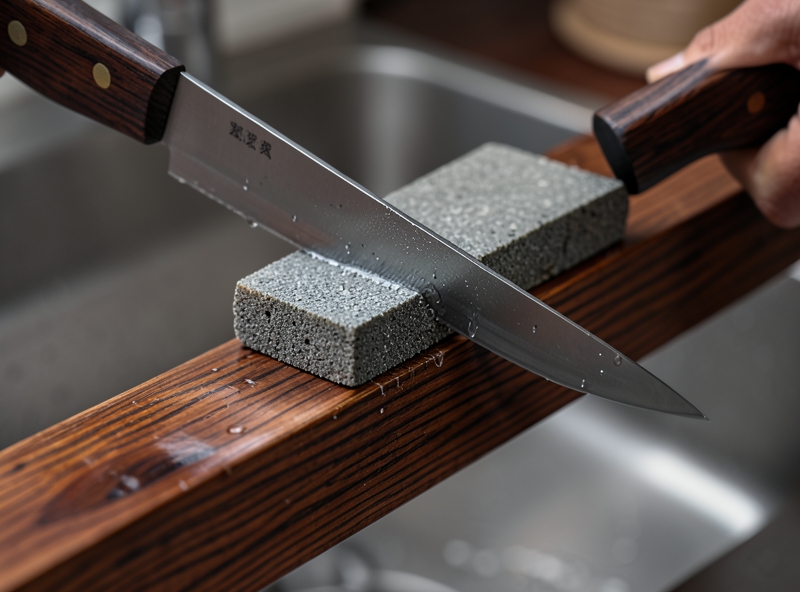
Once you have selected the right whetstone, follow these precise 4 steps:
- Step 1: Prepare the whetstone. Submerge the stone completely in water for 10 to 15 minutes until air bubbles stop rising. Secure the stone on a damp towel or rubber base to prevent slipping during operation.
- Step 2: Lock the sharpening angle (15 - 20 degrees). This is a crucial skill. For Asian or Japanese-style kitchen knives, the ideal angle is 15 degrees; for Western-style knives, it is 20 degrees. Stack two coins under the spine of the knife to estimate the distance for a perfect 15-degree angle, then lock your wrist and maintain this angle as you move.
- Step 3: Execute the burr-forming technique. Slide the knife across the stone surface along the length of the blade, moving from heel to tip with moderate pressure. Apply pressure only on the forward stroke and relax on the pull back. Continue sharpening until a "burr" (a tiny wire edge of metal rolled over to the opposite side) appears. At this point, flip the knife over and repeat the process for an equal number of passes.
- Step 4: Polish and finish. Switch to a fine finishing stone (#5000+) to lightly stroke the blade, removing all traces of the burr and giving the cutting edge a mirror shine.
To maintain this sharpness daily without overusing the whetstone, a honing steel is an essential complementary tool. Make no mistake: honing does not remove metal to sharpen; its purpose is to realign the microscopic bends along the edge that get knocked out of alignment after each use. Before cooking, hold the honing steel vertically and stroke the blade from heel to tip down the rod at a 20-degree angle 4 to 5 times per side to keep your knife constantly ready for action.
4. Tips for maintaining and preventing rust on professional kitchen tool sets
Have you invested hundreds, or even thousands of dollars in a premium Damascus or high-carbon steel kitchen knife set, only to wake up one day shocked to find unsightly orange rust spots on the razor-sharp steel blade? Rust doesn't simply appear due to poor steel quality; it is a direct penalty for improper maintenance habits. Expensive metal always comes with extreme sensitivity to the environment. Simply master the non-negotiable rules below, and your kitchen tool set will retain its razor sharpness and flawless appearance for decades.
"A rusty blade not only degrades cutting performance, but it is also a breeding ground for bacteria and completely ruins the delicate flavor of fine ingredients."
1. The ultimate rule: Never put knives in the dishwasher
Many people mistakenly assume dishwashers are "omnipotent," but for professional kitchen knives, this is the most brutal "torture chamber." High temperatures inside the machine combined with harsh, highly alkaline detergents will rapidly erode the protective oxide layer on the steel surface, causing pitting corrosion. Not to mention, powerful water pressure causes the blades to collide with baskets or other utensils, chipping and dulling the edge instantly. Always hand-wash your knives under warm water with a bit of diluted dish soap and a soft sponge.
2. Clean and dry thoroughly immediately after use
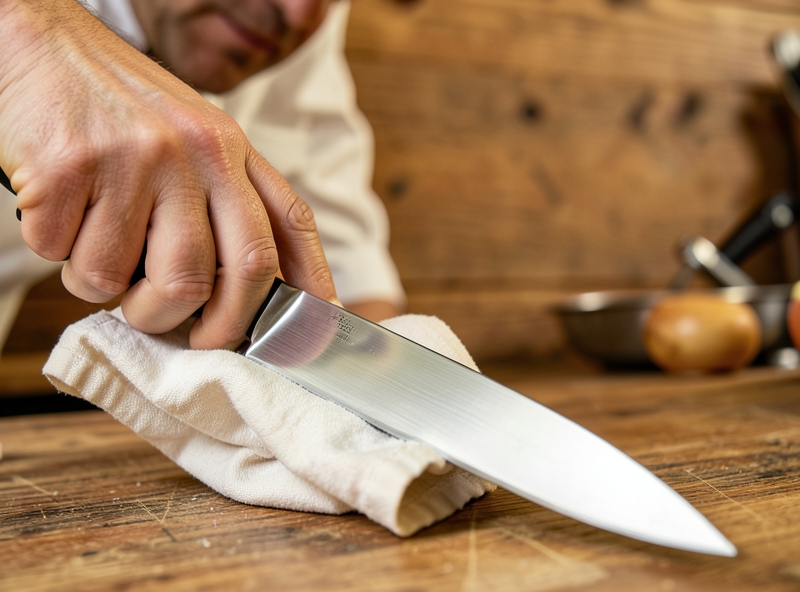
Acids in foods like lemons, tomatoes, and onions are the sworn enemies of carbon steel and even certain stainless steels. Never soak knives in the sink or let them air dry on a rack. Form the habit: Cut - Wash immediately - Dry instantly. Use a completely dry, soft microfiber cloth to wipe from the spine down to the edge. Absolute dryness is the strongest shield preventing oxidation from occurring.
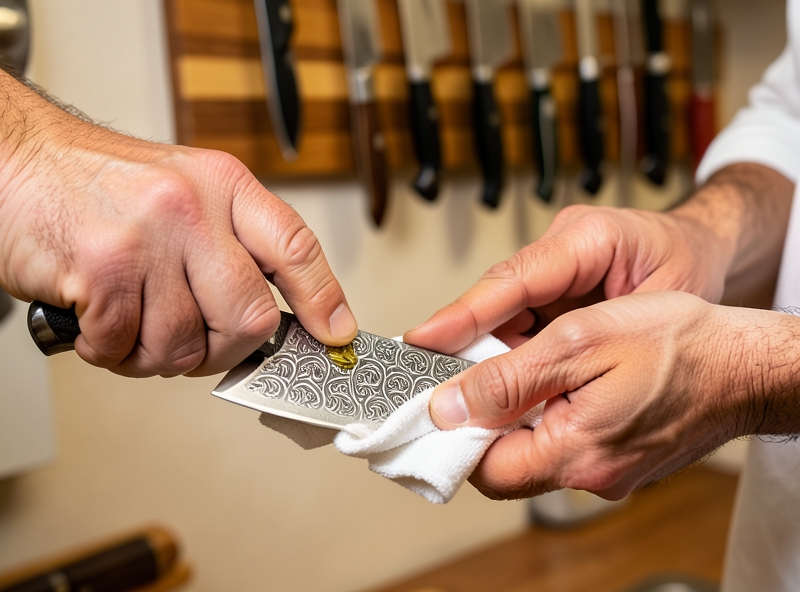
3. "Spa" treatment with food-grade mineral oil
For high-carbon steel knives—a steel type favored by professional chefs for its incredible edge retention yet highly prone to rusting—oiling is mandatory. After drying, apply 1-2 drops of food-grade mineral oil to the blade and use a paper towel to spread an extremely thin layer evenly.
Crucial note: Never use regular cooking oils (such as sunflower, olive, or soybean oil) to maintain knives. These vegetable oils will oxidize over time, turning rancid, attracting dirt buildup, and defeating the protective purpose.
4. Safe storage: Say goodbye to messy drawers
Tossing knives carelessly into a kitchen drawer not only poses a hazard to your hands when rummaging around, but also causes blades to bang against each other, leading to chips and scratches. To store knives professionally, invest in two optimal storage solutions:
- Magnetic Knife Strip: The perfect solution to keep blades well-ventilated, quick-drying, and showcasing the elegant mechanical craftsmanship of your knife set. Choose a wooden-covered magnetic strip to avoid scratching the steel surface upon direct contact.
- Leather sheath or wooden sheath (Saya): If you need to travel or must store knives in a cabinet, genuine leather sheaths or specialized wooden sayas fit snugly around the blade, gently absorb moisture, and protect the edge from external physical impacts.
5. Summary
A dull knife is not merely an inconvenience in the kitchen—it is a silent intruder that destroys the cellular structure of food, depletes natural juices, and directly threatens the safety of your hands. Caring for kitchen knives does not require overly complex techniques; it simply demands understanding and discipline based on three core principles.
To optimize performance and extend the lifespan of the "soul of the kitchen," always keep in mind this golden trio of principles:
- Understand knife materials: Recognize the difference between carbon steel (retains an extremely sharp edge but rusts easily) and stainless steel (durable, corrosion-resistant, but requires more frequent sharpening) to apply the most suitable maintenance method.
- Sharpen at the correct angle: Consistently maintain a sharpening angle of 15 to 20 degrees depending on the knife type to restore the original cutting edge, avoiding deformation or chipping caused by improper pressure.
- Perform regular maintenance: Hone your knife before each use, strictly avoid the dishwasher, and store knives on a magnetic strip or a dedicated wooden block instead of tossing them messily into a drawer.
"The blade is an extension of the chef's arm. A sharp, meticulously cared-for blade reflects the deepest respect for every natural ingredient."
Ultimately, keeping a knife consistently sharp goes beyond ordinary household tips. It symbolizes an appreciation for culinary craft, respect for those enjoying the food, and a statement about a refined lifestyle. When you cherish your tools, every slice becomes a smooth and inspiring artistic experience.