1. The Art of Layering: The Secret to a 5-Star Luxury Bedroom
In modern interior design, "Layering" is not simply about stacking multiple items on top of each other. For the 5-star hotel segment and luxury apartments, this is a methodical technique used to manipulate vision and sensation, transforming the bed from a functional piece of furniture into the center of relaxation. Textile layering is the combination of various materials – from cotton and linen to velvet and wool – to create thickness, depth, and structural richness for the resting space.
"Layering is the language of sophistication, where luxury lies not in the price tag of the item but in the emotional density and complexity of the material surfaces when they come into contact with the body."
The reason top architects and hotel designers like Marriott or Park Hyatt always remain loyal to the art of layering lies in three practical values: flexible thermal regulation, light soundproofing for the sleeping area, and the "cocooning" effect. A flat bed often creates a monotonous and cold feeling, while skillfully stacked layers of fabric create natural shadows, helping the room look much cozier and deeper.
| Criteria | Traditional Bed (Flat) | Layering Bed (Stacked) |
|---|---|---|
| Aesthetics | Simple, sometimes creates a sense of emptiness. | Luxurious, full, Resort standard. |
| Experience | Tactilely monotonous. | Diverse sensations (soft, smooth, fluffy, warm). |
| Flexibility | Difficult to change according to the weather. | Easy to add/remove layers depending on temperature. |
| Cost/Effort | Low, quick to clean. | Higher, requires arrangement skills. |
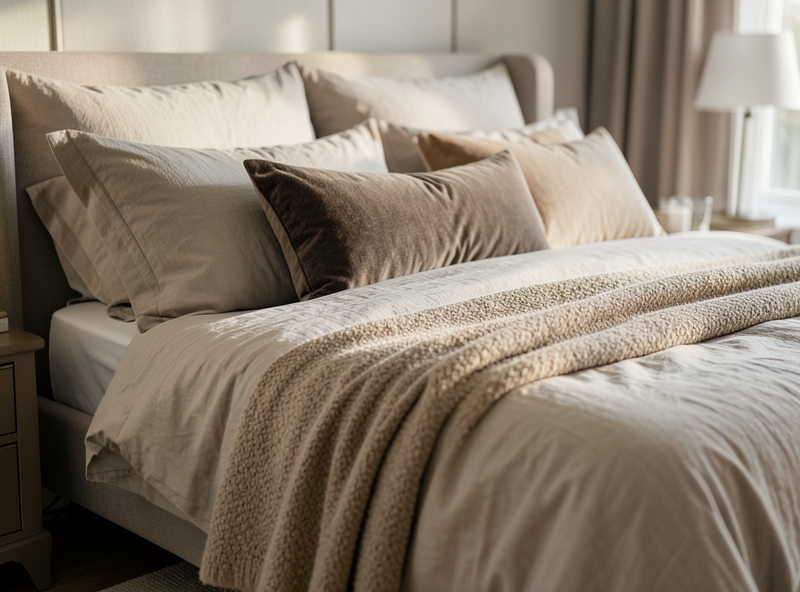
To achieve a 5-star effect, the actual layering process usually follows a structure from "submerged" to "emerged." Start with a set of high-quality bedsheets with a thread count of 300-500, followed by a thin coverlet to create a frame, then a duvet folded back at the head of the bed to reveal the layers beneath. Finally, a decorative throw blanket at the foot of the bed and a system of Euro shams will complete this architectural ensemble.
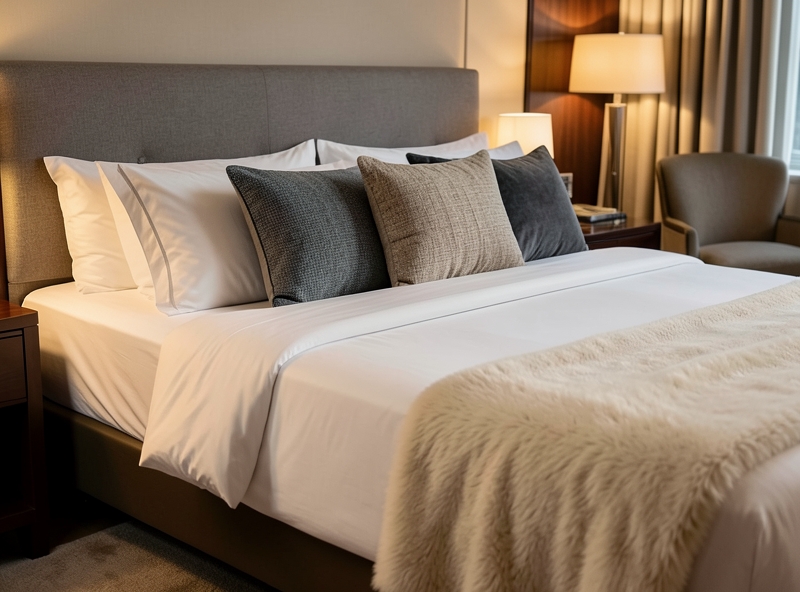
However, users should note the practicality when applying this in Vietnam. In hot and humid climate conditions, layering too many thick materials like velvet or feathers can have the opposite effect, creating a feeling of stuffiness. The solution is to prioritize natural materials with good "breathability" like linen or cotton satin. From an investment perspective, layering is the most effective way to upgrade the value of a space without interfering with the apartment's structural shell, bringing an extremely impressive ROI (enjoyment value over cost) to the owner.
- Use a neutral color palette: Helps fabric layers blend easily without causing visual clutter.
- Create material contrast: Combine the smooth flat surface of cotton with the rough texture of linen to stimulate the sense of touch.
- The odd number rule: Use 3 or 5 decorative pillows to create a natural balance instead of rigid symmetry.
2. Building the Perfect Foundation with Standard Bedding Sets
In bedroom interior design, a bedding set functions not just as an aesthetic element but as the "operating system" that determines the quality of rest. A perfect foundation starts with selecting materials based on technical specifications and practical needs rather than just following visual trends on social media.
| Material | Pros (Performance) | Cons (Limitations) | Ideal For |
|---|---|---|---|
| Cotton | Breathable, excellent moisture-wicking, high durability after multiple washes. | Wrinkles easily; requires ironing to achieve a resort-style crispness. | Daily use, suitable for tropical climates. |
| Silk | Absolute softness, antibacterial, retains moisture for skin and hair. | High cost; extremely strict maintenance and laundering process. | People with sensitive skin, luxury spaces. |
| Linen | Rustic beauty, becomes softer with every wash, best heat dissipation. | Initially coarse surface, natural wrinkles (not suitable for perfectionists). | Minimalist, Rustic, or Wabi-sabi styles. |
To achieve the signature loft of 5-star hotels, the technique for handling the duvet is key. Instead of laying it flat in a monotonous way, setup experts often use a duvet insert that is about 5-10cm larger than the cover to create tension. The action of "fluffing" the duvet to let air between the fibers helps the layer look full and vibrant.
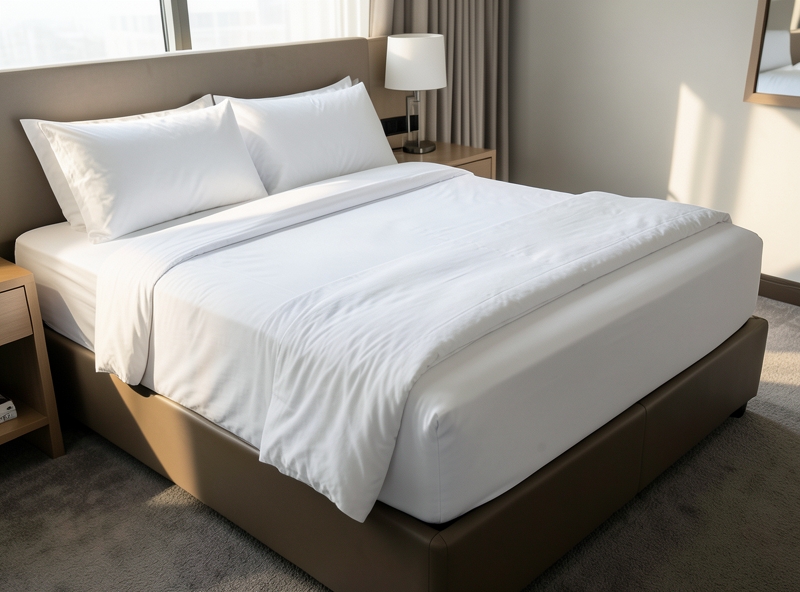
The "Hospital Corners" folding technique is a mandatory standard if you want to upgrade your bedroom to a professional level. This method not only keeps the sheets perfectly flat and prevents shifting during use but also creates sharp architectural lines for the bed:
- Step 1: Spread the sheet flat over the mattress, tucking the bottom end under the foot of the mattress.
- Step 2: Lift one side of the sheet to create a 45-degree angle with the mattress corner, then tuck the excess bottom fabric underneath.
- Step 3: Drop the 45-degree edge and tuck it tightly under the mattress, creating a sharp diagonal crease at the corner.
"Luxury does not lie in outward flashiness; it lies in the discipline of arrangement and the quality of details that come into direct contact with the body."
Finally, folding the top of the duvet back about 1/3 of the bed's length to reveal the flat sheet underneath creates a layering effect. This approach not only creates an inviting feel but also helps you easily regulate body temperature while sleeping, ensuring maximum practicality for the user.
3. Pillow Stacking Techniques for Impressive Visual Effects
In modern interior design, a bed is not merely a place to sleep but also the visual centerpiece of the bedroom. Pillow styling is akin to designing the User Interface (UI) for a resting space. When executed with the right technique, you create depth, luxury, and a sense of comfort from the very first glance. Conversely, overuse or illogical arrangement leads to clutter, wasting space and making daily cleaning difficult.
To optimize this effect, users first need to accurately classify the "components" that make up the pillow system on a bed:
| Pillow Type | Standard Dimensions | Functional Role |
|---|---|---|
| Euro Shams | 66x66 cm | Acts as a sturdy base layer, protects the headboard, and provides necessary height. |
| Sleeping Pillows (Standard/King Pillows) | 50x70 cm or 50x90 cm | Serves biological needs (sleep), placed in front of or behind the Euro shams. |
| Accent Pillows | Various (Square, rectangular, round) | Creates color accents, texture, and completes the aesthetic structure. |
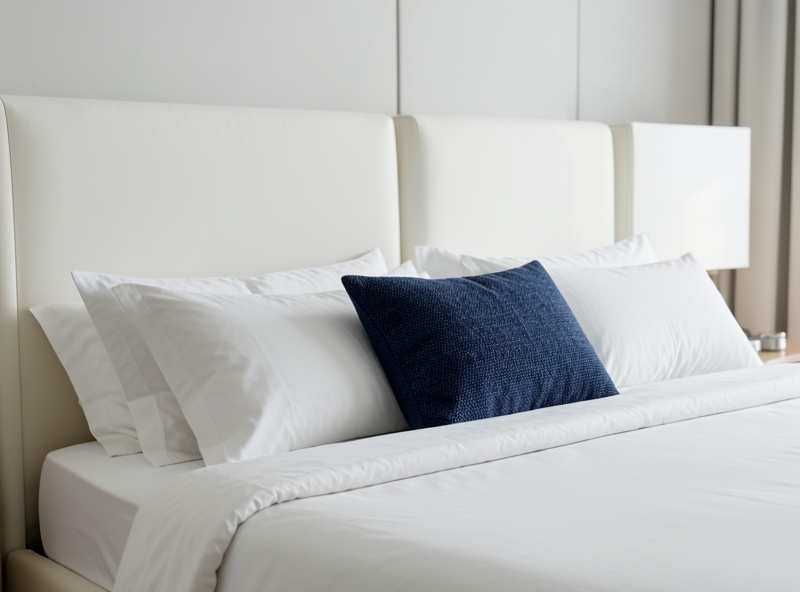
The effectiveness of decoration depends on the compatibility between the number of pillows and the bed size. Below are practical "formulas" that help users achieve the highest aesthetics without overloading the space:
- Single/Twin Bed: The optimal ratio is 1-1-1. This includes 1 Euro sham as a base, 1 standard sleeping pillow, and 1 small accent pillow in front. This approach makes the bed look full without taking up too much sleeping area.
- Queen Size Bed: Use the 2-2-2 or 2-2-1 formula. Place 2 Euro shams against the headboard, followed by 2 sleeping pillows placed parallel, and finish with 1 long lumbar pillow in the center to create symmetry.
- King Size Bed: This is the "stage" for complex pillow layers. You need at least 3 Euro shams to cover the full width of the headboard, combined with King-size sleeping pillows and layers of accent pillows tapering down towards the front.
"The difference between a 5-star hotel bed and a regular bed lies in the layered structure of the pillows. It's not just decoration; it's the art of managing volume and color."
Technically, users should prioritize pillows with down or high-quality microfiber inserts to maintain an upright shape, preventing pillows from flattening over time and ruining the visual structure. In terms of cost and functionality, the only drawback of this technique is the time required for arrangement each morning. However, the psychological value and spatial inspiration it brings are completely worth the investment.
4. Adding Decorative Throws and Area Rugs to Complete the Structure
In modern interior design, layering is a key technique to eliminate the monotony of large flat surfaces. Once the basic bedding system is established, throw blankets and area rugs serve as the "final puzzle pieces" that help define the spatial structure while optimizing the actual user experience.
A throw blanket is not merely a warming item; it is an effective visual regulation tool. A thin blanket intentionally placed at the end of the bed creates a contrasting color band or a different surface texture, helping to break up the excessive continuity of the bed sheets. This is particularly useful in rooms using neutral tones.
- Flat Layout: Fold the blanket into a narrow strip and place it horizontally right at the foot of the bed to create a neat, professional look like a high-end hotel.
- Casual Drape: Lightly drop the blanket from one corner of the bed to create a softer, more natural, and relaxing feel for the room.
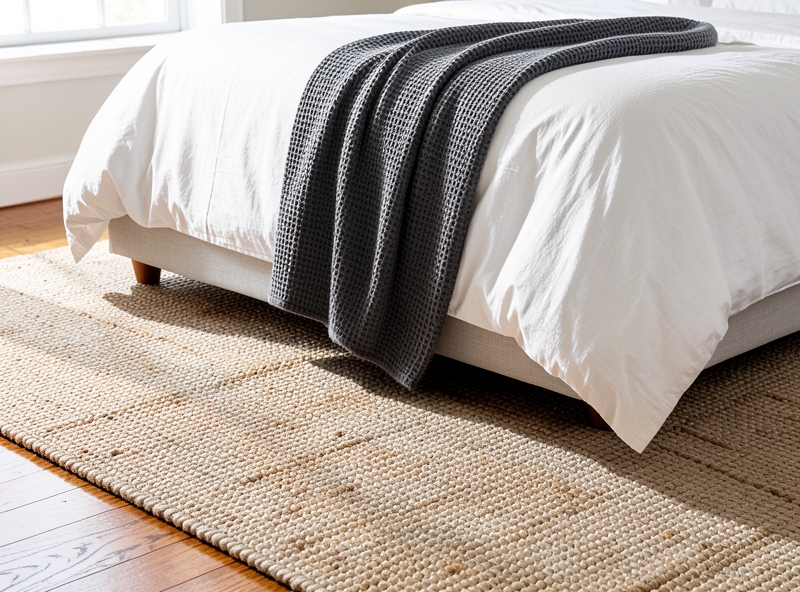
If the throw blanket creates an accent at the top, the area rug is the "anchor" that holds the entire bedroom layout together. Functionally, rugs prevent direct contact with cold floors when stepping out of bed and provide significant sound absorption. Aesthetically, the rug acts as a bridge connecting the fabric layers above with the floor, creating a unified and solid block.
"An area rug is not just a decorative item; it defines the boundaries of the rest area, transforming the bed from an independent object into the center of a cohesive spatial whole."
To achieve optimal results, rug selection should be based on a careful analysis of size and material. Below is an evaluation table of criteria for choosing a rug under the bed based on practical needs:
| Criteria | Recommended Specs | Value Provided |
|---|---|---|
| Size | 45cm - 60cm wider than the edge of the bed on each side. | Creates balance and ensures feet are always on the rug when stepping out of bed. |
| Placement | Placed from the bottom 1/2 or 1/3 of the bed extending outwards. | Does not hide the beauty of the hardwood floor while maintaining connectivity. |
| Material | Natural fibers (wool, cotton) or high-end synthetic fibers. | Easy to clean, durable, and provides a truly soft feel. |
Combining throw blankets and area rugs requires either tone-on-tone consistency or calculated contrast. A common mistake is choosing a rug that is too small for the bed area, making the room look fragmented and unprofessional. When done correctly, these two layers of material will complete the room's structure, bringing a sense of fullness, warmth, and a more "expensive" feel to the living space.
5. Principles of Material and Color Coordination in Layering
In interior design, Layering is not simply about piling up decorative items. It is a technical process that requires calculating surface interactions and light reflections. Mastering materials and colors is the key to transforming a room from a monotonous "flat" state into a space with depth and emotional richness.
The core principle of Layering is controlled opposition. To avoid boredom, the designer needs to blend at least three different types of surfaces within one visual frame:
- Smooth Surfaces: Metal, glass, marble, or lacquered wood. This group reflects light, creating a clean, modern, and luxurious feel.
- Rough Surfaces: Exposed brick walls, polished concrete, raw wood, or handmade ceramics. They absorb light and create small shadows, providing stability and authenticity.
- Soft & Shaggy Surfaces: Velvet, linen, knotted wool, or shag rugs. This is the most important "tactile" layer, bringing warmth and relaxation to the user.
| Material Type | Visual Impact | Practical Value |
|---|---|---|
| Hard & Glossy (Stone, Metal) | Increases spatial openness, creates modern highlights. | Durable, easy to clean, suitable for high-frequency use areas. |
| Natural (Rattan, Wood, Sedge) | Reduces the coldness of technological devices. | Eco-friendly, creates a sense of closeness. |
| Textiles (Velvet, Wool, Linen) | Softens rigid architectural edges. | Good sound insulation, increases comfort during direct contact. |
Regarding color, Layering is most effective when implemented based on two main strategies: Monochrome and Contrast. While Monochrome focuses on variations in value to maintain quiet luxury, Contrast uses opposing color pairs to create strong visual stimulation.
"Luxury does not come from filling a space with expensive items, but from the way material surfaces interact with each other under the light. A monochromatic palette rich in texture is always more valuable than a multicolored space poor in materials."
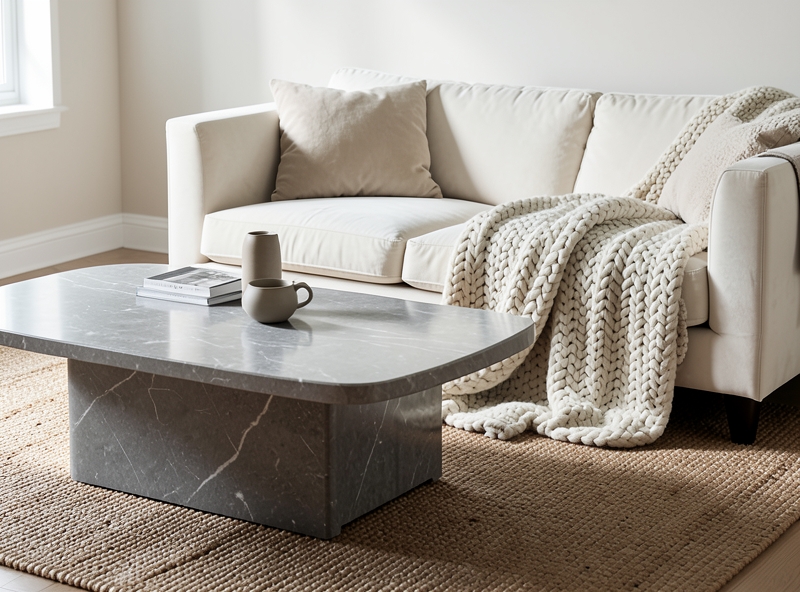
To maintain relaxation, the 60-30-10 color rule remains a practical "guiding star." In this, 60% is the neutral background color (usually large, smooth surfaces), 30% is the secondary color from materials with rougher surfaces to create rhythm, and 10% is the accent color from accessories with special materials (precious metals or handmade textiles). This approach ensures the space always has a clear hierarchy, avoiding visual clutter for the occupant.
6. Conclusion
Layering techniques in interior design are not merely about filling a space, but rather an optimization process of the living experience based on visual and sensory stratification. To operate a living space that meets the standard of being both "pleasing to the eye and satisfying to the soul," users need to master the core cycle: starting from the foundation layer (floors, walls), establishing the main furniture blocks (sofas, tables, beds), then integrating cushioning layers (rugs, curtains, pillows), and finishing with lighting systems and decorative accessories.
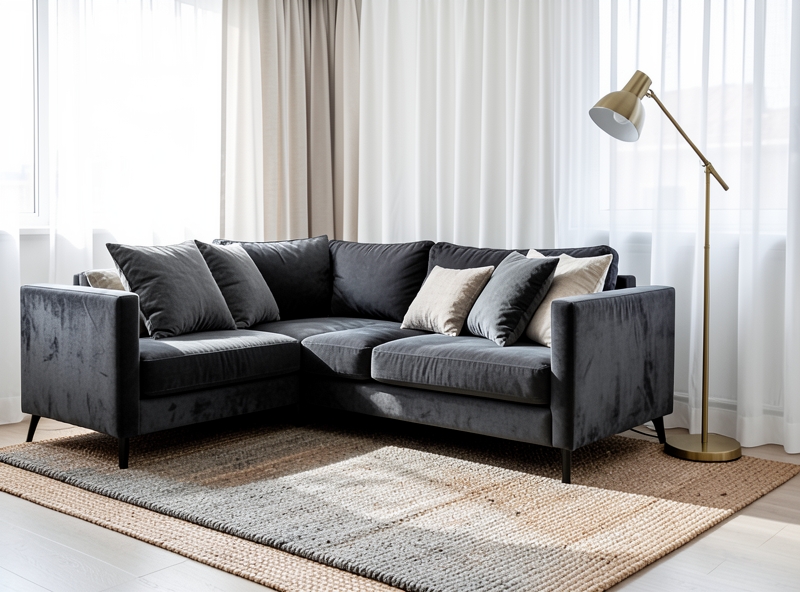
The practical value of this process lies in its high degree of customization. However, personalization must be strictly controlled by rules of balance to avoid falling into the trap of clutter. A space that bears a strong personal mark but lacks proportion calculations will cause visual noise, reducing the home's relaxation effectiveness.
| Strategic Element | Value Provided | Practical Note |
|---|---|---|
| Personalization | Creates identity and emotional connection with the space. | Avoid overusing too many souvenirs which causes spatial fragmentation. |
| Balance | Maintains aesthetic structure, creating a sense of tidiness. | Visual weight needs to be distributed evenly across areas. |
| Periodic Cleaning | Protects health and maintains the durability of fabric materials. | Fabric layers (rugs, curtains) are the highest accumulators of fine dust. |
From a long-term application perspective, investing in fabric layers and accessories requires a serious maintenance plan. Weekly rug vacuuming, periodic curtain washing, and sofa surface treatment are not just hygiene issues but ways to preserve the aesthetic "performance" of the Layering. If cleanliness cannot be maintained, decorative layers will backfire, becoming sources of allergens and reducing the apartment's utility value.
"True luxury in home decoration does not lie in the price tag of an item, but in the ability to control the balance between personal preference and discipline in arrangement and maintenance."
In summary, home decoration is an ongoing project. Understanding the Layering steps gives you a solid framework, but it is the meticulousness in material selection and awareness of periodic cleaning that are the keys to maintaining a high-quality, sustainable living space over time.