
1. Active Rest: The Golden Key to a Sustainable Career
Imagine your brain is the most advanced central processing unit (CPU) available today. In the era of "hustle culture," we constantly overclock the system to its maximum frequency, running thousands of background tasks simultaneously while forgetting that every component has a thermal limit. When the system temperature exceeds this threshold, "thermal throttling" occurs – performance is stifled to protect the hardware. In the biological world, we call this burnout. Burnout is not merely a feeling of fatigue; it is a serious system crash where neurons become overloaded with information, leading to a "system freeze" in creative and problem-solving abilities.
"Active rest is not about pressing the system SHUTDOWN button, but rather performing a REFACTORING process of the mind's source code, helping to eliminate data junk and optimize processing flows for the next cycles."
So, what exactly is "Active Rest"? If passive rest is "Sleep Mode" – where you lie on the sofa, aimlessly scrolling through social media (which is actually a form of memory leak that forces the brain to process junk data streams), then active rest is a much more optimized algorithm. It involves engaging in low-intensity activities that require selective focus, helping to activate different brain regions and allowing the "Default Mode Network" (DMN) to perform its task of consolidating memory and restructuring complex ideas.

Why is this a mandatory strategy rather than a luxury choice? Look at the performance comparison table below to see the difference in "throughput" (actual productivity) between the two states:
| System Parameters | Passive Rest | Active Rest |
|---|---|---|
| Operating Mechanism | Temporary disconnection, consuming junk content. | Task Switching to auxiliary activities. |
| Neuron Recovery Level | Low (Often leads to grogginess after waking up). | High (Stimulates Neuroplasticity). |
| Creative Processing Capability | Stagnated due to lack of quality input. | Optimized (Ideas are connected subconsciously - Incubation). |
| Long-term Impact | Only a temporary fix for fatigue. | Builds a sustainable "cooling system" for the career. |
To maintain 99.99% "Uptime" for your career, you need intentional rest protocols such as: walking in nature (without electronic devices), pursuing a hobby that requires dexterity (like assembling models or playing an instrument), or simply meditating to clear the cache. This is not a waste of resources, but a crucial Scheduled Maintenance. Without these active breaks, your processor will surely suffer "hardware degradation" before it can even reach the peak of its personal Roadmap.
- The Core Difference: Active rest creates "Deep Play" – a gentle flow state that helps restore natural dopamine instead of toxic dopamine from screens.
- Strategic Nature: Treating rest as part of the job (Job Story) helps you eliminate the guilt of not working.
- Synergy Effect: A gently moving body releases neurotransmitters that help the brain process logic many times better afterward.
2. The Thin Line: Distinguishing Between Laziness and Strategic Rest
In the era of "toxic productivity," putting down your phone and doing nothing can sometimes make us feel as guilty as if we had just made a grave mistake. We Gen Z are often caught between two extremes: either grinding until burnout or lying around all day and then blaming ourselves for being lazy. In reality, the boundary between "indulging in procrastination" and "intelligently regenerating energy" is very thin, but if you "check the vibe" through these 3 criteria below, you will know if you are truly resting or just escaping.
| Criteria | Laziness | Strategic Rest |
|---|---|---|
| Purpose | Escaping responsibility, avoiding immediate pressure. | Physical and mental recovery to work more effectively. |
| Mindset | Passive, accompanied by feelings of guilt and insecurity. | Proactive, planned, and fully enjoyed. |
| Result | Stagnation, prolonged fatigue, loss of momentum. | Return of sharpness, creative explosion, and full of inspiration. |
First is the Purpose. Laziness is essentially a defense mechanism when you feel overwhelmed by a difficult task. Instead of facing it, you choose to disappear into endless short videos on social media. Conversely, strategic rest is like proactively putting your device into "Battery Saving Mode." You stop not because you are afraid of work, but because you know that if you continue with 5% energy, the output will only be a mess.

Next, reflect on the Mindset. Have you ever lain down to watch a movie but your mind was still racing about unfinished deadlines, resulting in no joy but only more fatigue? That is a sign of unhealthy laziness. Strategic rest requires a decisive "closing the deal" with yourself: "In these 30 minutes, I will not touch work." When you proactively schedule rest, guilt is eliminated, making room for true relaxation.
Finally, look at the Result after the break. If after an afternoon of "drifting," you feel heavy-headed, disoriented, and unwilling to start again, you are falling into the black hole of procrastination. But if after a short nap or a walk around the city, you feel your neurons starting to "fire," and solutions for old projects suddenly appear, then congratulations, you have just performed an extremely "top-tier" strategic rest.
"Rest is not giving up the race; it is a necessary stepping stone for you to make a further leap without losing your breath halfway."
Don't let the "must always be busy" prejudice deceive you. Taking a break to enjoy a cup of coffee, do your skincare, or simply look out the window doesn't make you a lazy person. As long as you do it proactively and with intent, that is how you are investing in a more radiant and sharper version of yourself in the future.
3. The Scientific Mechanism of Energy Regeneration for the Brain
Energy regeneration is not merely a state of physical rest, but a complex biochemical process occurring within the central nervous system. When the brain is disconnected from high-intensity focused tasks, a specialized neural system called the Default Mode Network (DMN) is activated.
The DMN consists of a group of interconnected brain regions, primarily the medial prefrontal cortex, the posterior cingulate cortex, and the inferior parietal lobule. Contrary to the common misconception that the brain "shuts down" during rest, the DMN shows that the brain is extremely active in a static state to process internal information, self-reflect, and establish new neural connections.
"The Default Mode Network is not a passive state; it is a critical phase for the brain to perform the 'incubation' function – the precursor to all breakthroughs in thinking and creativity."
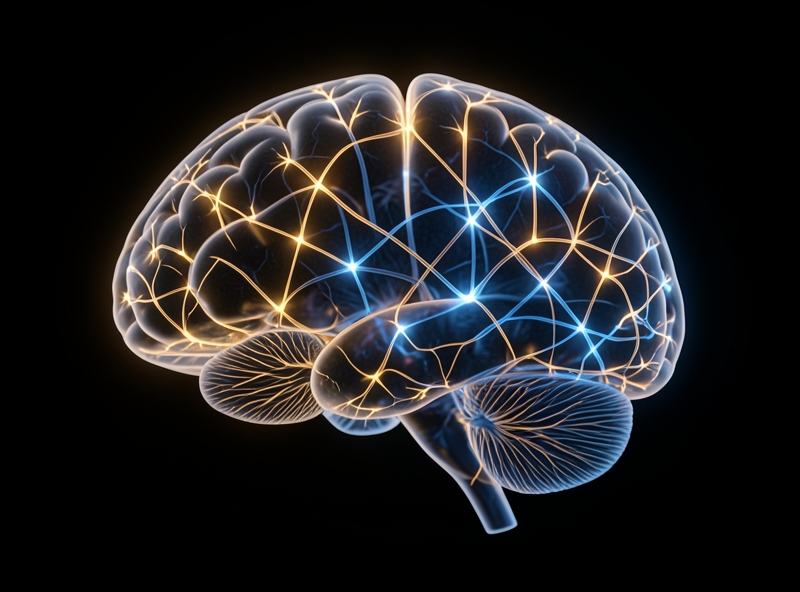
This mechanism plays a decisive role in two important processes: memory consolidation and the promotion of creative thinking. During the energy regeneration process, the hippocampus coordinates with the cerebral cortex to convert short-term memory into long-term memory. Ceasing the intake of new information creates space for the brain to organize, categorize, and store data logically. Simultaneously, the interruption in intentional focus allows fragmented ideas to connect, creating "insights" that are difficult to achieve in a high-stress working state.
Endocrinologically, energy regeneration directly affects the Hypothalamic-Pituitary-Adrenal (HPA) axis. When the brain rests properly, levels of Cortisol – the primary stress hormone – decrease significantly. Maintaining low Cortisol levels during breaks helps protect neurons from degeneration and improves the sensitivity of dopamine receptors.
| Impact Index | Stress State (Lack of Regeneration) | Recovery State (After Regeneration) |
|---|---|---|
| DMN System | Inhibited by the central executive network | Highly active, processing internal data |
| Cortisol Level | Elevated, inhibiting logical thinking | Reduced to biological balance |
| Memory (Synaptic Plasticity) | Prone to confusion, difficult to retain new information | Enhanced connectivity and deep memory retention |
| Reflex Speed | Slowed due to synaptic fatigue | Restored and optimized |
From a molecular biology perspective, rest also facilitates the operation of the Glymphatic system. This is the brain's "cleaning" system, which helps remove toxic proteins such as beta-amyloid that accumulate during daytime neural activity. Therefore, energy regeneration is not just a psychological need but a mandatory biological requirement to maintain clarity and sustainable performance.
- Reducing Cognitive Pressure: Disconnecting helps release the working memory of the prefrontal cortex.
- Balancing Neurotransmitters: Restoring natural levels of Serotonin and Dopamine, helping stabilize mood.
- Optimizing Stress Response: Enhancing the nervous system's ability to self-regulate against external fluctuations.
4. Optimal Active Rest Methods for Busy People
In the journey of self-development, we often obsessively pursue performance milestones, forgetting that humans are biological entities, not machines. "Recharging" is not merely about stopping work; it is about practicing active rest methods to regenerate the flow of energy, much like how a forest restores itself after each season of shedding leaves. Active rest helps balance the nervous system, minimizes the depletion of mental resources, and maintains sustainability for long-term health.
Below are practical techniques to help you optimize your rest time, even amidst the densest schedules:
- Micro-breaks Technique: Instead of waiting until exhaustion hits, insert breaks of 2-5 minutes after every 30-60 minutes of work. Instead of scrolling through your phone—a behavior that consumes the brain's "green energy"—direct your gaze into the distance, look at a green plant, or take a few deep breaths. Visual contact with the color green or natural light significantly reduces cortisol (stress hormone) levels.
- The 90-Minute Rule (Working in Ultradian Cycles): The human body operates on biological rhythms lasting approximately 90 minutes. After this period of high concentration, the brain needs at least 15-20 minutes to recover. Forcing yourself to work continuously for many hours not only reduces the quality of work but also causes severe burnout.

"Rest is not a waste of time; it is an act of respecting the natural rhythm of life within you."
- Mental Rest through Digital Detox: The explosion of electronic devices keeps the mind in a constant state of data overload. Spend at least 30 minutes a day completely detached from screens. Reducing digital content consumption time not only protects your eyes but also minimizes the indirect carbon footprint from operating massive data centers. Instead, read a paper book or simply observe the movement of the clouds.
- Physical Rest and Meditation: Gentle movement such as stretching right at your desk helps release energy blockages. If possible, practice meditation for 5-10 minutes. Using a yoga mat made from sustainable materials like natural rubber or cork will help you feel more connected to Mother Earth, supporting a holistic body-mind healing process.
| Method | Optimal Duration | Core Benefits |
|---|---|---|
| Micro-breaks | 2 - 5 minutes | Reduces eye strain, instantly refreshes focus. |
| Ultradian Cycles | 15 - 20 minutes every 90 minutes | Maintains consistent performance throughout the day. |
| Digital Detox | 30 - 60 minutes (end of day) | Improves sleep quality, reduces nervous tension. |
| Meditation/Light Exercise | 10 - 15 minutes | Regenerates physical energy, boosts the immune system. |
Applying these methods does not require much time, but rather a commitment to yourself. When you learn to rest in harmony with natural laws, you are not only developing a stronger individual self but also practicing a mindful lifestyle, reducing unnecessary pressure on both your own mental ecosystem and the surrounding environment.
5. Establishing the 'Rest is Part of the Work' Mindset
Data from labor productivity studies confirm: The human brain reaches a saturation point after an average of 90 - 120 minutes of high-intensity work. Maintaining a continuous working state without breaks (Hustle Culture) leads to a decline in dopamine levels, an increased rate of systematic errors, and prolonged processing time for complex tasks. Considering rest as a mandatory module in your personal operating procedure is the way to optimize "total capacity" rather than maximizing "hours present."
| Measurement Metric | Continuous Work (>4h) | Structured Rest (90/15) |
|---|---|---|
| Cognitive Focus | Decreases by 40% after the first 2 hours | Maintains stability at 85-90% |
| Error Rate | Increases linearly over time | Low and stable |
| Creative Output | Limited by mental ruts | Increases by 30% after short breaks |
To integrate rest into a professional workflow without disrupting the flow, individuals need to implement an expectation management mechanism through transparent communication protocols:
- Establish "Deep Work Hours" and "Recharge Slots": Update public work calendars (Google Calendar/Outlook) with specific rest periods. This is a clear message about not responding to non-urgent requests.
- SOP (Standard Operating Procedure) for Responses: Set response thresholds for messages/emails. For example: Slack/Teams messages will be replied to within a maximum of 60 minutes during working hours, allowing individuals short "disconnection" intervals to regenerate.
- Clear Separation of States: Resting is not switching from a computer screen to a phone screen. True rest requires a complete disconnection from work-related stimuli to allow the nervous system to recover.

"Maintaining peak performance lies not in the ability to work tirelessly, but in the ability to recover rapidly after each period of effort."
Managing colleagues' expectations with actual results is the most effective way to protect your rest time. When the quality of output is guaranteed at an excellent level, your "disconnection" periods will be recognized as an inevitable part of a professional workflow, rather than being misunderstood as stagnation.
6. Summary
Have you ever wondered why the greatest marathon runners never give it their all in the first few meters? The journey of self-development is exactly the same. If life is a racetrack, then it is certainly not a flashy 100-meter sprint, but a persistent run across fields, hills, and jagged turns. You don't need to overtake someone immediately; you just need to keep yourself from giving up.
"True growth is not measured by speed, but by the ability to maintain progress even when the wind is against you."
Reflecting on what we've shared, persistently honing yourself not only helps you acquire new skills but also builds core values within you:
- Insight: You clearly understand your own internal strength and limits, instead of constantly chasing someone else's standards.
- Resilience: Like a tempered spring, you know how to bounce back higher after every stumble.
- Composure: You learn how to manage expectations, knowing that every sweet result needs time to ripen.
| Characteristic | "Sprint" Mindset | "Persistent Marathon" Mindset |
|---|---|---|
| Speed | Fast, intense but easy to lose breath. | Stable, rhythmic, and goes the distance. |
| State | Stressful, easy to fall into the burnout trap. | Balance between effort and recovery. |
| Vision | Short-term, only looking at immediate benefits. | Long-term, focusing on sustainable value. |
I want to tell you one important thing: Practice the "art of resting." Do not confuse stopping to recharge with laziness. Even the most modern phone needs to be plugged in after a long day. You are the same; those quiet moments, those days when you allow yourself to "disconnect," are the times when your creative cells and willpower are most powerfully regenerated.

Keep moving forward on your own journey, with a steady heart and a contented mind. Success is not the ultimate destination but the way you feel happiness on every mile you pass. Don't forget to take good care of yourself, because you are the most precious asset you have. See you at new heights, where you are not only successful but also truly healthy and peaceful.