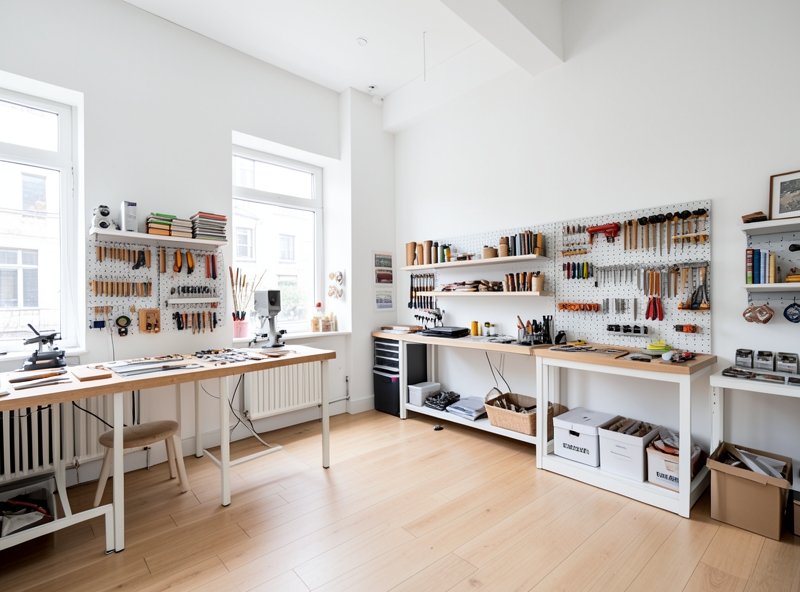
1. The Importance of Optimizing Space in Small Retail Stores
Every square meter of floor space silently incurs fixed costs every second, but is that area generating proportional revenue? For small-scale businesses, space is not merely a place to hold merchandise, but a strategic asset that determines survival. The fatal mistake of many managers is trying to cram maximum products onto shelves, turning the store into a suffocating warehouse, unintentionally stifling the shopping experience and directly pushing customers to competitors.
"In modern retail, unoptimized space is a sunk cost. Conversely, scientifically arranged space is the highest-performing silent salesperson."
Space optimization is the art of freeing up physical "bottlenecks" to clear the way for financial flow. When the layout is smartly planned, businesses will immediately achieve three core benefits: enhancing the customer experience, freeing up staff productivity, and directly maximizing the sales per square foot metric.
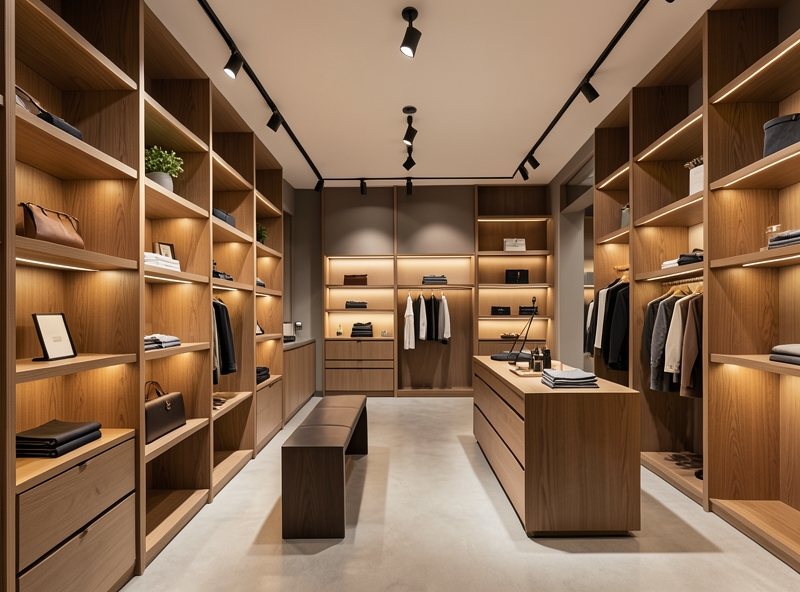
To clearly see the difference, look at the operational efficiency comparison table below between two floor management mindsets:
| Operational Metric | Intuition-Based Layout | Scientifically Optimized Layout |
|---|---|---|
| Dwell time | Short, customers want to leave quickly due to suffocation. | Long, customers freely experience and explore. |
| Employee efficiency | Frequent collisions, wasting time searching for goods. | Fast operations, reducing redundant movement by 30%. |
| Conversion rate | Low, customers struggle to find target products. | High, thanks to purposefully arranged visual touchpoints. |
Any change in space must start by answering the question: Are customer traffic flows and employee workspace operations truly synchronized? Designing traffic flow is not just about leaving an aisle, but about building a silent behavioral script, guiding customers' steps through the most profitable areas. In parallel, the staff work area must be minimized according to ergonomic principles, ensuring all supporting tools are within reach to eliminate every wasted second in daily operational processes.
2. Designing a Scientific Movement Flow for Customers and Staff
A narrow aisle, an invisible bottleneck right at the checkout corner can silently steal 30% of the revenue of a small-scale store without you even knowing it. When customers feel bumped from behind (the "Butt-Brush Effect") or staff must constantly dodge each other while carrying items, the shopping experience immediately falls apart. Flow design is not merely about arranging shelves; it is the art of navigating behavior and optimizing every square centimeter of area to generate profit.
For small spaces under 100m², aisle planning must solve two problems simultaneously: extending customers' natural experience time and minimizing redundant steps of operating staff.
| Flow Model | Advantages for Small Spaces | Disadvantages to Note | Best Practical Application |
|---|---|---|---|
| Free-Flow | Creates a sense of freedom, stimulates impulse buying, easy to change layout. | Easy to waste space if you do not know how to place product "anchors". | Boutique fashion stores, high-end cosmetics, handicrafts. |
| Grid Flow | Maximizes display space on walls and shelves, easy to manage inventory. | Easy to create a tedious feeling, customers tend to walk quickly through the aisles. | Convenience stores, clean food, mini bookstores. |
| Loop/Forced-Path Flow | Guides customers through 100% of products according to a pre-arranged scenario. | Causes frustration if customers just want to quickly buy a specific item. | Small furniture stores, smart household appliances, experience showrooms. |
To choose the right model, you need to understand the core behavior of your customers. If running a quick self-service model, grid flow helps them find what they need in 30 seconds. Conversely, if selling products that require high consideration, free-flow combined with central experience tables will retain them longer, thereby increasing the average order value.
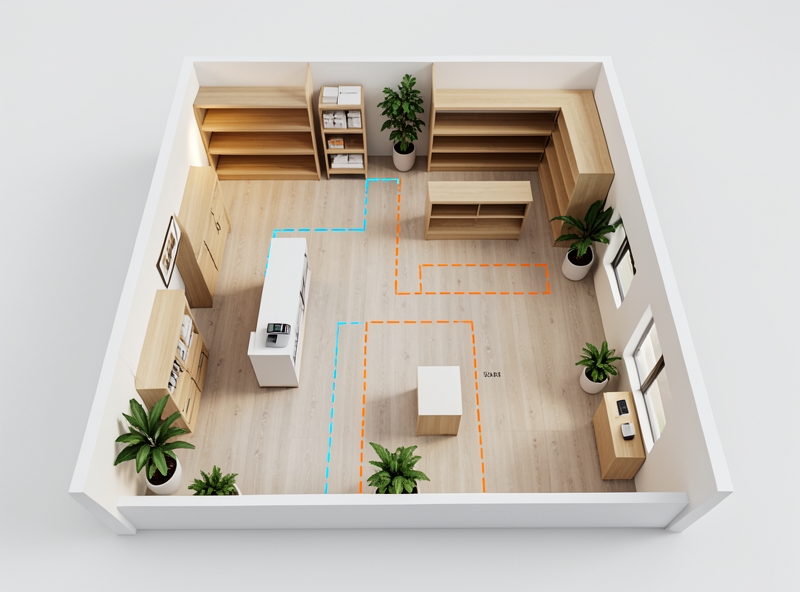
In addition to choosing the model, physical dimension parameters are vital factors determining customer comfort and staff productivity:
- Main Aisle (Artery Axis): Must reach a minimum width of 1.1m to 1.2m. This distance allows two people walking in opposite directions to pass each other easily without having to lean or make light contact.
- Secondary Aisle (Between Shelves): Ranges from 0.8m to 0.9m. This is enough space for a customer to stop and bend down to look at products on the bottom shelf without completely blocking the path of others.
- Checkout Buffer Zone (Decompression Zone): A space of at least 1.5m wide extending from the cashier counter outward. This is where the biggest traffic conflicts usually occur between people queuing for checkout and those who have just entered the store.
- Staff's Private Operational Path: If the area is too small to completely separate a private path, design "evasion points" (console tables, column corners) up to 5m apart so that staff carrying items or replenishing goods have a stopping point to politely yield the way to customers.
"The ultimate principle in small space management: Customers always have absolute priority on every aisle. All stock replenishment activities by staff must be scheduled during off-peak hours to avoid making buyers feel pushed away."
By mastering physical dimension parameters and choosing the right movement flow model, you not only create a pleasant shopping space and increase conversion rates, but also minimize operational accidents, helping staff serve faster with the least energy consumption.
3. Organizing the Workspace and Smart Shelving to Increase Productivity
Every square meter of floor space directly depreciates the net profit margin of the business. However, the majority of small shops and warehouses today are wasting up to 35% of usable space due to instinctive organization. Employees have to walk thousands of redundant steps every day just to find scissors, tape, or retrieve an misplaced item. This is not just physical fatigue; it is a silent financial leak.
To break this bottleneck, businesses need to restructure their space based on ergonomics and the concept of maximizing vertical space.
Designing "Zero Redundant Movement" Workstations
The core principle of ergonomics in small-scale operations is to bring all frequently used items within the "Golden Reach Zone" (a radius of 30cm to 45cm from the employee's body axis). When employees do not need to bend below their knees or reach above their shoulders to complete a repetitive task, order processing speed will increase by at least 40%.
- High-Performance Cashier Counter: Place the handheld barcode scanner, receipt printer, and cash drawer in a straight line that follows the natural movement of the right hand (or the employee's dominant hand). Customers pay, employees scan, receive cash, and print bills without having to turn their bodies more than 45 degrees.
- Single-Flow Packing Area: Design the packing table based on the principle of moving from left to right. On the left is the tray containing products waiting to be packed; in the middle is the space for taping boxes and bubble wrapping; on the right is where the electronic scale, shipping label printer, and finished package bin are located. This consistency completely eliminates crisscross movements that cause collisions and product mix-ups.
"Smart space layout is not about how many things you can cram into a room, but how many redundant movements you can eliminate for the worker."
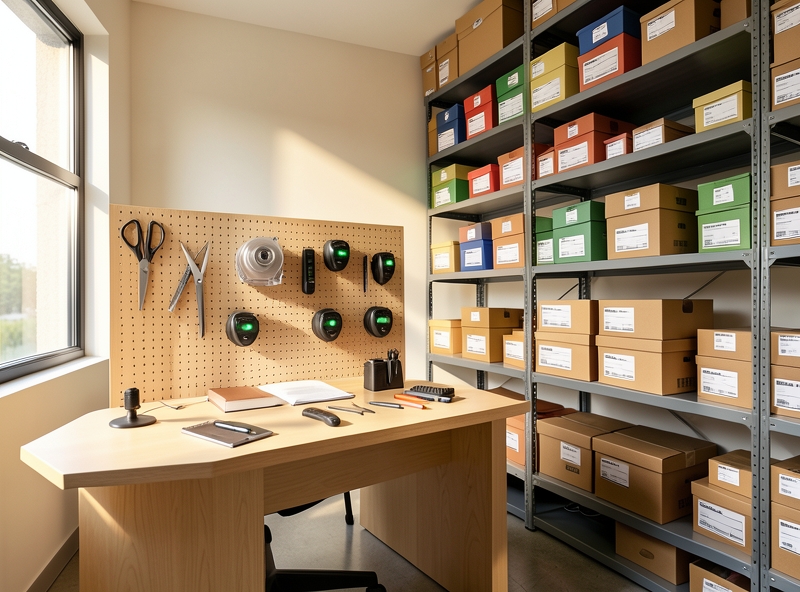
Freeing Up Floor Space: Shifting from Area to Volume
The most common mistake of small businesses is thinking flatly across a single plane. When they run out of storage space, they tend to look for more property to rent. Instead, exploit vertical space to the fullest using three strategic groups of shelving systems:
- Multi-purpose Shelving (Assembled slotted angle iron shelves): Choose shelves that allow flexible height adjustments for each tier. This helps eliminate wasted space above small-sized boxes. Allocate according to the principle of heavy items at the bottom and light items at the top to ensure labor safety.
- Wall-mounted Floor-to-Ceiling Shelves: Instead of using bulky wooden cabinets with swinging doors that consume space, use open shelving systems mounted tight against the wall and reaching all the way to the ceiling. This system expands storage capacity by up to 3 times on the same footprint of floor space. Use a dedicated rolling ladder to access the highest shelves for low-velocity inventory.
- Hanging Shelves and Pegboards over Workbenches: Put all scissors, tape, pens, scanners, and empty invoices onto a pegboard right in front of the packing employee's face. The workbench surface must be completely clear to be reserved solely for handling products.
| Comparison Criteria | Traditional Layout (Spontaneous) | Smart Layout (Ergonomics & Vertical Shelving) |
|---|---|---|
| Space Utilization Rate | Only uses 40% - 50% of actual volume due to floor spreading. | Utilizes up to 85% - 90% of volume thanks to floor-to-ceiling and wall-mounted shelving systems. |
| Search & Retrieval Time | Takes 60 - 90 seconds per SKU due to lack of visibility and obstruction. | Under 15 seconds thanks to the "everything in sight" principle and shelf tier classification. |
| Packing Error Rate | High (due to cluttered work areas and overlapping tools). | Nearly 0 thanks to the single-flow movement process from left to right. |
By standardizing the workspace and upgrading the shelving system, businesses not only cut operating costs but also create a professional working environment, helping personnel maintain high focus and minimize errors throughout their shifts.
4. Maximize Height and Light to Create a Spacious Feel
Every square meter of space is directly eating away at your profits every month. When rent costs skyrocket, a fatal mistake for small business owners is only looking at the flat floor space while ignoring the entire empty space from eye level up to the ceiling. By optimizing height and understanding the visual art of lighting, you can completely double your storage capacity while creating an airy shopping space that stimulates customer buying behavior.
Unlocking the "Gold Mine" of Vertical Space
When floor space is limited, the answer lies in the store's sky. Shifting storage thinking from "horizontal" to "vertical" helps free up movement areas, creating clear pathways for customers.
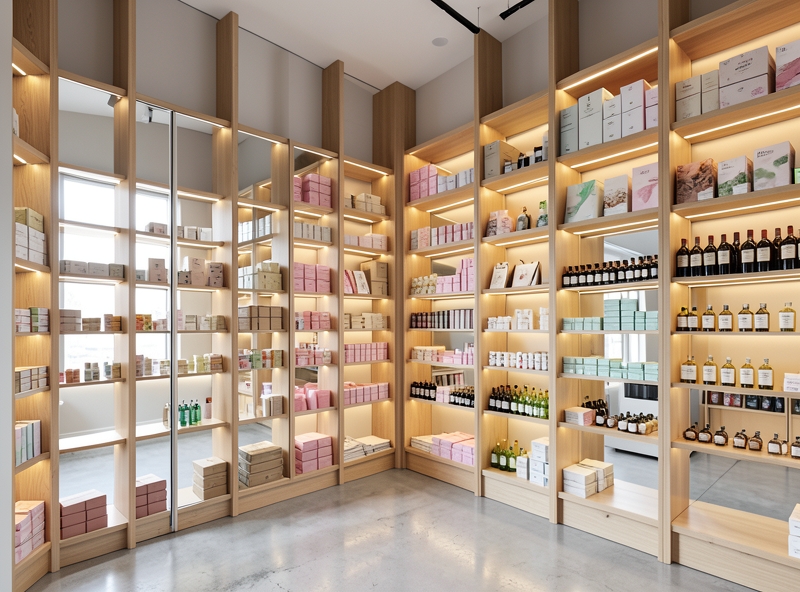
- Floor-to-Ceiling Shelving Systems: Use modular floor-to-ceiling shelving systems to store low-use items high up. The eye and reach level area (from 0.9m to 1.8m) should always be prioritized exclusively for best-selling, flagship products.
- Smart Mezzanine Utilization: For small warehouses with ceilings of 4m or higher, installing a prefabricated lightweight steel mezzanine system is the most optimal solution to double storage space or create an office space without structural renovation.
- The "Multipurpose Wall" Rule: Use pegboards or slatwalls to hang tools and small goods. This method turns empty wall space into a vibrant display area while keeping the floor clean and tidy.
The Art of "Tricking" the Eye with Light and Mirrors
Customers don't just buy products; they buy the emotion of experiencing the space. A dark, suffocating space triggers a defensive mindset, making them want to leave quickly. Conversely, mastering light and reflection will create a magical "expansion" effect of virtual space.
- Unleash the Flow of Natural Light: Natural light is the antidote to all confinement. Clear any obstacles near windows, and use large tempered glass doors to welcome maximum sunlight deep into the store.
- Layered Lighting Technique: Do not use a single high-power fluorescent bulb in the middle of the ceiling. Break it down into 3 layers of light: Soft ambient light, focused task light shining directly onto products, and decorative accent light like LED strips hidden under shelf edges to create depth and the feeling that walls are receding.
- The Doubling Effect of Mirrors: Place large mirrors covering an entire wall at dead corners or the end of aisles. Mirrors not only reflect light to make the space twice as bright, but also trick the brain into thinking the space continues, completely erasing the suffocating feeling of concrete walls.
"Physical space is fixed, but experiential space is limitless if you know how to direct the flow of light and your customers' gaze."
| Optimization Factor | Traditional Approach (Causes Cramped Feel) | Breakthrough Solution (Creates Spacious Feel) |
|---|---|---|
| Shelving System | Low shelves spread across the floor, obstructing walkways. | Floor-to-ceiling shelves, slim design, optimizing vertical space. |
| Lighting | One strong overhead light source, creating many shadows in dark corners. | Layered lighting combined with cove LEDs, eliminating all dead corners. |
| Wall Decoration | Left blank or cluttered with too many cumbersome pictures. | Using large, full-height mirrors placed in dark corners to create virtual depth. |
Investing in height and lighting does not require a huge budget like renting a larger space. This is the smartest cost-optimization problem, turning space limitations into an exclusive competitive advantage for small businesses.
5. Conclusion
Every square centimeter in a small store is a financial life-or-death battlefield. The essence of space optimization does not stop at tidy shelves or shimmering lighting. It is the art of behavioral navigation and the science of maximizing yield per square meter. When optimizing a layout the wrong way, businesses are silently committing suicide through missed opportunity costs.
A smart layout design acts as a silent salesperson working at full capacity 24/7. To turn a small space into a cash flow generating machine, business owners need to keep these three core principles in mind:
- The law of natural traffic flow: More than 80% of customers tend to turn right when entering a store. Place your highest-margin products or newest collections in the "power wall" area on the right to stimulate an immediate desire to shop.
- The eye-level is buy-level principle: The display zone from chest to eye level is the golden area. Do not waste this space on slow-moving or low-margin items. Arrange them according to the principle of "best sellers at eye level, high-value goods on the right."
- Furniture flexibility: For small businesses, fixing shelves and cabinets permanently is a fatal mistake. Using a mobile modular shelving system allows for flexible store layout changes according to seasons, promotional campaigns, or based on actual shopping data.
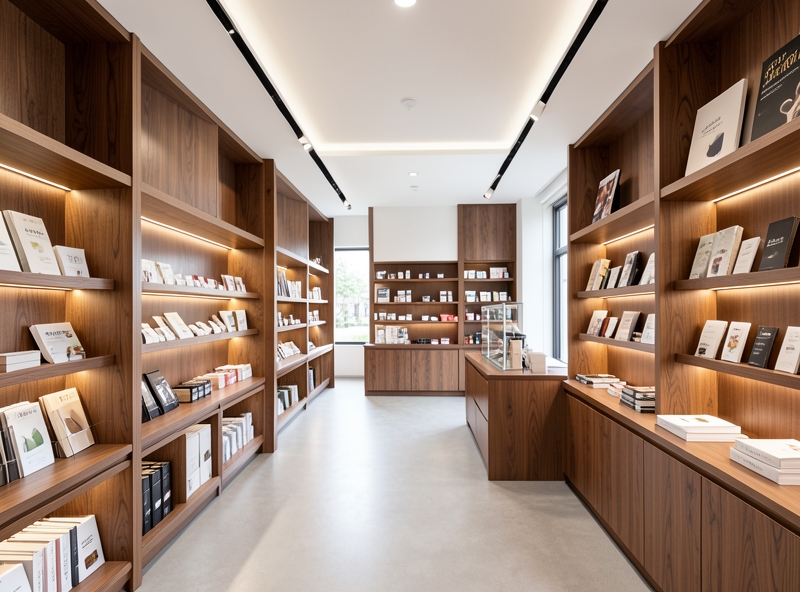
To understand the difference between conventional operational thinking and modern space management thinking, see the performance comparison table below:
| Criteria | Intuitive Arrangement (Pure Aesthetics) | Strategic Arrangement (Operational Optimization) |
|---|---|---|
| Ultimate Goal | The store looks beautiful, neat, and clean. | Increase Average Order Value (AOV) and inventory turnover rate. |
| Customer Touchpoints | Cramming maximum goods onto shelves for easy customer selection. | Creating "breathing spaces" and strategic stopping points to increase customer dwell time. |
| Performance Measurement | Evaluating by naked eye or based on the store owner's personal preferences. | Measuring by revenue per square meter and interaction density in each area. |
"Never design a store to please your eyes. Design the store to guide the steps and wallet-opening behavior of your customers."
The difference between a small store struggling to survive and a breakthrough business model lies in how the manager perceives their physical space. It is not a fixed cost to be minimized, but a strategic asset to be maximized in performance. Changing the store layout today based on behavioral data is the most practical step to build sustainable momentum for the business.