1. What is the Sous-vide Technique? An Overview of the Art of Vacuum Cooking
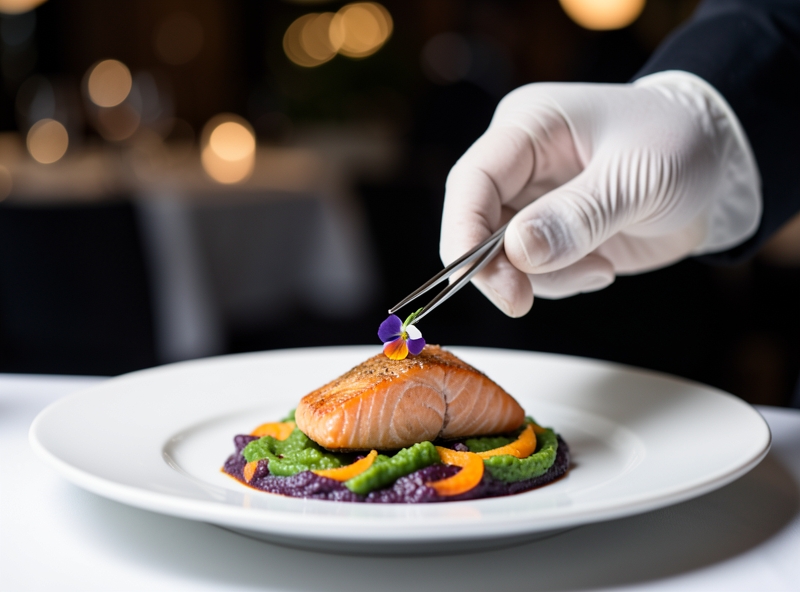
How many times have you had to grit your teeth swallowing a piece of chicken breast as dry as sandpaper, or felt deep regret for accidentally ruining an expensive steak just because of 2 extra minutes in a hot pan? That is the biggest barrier separating home cooks from a Michelin-standard experience. Sous-vide emerged to completely eliminate that guesswork.
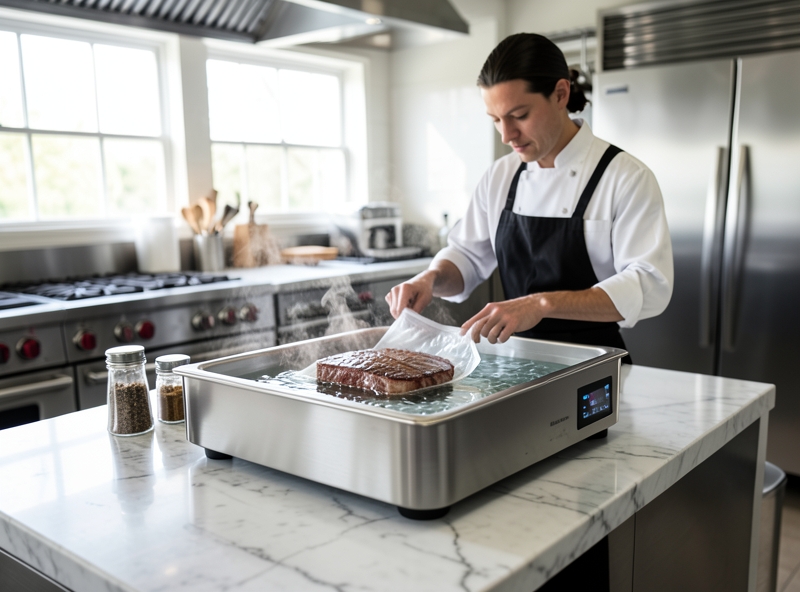
Originating from French with the literal meaning "under vacuum", Sous-vide (pronounced: soo-veed) is not merely a recipe, but **the art of absolute temperature control**. The core operating principle relies on 3 minimalist yet refined steps:
- Vacuum packaging: Fresh food along with seasonings and herbs are vacuum-sealed in specialized heat-resistant plastic bags.
- Cooking in a water bath: The food bag is fully submerged in a circulating water bath.
- Precise temperature control: The heating device (Immersion Circulator) keeps the water temperature constant with a variance of no more than 0.1°C over many hours.
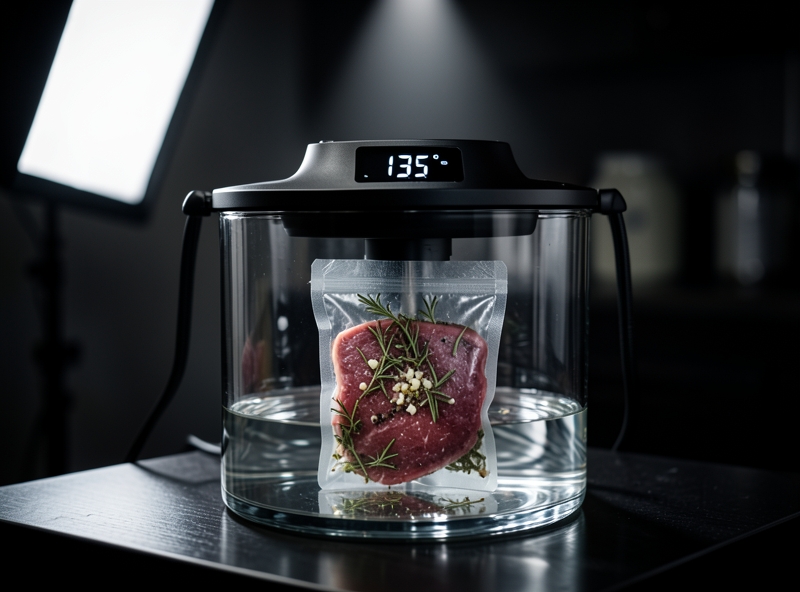
Imagine the physical difference: When searing a piece of meat traditionally, you use a 200°C flame targeting the surface and hope heat transfers to the center just enough before the outer layer turns black. In contrast, Sous-vide turns the water bath into a perfect thermal equilibrium environment. If you want a steak cooked medium-rare at exactly 54.5°C from edge to edge, you simply set the water bath to precisely 54.5°C. Whether submerged for 1 hour or 4 hours, the food **is never overcooked**.
"Traditional cooking is a race against time. Sous-vide is complete mastery over temperature."
To clearly understand why this technique dominates fine dining restaurants, let us analyze the core comparison table below:
| Comparison Criteria | Traditional Method (Frying/Grilling/Boiling) | Vacuum Cooking Technique (Sous-vide) |
|---|---|---|
| Applied Temperature | Very high, widely fluctuating (150°C - 300°C), difficult to control. | Absolutely fixed, precise to every 0.1°C. |
| Moisture & Weight Loss | High evaporation. Food can lose 20% - 30% of its water weight. | Locks in 100% moisture and natural juices inside the sealed bag. |
| Consistency | Uneven. The outer edges are overcooked, with only the center reaching the desired doneness. | 100% consistent from the surface structure all the way to the inner core. |
| Flavor & Nutrition | Aromas and nutrients are easily degraded by high heat or dissolved into cooking liquid. | Seasonings penetrate deeply, retaining vitamins and collagen structure completely. |
| Margin of Error | Extremely small. The line between "perfect" and "ruined" is measured in seconds. | Very forgiving. Food maintains its peak quality even if left submerged for a few extra hours. |
Sous-vide does not completely eliminate traditional techniques, but rather serves as the most perfect preparation step. Once a piece of meat reaches precise juiciness after Sous-vide cooking, it only requires a quick sear of 45 seconds per side to create an appealing golden-brown crust (the Maillard reaction). This is the secret formula to help you master even the most demanding ingredients.
2. Why Does Sous-Vide Create Juicy Textures and Perfect Precision?
The biggest disaster in a fine-dining kitchen is watching an expensive tenderloin turn into a tough "shoe sole" just because it was overcooked by 2 minutes. This mistake isn't about skill, but rather the physical limits of traditional heating methods. When a pan or oven is at 200°C, the surface of the food gets scorched before the center has time to cook, creating a tough "grey band" and causing a massive loss of natural juices.
The sous-vide technique completely solves this pain point through absolute thermal equilibrium. By vacuum-sealing food in a bag and cooking it in a water bath precisely controlled to within 0.1°C, sous-vide transforms cooking from a game of chance into a perfectly repeatable science.
| Comparison Criteria | Traditional Methods (Searing/Roasting) | Sous-Vide Method |
|---|---|---|
| Temperature Difference | Very high (Surface 200°C - Core 54°C) | Zero (The entire cut reaches exactly 54°C) |
| Weight Loss (Water/Fat) | 25% - 35% loss of original weight | Under 5% loss, retaining all juices |
| Precision & Consistency | Uneven doneness (Very easy to overcook) | 100% evenly cooked from edge to core |
| Flavor & Nutrient Retention | Lost through steam and smoke | 100% locked in a vacuum environment |
The Science of Protein Denaturation: Unlocking Juicy Textures
Meat is essentially a "sponge" containing 75% water held together by protein fibers. When exposed to heat, the two primary proteins that directly determine meat tenderness react completely differently:
- Myosin (Denatures at 50°C - 55°C): In this temperature range, the meat structure gently contracts, retaining moisture and creating a pleasantly soft texture when eaten.
- Actin (Denatures at 66°C and above): When temperatures exceed 66°C, actin fibers contract violently, squeezing the meat grains tightly and wringing out all moisture like twisting a wet towel. This is precisely what causes meat to become dry and tough.
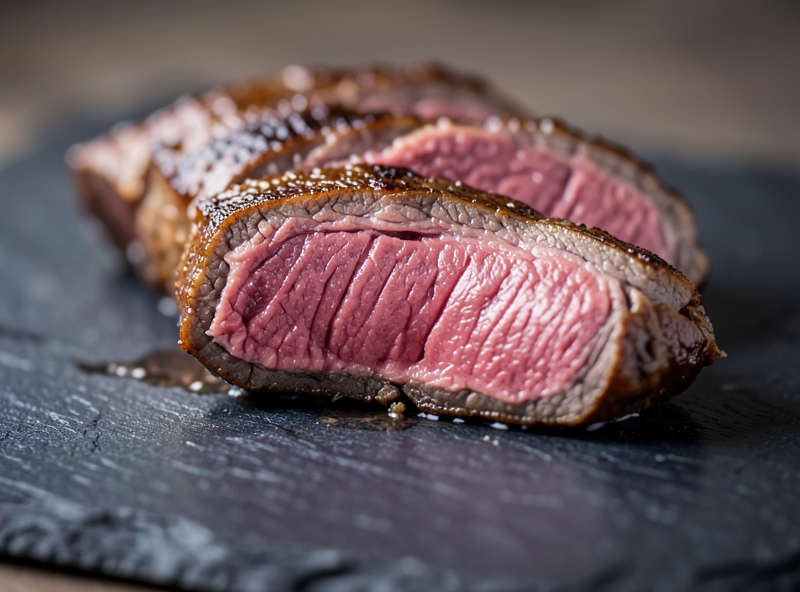
Sous-vide allows you to maintain a precise temperature at 54.5°C (for medium-rare steak) for hours. This temperature is sufficient to denature myosin and eliminate harmful bacteria, but absolutely never reaches the denaturation threshold of actin. As a result, natural juices remain completely locked inside the meat fibers.
4 Outstanding Advantages That Win Over the Most Demanding Palates
Going beyond juiciness, sous-vide redefines the quality standards of fine dining through 4 exclusive characteristics:
1. 100% edge-to-edge perfection: You no longer have to settle for dry, overcooked outer edges just to get a pink center. Every point on the cut of meat achieves the exact desired level of doneness.
2. Completely eliminates the risk of overcooking: Because the water temperature is fixed at the exact target temperature of the dish, the food cannot get hotter than that setting. Even if you "accidentally forget" the steak in the water bath for an extra 30 minutes, it retains its perfect doneness without becoming tough or dry.
"Sous-vide is not merely a cooking method; it is a revolution in temperature control at the molecular level, transforming every grain of meat into a culinary masterpiece with absolute consistency."
3. Fully seals in natural flavors: The vacuum-sealed environment prevents the evaporation of concentrated aromatic compounds. Spices, herbs, and natural juices penetrate deep into every cell of the food under vacuum pressure, creating a depth of flavor many times richer than conventional cooking methods.
4. Minimizes weight loss: Fine-dining restaurants especially favor sous-vide for its ability to optimize ingredient costs. A 300g steak, when pan-seared conventionally, weighs only around 210g after cooking; with sous-vide, however, the retained weight reaches almost the full amount at 285g.
3. Guide to the 4-Step Restaurant-Quality Sous-Vide Cooking Process
Have you ever had to regretfully throw away an expensive tenderloin just because you overcooked it by 30 seconds in the pan? Traditional cooking techniques are always a risky game, as the external temperature is always much higher than the desired doneness at the core of the food. Sous-vide (vacuum thermal cooking) was born to completely eliminate that element of chance, transforming any home kitchen into a 3-star Michelin-quality space with absolute precision.
Before diving into the process, you need to prepare the essential trio of equipment:
- Immersion Circulator: A device that maintains a stable water temperature with a margin of error of just ±0.1°C.
- Vacuum sealer and bags: Choose heat-resistant, BPA-free bags to ensure absolute health safety.
- Water container: You can use a dedicated Polycarbonate container or simply repurpose a deep stainless steel pot you already have.
"Sous-vide is not simply a cooking method; it is the science of temperature control. When you master the degrees, you master the texture and juiciness of every protein."
Below is the standardized 4-step process to help you master juicy, melt-in-your-mouth dishes with perfection:
Step 1: Preparation & Strategic Seasoning
Unlike high-heat cooking methods that alter seasonings quickly, Sous-vide amplifies rich flavors many times over. Season the surface of your food directly with salt, pepper, and fresh herbs (like thyme and rosemary). Crucial note: Avoid using raw minced garlic because, at low Sous-vide temperatures, garlic cannot cook through and will develop a harsh metallic taste; substitute it with garlic powder or pre-sautéed garlic.
Step 2: Absolute Vacuum Sealing
Place the seasoned ingredients into a specialized bag, optionally adding a small knob of butter or a splash of olive oil. Vacuum out all the air and heat-seal the bag. The vacuum environment forces seasonings deep into every muscle fiber while acting as a perfect heat conductor, preventing moisture loss that dries out food.
Step 3: Cooking in the Heated Water Bath
Attach the immersion circulator to the water container, setting the precise temperature and time according to the standardized table below. Submerge the food bag into the bath once the water reaches the target temperature. Thanks to the continuous water circulation, tough collagen in the meat slowly breaks down into soft gelatin without destroying the protein structure or losing moisture.
| Food Type | Desired Doneness | Target Temperature | Minimum Time |
|---|---|---|---|
| Ribeye / Tenderloin Beef | Medium-rare (Juicy pink) | 54°C | 2 hours |
| Chicken Breast | Juicy and tender, no dryness | 63.5°C | 1.5 hours |
| Salmon | Melt-in-your-mouth, moist and silky | 50°C | 35 minutes |
Step 4: Searing for the Perfect Crust
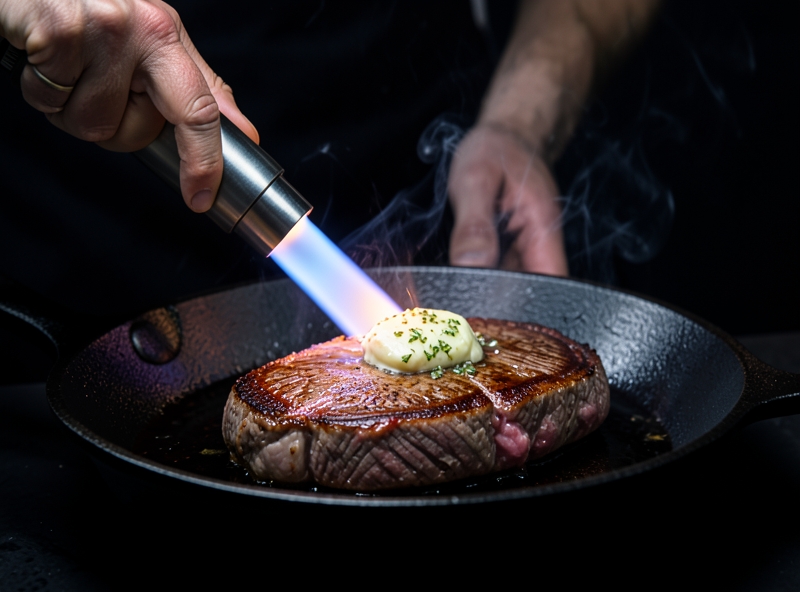
This is the decisive step for the appearance and ultimate flavor of the dish. After removing the bag from the water bath, cut it open and thoroughly pat dry the surface of the meat with paper towels. If the surface remains wet, heat energy will be wasted on evaporating water instead of creating a browning reaction.
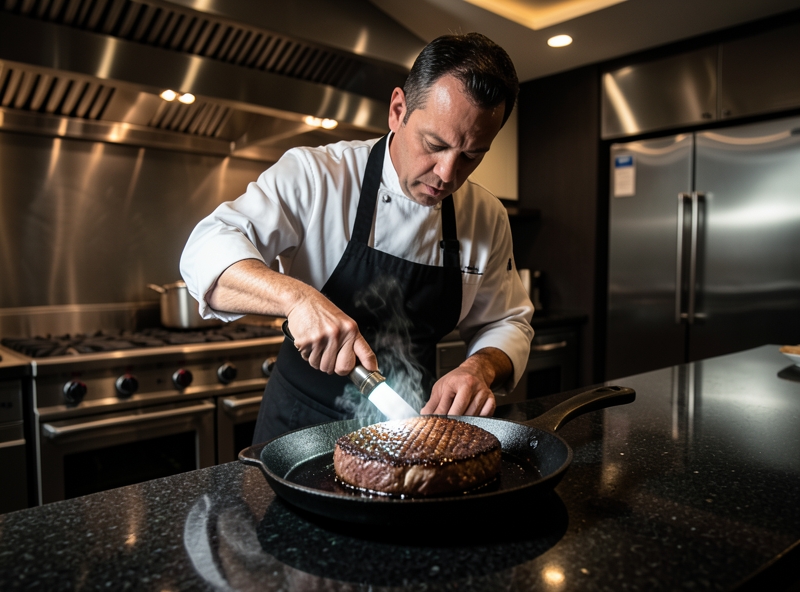
Heat a cast-iron skillet until smoking hot (around 230°C), and add a high-smoke-point cooking oil. Place the meat in the pan and sear extremely quickly: 30 to 45 seconds per side. Add butter and crushed garlic, continuously basting the surface to trigger the miraculous Maillard reaction, creating a rich, crispy golden crust with an irresistible aroma.
Because the internal temperature was perfectly controlled in Step 3, you can slice and enjoy immediately without spending time letting the meat rest as required by traditional grilling or pan-searing methods.
4. Standard Sous-Vide Temperature and Time Chart for Different Foods
A single degree Celsius can transform an expensive piece of beef into a tough block of rubber. The biggest difference between an amateur cook and a Michelin Chef lies in the ability to control protein denaturation. With Sous-vide, ambiguity is completely eliminated, making way for **absolute precision down to every millimeter of texture**.
| Ingredient | Doneness / Target Texture | Temperature (°C) | Standard Time |
|---|---|---|---|
| Beef Steak (Tenderloin, Striploin, Ribeye) | Rare (Soft, juicy) | 51.5°C - 53°C | 1 - 2.5 hours |
| Medium Rare (Perfect pink, rich) | 54°C - 55.5°C | 1 - 3 hours | |
| Medium (Medium doneness, firm) | 56°C - 58°C | 1 - 3 hours | |
| Chicken Breast (Boneless Skinless) | Juicy, melt-in-your-mouth tender (Juicy & Tender) | 60°C - 63.5°C | 1.5 - 3 hours |
| Salmon (Fillet) | Silky, rich (Slightly Translucent) | 43°C - 48°C | 30 - 45 minutes |
| Pork (Tenderloin, Pork Chop) | Tender and juicy, not dry or tough | 58°C - 62°C | 1.5 - 3 hours |
| Root Vegetables (Carrots, potatoes, radishes) | Tender-cooked while retaining shape & sweetness | 84°C - 85°C | 1 - 2 hours |
To fully master this vacuum cooking method, memorizing the specs table is just the beginning. The two decisive technical factors below will separate an "edible" dish from a "culinary masterpiece":
1. Food Safety & The "Danger Zone" Rule
Temperatures from 4°C to 60°C are the ideal environment for bacteria to multiply, doubling every 20 minutes. When cooking at low temperatures (especially salmon or rare beef), the process of **Pasteurization over time** must be strictly followed. Cooking meat at 55°C for 2 hours has the same antibacterial efficacy as cooking at 71°C for a few seconds, while fully retaining the original cellular structure.
- Never keep meat at temperatures below 55°C for more than 4 hours.
- If not consumed immediately, you must rapidly chill (Ice bath) the food pouch in a 50% water - 50% ice mixture for at least 30 minutes before freezing or refrigerating.
2. Rules for Seasoning in a Vacuum Environment
An airtight environment completely changes the chemical reactions of seasonings. The smallest mistakes will be magnified many times over when sealed inside a vacuum bag.
- Reduce salt by 50% compared to normal: Water cannot evaporate inside a vacuum bag. Salt will penetrate deep into muscle fibers; if seasoned like traditional frying or grilling, the dish will turn out overly salty.
- Avoid raw garlic and excessive fresh herbs: Raw garlic cannot cook at temperatures below 85°C; it will release a harsh, unpleasant odor and poses a potential risk of anaerobic bacterial growth. Replace it with **garlic powder** or lightly sautéed garlic.
- The fat trap (Butter/Oil): Many people habitually add a knob of butter to the bag when cooking steak. This is a costly mistake.
"Adding butter or oil to the Sous-vide bag when cooking fatty beef will dissolve and extract the best flavor compounds out of the meat. Keep the bag dry and only use butter during the final searing phase."
Accurately applying temperature ranges, mastering pasteurization time, and properly adjusting seasonings is the golden key to **completely controlling food quality**, delivering the ultimate culinary experience right in your own kitchen.
5. Frequently Asked Questions (FAQ) About the Sous-Vide Cooking Method
Watching a piece of beef tenderloin submerged in a plastic bag within a circulating water bath can make any beginner feel skeptical. Fears of microplastic toxins, the risk of food poisoning, or the hassle of equipment are completely natural psychological barriers.
Q1: Does cooking with plastic bags for hours release harmful toxic substances into food?
No, provided you use the right materials. The secret lies in choosing food-grade plastic bags that are certified BPA-free and BPS-free. These bags are typically made from Polyethylene (PE) or Polypropylene (PP)—extremely stable polymer structures that do not degrade or leach chemicals at sous-vide temperatures (which usually range from 50°C to 85°C).
Strictly avoid cheap plastic bags made from PVC or standard plastic wrap, as they contain plasticizers (phthalates) that easily migrate when exposed to high heat and fat.
Q2: Can regular sealable ziplock bags be used instead of specialized vacuum pouches?
YES, but with strict conditions. You can completely apply the water displacement method using ziplock bags to remove air when cooking short-duration meals (under 2 hours) at lower temperatures, such as chicken breast or fish fillets.
However, for cuts of meat requiring extended cooking times from 12 to 48 hours (such as beef ribs or pork cheeks), regular ziplock bags show clear drawbacks: seals can easily burst, heat resistance is poor, and there is a risk of water leaking in and ruining the entire dish.
| Comparison Criteria | Sealable Ziplock Bags | Specialized Vacuum Pouches |
|---|---|---|
| Air Removal Mechanism | Manual displacement using water pressure (relative) | 99.9% air removal using a dedicated vacuum sealer |
| Optimal Cooking Time | Under 2 hours (quick cooks) | Unlimited (up to 72 hours) |
| Seal Durability | Prone to popping open at temperatures above 75°C | Superior heat resistance, completely airtight seal |
Q3: What is the proper food storage procedure after sous-vide to ensure absolute safety?
If not consumed immediately after finishing the sous-vide process, you must perform an ice bath shock treatment. Submerge the hot bag directly into an ice bath (50% water : 50% ice ratio) for at least 30 minutes to rapidly drop the food's core temperature below 3°C.
This step helps the food bypass the "danger zone" (5°C - 60°C)—where bacteria multiply exponentially. Chilled food left sealed in its original vacuum pouch can remain fresh in the refrigerator for 2 to 3 weeks, or up to 1 year in the freezer without freezer burn or loss of moisture.
The core values sous-vide redefines for the modern kitchen
Sous-vide is not merely an advanced cooking technique; it is a total release of kitchen stress. This method completely transforms the cooking mindset from intuitive guesswork to precise scientific control.
- 100% Precision: No more risk of dry steaks, stringy chicken breast, or mushy fish. The desired level of doneness is perfectly replicated every single time.
- Time Optimization: Food cooks itself in the water bath without requiring constant supervision. You can comfortably prep meals up to a week in advance.
- Preserves Nutrition and Flavor: All nutrients, vitamins, and natural juices are locked inside the sealed vacuum pouch, reducing weight loss by up to 30% compared to traditional cooking methods.
"Sous-vide completely eliminates guesswork from the kitchen. It transforms an amateur cook into a chef capable of creating Michelin-standard dishes with absolute precision."