1. The Importance of Scientific Kitchen Organization for Busy People
Empirical data from ergonomic studies indicate that the average home cook moves approximately 150-200 meters in the kitchen per meal. For busy individuals, a lack of spatial planning causes "operational latency" of up to 25-30% of total cooking time. Clutter not only extends food processing time but also stimulates cortisol production, increasing mental stress levels after work hours.
| Comparison Metric | Spontaneous Kitchen Layout | Scientific Kitchen Layout |
|---|---|---|
| Preparation Time (Average) | 45 - 60 minutes | 25 - 35 minutes |
| Travel Distance | > 150 meters | < 80 meters |
| Error Frequency (Missing spices, burnt food) | High (Due to distraction) | Low (Due to seamless workflow) |
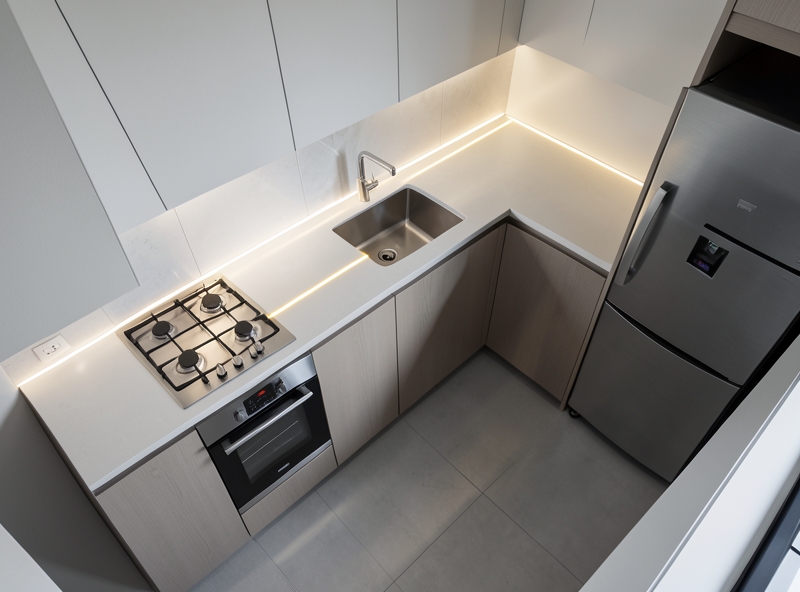
The core solution to address this situation is the application of the "Kitchen Work Triangle" diagram. This is an architectural principle connecting the three most important functional points: The Sink (preparation area), The Stove (processing area), and The Refrigerator (storage area). The goal is to minimize the total travel distance between these three points, ensuring each side of the triangle ranges from 4 feet (1.2m) to 9 feet (2.7m).
"In systems analysis, a kitchen is not just a living space but a mini production line. The efficiency of this line depends directly on the arrangement of traffic nodes."
Applying a scientific layout brings measurable psychological and kinetic benefits:
- Workflow Optimization: A one-way process from Storage -> Preparation -> Processing eliminates overlapping movements.
- Psychological Unloading: Having all tools within sight and reach reduces the pressure of searching, preventing information overload for the brain.
- Hygiene Control: Clear zoning prevents cross-contamination between raw and cooked foods, optimizing post-cooking cleanup.
2. The 'Golden Triangle' Principle - The Key to High-Performance Kitchen Operation
Imagine cooking a meal is like a skillful circus performance. If the props are placed too far apart, the artist will exhaust themselves running back and forth; if they are too close, they will trip over themselves. In interior architecture, "The Kitchen Work Triangle" is the roadmap that helps the cook move the least while achieving the highest efficiency. Put simply, this is a diagram connecting the three most important "stops" that any ingredient must pass through before reaching the plate.
The three vertices of this triangle correspond to three distinct functional areas, accurately simulating the actual food processing workflow:
- Refrigerator (Storage Area): This is the "food warehouse." Every culinary journey begins with taking ingredients out of the refrigerator door.
- Sink (Preparation Area): Where food is cleaned, peeled, and chopped. This is the busiest transit station, where you spend up to 70% of your time in the kitchen.
- Stove (Cooking Area): The "main stage" where heat transforms raw ingredients into a finished dish.
"A smart kitchen is not measured by how large or small its area is, but by the distance your feet must travel between three points: Refrigerator - Sink - Stove."
The core operating principle here is a one-way workflow. Food should follow a straight path or a closed loop: Take from the fridge -> Wash at the sink -> Chop on the prep counter -> Cook on the stove. If you arrange the sink in one corner and the refrigerator in the far opposite corner, you are forcing yourself into an unnecessary marathon right inside your own home.
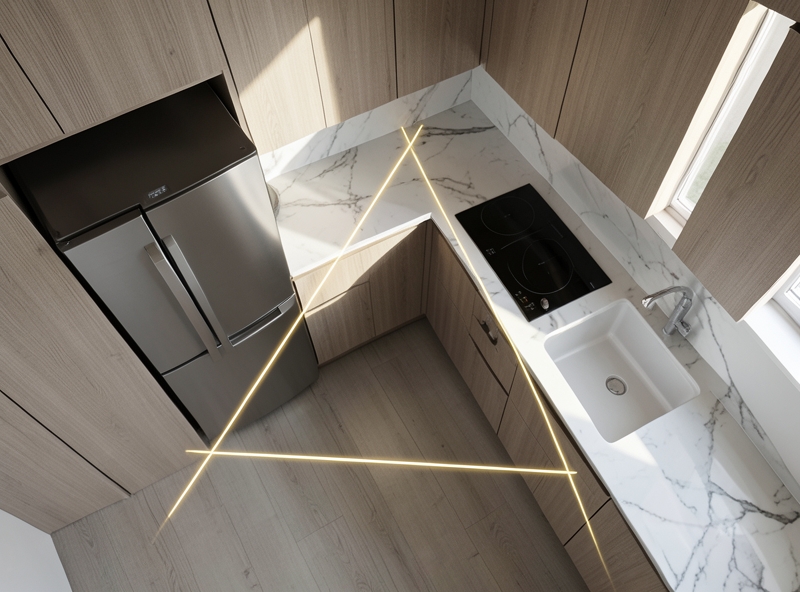
To prevent the "Golden Triangle" from becoming a tiring "Bermuda Triangle," design experts have established golden technical specifications. These numbers are calculated based on average human arm span and stride to ensure maximum comfort:
| Specification | Standard Dimension | Scientific Reason |
|---|---|---|
| Length of each triangle side | 1.2m - 2.7m | Close enough to reach, far enough not to be cramped. |
| Total triangle perimeter | 4.0m - 7.9m | Ensures the total travel distance during a cooking session is not too long. |
| Traffic clearance | Minimum 1.2m | Allows two people to pass each other or open refrigerator/oven doors easily. |
Accurately applying this principle not only helps you conserve physical energy but also keeps the kitchen area organized. When every item is in its correct place along the path of movement, cleaning up after cooking becomes as quick as a simple sorting game, rather than a burden after every meal.
3. Optimizing Storage and Prep Areas to Shorten Preparation Time
Have you ever found yourself standing at the stove, the pot of soup boiling vigorously while you're still frantically searching for a piece of ginger hidden somewhere in a messy pile of vegetables? I've been there too, and believe me, kitchen fatigue sometimes doesn't come from the cooking itself, but from the chaos of the preparation phase. To make cooking a leisurely experience, we need to turn the kitchen into a smooth-running "machine" starting right from storage.
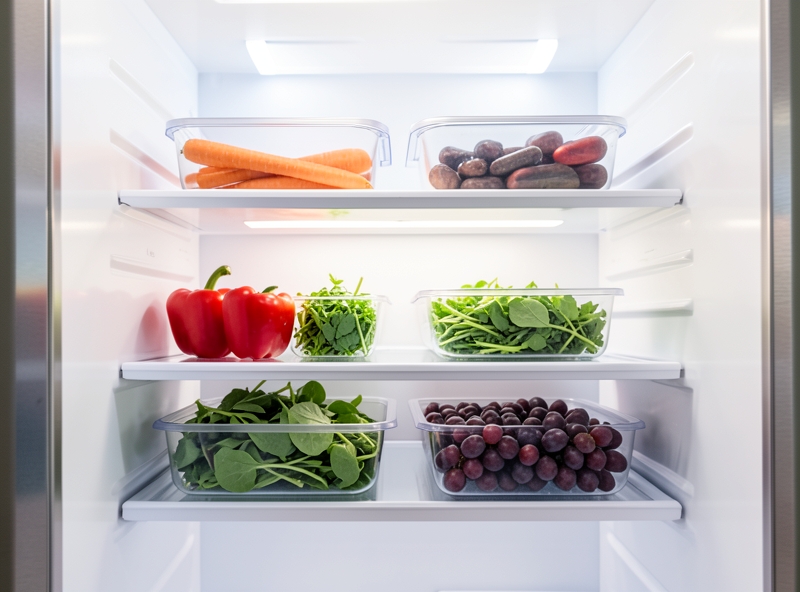
First, let's talk about the refrigerator – the "heart" of your ingredients. Don't treat it as a storage warehouse; see it as a miniature convenience store. My method is to categorize based on the rule of freshness and expiration dates. Perishable items like leafy greens and fresh meat or fish should be placed at eye-level or in dedicated compartments labeled with the date of purchase. Using transparent plastic containers of the same size not only makes the fridge look "picture-perfect," but also helps you monitor remaining food supplies at a single glance.
"Organizing a kitchen isn't about beauty; it's about creating a flow of energy and uninterrupted movement."
Next, the sink area is the most important "control station." Instead of using the sink just for washing dishes, turn it into a prep hub. A combo set of knives, cutting boards, and colanders should be arranged within reach or integrated directly onto the sink surface. You can install a wall-mounted magnetic strip to hang knives – keeping them dry, safe, and looking professional. When everything is ready "within arm's length," you'll find the time spent cleaning vegetables and slicing meat decreases significantly.
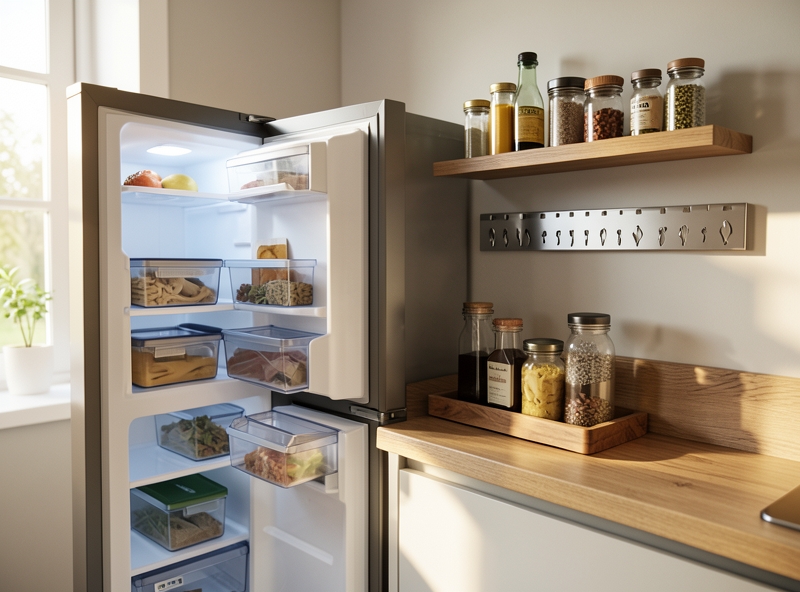
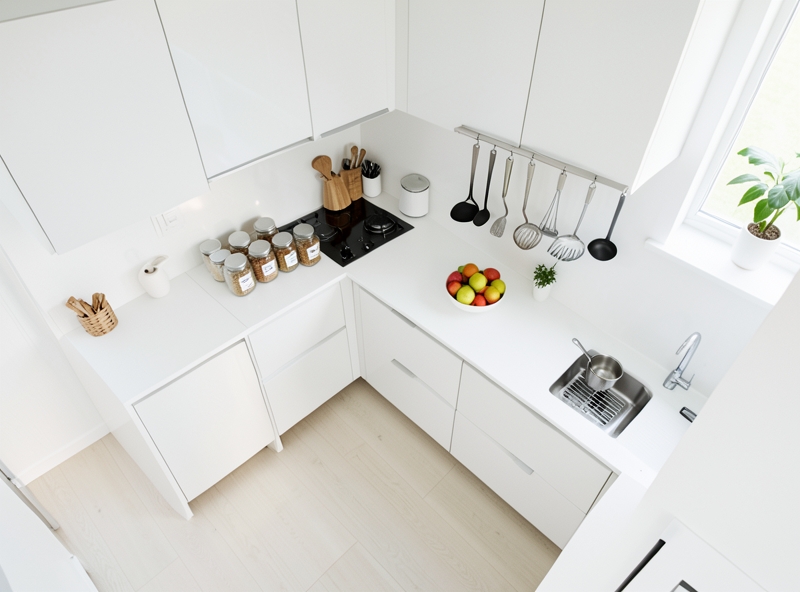
Finally, the secret to freeing up countertop space is utilizing vertical space. If your countertop is "suffocating" under various spice jars and bottles, invest in multi-tier racks or hanging shelves immediately. Keeping the countertop clear not only provides ample space for tasks but also helps your mind stay relaxed and focused when starting complex recipes.
| Area | Common Issues | Optimal Solution |
|---|---|---|
| Refrigerator | Forgotten food leads to spoilage and clutter. | Use transparent containers, categorize by group (cooked/raw), and label expiration dates. |
| Sink | Too much movement required to get knives, boards, and colanders. | Arrange knife racks and cutting board shelves right next to the sink within arm's reach. |
| Countertop | Too many bottles obstruct preparation tasks. | Use multi-tier racks or wall-mounted shelves to free up the flat surface. |
Changing your organizational habits slightly not only helps you cook faster but also inspires you to want to be in the kitchen more every day. Try starting by reorganizing your fridge's vegetable drawer tonight, and you'll see the difference immediately tomorrow morning!
4. Setting Up 'One-Touch' Cooking and Cleaning Zones
You know, the difference between a leisurely cooking session and a chaotic "battle" often doesn't lie in how complex the dish is, but in how you arrange the battlefield around you. I often tell my friends that a smart kitchen should be like an extended brain – where your hands automatically move to the right spot without your eyes needing to search. That is the concept of "one-touch."
Let's start with spice jars and pots and pans. The technique here is simple: Layering by frequency of use. Essentials like salt, pepper, fish sauce, cooking oil, or your favorite frying pan must be within a "one-arm's length" radius from where you stand at the stove. Don't force yourself to bend down or overreach just to grab a spoonful of seasoning while the onions in the pan are starting to turn golden. Conversely, bulky stockpots or rarely used spices can be boldly pushed into deep corners or bottom cabinets.
"A scientific kitchen is not a place that has everything, but a place where everything you need is waiting right at your fingertips."
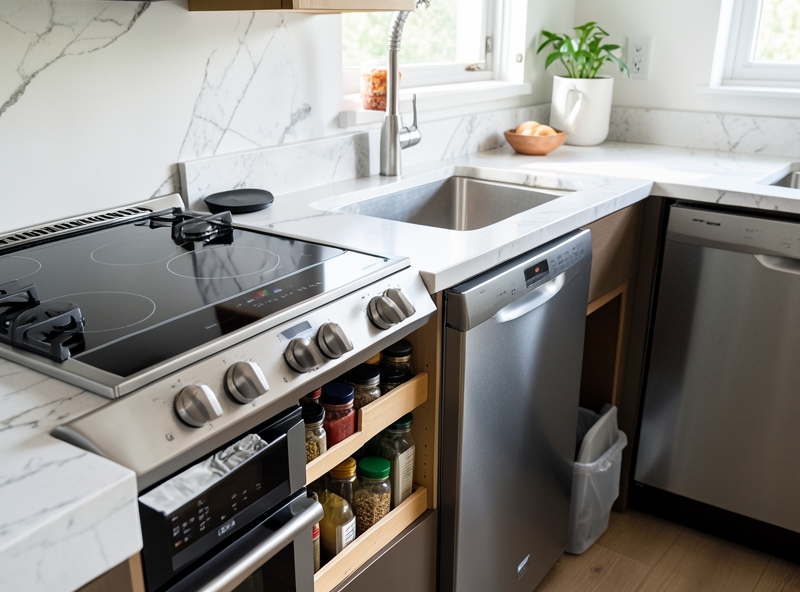
The second key point that few people notice is the "Clean-as-you-go" process. To do this effortlessly, you need a cleaning ecosystem right next to the sink. Imagine you've just finished chopping vegetables; you simply swipe the scraps into an integrated trash bin right under the countertop, then turn to place the cutting board into the dishwasher next to it. Everything happens in seconds, simultaneously as the pot of water on the stove just begins to boil.
Below is the space allocation table that I have applied and found extremely effective:
| Location | Priority Items | Frequency of Use |
|---|---|---|
| "One-Touch" Zone (Next to stove) | Basic spices, cooking oil, spatulas, non-stick pans. | Daily |
| Drawers under the stove | Soup pots, lids, pot holders. | Frequent |
| Area under the sink | Sorted trash bins, dishwasher, hand soap. | Continuous during cooking |
| Floor-to-ceiling cabinets | Hot pots, meat grinders, party dinnerware. | Special occasions |
When you set up this system, cleaning is no longer an end-of-party "battle." You will find that as soon as you turn off the stove and serve the hot meal on the table, the sink is empty and the countertop is spotless. The feeling of enjoying your results is truly complete then, because your mind is no longer preoccupied with the pile of messy dishes waiting out there.
- Pro tip: Use dividers in spice drawers so they don't shift every time you open and close the cabinet.
- Note: The trash bin should be a pull-out type so you can use your elbow to open it when your hands are dirty.
5. Small Habits for Maintaining a Long-Term Relaxing Kitchen
Serenity and relaxation in the kitchen don't come from expensive appliances, but rather from how we operate that space every day. Someone pursuing a minimalist lifestyle won't see cleaning as a burden, but as a form of self-care, helping to free the mind from unnecessary clutter. To maintain a kitchen full of inspiration while saving time, you can apply these streamlined habits below.
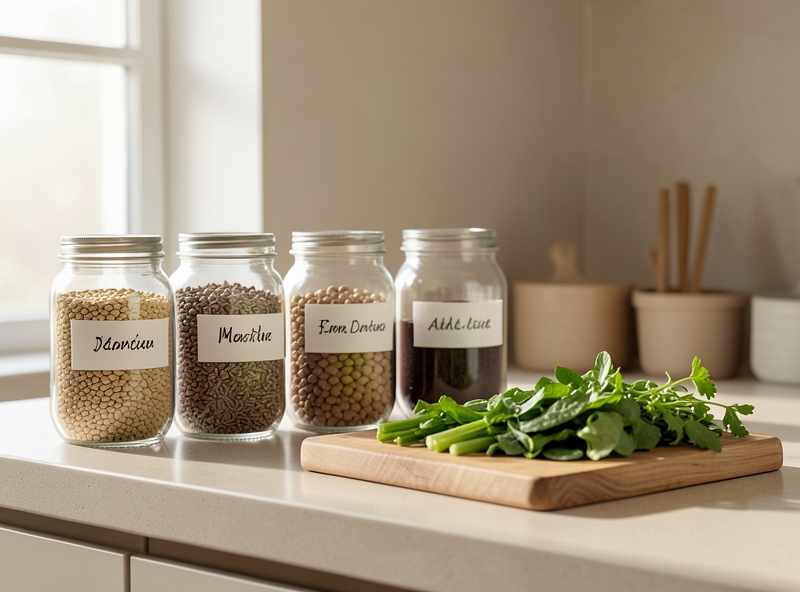
Effective kitchen management begins with understanding the actual needs of yourself and your family, staying away from emotional consumption habits. Small but consistent rules will create a huge difference:
- The 5-minute post-meal cleanup rule: Instead of letting dishes accumulate in the sink, spend exactly 5 minutes right after a meal to handle the remaining items. Resolving it immediately prevents feelings of hesitation and keeps kitchen surfaces airy, ready for the next use.
- Smart labeling and food management: Use transparent glass jars and labels with the name of the food and the expiration date. This habit not only makes the kitchen look uniform and beautiful but also helps you control the amount of food on hand, avoiding duplicate purchases that waste finances and resources.
- Weekend Meal Prep habit: Spend a short amount of time on your day off to wash, cut, and categorize vegetables, plant-based proteins, or animal proteins into storage containers. Preparing in advance not only shortens cooking time during a busy week but also helps you maintain a healthy diet, limiting fast food orders due to exhaustion.
"Minimalism in the kitchen is not about removing everything, but about keeping what truly serves the function and nurtures peace in the cook's soul."
By focusing on core values and eliminating redundant habits, we not only possess a clean kitchen but also create a mindful lifestyle, where every meal is prepared with total appreciation and self-joy.
6. Conclusion
Many people remain skeptical that organizing a kitchen is merely a time-consuming hobby for those with too much free time or a marketing gimmick by appliance brands. However, putting aside "Instagrammable" aesthetic prejudices, we must look directly at the reality of efficiency. A cluttered kitchen not only burns your calories while searching for items but also acts as a silent "killer" that stifles the intention to cook as soon as it flickers to life.
| Comparison Metric | "Chaotic" Kitchen | Scientific Kitchen |
|---|---|---|
| Preparation Time | Often prolonged due to searching for tools | Saves at least 30% of time |
| Cook's Mindset | Stressed, prone to giving up, ordering fast food | Relaxed, maintaining creative inspiration |
| Ingredient Control | Prone to overbuying or letting food expire | Well-managed, reducing food waste |
The figure of "30% time savings" is not an empty marketing promise. It is the result of eliminating redundant movements and optimizing workflow. When everything from spice jars to the peeler is in its rightful place, cooking becomes a smooth operational process rather than a psychological battle. Don't wait until you have a kitchen spanning dozens of square meters to start organizing; science lies in the mindset of space allocation, regardless of whether the area is large or small.
"An organized kitchen doesn't turn you into a professional chef instantly, but it removes the biggest barrier between you and a healthy lifestyle: the laziness born from clutter."
Ultimately, organizing the kitchen is not merely a story about plastic containers or expensive stainless steel racks. It is the foundation of a disciplined and balanced lifestyle. When you master your cooking space, you master your nutrition and your own quality of life. Stop complaining about not having time to cook; instead, re-evaluate how you treat the "power station" of your home.
- Practical Efficiency: Minimizes downtime and useless searching maneuvers.
- Mental Value: Transforms the kitchen from a high-pressure workplace into a space for relaxation and rejuvenation.
- Sustainable Lifestyle: Formulates healthy eating habits through a convenient food preparation process.