1. The Rise of Raw and Sustainable Materials in 2024
The global economic landscape of 2024, marked by supply chain fluctuations and persistent inflation, has directly altered consumer behavior in the field of interior decoration. Instead of chasing fleeting trends (fast-interior), modern users are shifting strongly toward a "smart consumption" mindset. Investing in items with long lifespans, high recyclability, and low environmental impact has become a top priority, not only for ecological awareness but also for the practicality of preserving asset value.
The concept of "luxury" in home design is also being sharply redefined. Luxury no longer lies in shiny gold-plated surfaces or expensive but less durable synthetic materials. Instead, the true value lies in the authenticity of the material. The new luxury is the connection between humans and nature through textured surfaces, natural wood grains, or intentional imperfections of craftsmanship.
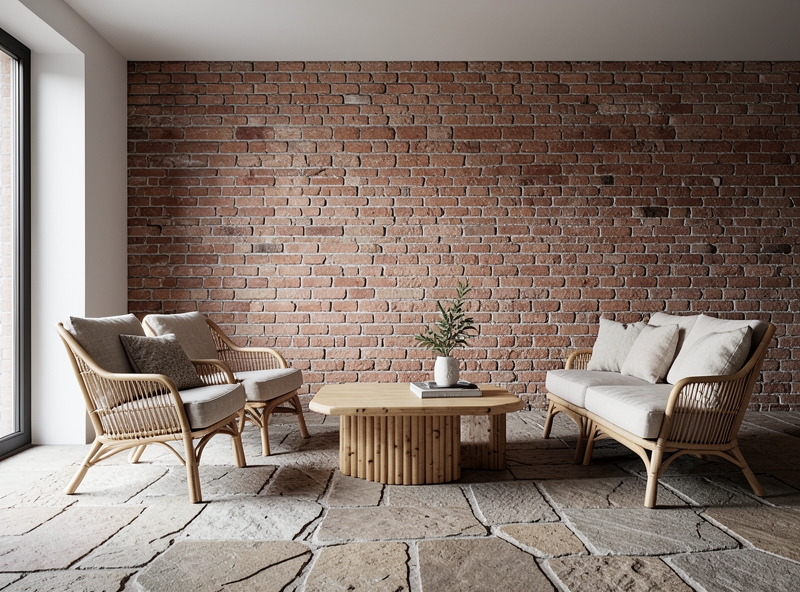
In this trend, three representative materials—rattan, bamboo, and exposed brick—have become the focal point of modern decor thanks to their outstanding advantages in both functionality and aesthetics:
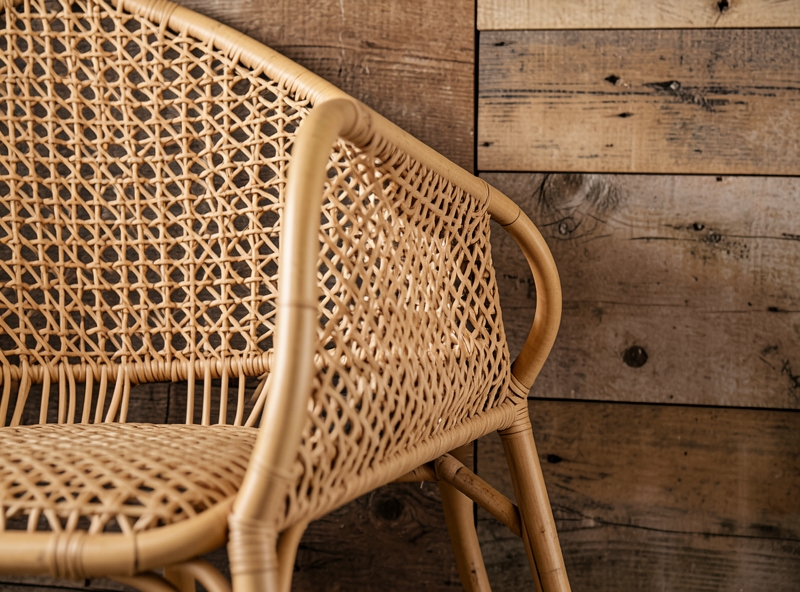
- Rattan and Bamboo: No longer limited to traditional designs or "rustic" styles. Thanks to modern pest-treatment technology and sophisticated bending techniques, rattan and bamboo are applied to high-end furniture lines with lightweight properties, high elasticity, and rapid regenerability, solving the problem of natural wood shortages.
- Exposed Brick and Polished Concrete: Representing a pragmatic design philosophy. Retaining the raw surface of brick or concrete helps reduce finishing costs (painting, plastering), while creating natural temperature regulation and minimizing periodic maintenance costs.
"Sustainability is no longer a stylistic choice; it is a mandatory technical requirement to maintain long-term utility value in the context of increasingly scarce resources."
| Criteria | Industrial Materials (Old) | Raw/Sustainable Materials (2024) |
|---|---|---|
| Lifespan | Short (easily degrades, difficult to repair) | Long (value increases over time) |
| Environmental Impact | High (VOC emissions, difficult to decompose) | Low (recyclable, natural origin) |
| Operating Costs | Low initially, high for maintenance | Reasonable initial investment, few additional costs |
The rise of raw materials is not merely an aesthetic trend. It is the result of a pragmatic analysis of economic factors and quality of life. Removing artificial surface coatings to return to the core values of materials helps living spaces become honest, durable, and better adapted to future fluctuations in the interior design market.
2. Rattan and Bamboo: The Intersection of Craftsmanship and High-End Minimalism
In the era of synthetic materials and mass industrial production, the return of rattan and bamboo is not merely a nostalgic trend. It is a redefinition of luxury: a shift from material ostentation to experiential value and sustainability. In today's leading architectural styles such as Wabi-sabi (respecting original, imperfect beauty) or Japandi (blending Japanese elegance with Nordic functionality), rattan and bamboo act as "catalysts" that break the coldness of concrete and glass.
The pragmatic appeal of natural materials lies in their ability to regulate visuals. Meticulous hand-woven patterns create rich textures, providing natural warmth without the need for complex lighting systems. With their flexible characteristics, rattan and bamboo allow for the creation of soft curves – something that natural wood or metal find difficult to achieve at an optimal cost.
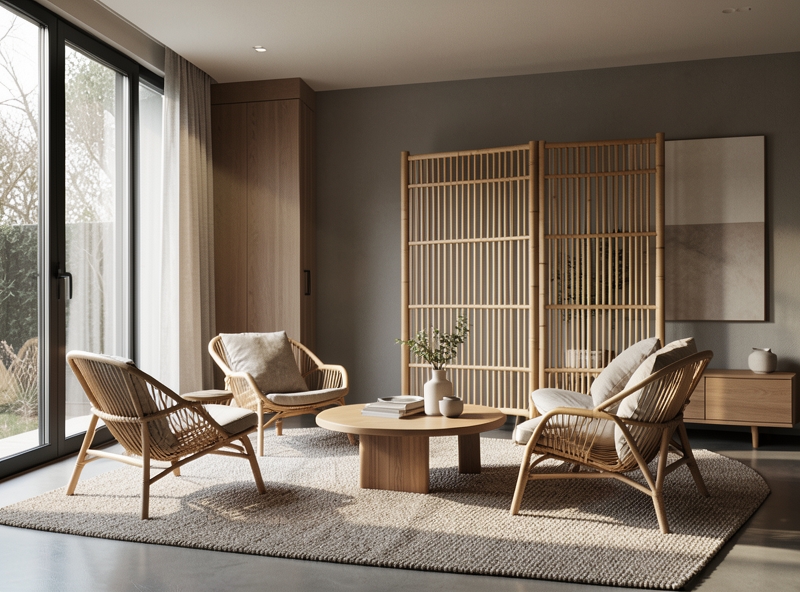
From an investment and environmental protection perspective, rattan and bamboo possess impressive regenerative statistics. Bamboo has one of the fastest growth rates among woody plants, allowing for harvest after only 3-5 years without depleting forest resources. This is the green economic equation that sustainable real estate investors are prioritizing.
| Comparison Criteria | Rattan & Bamboo (Natural) | Engineered Wood (MDF/HDF) | Metal/Plastic |
|---|---|---|---|
| Regeneration Speed | Very fast (3-5 years) | Slow (15-30 years) | Non-renewable (Mining) |
| Weight | Ultralight, flexible | Heavy, difficult to move | Heavy (Metal) |
| Emotional Impact | Warm, relaxing, intimate | Neutral, industrial | Cold, modern |
| Cultural Value | High (Indigenous craftsmanship) | Low (Mass production) | Average |
"True luxury in modern interior design lies not in the price of the material, but in the cultural story and its positive impact on the living environment."
Indigenous value is also a key variable constituting "high-end minimalism." The use of woven rattan and bamboo is a way to bring the breath of heritage into modern living spaces. Each piece of furniture is not just an item, but a highly unique handcrafted work due to the specific characteristics of each rattan fiber or bamboo slat. However, users should pay attention to humidity control and termite treatment using biotechnology to ensure material longevity in tropical climates.
In terms of functionality, rattan and bamboo furniture offer superior ventilation. The hollow woven structure facilitates air circulation, reducing the heat buildup often found in thick-padded sofas or closed wooden cabinets. This is an optimal solution for apartments aiming for a minimalist lifestyle while still requiring comfort and sophistication.
- Applicability: Suitable for everything from partitions and pendant lights to lounge chair systems.
- Actual Durability: If processed correctly, the lifespan can reach 20-30 years.
- Cost: Flexible, from affordable handcrafted lines to premium Designer Collections.
3. Exposed Brick and Polished Concrete: The Beauty of Intentional Imperfection
In traditional design thinking, bricks and concrete are structural components that need to be covered by layers of plaster and finish paint. However, from a modern architectural perspective, keeping these materials in their exposed state is not just an aesthetic choice but also an optimization of cost and practical functionality. The combination of exposed brick and polished concrete creates a space with depth, where natural imperfections become a statement of the homeowner's personality.
Eliminating the steps of plastering, skim coating, and painting significantly reduces the material and labor budget during the finishing stage. Instead of investing in outer layers that degrade over time, this budget is reallocated to intensive surface treatments such as polishing or waterproofing, making the house structure more durable against physical impacts and moisture.
"The ruggedness of brick and concrete does not represent a deficiency, but rather a respect for the essence of the material, creating a silent backdrop for other interior values to shine."
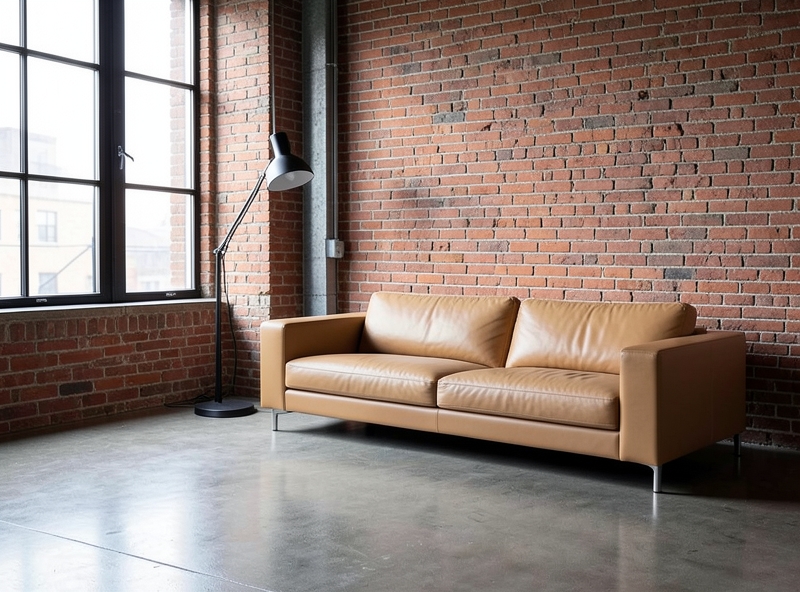
One of the superior technical advantages of exposed brick is its ability to act as the perfect "backdrop" for high-end furniture. The rough, non-uniform surfaces of red brick or the neutral gray of concrete help eliminate excessive light reflection, making materials like natural wood, gold-plated metal, or genuine leather stand out and look more luxurious. This is why Industrial and Brutalism styles consistently maintain their appeal in luxury apartment projects.
| Criteria | Polished Concrete/Exposed Brick | Traditional Materials (Ceramic Tiles/Paint) |
|---|---|---|
| Durability | Extremely high, good load-bearing capacity, no peeling. | Prone to cracking, fading, or paint peeling over time. |
| Maintenance | Easy to clean, no grout lines to trap dirt. | Requires grout treatment and periodic repainting. |
| Operating Cost | Low; concrete floors help maintain stable temperatures. | Medium to high depending on the material type. |
In terms of long-term applicability, polished concrete floors completely solve hygiene and maintenance issues. Unlike ceramic tiles, which often suffer from stained grout lines, or natural wood, which is prone to shrinkage, surface-hardened concrete floors are waterproof, dust-resistant, and extremely easy to clean. For busy modern families, this is the most practical solution to maintain the beauty of the home without spending too much effort on care.
- Customizability: Polished concrete can have its aggregate exposure or gloss level adjusted according to preference.
- Sustainability: Uses the house structure directly, minimizing construction waste from auxiliary decorative materials.
- Sense of Space: Seamless concrete floors create a space-expanding effect more effectively than fragmented materials.
4. Economic Problem: One-time Investment for Long-term Value
In the interior decoration market, the concept of "cheap" is often a trap regarding operating costs. A smart investor or a homeowner with vision will view home decoration from a TCO (Total Cost of Ownership) perspective. Choosing between short-term industrial materials and premium natural materials is not just a question of aesthetics, but a rigorous calculation of utility performance and the ability to preserve asset value.
| Comparison Criteria | Industrial Materials (MDF, Plastic, Simili) | Natural Materials (Solid Wood, Stone, Genuine Leather) |
|---|---|---|
| Initial investment cost | Low (1x) | High (3x - 5x) |
| Lifespan | 3 - 7 years (Prone to peeling, mold) | 20 - 50 years (Durable with age) |
| Aesthetic changes | Degrades, becomes obsolete quickly | Develops a "Patina" layer, grows more beautiful over time |
| Recyclability/Repairability | Nearly zero, requires full replacement | Easy to refresh, polish, and repair locally |
Industrial materials usually reach their peak beauty right when they leave the factory, but that is also when the degradation process begins. Conversely, raw and natural materials possess the ability to "self-regenerate" beauty. An oak tabletop or natural stone floor may show the scratches of time, but those very characteristics create a unique patina, increasing artistic value that no industrial printing technology can perfectly simulate.
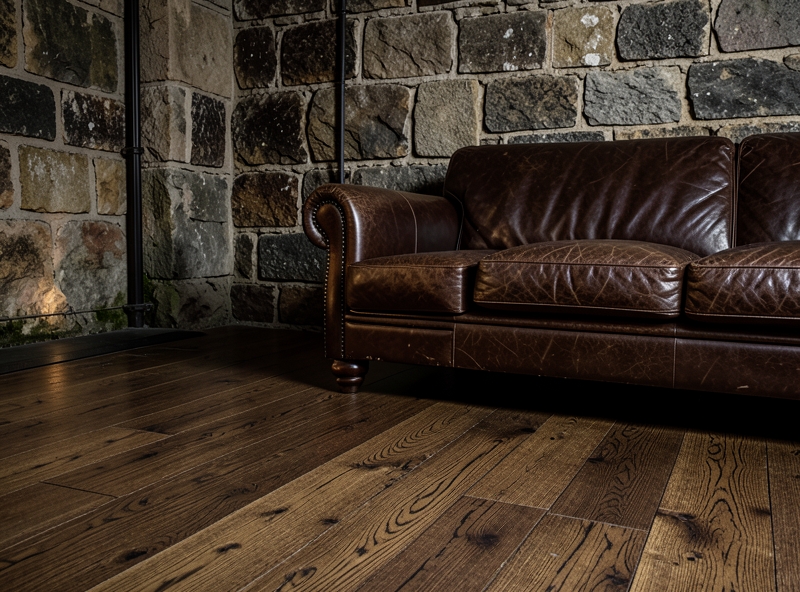
"The difference between an apartment that needs repairs every 5 years and a family legacy lies in the decision to choose materials capable of 'aging' gracefully."
From a pragmatic standpoint, investing in premium materials minimizes the risks of maintenance and replacement. Look at the practical analysis:
- Liquidity: Homes using natural wood furniture, Marble, or smart lighting systems have higher resale values and 15-20% faster liquidity rates compared to homes using mass-produced furniture.
- Psychological Experience: Direct contact with natural surfaces (haptic sense) provides a sense of security and stress reduction, an intangible but essential value in the digital age.
- Resource Optimization: Instead of paying multiple times for minor repairs, concentrating the budget on a high-quality framework helps homeowners save on labor costs and time disruptions to daily life.
From a pragmatic journalistic perspective, prioritizing sustainable materials is not a luxury, but an effective personal financial management strategy. When breaking down the total cost over the number of years of use, the real "bargain" always lies in products with timeless durability, low obsolescence, and environmental friendliness.
5. How to Apply Raw Materials to Living Spaces for Aesthetic Impact
Using raw materials such as polished concrete, exposed brick, natural stone, or solid wood is becoming a dominant trend in contemporary architecture. However, the line between an "artistic" space and an "unfinished" room is very thin. To achieve optimal aesthetic efficiency, users must master technical principles regarding visuals and functionality.
The core principle lies in the balance of Texture (surface structure). A space with too many rough surfaces will feel heavy and dusty. Conversely, too many smooth, glossy surfaces make the home monotonous and lacking in depth. The optimal formula is contrast: placing a rugged natural stone block next to a smooth pane of tempered glass, or using a raw concrete wall as a backdrop for a sleek, high-end leather sofa.
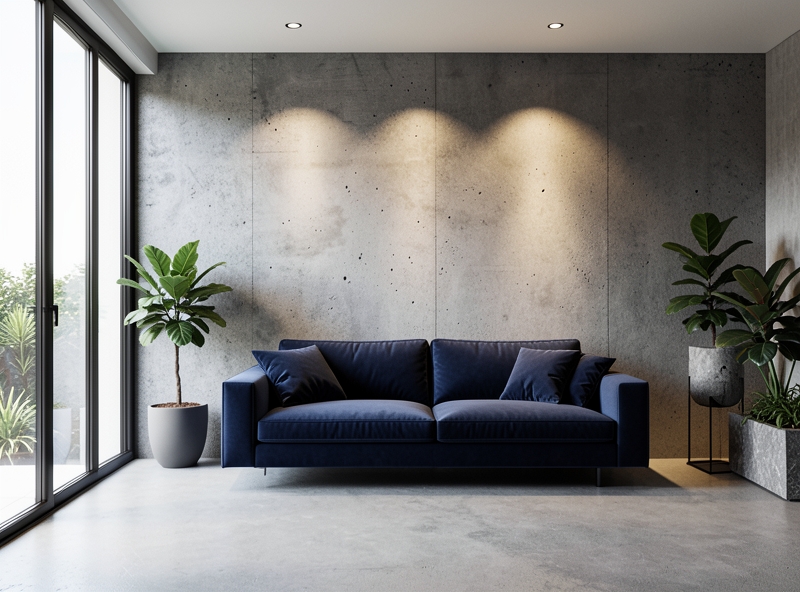
Lighting is the most important "weapon" to celebrate raw materials. Instead of using ambient light that flattens every surface, prioritize directional light or LED strips that graze along the material's surface. This technique creates tiny shadows, highlighting every wood grain, natural crack in the stone, or the ruggedness of exposed brick, creating a vivid "painting" that changes at different times of the day.
"In modern design, raw materials do not play a purely decorative role; they are structural components that shape the emotion and authenticity of the living space."
To avoid a space feeling old, cold, or "lifeless" when overusing raw elements, you should apply these practical handling tips:
- Interweave organic elements: Green plants are natural filters that help soften the harsh edges of stone and concrete. Greenery helps balance the cold gray tones of raw materials.
- Control color temperature: Always use warm yellow light (2700K - 3000K) for areas with many raw materials to eliminate a gloomy feeling.
- Use Textiles: Shag rugs, linen curtains, or velvet throw pillows will compensate for the lack of softness, creating haptic comfort.
- Specialized surface treatment: Use transparent nano-coatings to protect raw materials from water penetration and mold without losing their original appearance.
| Material Type | Aesthetic Advantages | Practical Application Notes |
|---|---|---|
| Polished Concrete | Modern, edgy, creates a sense of continuity. | Requires thorough waterproofing to avoid yellowing and cracking. |
| Exposed Brick / Natural Stone | Warm, rustic, highly unique. | Easily collects dust; requires cleaning with a specialized vacuum. |
| Solid Wood Slabs | Luxurious, intimate, regulates temperature. | Prone to warping if not properly seasoned and dried to standards. |
Applying raw materials requires careful calculation of proportions. If the space is small, only use raw materials as an accent wall rather than covering the entire room. This pragmatic approach not only ensures sustainable aesthetics but also helps save on long-term maintenance costs.
6. Summary
Interior decoration in the new era has gone far beyond the pure concept of "beautification" to become a problem of resource and living space management. The trend of sustainable decor is no longer a luxury choice for the elite, but has become an inevitable roadmap for wise consumers. Analyzing from a pragmatic perspective, investing in recycled materials, multi-functional furniture, and durable designs is the way to optimize the "Total Cost of Ownership" for the home, helping to save maintenance and replacement budgets in the long run.
| Criteria | Traditional Decor (Fast-decor) | Sustainable Decor (Modern sustainable) |
|---|---|---|
| Material Longevity | Short (2-3 years), easily damaged. | Long (10-20 years), becomes more valuable with use. |
| Environmental Impact | Emits plastic waste and toxic chemicals. | Prioritizes natural, recyclable materials. |
| Spiritual Value | Instant gratification, quickly goes out of style. | Creates a minimalist, stress-free lifestyle. |
A minimalist lifestyle combined with environmental responsibility is reshaping modern aesthetics. An artistic living space is no longer measured by the quantity of items on display, but is evaluated through openness, the ability to capture natural light, and the presence of green elements. This is a shift from a "consumption" mindset to an "enjoyment and preservation" mindset.
"In an era of excess, the pinnacle of decorative art is calculated moderation, where every object carries within it a story of origin and a commitment to a green future."
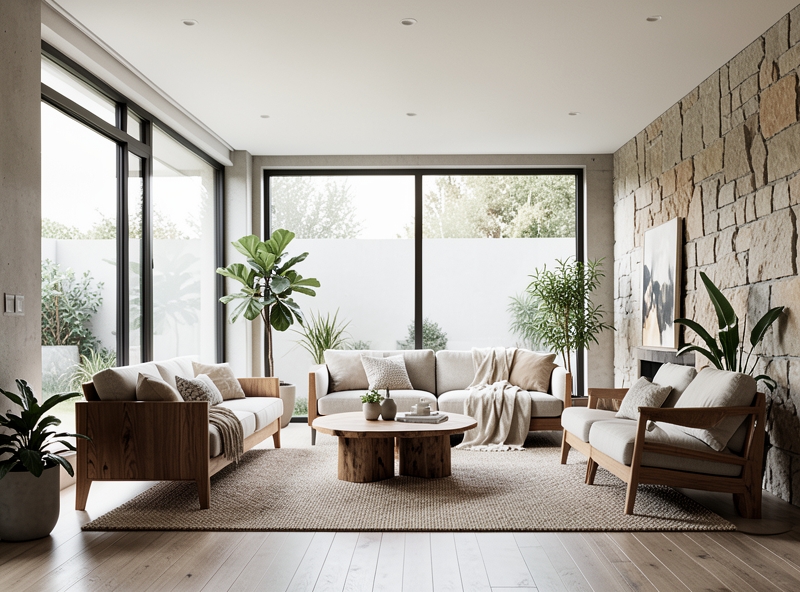
In summary, home decoration today is the intersection of arrangement techniques and community consciousness. To achieve practical effectiveness, users should focus on the following core values:
- Prioritize quality over quantity: Choose to buy one good product instead of ten non-durable ones.
- Leverage technology: Use smart devices to manage energy and light efficiently.
- Sustainable personalization: Refurbish old items to create unique highlights without putting pressure on environmental resources.
With this approach, the house is not just a place to live, but also a profitable investment in health, spirit, and finances for the homeowner in the future.