
1. Overview of Psychological Pricing Strategies and Their Behavioral Impact
Small businesses often fall into the "technical pricing" trap—adding operating costs to expected profit margins and slapping a price tag on the product. This is the shortest path to conversion failure. Humans do not buy with calculators; they buy with emotion and justify with logic. When you price purely based on mathematics, you miss out on psychological pricing (Psychological Pricing)—the ultimate weapon that shapes customers' perception of product value before they even look at their wallets.
The essence of psychological pricing is directly targeting the brain's cognitive biases. Customers never know how much a product is "actually" worth without a frame of reference. By changing the structure of how numbers are displayed, establishing comparison anchors, or leveraging the fear of missing out, businesses can turn an ordinary price into an "irresistible bargain."

To better understand the difference between conventional pricing mindsets and behavior-based pricing mindsets, consider the comparison table below:
| Rational Perspective (Common Mistake) | Behavioral Psychology Reality (Revenue Breakthrough) |
|---|---|
| Customers compare actual utility value and calculate material costs to make a purchase decision. | Customers anchor their emotions to the first number they see, using it as a benchmark for expensive/cheap (Anchoring Effect). |
| An odd price like $99 is only marginally cheaper than $100, an insignificant difference in physical terms. | The brain automatically processes the ending odd digits as a signal of a special deal and focuses only on the leftmost digit. |
| Discounting as deeply as possible to quickly stimulate purchase demand. | Discounting too frequently damages brand value, causing customers to doubt quality and develop a habit of delaying purchases to wait for the next sale. |
"Money is not just a tool for material exchange; it is a measure of security, status, and the fear of deprivation. Good salespeople sell products; outstanding managers sell the peace of mind of getting a bargain."
For small businesses with limited marketing budgets, optimizing selling prices is not just a short-term sales tactic to boost revenue. This is the most powerful financial lever to immediately improve cash flow. A classic study from McKinsey indicates that: by simply optimizing the selling price by 1% without reducing volume, a company's operating profit can increase by an average of 11%. Instead of pouring money into expensive advertising campaigns to find new customer segments, changing how prices are displayed and structuring product bundles right on the shelf will help you maximize profit margins from your existing customer base.
2. Classic Psychological Effects in Product Pricing
Many small business owners make a fatal mistake: pricing products solely by adding production costs to an expected profit margin. This mechanical approach inadvertently overlooks a harsh truth: customers do not buy products using absolute logical thinking; they buy with emotion and relative comparison. Pricing is not an accounting problem; it is a battle of behavioral psychology where the winner is the one who masters customer perception.
To optimize profit margins without dropping conversion rates, small businesses need to master the 4 classic psychological pricing effects below:
The Anchoring Effect
The human brain is always looking for an anchor point to evaluate all subsequent information. When a customer sees the first price, that will be the psychological anchor for all prices that appear after it. If you present a product priced at 10 million VND first, then a product priced at 3 million VND right after suddenly becomes extremely "cheap" and much easier to accept.
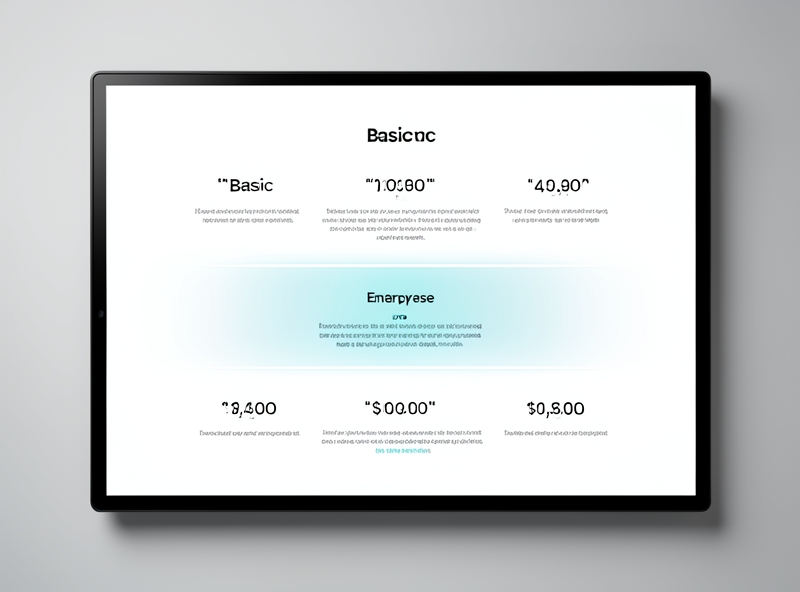
- How to apply: Always display the most expensive option (Premium/Enterprise version) in the first or most prominent position on the pricing table. Even though customers rarely buy this package, it still does the job of "anchoring" a high price in their minds, making the mid-tier packages next to it look like a great bargain.
Charm Pricing (The Left-Digit Effect)
Why does a price of 99k always have a strange appeal compared to 100k? Science calls this the Left-Digit Effect. Our brains process information so quickly that they register the first digit before having time to read the entire number. A price of 99,000 VND is encoded in the brain as "starting with 9" (equivalent to over 90 thousand), creating a feeling of being much cheaper than the "starting with 1" price of 100,000 VND.
- How to apply: Apply the number 9 for mass-market products, promotional programs, or when businesses want to emphasize maximum savings for customers.
The Decoy Effect
When faced with two options, customers often hesitate for a long time. But when a third option (the decoy) appears, shopping behavior will change completely. The job of the "decoy" is not to sell, but to make the most expensive option look outstandingly attractive.
| Sales Option | Product Configuration | Price | Actual Role |
|---|---|---|---|
| Option A | Online-only package | 59 USD | Basic option |
| Option B (Decoy) | Print-only package | 125 USD | Created as a background (No one buys) |
| Option C (Target) | Print + Online package | 125 USD | An absolute bargain (Customers choose immediately) |
Thanks to option B, customers will feel that choosing package C is like getting the 59 USD Online package for free. Businesses can easily guide customers to the product package that brings in the highest revenue.
Prestige Pricing
Completely opposite to Charm Pricing, prestige pricing uses round numbers (e.g., 1,000,000 VND instead of 999,000 VND). Round numbers are processed very quickly and smoothly by the brain, creating a sense of premium quality, transparency, and trust. The use of odd endings (.99 or .95) will unintentionally trigger the brain's "defense" mode, making customers associate the product with mass discounts and lowering the brand value of luxury products.
- How to apply: If your business targets the high-end segment, providing premium experiences or artistic products, use round pricing to assert class.
"Customers don't really know how much a product should cost. They only know how to compare what you present in front of them to convince themselves that they are making a smart buying decision."
3. The Art of Visual Pricing to Stimulate Purchase Decisions
Thousands of small businesses are unknowingly turning away customers simply because of how they display their prices. You may have an excellent product and dedicated customer service, but if the numbers on the price tag or checkout page trigger the "pain of paying" in the buyer's brain, all marketing efforts fall flat. The human brain does not process numbers in a purely rational way; it perceives information through visual stimuli and cognitive biases.
By mastering the behavioral psychology tactics below, you can instantly turn the tide, transforming lifeless numbers into powerful catalysts that drive rapid checkout behavior.
| Visual Tactic | Triggered Psychological Mechanism | Optimization Practical Application |
|---|---|---|
| The Rule of 100 | Prioritizes the number with the larger perceived value. | Flexibly applied based on the product value threshold of 100 currency units. |
| The Font Size Paradox | Aligns the physical size of the text with the numerical value in the brain. | Shrink the font size of the sale price compared to the original price. |
| Omitting Currency Symbols | Disconnects the payment amount from the financial defense reflex. | Hide or minimize the presence of symbols like $, €, or local currency signs. |
The Rule of 100: Shaping the Maximum Discount Value
Why is it that for the same actual discount, one promotion attracts thousands of purchases while another is completely ignored? The secret lies in The Rule of 100—a classic formula in the art of visual pricing:
- When the product price is under 100 units: Always display the discount as a percentage (%). A book priced at $80 with a 20% discount sounds much more appealing and like a "better deal" than displaying a discount of $16, even though the actual value of these two numbers is exactly the same.
- When the product price is over 100 units: Switch to displaying the discount as a specific monetary amount. A laptop worth $2,000 with a $200 discount will create maximum psychological attraction compared to displaying a 10% discount, because the number 200 creates a visual impact dozens of times stronger than the number 10.

The Size Paradox: Why Sale Prices Need to Be "Smaller"?
A common mistake made by small business owners is magnifying the font size of the discounted price to grab customers' attention. However, studies in cognitive psychology have shown the exact opposite: Customers tend to associate the physical size of the text with the actual value of that number.
When you present a promotional price in a huge, bold font, the buyer's brain subconsciously links that large size to an "expensive" cost. To optimize this effect, design the original price (before discount) to be large, clear, and with a decisive strikethrough. Right next to it, display the new discounted price in a smaller font size. This visual contrast tricks the brain into believing the new price is extremely low, triggering immediate impulsive buying behavior.
Eliminating Currency Symbols: Removing the "Pain of Paying"
Every time customers see a currency symbol like "$", "€", or local currency signs, the pain processing center in their brain is slightly activated. This symbol is a direct reminder that they are about to part with their hard-earned money.
"Displaying prices without an accompanying currency symbol helps lower psychological defense barriers, shifting the customer's focus from 'how much money they are losing' to 'what value they are receiving'."
On modern restaurant menus, e-commerce sites, or premium service price lists, leaving only the pure numbers (for example, displaying "150" instead of "$150") has proven highly effective in increasing the average order value. If you are required to use a currency symbol due to display regulations, actively minimize the size of this symbol as much as possible, make it faint, or place it in an inconspicuous position to reduce its negative impact on customer psychology.
4. Core Considerations to Avoid Backfires When Applying Psychological Pricing
Psychological pricing is a sharp weapon, but the sharper the weapon, the easier it is to cut your own hand. Many small business owners excitedly apply pricing "hacks" without realizing that today's customers are extremely sharp and possess highly sensitive anti-manipulation filters. When the line between "psychological suggestion" and "customer deception" is blurred, businesses will pay the price with their most priceless asset: trust.
"Customers don't buy products because they are cheap; they buy because of the feeling that they made a smart decision. But nobody wants to feel like they are being fooled."

To avoid falling into the trap of self-destructing their brand, small businesses need to pay special attention to these three core mistakes:
First, abusing fake discounts (Fake Discounts). Constantly doubling the listed price and then running "50% off" promotions year-round is a fatal mistake. Customers only need a few seconds to look up price history or compare competitors to expose this trick. When the "anchoring effect" is crudely abused, it turns into an insult to the buyer's intelligence, completely wiping out the possibility of repeat purchases.
Second, ruining premium positioning with the number 9. The number 9 (e.g., $199 instead of $200) is a classic symbol of savings and a "good deal." However, if a business is positioning its product in the premium, luxury, or highly personalized service segment, using prices ending in 9 too much will lower the perceived value of the brand. The high-end segment demands simplicity, transparency, and elegance – where round numbers (such as $2,000) bring a sense of reassurance, superior quality, and timeless class.
Third, targeting the wrong audience. Price-sensitive customers will respond very well to odd numbers and short-term offers. Conversely, value-sensitive customers care about performance, after-sales service, and transparency. Applying intense psychological pricing tactics to value-valuing customers will only make them suspicious of the actual quality of the product.
| Tactical Element | Correct Application (Drives Conversion) | Incorrect Application (Backfires) |
|---|---|---|
| Numbers ending in 9 | Common retail products, mid-range segment, stimulates impulsive buying. | Premium products, healthcare services, financial consulting requiring high trust. |
| Time-limited offers | Actual events with valid reasons (birthdays, holidays), genuinely limited quantities. | Countdown timers running continuously every time the page reloads, creating a false sense of scarcity. |
| Price comparison (Anchoring) | Visual comparison between service packages with clearly different features. | Inflating the original value of a single product to an unreasonable level to create a sense of a deep discount. |
The only path to sustainable growth is transparency and business ethics. Use psychological pricing as a way to lower customers' natural defensive barriers, not as a tool to lure them into a trap. Honest pricing combined with an outstanding service experience is the glue that retains customers for life.
5. Summary and Suggested Roadmap for Sustainable Profit Optimization
By mispricing by even a single dollar, small businesses hand over customers to competitors or suffocate their own profit margins. Many business owners are still stuck in the "discounting to compete" trap, unaware that customers don't buy a product because it is the cheapest; they make a purchase because they feel they are getting the best deal possible.
Psychological pricing strategy is no longer a minor trick; it is the backbone of every purchasing decision in modern business. However, mechanically applying numbers ending in .99 or soullessly packaging combos only cheapens the brand. Pricing is a living entity, requiring flexibility based on real-world data and continuous testing.
| Comparison Criteria | Traditional Pricing Mindset | Data-Driven Dynamic Pricing Mindset |
|---|---|---|
| Decision Basis | Based subjectively on production costs plus the expected profit margin. | Based on customer perceived value and actual behavioral data. |
| Flexibility | Fixed prices year-round, only discounting when facing sluggish sales. | Continuous A/B testing, adjusting prices by segment and timing. |
| Accompanying Experience | Complete separation between the product and customer service. | Integrating a premium experience to protect and enhance the value of the price. |
To find the "sweet spot" of profitability, businesses must implement continuous A/B testing. Stop guessing what customers want. Instead, test changes in price display, adjust combo structures, or create different price anchors on small target groups to measure actual conversion rates before applying them on a large scale.
"Price is what you pay, value is what you get. Small businesses win not by selling the cheapest, but by making customers feel they are getting exceptional value compared to the cost incurred."
The ultimate weapon of small businesses lies in flexibility and deep personal connection. A reasonable price combined with a premium service experience will create an unbreakable competitive barrier. When service quality exceeds expectations, the price barrier completely dissolves in the minds of buyers, paving the way for long-term loyalty.
Here is an immediate action roadmap for businesses to optimize their profit margins:
- Audit the product portfolio: Clearly classify which products are loss leaders (decoys) accepting low profit margins to attract customers, and which are core products generating the main cash flow.
- Establish an A/B testing process: Test changes in how prices are displayed (for example: showing daily prices instead of annual prices) on a small customer segment to measure reactions before making widespread changes.
- Upgrade service touchpoints: Optimize the consultation process, package professionally, and speed up response times to increase visual perceived value, making the current price look like an "absolute steal" in the eyes of customers.