1. Introduction: Traditional Marinating and the Surface-Level Seasoning Problem
Have you ever spent hours—or even overnight—marinating an expensive steak or a whole roast chicken, only to face bitter disappointment on the very first bite? The outer crust is flavorful and aromatic, but the deeper you go into the center, the meat is dry, mealy, and completely bland.
This is the common "sentence" of traditional marinating methods. Most home cooks still mistakenly believe that simply mixing plenty of seasonings, rubbing them evenly over the surface, and waiting will cause flavors to automatically "penetrate deeply." The harsh truth from food science: Most seasoning molecules are far too large to pass through muscle cells on their own. Cooking oil, sugar, pepper, minced garlic, and onions merely create a razor-thin coating of about 0.5 - 1 millimeter on the outside. Exposed to high heat, this outer crust quickly chars, while the moisture inside the meat is forced out by heat, taking with it all hopes for a juicy dish.
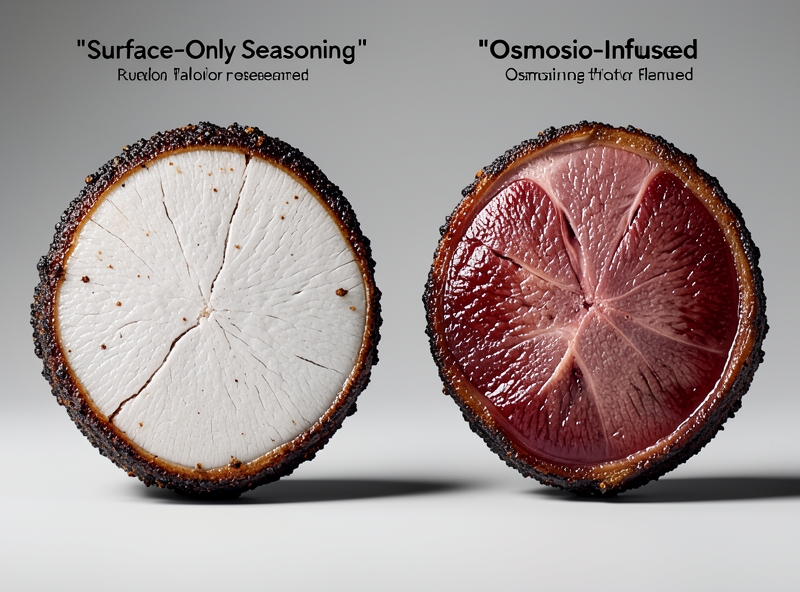
To break through this barrier, you don't need a more complex seasoning recipe—you need to utilize the Osmosis phenomenon.
Osmosis is the physics key that completely changes the culinary game. By creating an optimal salt concentration environment around food (via wet or dry brining techniques), tiny sodium (Na+) and chloride (Cl-) ions gain the ability to penetrate muscle cell membranes. This process generates three groundbreaking effects:
- Protein structure transformation: Salt denatures and expands muscle fibers (myosin), widening the gaps between cells to trap water molecules during cooking.
- Deep flavor transmission: As salt ions migrate inward, they draw water-soluble flavor compounds with them, ensuring the entire cut of meat is uniformly savory inside and out.
- Juiciness optimization: Restructured muscle cells retain 15% to 25% more water than unbrined meat, completely eliminating dryness when grilling or frying at high temperatures.
| Comparison Criteria | Traditional Marinating (Surface Coating) | Scientific Osmosis Mechanism (Osmosis/Brining) |
|---|---|---|
| Penetration Depth | Stops at the surface (0.5 - 1 mm) | Penetrates deep into the center core of the meat cut |
| Moisture Retention Capacity | Poor. Meat quickly loses water at high temperatures | Increases natural water retention capacity by 15–25% |
| Impact on Muscle Structure | Unchanged. Muscle fibers contract tightly, making meat tough/chewy | Breaks down myosin bonds, keeping meat fibers tender and juicy |
| Cooking Risks | Surface seasonings easily char before the meat cooks through | Dry surface ideal for the Maillard reaction, ensuring evenly cooked meat |
"Marinating is not simply coating seasoning on the surface of food. Precise marinating is the process of protein restructuring and moisture management at the cellular level."
Understanding the phenomenon of osmosis is the dividing line between an intuitive home cook and a master of flavor control. Move past the "more seasoning is better" mindset, and let's dive deep into the algorithm of balancing salt concentration, time, and temperature to make every dish flawlessly perfect.
2. The Osmosis Mechanism: The Science Behind Meat Structure Transformation
Have you ever spent a fortune on a prime cut of beef, heavily marinated it for 4 hours, only to end up with a core that is dry as cardboard and bland when grilled? The mistake doesn't lie in your pan-flipping skills, but in fighting against the fundamental laws of food chemistry. Most traditional marinades contain flavor molecules that are far too large to penetrate the muscle cell barrier. The only solution to transform the meat right to its core is to master the mechanisms of Osmosis and Diffusion.
When salt comes into contact with the surface of fresh meat, a 3-stage chain of physicochemical reactions is immediately triggered:
- Stage 1 - Water Extraction (Pure Osmosis): The extremely high salt concentration on the surface creates a hypertonic environment. According to the laws of osmosis, water from inside the muscle cells is drawn outward to the surface to balance the pressure. The meat becomes damp at this point.
- Stage 2 - Dissolution & Diffusion: Coarse salt quickly dissolves in the water that was just drawn out, creating a concentrated brine solution. At this point, microscopic Sodium ($Na^+$) and Chloride ($Cl^-$) ions begin to diffuse back deep into each muscle bundle.
- Stage 3 - Reabsorption & Protein Denaturation: The brine solution carries moisture deep into the center of the meat, initiating a complete restructuring of the muscle fibers.
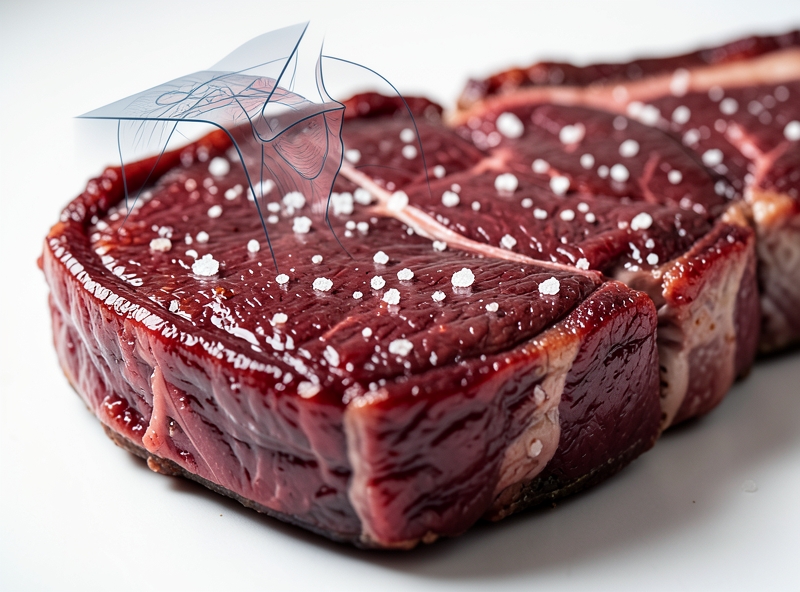
The key lies in how salt ions interact with Myofibrillar proteins (primarily Actin and Myosin). In their natural state, these protein chains are tightly bound together by ionic bonds. When $Na^+$ and $Cl^-$ ions penetrate the spaces between muscle fibers, they carry electrical charges that repel the old bonds, causing the protein structure to undergo denaturation and unfolding.
This unfolding process does not turn the meat into mush; instead, it expands the spatial gaps between muscle fibers. This newly denatured protein matrix acts like a high-end sponge: it traps and retains water molecules along with melted fat when exposed to high heat. As a result, instead of being squeezed dry and losing up to 30% of its water weight during cooking as usual, salt-brined meat loses less than 12-15% moisture.
| Treatment Technique | Primary Mechanism of Action | Seasoning Penetration Depth | Moisture Retention Capacity When Cooked |
|---|---|---|---|
| Traditional Marinade | Mainly clings to the surface; sugars and oils cannot penetrate muscle cells. | Only 1 - 2 mm from the surface. | Low (Meat shrinks easily and gets squeezed dry when exposed to heat). |
| Dry Brining | $Na^+$ and $Cl^-$ ions diffuse deeply, denaturing muscle chain proteins. | Fully penetrates to the center of the meat (depending on time). | Very high (The expanded protein matrix traps water exceptionally well). |
| Wet Brining | Submerges the muscle structure in a hypotonic/isotonic salt solution. | Deep, increasing the initial total water weight. | High (However, it may dilute the original flavor of the meat). |
"Salt is not merely a seasoning; it is a biochemical architectural intervener. Timing your salt application correctly is the only natural method to restructure muscle tissue, turning even the toughest cuts into tender, juicy meat without any chemical tenderizers."
To achieve optimal structural transformation without making the meat overly salty or losing its natural flavor, the golden ratio of salt is 1% to 1.5% of the total meat weight. The time required for the Osmosis and Diffusion mechanisms to fully take place is at least 40 minutes for thick steaks and 12 to 24 hours for large roasts/primal cuts in a refrigerated environment. Skipping this timeframe means you are cooking the meat during Stage 1—the phase when water is being drawn out most aggressively, ensuring it will turn out tough and dry when exposed to heat.
3. The Brining Technique: The Art of Elevating Dishes with Brine
Have you ever spent a lot of money on an expensive cut of meat only to end up with a dish that is dry, tough, and lifeless? The mistake doesn't lie in the flame or the cooking timing, but in the very first step of preparation: controlling cellular moisture. Brining (salt treatment technique) is not merely seasoning; it is a biochemical reaction that helps restructure muscle fibers, transforming lean cuts of meat prone to drying out into juicy, flavorful dishes seasoned to the bone.
"Salt doesn't just awaken the taste buds; salt alters the physical structure of proteins. Proper brining helps meat retain up to 15% of the water weight that would otherwise be lost during thermal processing."
To master this technique, it is essential to understand two opposing yet highly effective approaches: Wet Brining (soaking in a liquid brine solution) and Dry Brining (dry salting).
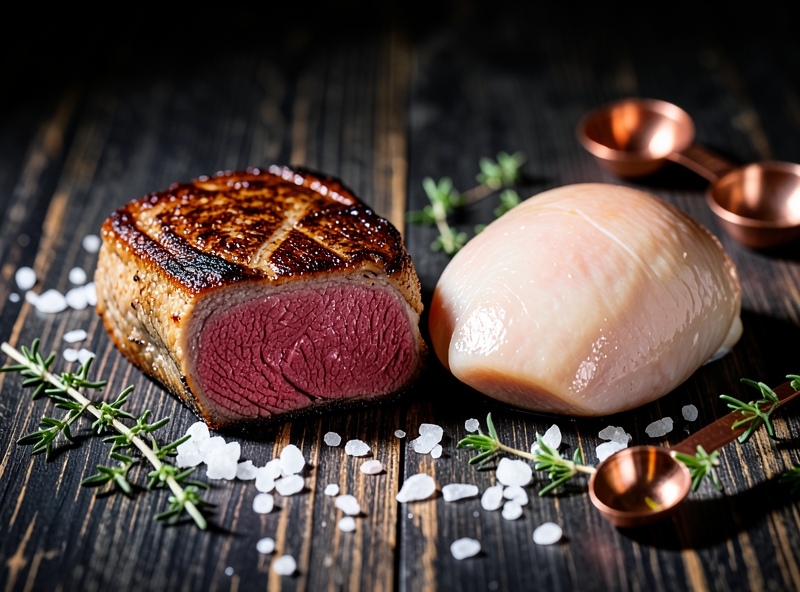
1. Wet Brining: Liquid Solution for Instant Hydration
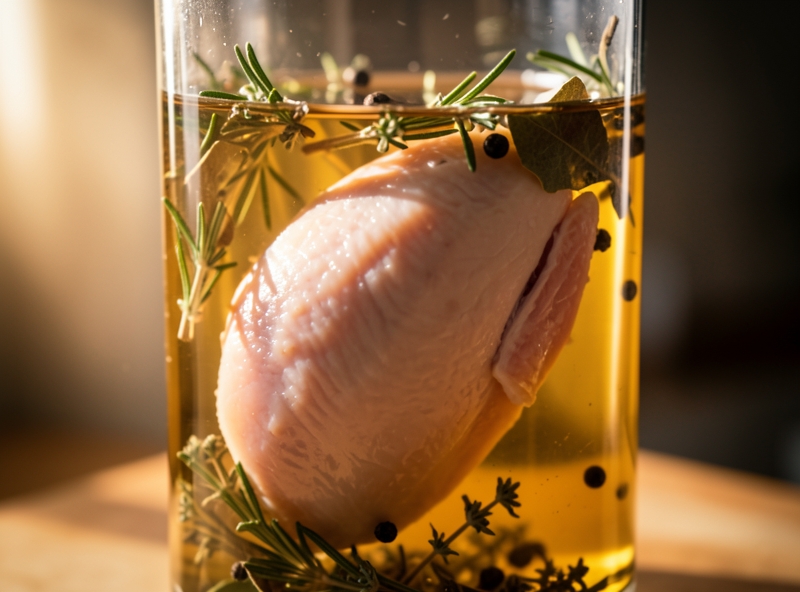
Mechanism of Action: Wet Brining involves completely submerging meat in a dissolved saltwater solution (standard ratio from 5% to 8%) combined with herbs. Initially, osmosis draws a small amount of water out of the meat. However, sodium ($Na^+$) and chloride ($Cl^-$) ions from the salt quickly diffuse deep into the muscle fiber structure. Here, salt denatures proteins (especially Myosin), expanding the spaces between myofibrils. As these gaps open up, the meat draws the brine solution back inside like a sponge.
- Pros: Provides maximum hydration for lean meats, distributes saltiness with absolute uniformity from outside to inside, and easily infuses flavors from herbs and spices (garlic, bay leaves, peppercorns) deep into the meat fibers.
- Cons: Dilutes the natural flavor of the meat; excessive water accumulation under the skin makes it extremely difficult to get crispy skin when frying or roasting; consumes significant refrigerator space.
- Best suited for: Chicken breasts, turkey breasts, lean pork tenderloin, or seafood prone to drying out under high-heat roasting or grilling.
2. Dry Brining: Dry Salting and the Power of Natural Meat Juices
Mechanism of Action: Unlike soaking in water, Dry Brining uses coarse salt sprinkled directly onto the surface of the meat and left to rest in cold air. Salt draws natural moisture from inside the meat outward through osmosis, forming a concentrated brine solution right on the surface. Then, this concentrated brine is reabsorbed deep into the meat fibers, carrying salt ions to break down the protein structure without diluting the natural meat juices.
- Pros: Preserves and enhances the rich, natural flavor of the meat (beefy flavor); thoroughly dries the surface, creating ideal conditions for the Maillard reaction to develop, resulting in extra crispy skin and a beautiful golden-brown color; saves refrigerator space.
- Cons: Requires a longer resting time (from 12 to 48 hours) for the salt to fully penetrate thick cuts of meat.
- Best suited for: Beef steaks (Ribeye, Tomahawk), leg of lamb, whole duck, skin-on roast pork, salmon.
| Comparison Criteria | Wet Brining (Liquid Brine) | Dry Brining (Dry Salting) |
|---|---|---|
| Standard Ratio | 50g - 60g salt / 1 liter of water (5% - 6%) | 1.5% - 2% salt relative to meat weight |
| Processing Time | Fast (1 - 12 hours depending on size) | Slower (12 - 48 hours for optimal results) |
| Skin/Crust Quality | Soft, moist, difficult to achieve crispiness | Extremely dry, ultra-crispy when seared/roasted |
| Core Flavor | Juicy, mild flavor, infused with herbal aromas | Rich, deep natural meat flavor, packed with Umami |
| Cooking Loss | Loses about 10-12% of weight | Loses only about 5-8% of weight |
Golden rules to master the ultimate brining technique:
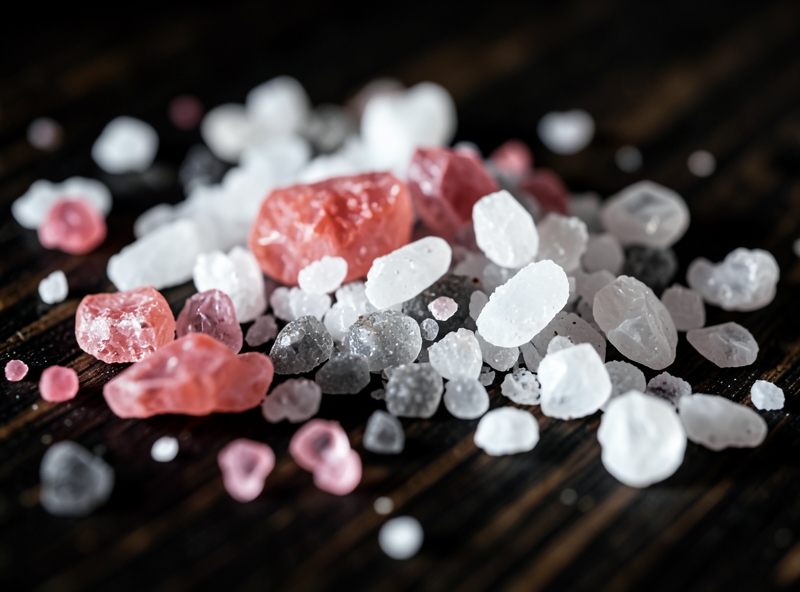
- Always use Kosher Salt or Coarse Sea Salt: Avoid fine-grain iodized salt because it dissolves too quickly, easily causing localized harsh saltiness and an unpleasant metallic taste.
- Control safe temperatures: The brining process (whether dry or wet) must take place inside a cold refrigerator environment (between 1°C - 4°C) to completely prevent bacterial growth.
- To rinse or not to rinse? For Wet Brining, lightly rinse the surface and pat thoroughly dry with paper towels before cooking. For Dry Brining, never rinse—let the naturally dissolved salt layer proceed directly into the cooking process.
4. Guide to Applying Professional Kitchen-Standard Brining Techniques
Have you ever spent a lot of money on a premium cut of beef or chicken breast, only to end up with a finished product that is dry, tough, and bland on the inside? The mistake isn't in your cooking skills, but in skipping Brining—the technique of controlling moisture and protein structure with salt. This technique marks the boundary between an ordinary dish and a Michelin-standard culinary masterpiece.
Chemically speaking, salt does more than just enhance flavor. As it penetrates muscle fibers, salt alters the protein structure (specifically myosin), forming a matrix that tightly retains water molecules. As a result, the meat retains 10% to 15% more juiciness after high-temperature cooking.
"Brining is not merely salting. It is an insurance policy for the moisture and structure of every meat fiber against the intense heat of the flame."
To achieve perfection, you need to master two methods: Wet Brining and Dry Brining based on absolutely precise ratio formulas.
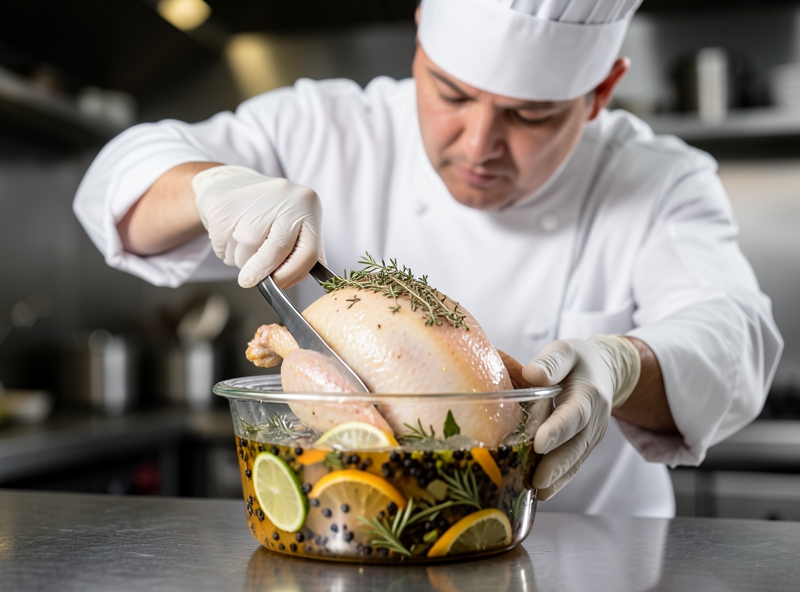
1. The Golden Ratio for Wet Brining
A standard brine solution ranges from 3% to 6% salinity. The calculation is based entirely on the weight of the water (or total weight of water + meat if applying the Equilibrium Brining method):
- Low Concentration (3% - 4%): Use 30g - 40g of salt per 1 liter of water (1000g). Ideal for delicate seafood or meats requiring extended overnight brining without risk of over-salting.
- Standard Concentration (5% - 6%): Use 50g - 60g of salt per 1 liter of water. This is the ideal "sweet spot" for whole poultry and thick-cut pork. Fast brining time with deep penetration.
2. Standard Ratios for Dry Brining
Dry Brining leverages the meat's natural moisture to dissolve the salt, which is then drawn back inside along with the savory juices. The exact formula is 1.5% to 2% salt by weight relative to the total weight of the meat. For example: A 500g steak will require exactly 7.5g to 10g of kosher salt.
| Ingredient Type | Optimal Method | Standard Salt Ratio | Brining/Salting Time | Texture Goal |
|---|---|---|---|---|
| Chicken Breast / Chicken Thigh | Wet Brining | 5% (50g salt / 1L water) | 1.5 - 3 hours | Juicy, not stringy or dry |
| Whole Chicken / Duck | Dry Brining (refrigerated) | 1.5% of meat weight | 12 - 24 hours | Crispy skin, evenly seasoned meat |
| Pork Loin / Pork Ribs | Wet Brining | 6% (60g salt / 1L water) | 4 - 8 hours | Tender, retains natural juices when pan-seared |
| Beef Steak (Thick-cut >3cm) | Dry Brining | 1.8% of meat weight | 12 - 48 hours | Creates a rich Maillard crust, deeply tender meat |
| Shrimp / Fish Fillets | Short-duration Wet Brining | 3% (30g salt / 1L water) | 15 - 30 minutes | Snap-crisp shrimp, firm fish meat that doesn't fall apart |
3. Food Safety Rules and Flavor Elevation
If done incorrectly, the brining technique can become a breeding ground for bacteria or completely ruin the dish's texture. Strictly follow these principles:
- Maintain temperature below 4°C: The brine solution must be completely chilled (below 4°C) before adding ingredients. The entire brining process must take place inside the refrigerator to prevent the growth of dangerous bacteria such as Salmonella.
- "Air-Drying" Technique: After removing meat from the wet brine, pat it thoroughly dry with paper towels and leave it uncovered in the refrigerator for 2 to 6 hours. This step dries out the surface, creating optimal conditions for the Maillard reaction to yield crispy skin and a beautiful golden-brown color.
- Never Reuse Brine: The brining solution becomes contaminated with microorganisms and raw meat proteins after use. Discard it immediately after a single use; never re-boil it for reuse.
- Optimize Aromatics: Add fat- and water-soluble aromatics to the brine, such as crushed garlic, black pepper, bay leaves, orange peel, or thyme. Salt acts as a "carrier," drawing these flavor molecules deep into the muscle fiber structure.
5. Frequently Asked Questions (FAQ)
Chicken breast turned out dry as sandpaper, steak tough as leather, or grilled ribs drained of all their sweet juices—these are the consequences of ignoring the science of protein denaturation. Below are in-depth answers to the most essential questions to help you master the brining technique and elevate every dish to restaurant quality.
1. Does brining make the meat too salty?
Absolutely not, provided you properly control the ratio and timing. Brining is not merely "salting," but a controlled process of osmosis and diffusion.
When meat is submerged in a standard salt solution (typically 5% - 6%, equivalent to 50g - 60g of fine salt dissolved in 1 liter of water), Na+ and Cl- ions penetrate the muscle fibers, causing a slight denaturation of the protein structure (myosin). This process expands the binding spaces to tightly hold water molecules. The result: meat that is 15% - 30% juicier after cooking, with a saltiness that remains comfortably at a natural, savory level.
"Meat becoming overly salty only occurs when using the wrong type of salt (failing to convert weight between table salt and Kosher salt) or brining beyond the critical timeframe, causing the protein network to completely break down."
2. Should you combine sugar, acids (vinegar/lemon), or herbs into the brine solution?
Yes, but each ingredient plays a distinct chemical role that you must carefully manage:
- Sugar (Brown sugar, honey, syrup): Balances the harshness of the salt while promoting the Maillard reaction (the reaction that creates a beautiful golden-brown color and rich aroma when searing/grilling). The golden ratio is 1:1 or 1:2 relative to the amount of salt.
- Acids (Vinegar, orange/lemon juice, wine): Exercise extreme caution! Acids break down protein chains rapidly. If you add too much or brine for longer than 2 hours, the surface of the meat will become mushy. Keep the concentration below 2% or add it only during the final 30 minutes.
- Herbs & Spices (Black pepper, garlic, thyme, rosemary): Most aromatic compounds are fat-soluble or water-soluble in hot liquid. To release maximum essential oils, gently simmer 1/3 of the brine water with the herbs, then dilute it with the remaining ice water before submerging the meat.
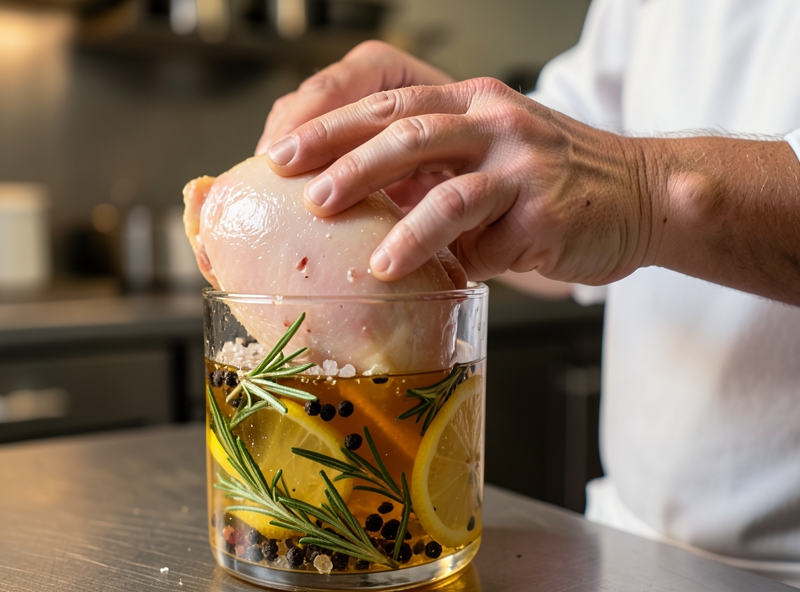
3. What is the fundamental difference between brining and marinating with fish sauce or soy sauce?
Although both use salt as a base for flavor, the biochemical mechanisms of these two methods affect the meat in completely opposite ways:
| Comparison Criteria | Brining Technique (Wet/Dry Brine) | Marinating with Fish Sauce / Soy Sauce |
|---|---|---|
| Mechanism of Action | Small salt ions (Na+, Cl-) penetrate deep into the cell core, restructuring proteins to retain moisture from within. | Large Umami molecules (Glutamate) and complex proteins mainly adhere to the surface. |
| Moisture Retention Ability | Exceptionally Optimal. Helps meat maintain juiciness even when cooked at high temperatures. | Very Limited. High local salt concentration on the surface can draw moisture out through reverse osmosis. |
| Effect When Exposed to Heat | Preserves the natural color of the meat and promotes a crispy crust (especially with dry-brining). | Highly prone to charring/burning before the meat cooks through, due to high levels of sugar and dissolved proteins. |
| Optimal Applications | Meats prone to drying out: chicken breast, pork loin, whole turkey, thick-cut steaks. | Quick stir-fries and charcoal-grilled dishes that require a rich coating of Umami flavor on the outside. |
Put simply: Brining is a technical solution to restructure moisture from the inside, whereas marinating with fish/soy sauce is the art of coating the exterior with flavor and color.