1. Multi-generational Home Painting: The Challenge of Harmony Among Family Members
A home is where the storm stops behind the door, but sometimes, a silent "civil war" breaks out just because of wall paint colors. A common reality in Vietnam is "three generations living under one roof." Here, conflicts over aesthetics and Feng Shui become the biggest barriers: Grandparents desire the tranquility and solemnity of deep tones; parents prioritize modernity and luxury; while children long for dynamic colors that stimulate creativity.
This mismatch is not just about beauty or ugliness. In specialized Feng Shui, a color that "clashes" with the destiny or psychology of a key member can cause feelings of insecurity and irritability, reducing the overall prosperity of the entire family. Choosing the wrong paint color is like wearing an ill-fitting garment; it makes the living space feel forced and loses the invisible bond between generations.
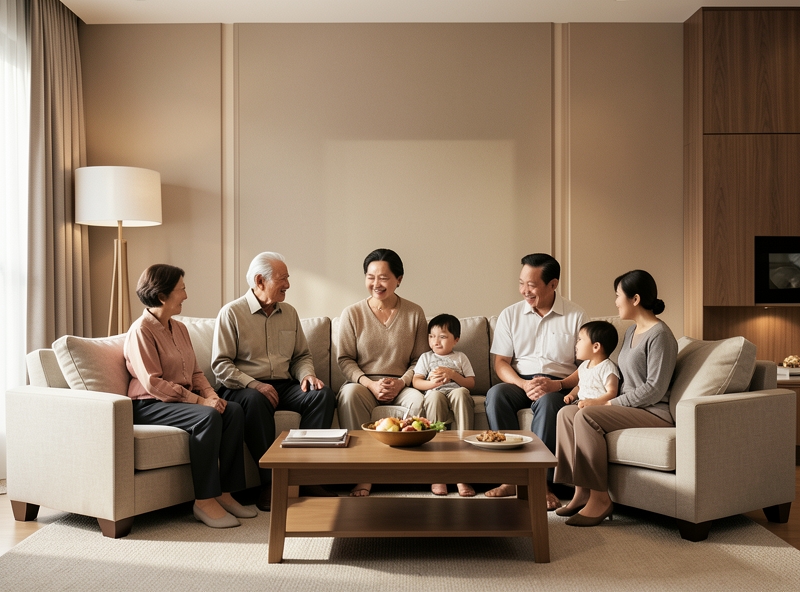
To solve this problem, leading Feng Shui experts never impose rigid standards. Instead, we look for "color buffer zones" – where different destiny energies find harmony. This is a technique using neutral tones as the main theme combined with accent walls tailored to each individual's destiny in their private spaces.
"Color Feng Shui for multi-generational homes is not a compromise, but the art of balancing Heaven - Earth - Human to create the smoothest flow of energy."
| Generation | Psychology & Needs | Feng Shui Color Solutions |
|---|---|---|
| Elderly | Peace, nostalgia, deep sleep. | Earth tones (cream yellow, light brown) create stability and peace of mind. |
| Young Couples | Energy, success, inspiration. | Metal or Water tones (porcelain white, light gray, ocean blue) bring clarity and smooth progress. |
| Children | Exploration, growth, joy. | Wood or Fire tones (light green, pastel orange) stimulate intellect and movement. |
The key lies in identifying the Main Color for common living areas such as the living room and kitchen. These colors must act as the "glue" that connects, usually Earth or Metal colors with gentle shades, helping to neutralize conflicts between different destiny elements. A truly valuable living space is where everyone from the elderly to young children feels the warmth of understanding as soon as they step into the house.
Don't let paint colors become a source of discomfort. Finding the common touchpoint in the color palette is the first step toward building a prosperous home, where each member finds their identity within a harmonious and positive energy-filled whole.
2. Principles for Choosing Dominant Colors: Prioritize Neutral and Balanced Tones
The biggest mistake homeowners make when designing a living room is trying to incorporate too many "destiny-matching" colors into large areas such as walls or ceilings. The result is a stifling space that causes neurological inhibition and disrupts the flow of energy (Qi). In modern feng shui, neutral colors are not monotonous; they act as energy "filters" that help balance the five elements, creating a buffer space for energy currents to circulate most effectively.
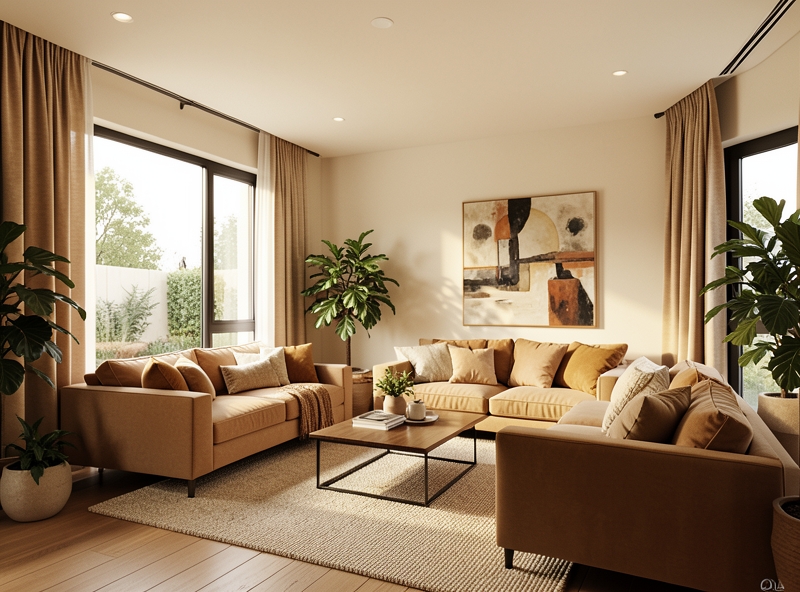
Using shades such as Cream, Beige, or Off-white as a primary foundation is the optimal solution for the "pain point" of cramped and poorly lit spaces in modern townhouses. These tones possess low vibration frequencies, helping to immediately soothe the eyes, reduce stress after a long workday, and create a visual illusion of a larger space.
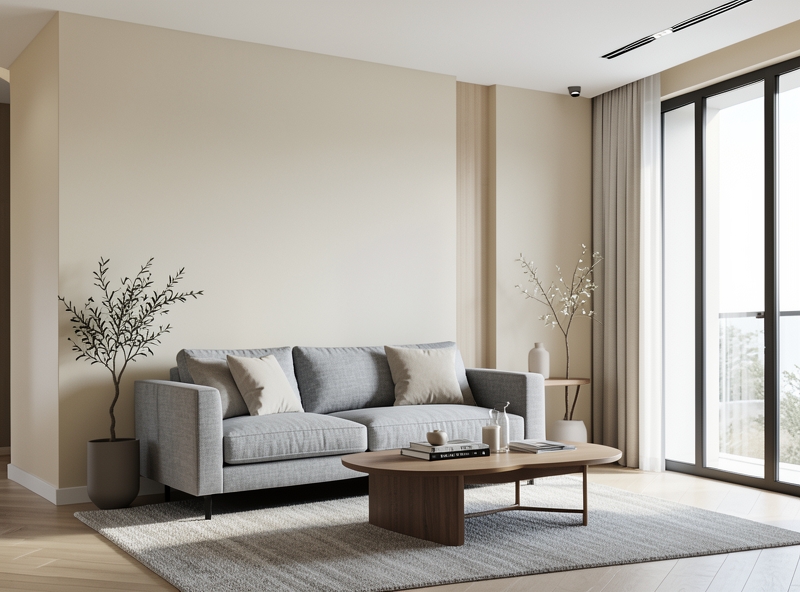
Why do leading feng shui experts always prioritize a neutral palette for common living areas? The answer lies in the principle of color interaction:
- Excellent Adaptability: Neutral colors belong to the Earth or Metal (light) elements, providing high stability. They act as a "mediator," allowing you to easily coordinate with decorative items featuring specific destiny colors (such as red cushions for the Fire element or green paintings for the Wood element) without causing aesthetic or energetic conflict.
- Optimizing Light (Yang Energy): Light neutral tones have the best ability to reflect natural light. In feng shui, light is a symbol of vitality (Sheng Qi). A bright room signifies a smooth household path and a clear mind.
- Emotional Sustainability: Unlike warm tones that cause temporary excitement but quickly lead to fatigue, Beige and Off-white maintain a balanced psychological state, helping to bond family members together.
| Dominant Color Palette | Psychological Impact | Feng Shui Value |
|---|---|---|
| Cream / Beige | Warm, intimate, reassuring | Nurtures the Earth element, creating stability for the family. |
| Off-white / Pearl | Elegant, pure, wise | Activates Metal element energy, promoting decisiveness. |
| Light Grey | Calm, modern, profound | Balances conflicting elements, reducing "killing energy" (Sha Qi) from sharp angles. |
"In a feng shui-standard space, neutral colors do not play the leading role; they are a perfect 'stage' for the homeowner's life to shine according to their own destiny."
Do not underestimate simple white or beige wall surfaces. They are the "visual rest stops" and a protective layer that keeps your home timeless. Once the foundation is solid and balanced, you can fully utilize small furniture pieces, artwork, or greenery to activate wealth or romance sectors according to your personal needs without fear of breaking the home's overall energy structure.
3. Secrets to 'Neutralizing' Clashes When Family Members Have Conflicting Elements
Have you ever felt the atmosphere at home is always tense, trivial arguments erupt for no reason, or your family's luck suddenly "stalls" despite everyone's best efforts? It is highly likely that energy conflicts between destiny elements are silently undermining your home's feng shui. Don't rush to worry about tearing everything down or changing all your furniture; the key lies in the principle of bridging colors – a sophisticated art of coordinating the Five Elements that only true feng shui masters thoroughly understand.
In feng shui, "clashing" does not mean destruction, but rather the obstruction and neutralization of each other's energy. To resolve this, we do not use confrontation but rather transformation. Instead of letting two energy streams collide head-on, we insert a color "buffer zone" in between to act as an intermediary, creating a closed loop of Mutual Generation. This is the "Hóa Sát Vi Quyền" solution (turning a threat into authority), transforming adversity into a driving force for family prosperity.
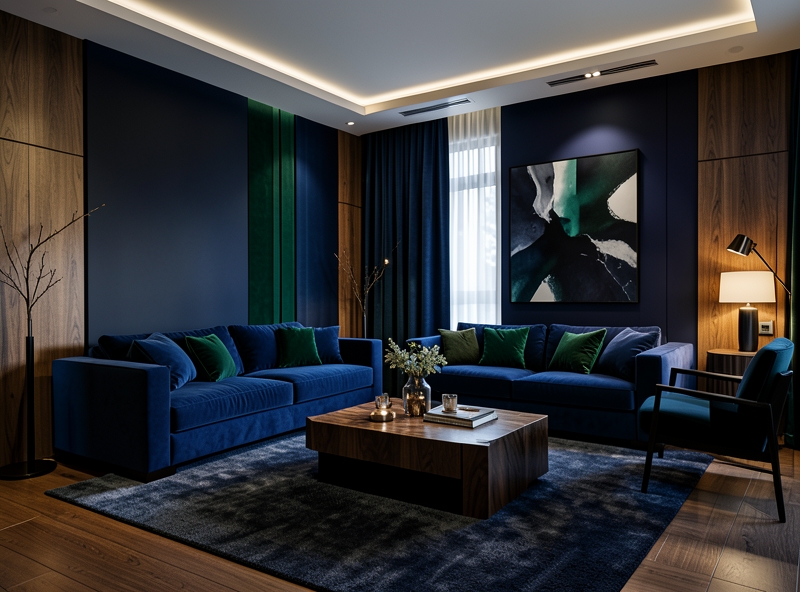
Let's analyze the most common clashing scenarios and how to use color to "turn the tables":
- Water Husband clashes with Fire Wife: Water extinguishes Fire, easily making the wife feel overwhelmed and inhibited. The solution is to use Green (Wood) as an accent color (pillows, wall paintings, curtains). At this point, Water will generate Wood, and Wood will generate Fire. The presence of Wood shifts the relationship from "confrontation" to "nurturing."
- Metal Wife clashes with Wood Husband: Metal cuts through the growth of trees, easily causing rifts in the husband's career. Use Black or Blue (Water). Water will act as an intermediary: Metal generates Water, and Water nourishes Wood, helping energy flow smoothly.
- Earth Parents clash with Water Children: Earth blocks the flow of Water, making children feel restricted and making it difficult to develop their personalities. Introduce White or Metallic (Metal) into the living space. Earth generates Metal, and Metal generates Water, creating understanding and a strong bond.
"Color is not just to look at; it is a vibration frequency. When you choose the right bridging color, you are setting up a 'conductor' who coordinates all the energy music in the house to become melodious and prosperous."
| Conflicting Element Pairs | "Rescue" Colors (Bridging) | Practical Application |
|---|---|---|
| Wood clashes with Earth | Red, Pink, Orange (Fire) | Add warm-light table lamps or red-toned floor rugs. |
| Fire clashes with Metal | Yellow, Earthy Brown (Earth) | Use ceramic vases or paint walls in cream/light yellow. |
| Earth clashes with Water | White, Gray, Silver (Metal) | Use metal picture frames or silver-gray curtains. |
Important note: Bridging colors do not need to cover the entire area. Sometimes just a strategic accent (Pop of color) in common living areas like the living room or kitchen is enough to completely change the energy situation. Prioritize items with high aesthetics and natural materials for the maximum feng shui effect. Understanding and applying intermediate colors is a testament to the homeowner's sophistication in preserving happiness and creating sustainable wealth.
4. Dividing Functional Zones: How to Personalize Private Spaces Within a Shared Environment
A fatal mistake for many homeowners is trying to "synchronize" the colors of the entire living room according to the owner's destiny, turning the common living space into a monotonous and imposing block of color. In reality, a prosperous home must be a balanced ecosystem, where each member finds their own "energy charging station" without disrupting the overall Feng Shui flow. Don't turn your living room into a soulless showroom; turn it into a symphony of personalized pieces.
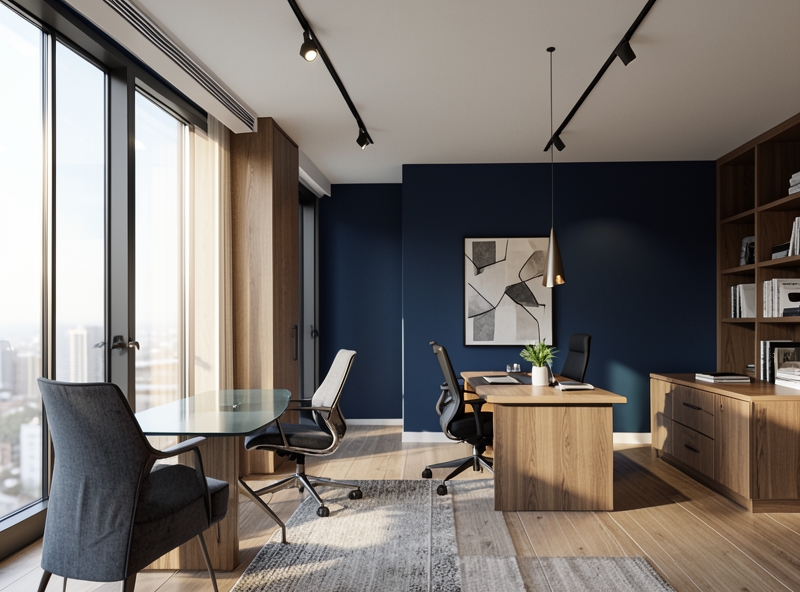
The key lies in Accent Wall and Micro-Zoning techniques. Instead of repainting all four walls, you only need to choose a 2-3m2 corner or a recessed wall section to create a "destiny zone." For example, in a neutral Beige (Earth) living room, a deep Navy Blue accent wall in a Water-element person's reading nook will be a sophisticated highlight, simultaneously activating personal wealth and creating extreme aesthetic depth.
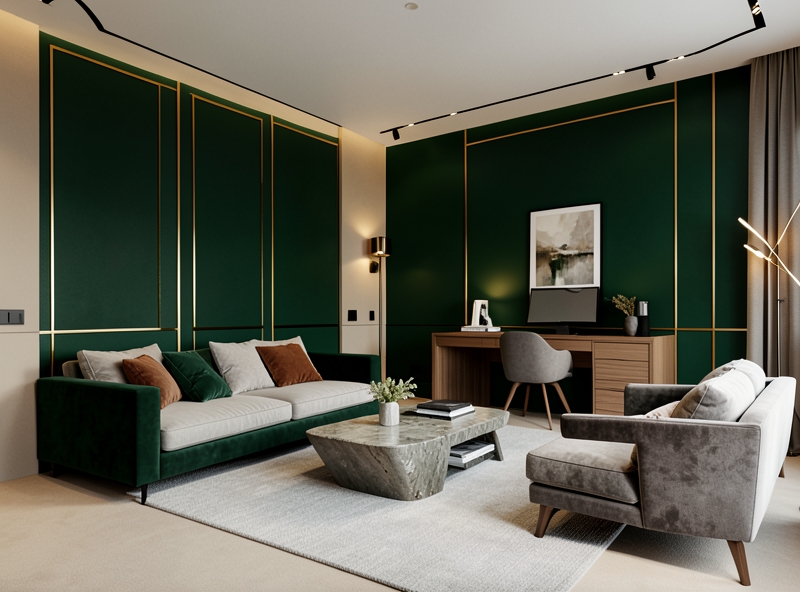
Modern Feng Shui design thinking doesn't stop at destiny elements; it must also resolve generational psychological conflicts. A harmonious living space requires visual "resting points" calculated based on the intrinsic needs of each age group:
- Quiet corners for the elderly: Older people often face a decline in Yang energy and can easily feel insecure. Prioritize Deep, Neutral, or Warm Pastel tones such as wood Brown, warm Gray, or sand Yellow. These colors belong to the Earth and Metal elements, creating stability and peace, helping to stabilize blood pressure and improve sleep quality.
- Dynamic corners for children: Children need the stimulation of Wood and Fire elements to develop thinking and creativity. Don't hesitate to use bright color patches like sprout Green, coral Orange, or sunny Yellow in study corners or play areas. These are "color vitamins" that keep children full of inspiration.
| Subject | Psychological Needs | Recommended Colors | Feng Shui Effects |
|---|---|---|---|
| Elderly | Tranquility, peace of mind | Earthy Brown, Slate Gray, Beige | Nurtures vital energy, calms the mind, stabilizes family harmony. |
| Children | Exploration, dynamism | Green, bright Yellow, light Orange | Activates intelligence, promotes growth (Wood). |
| Workspace (Homeowner) | Focus, power | Navy Blue, Mystic Black, Porcelain White | Enhances fortitude, attracts career opportunities. |
"Feng Shui is not the possession of a single color. Peak Feng Shui is the art of arrangement so that every member feels they belong to that space, through subtle color touchpoints aligned with their destiny."
To achieve this without causing "visual chaos," follow the 60-30-10 rule. 60% is the dominant color of the living room (usually chosen based on the house orientation), 30% is the color of large furniture, and the remaining 10% is the "stage" for personalization. This 10% could be a red lounge chair for a Fire-element person, or a green bookshelf for a Wood-element person. These subtle strokes will dissolve stiffness, bringing a fresh flow of vital energy and absolute satisfaction to every family member.
5. Optimizing Lighting to Enhance Color Value
Have you ever found yourself in this situation: picking out a peaceful serene blue paint at the store, but once it's on your walls, it turns into a cold, dark blue tone like a stone cellar? The mistake doesn't lie in the color palette, but in the physical interaction between light and hue. In modern feng shui, light is the "catalyst" that activates the energy of color. If color is the body, then light is the soul. Without optical calculation, any intention regarding color feng shui can backfire, causing neurological inhibition for the occupants.
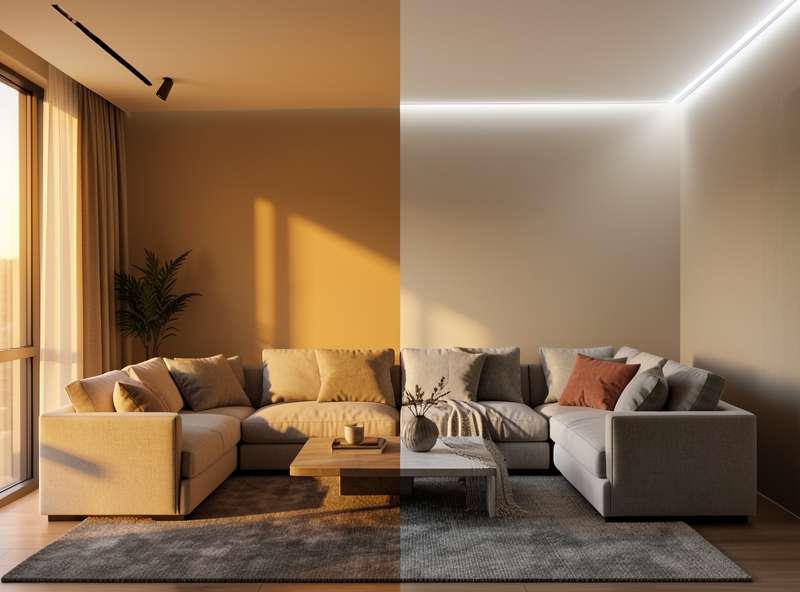
To optimize color value and resolve conflict in multi-colored spaces, you need to master these two core lighting "scenarios":
Natural Light – The "Filter" that changes over time: Sunlight has a color temperature that varies continuously from morning to night. The orientation of your house determines your "filter lens." North-facing houses usually receive soft blue light, making paint colors look cooler; while West-facing houses receive harsh yellow light in the afternoon, which can easily make warm tones (red, orange) become excessively vibrant, creating high fire energy. The secret is to use blinds or thin sheer curtains to scatter light, helping to soften the boundaries between two contrasting colors, creating a smooth transition that is pleasing to the eye.
Artificial Light – The "Wizard" of mood coordination: Never use just a single type of lamp for the entire house. Combining white and yellow light will help you completely master the hue of the paint color:
| Type of Light | Impact on Color | Feng Shui & Psychological Application |
|---|---|---|
| White Light (6000K-6500K) | Maintains the integrity of blue, gray, and white. Sharpens details. | Increases alertness, suitable for offices or areas requiring mental clarity (Water/Metal elements). |
| Yellow Light (2700K-3000K) | Warms up cool tones, deepens warm colors like red, yellow, and brown. | Creates a sense of security and connection, extremely good for bedrooms and dining tables (Earth/Fire elements). |
| Neutral Light (4000K) | Balanced, does not alter the original hue of the paint color. | The "golden" solution for spaces with mixed colors, helping to resolve clashing tones. |
"Light is not just for illumination; it is used to define color. A dark paint color can become mysterious and luxurious thanks to accent lighting, but it can also become gloomy if placed in uncontrolled darkness."
To live comfortably in a multi-colored space without feeling "suffocated," apply the principle of indirect reflection. Instead of shining lights directly onto strong colored wall sections (which easily causes glare and eye strain), use cove lighting or wall washers. When light reflects off a painted surface, it carries a part of that color's hue but in a gentler form, spreading throughout the room. This is a wonderful way to neutralize conflicting energy flows between family members with different destinies, helping everyone find tranquility in the same shared living space.
Remember: The color you see is the result of light bouncing back into your eyes. Master the light, and you are the master of manipulating the emotion and energy of your entire home.
6. Summary
Paint color is not merely a layer covering lifeless concrete blocks; it is a vibrational frequency that directly affects the nervous system and the flow of vital energy (Qi) within your home. Choosing colors according to Feng Shui is not about extreme superstition, but rather a science of understanding: understanding destiny, understanding space, and understanding the silent aspirations of each family member.
To achieve perfect balance, you must master the principle of intermediate Feng Shui. Instead of imposing a single destiny-based color that might feel overwhelming, use transitional shades to harmonize differences between family members. A living room with Earth tones nourishing Metal not only helps the homeowner manifest prosperity but also creates warmth, bridging the gap between generations.
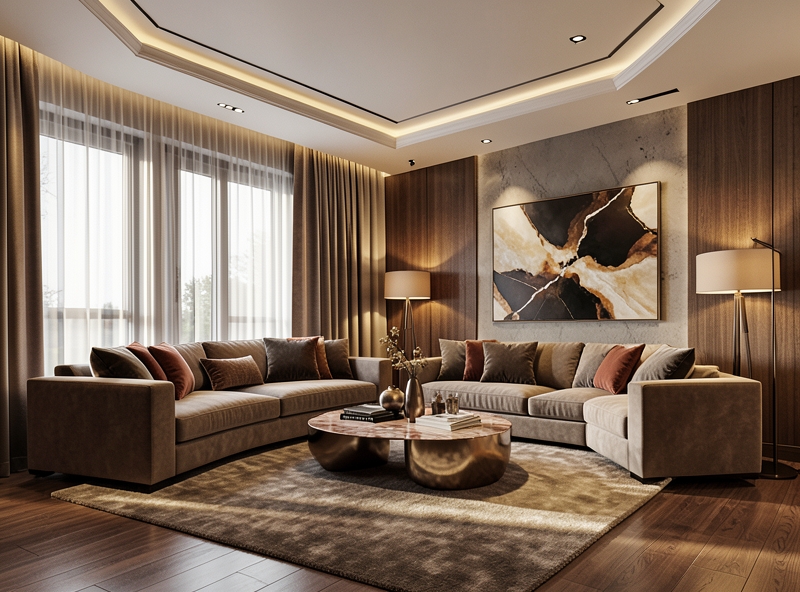
View color coordination through the lens of a sophisticated expert:
- Understanding: Selecting colors based on the interaction between the Five Elements and behavioral psychology.
- Intermediate Rules: Using neutral tones (gray, beige, cream white) as bridges to soften conflicts between clashing elements.
- Emotional Connection: Appropriate colors create a comfortable psychological state, acting as a catalyst for emotional bonding, turning the house into a sanctuary where the storm stops at the door.
"Color is the language of emotion. A Feng Shui-compliant home is a place where every wall knows how to tell a story of prosperity and peace of mind."
| Core Element | Practical Value | Spiritual & Emotional Impact |
|---|---|---|
| Accurate Color Schemes | Optimizes light, expands space | Activates wealth luck, increases prosperity |
| Destiny Understanding | Reduces stress, improves health | Creates harmony between people and the land (Heaven - Earth - Human) |
| Connectivity | Harmonizes member preferences | Family harmony, filial children |
Do not consider choosing paint colors as the final finishing step; consider it the foundation of happiness. When you master the laws of color, you hold the key to regulating energy flow, turning every living space into a symphony of sustainable prosperity. It is time to shed old prejudices to create a living space where every shade is a blessing for your family.