1. The Importance of Natural Light for Small Apartments
If your small apartment is like a slightly tight-fitting garment, then natural light represents the clever tailoring that helps the wearer feel more comfortable and free. In interior design, light is not merely a tool for seeing things clearly; it acts as an "invisible architect." It has the power to blur the boundaries of concrete walls, creating an illusion of an open space full of vitality.
"Natural light is a free gift from the universe, capable of transforming a cramped box into a breathing home."
Imagine our bodies are like a smartphone, and sunlight is the most natural battery charger. Living in a space flooded with sunlight helps regulate circadian rhythms and stimulates the body to produce serotonin – the "happiness hormone" – helping you dissipate the feeling of suffocation after stressful working hours. Conversely, a poorly lit apartment is like a plant placed in a dark cellar; even if adequately watered, it can hardly thrive or stay radiant.
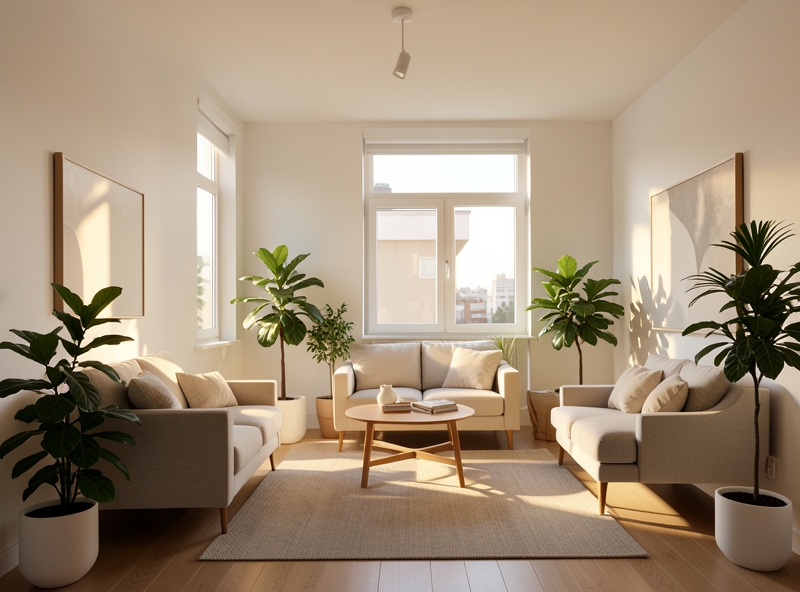
The current reality in major cities is that small apartments are often surrounded by high-rise buildings, leaving them in a state of "light hunger." These rooms often provide a cramped, damp feeling and incur significant costs for daytime electrical lighting systems. The lack of natural light not only makes the house look darker but also makes expensive furniture appear dull and lifeless.
| Benefits of Light | Impact on Small Spaces | Real-world Example |
|---|---|---|
| Visual Expansion | Eliminates confinement, creating a feeling of more openness than the actual area. | A narrow hallway will look twice as wide if there is light at the end of the path. |
| Health Improvement | Boosts Vitamin D and improves the occupant's mood. | A feeling of relaxation when reading a book by the window in the morning. |
| Energy Saving | Reduces dependence on electric lights and heaters. | Lower monthly electricity bills by utilizing free light sources. |
In summary, natural light plays a core role in "rescuing" narrow spaces. When you know how to maximize this light source, you are not only saving energy but also directly investing in your own quality of life and mental health. Here are the specific roles that natural light provides:
- Natural Disinfectant: UV rays in sunlight help kill bacteria and mold in hidden corners of small apartments.
- Enhancing Colors: Only under natural light do decorative color palettes and interior materials display most accurately and vividly.
- Connecting with the World: Light helps blur the distance between inside and outside, helping people not feel isolated within their "box."
2. Using Strategic Mirrors to Reflect and Spread Light
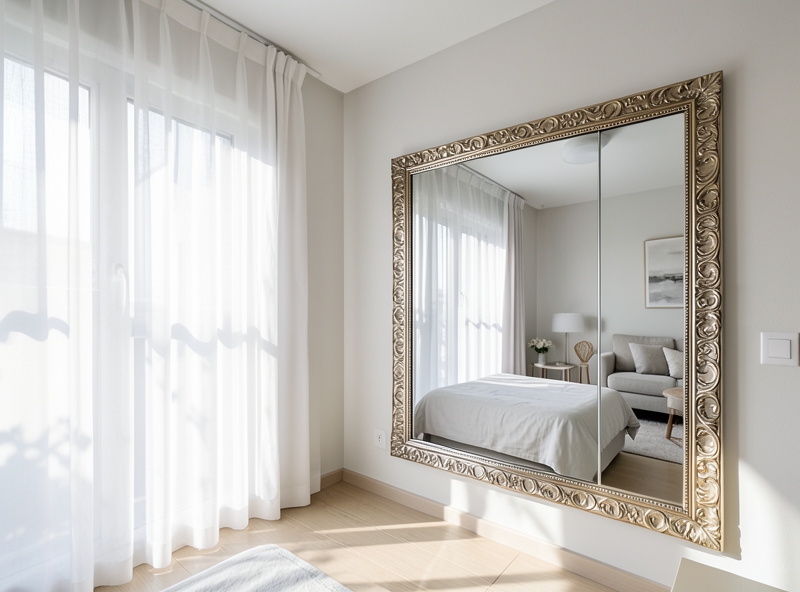
Imagine a mirror not just as an item for checking your outfit every morning, but as a powerful "second window." In interior design, mirrors act as light transit stations. If sunlight is a stream of cool water pouring into a room through the window, then mirrors are the smart channels that help that stream flow beyond the windowsill and seep into every dark corner of the house.
To optimize this "transit station," the golden rule is to place mirrors opposite or perpendicular to natural light sources. When sunlight hits the mirror surface, it is reflected and "shot" back into the space, creating an instant brightening effect. This method is like replicating the sun right in your living room, saving energy and providing a pleasant feeling of being close to nature.
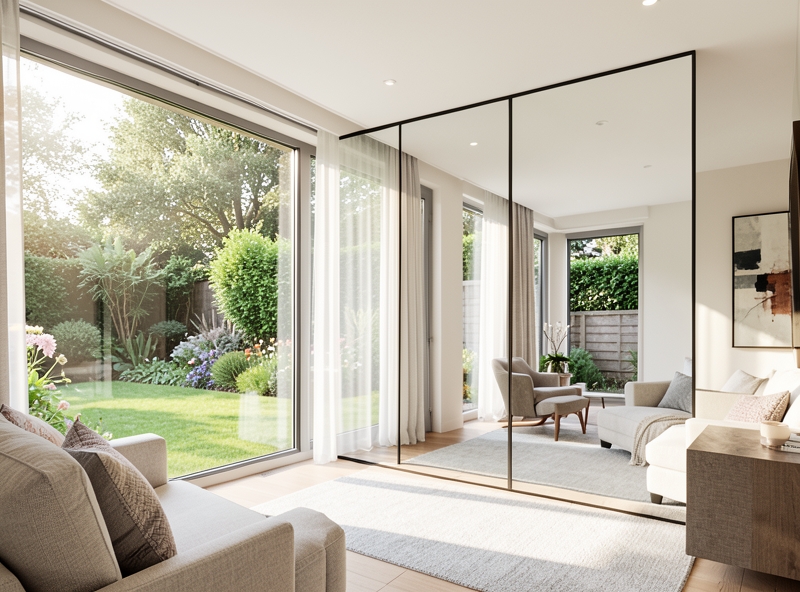
In addition to directing light, a mirror is also a "magician" of area. Large floor-to-ceiling mirrors or wardrobes with mirrored doors create a visual effect called "doubling." It tricks the brain into thinking the room continues beyond the concrete wall. Much like looking down a long, narrow road through a small gap, mirrors eliminate the feeling of confinement, making ceilings appear higher and floor space seem doubled. This is an indispensable "secret weapon" for studio apartments or small bedrooms.
"Mirrors do not just reflect our image; they reflect the hope for a more open and energetic living space."
Beyond functionality, modern decorative mirrors are also designed as works of art to enhance aesthetics and multidimensional light diffusion effects:
- Sunburst mirrors: With rays radiating outward, this type of mirror helps break up the light stream and disperse it in many directions, creating a sparkling effect like stars.
- Window-pane mirrors: Shaped exactly like a real window frame, these help trick the eye into believing in the existence of another spatial exit.
- Frameless mirrors: Create absolute continuity, suitable for minimalist styles, helping light spread without being interrupted by coarse frame lines.
| Mirror Placement | Resulting Effect | Technical Notes |
|---|---|---|
| Opposite windows | Maximize natural light amplification | Choose mirrors with high flatness to avoid distorting reflected images. |
| Along dark hallways | Break narrowness, create depth | Should be combined with recessed LED lights for a shimmering effect. |
| Behind desks | Reduce psychological pressure from the wall in front | Avoid placing mirrors that reflect too much cluttered furniture. |
Using mirrors strategically is how we play with the laws of physics to serve our emotions. With just a small change in angle, you can turn a dark corner of a room into the brightest spot in the house, much like how we learn to open our hearts to receive positive things in daily life.
3. Replace partition walls with glass partitions to optimize light flow
Imagine that natural light in a home is like a stream of fresh water that needs to circulate continuously. A traditional brick wall, 10-20cm thick, acts like a solid "dam," completely blocking that flow and leaving the rooms behind in a state of light "thirst." Replacing these heavy walls with glass partitions is how we dismantle the dam to lead light into every corner, creating a smooth connection between spaces.
"Replacing brick walls with glass partitions isn't about destroying privacy; it's about inviting light to act as a 'visual guide,' helping a small house suddenly feel vast."
Depending on the need for privacy and aesthetics, we have three powerful "assistants" to replace bricks and mortar:
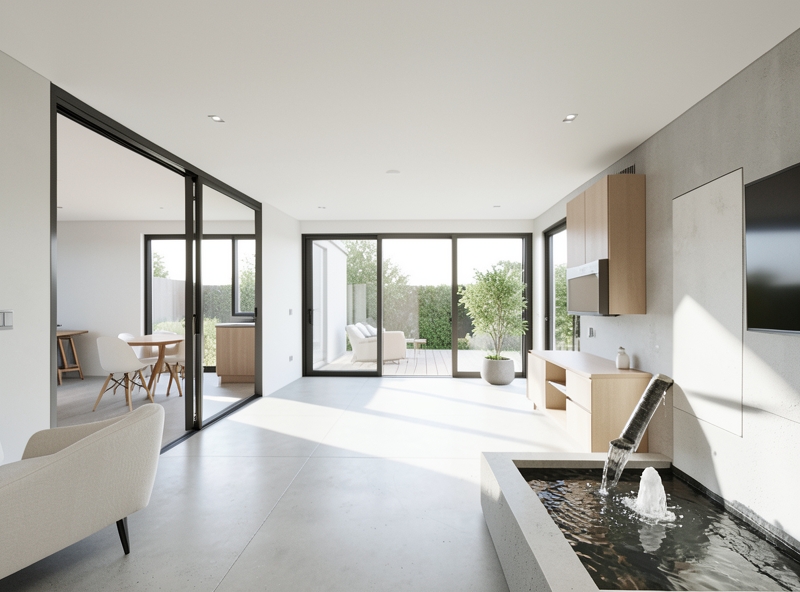
- Transparent tempered glass partitions: Like an invisible membrane, this type of glass dissolves the boundaries between the living room and the home office or kitchen. It allows your eyes to see through, creating the sensation of a space twice its actual size.
- Frosted or Fluted glass: If you need privacy for the bedroom but still want to welcome sunlight, this is an excellent choice. It acts like a filter, allowing only soft light to pass through while keeping private images behind a dreamy layer of mist.
- Glass blocks: These clear bricks, looking like ice cubes, are not just construction materials but also "lenses" that diffuse light. Glass blocks create eye-catching refractive effects, turning a dry wall segment into a light-catching work of art.
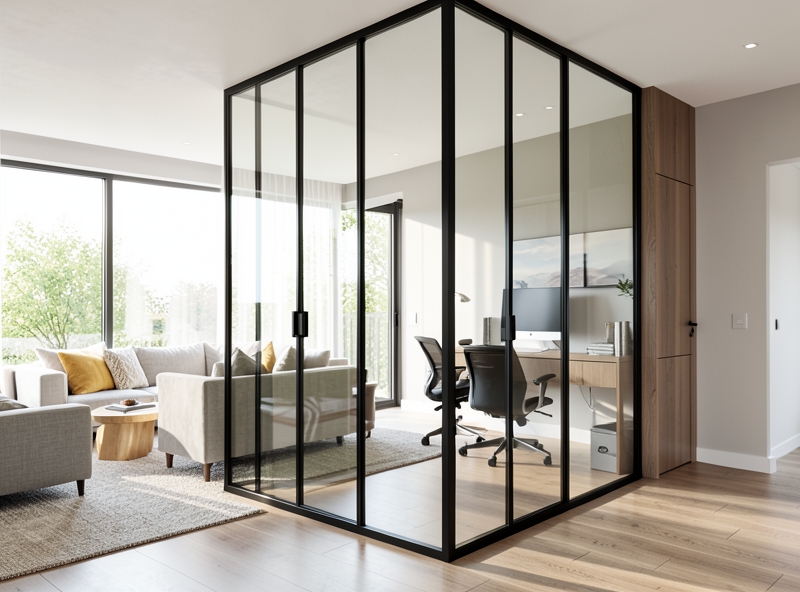
To help you easily visualize the difference, let's put brick walls and glass partitions on the scale based on daily living criteria:
| Criteria | Traditional brick wall | Glass partition |
|---|---|---|
| Light permeability | 0% - Completely dark | 80% - 95% - Flooded with light |
| Sense of space | Causes fragmentation, cramped feeling | Seamless, creates depth |
| Thickness (area consumption) | Thick (100mm - 200mm) | Thin (8mm - 12mm) |
| Aesthetics | Needs painting, additional decoration | Modern, inherently luxurious |
Using glass partitions between the bedroom and bathroom, or between the kitchen and living room, not only helps save on electricity costs during the day but also improves the mental well-being of family members. When light circulates freely, the house is no longer a series of stacked "boxes" but becomes a vivid, energy-filled entity.
4. Sheer Curtains: The Art of Light Filtering and Privacy Preservation
Imagine the harsh midday sun as an overly spicy dish that can "burn" your eyes and make the space feel sweltering. At this moment, sheer curtains (also known as voile or net curtains) act as a delicate spice filter. Instead of completely blocking the natural flow of energy like heavy fabric curtains, sheer curtains gently catch the harsh rays, allowing only soft, sweet streams of light to filter into the room. This is a real-life "filter" that makes everything in the house appear shimmering and much softer.
| Features | Blackout Curtains | Sheer Curtains |
|---|---|---|
| Light | Blocks completely, creating absolute darkness. | Diffuses light, creating natural and even brightness. |
| Breathability | Blocks wind, can cause a stuffy feeling. | Good air circulation, creating a cool atmosphere. |
| Spatial Feel | Formal, solid but sometimes heavy. | Whimsical, elegant, and expands visual space. |
The magic of sheer curtains lies in their ability to "hide while opening." If thick curtains are like a solid brick wall, sheer curtains are like a misty fog. From the inside, you can still observe the movement of trees and the sky, yet it remains difficult for those outside to intrude upon your family's private space. It establishes a gentle psychological boundary, helping you feel secure without the sensation of being imprisoned within four walls.
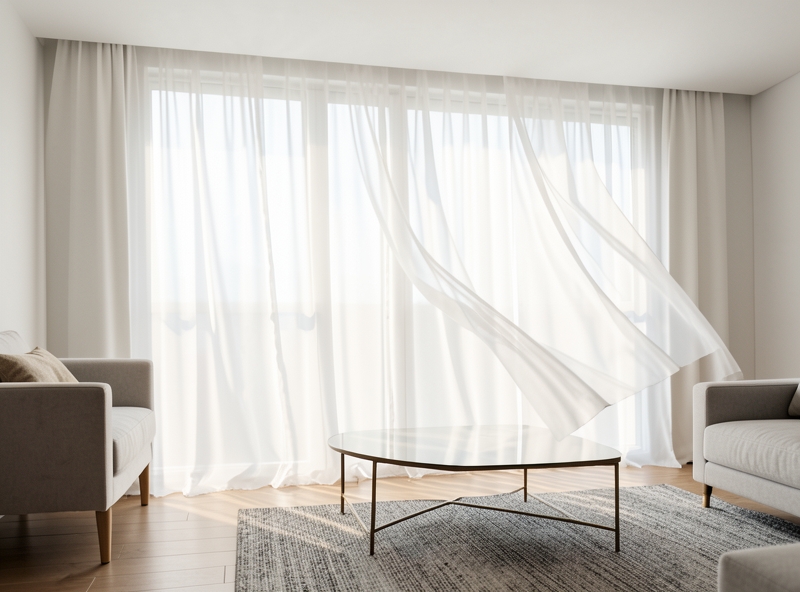
To achieve the best visual effect, color selection is a vital factor. You should prioritize neutral and pastel tones:
- Pure White: Like a filter paper that cleanses all light impurities, helping the room look its most spacious and clean.
- Cream or Beige: Brings a warm feeling like a milk latte, softening the coldness of modern apartments that use many glass and metal materials.
- Pastels (Baby Blue, Pale Pink): Creates a gentle "foundation" layer for the space, helping the mood become more relaxed and pleasant after a long workday.
"Sheer curtains are not just shielding items; they are a brushstroke of light, turning a home into a living work of art that follows the rhythm of the sun."
When gentle breezes blow through, the sheer fabric sways slightly like the breath of the house. This poetic movement is the secret to turning a quiet, dry space into one full of life and whimsy. Investing in a quality set of sheer curtains is how you pamper your vision and nurture your emotions in every moment of daily life.
5. Additional Considerations When Designing a Light-Filled Space
Imagine natural light as a distinguished guest visiting your home. To allow this guest to wander through every room instead of just lingering at the threshold, we need to prepare a clear "runway" and "mirrors" that reflect joy. Below are the tips to help you maximize the resonance of this energy source.
First and foremost, consider your wall paint color as the canvas of a painting. If you choose dark or deep tones, they will act like a sponge, absorbing all the light. Conversely, light tones such as creamy white, porcelain white, or pale blue serve as "relay stations," helping light bounce from one wall to another, brightening the room without needing to turn on too many lamps.
"Light is not just for seeing; it is for feeling. A standard bright space is one where light can naturally reach the furthest hidden corners."
The combination of Minimalism and Glossy surfaces is the "perfect duo" for expanding space. Furniture with slender legs and streamlined designs allows light to weave under tables and between chairs instead of being blocked by massive blocks of wood. When light hits glossy surfaces like ceramic tiles, stone countertops, or metallic details, it creates a reflection effect similar to how a lake reflects the sun, adding sparkle and depth to the room.
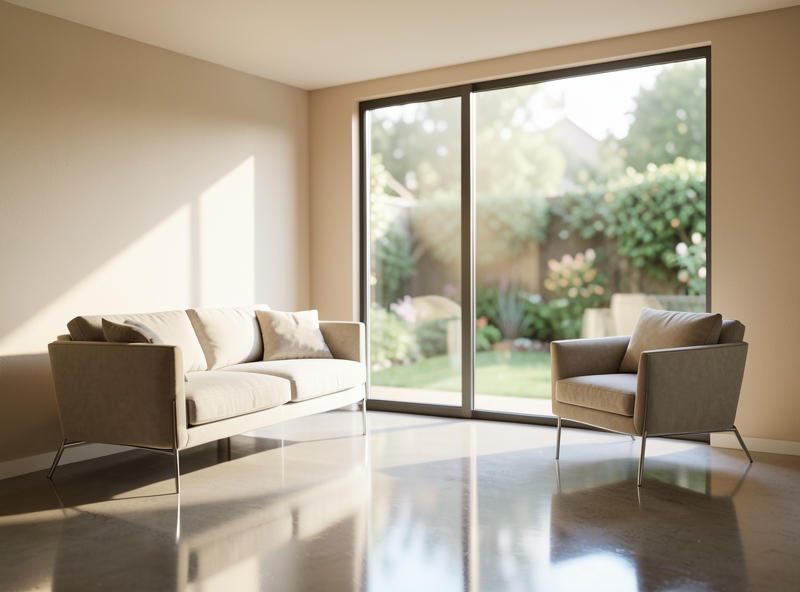
To help you easily visualize how material choices affect brightness, refer to the comparison table below:
| Design Element | Optimal Choice (Increases Light) | Choice to Avoid (Blocks Light) |
|---|---|---|
| Primary Colors | White, beige, pastel, light cool tones. | Black, dark brown, charcoal gray, burgundy. |
| Furniture Surfaces | Lacquer, glass, metal, polished stone. | Rough wood, black velvet, matte surfaces. |
| Furniture Style | High-legged, thin, elegant lines. | Solid blocks, fully upholstered to the floor. |
Finally, there is a very simple detail that is often overlooked: the cleanliness of your glass windows. Did you know that a thin layer of dust on the glass is like wearing sunglasses indoors? It can reduce the intensity of light entering the room by as much as 20-30%. Keep the "eyes" of your home crystal clear and don't let oversized potted plants or heavy curtains obstruct the view. Light needs a wide entrance to refresh your soul every day.
Decorating your home to welcome light is not difficult; it's like clearing a path. When all obstacles are removed and supporting surfaces are placed correctly, your home will naturally become a "symphony" of light and freedom.
6. Summary
Dear friends, imagine a small house is like a cup of concentrated drip coffee. If we just leave it as it is, the space can feel a bit "heavy" and cramped. But if we know how to add "spoons of sugar" in the form of light at the right time, the flavor of living will immediately become much more elegant and pleasant. Through what we have explored, we can summarize three key "secrets" to transforming a small space:
- Mirrors (The Space Cloner): Like a visual magic trick, mirrors are not just for reflecting; they are a way for us to "borrow" extra area from reality, making the room feel like it has a sunlit twin.
- Glass Partitions (The Invisible Wall): This is the "division without separation" solution. It acts like a diligent butler, helping to clearly define functional areas but absolutely never blocking the eyes or the sunbeams wandering around the house.
- Sheer Curtains (The Emotional Filter): Think of this as a soft layer of cream on top of your coffee. Sheer curtains help soften harsh sunlight, transforming raw light into something smooth that weaves into every nook and corner like golden silk threads.
Optimizing light is actually not merely a dry problem of architecture or furniture arrangement. It is the way we care for the "health" of our living space. A home flooded with natural light is like a body filled with vitamins every day; it helps the owner's mood become more positive, dispelling fatigue after work hours.
When living in a space that is small but carefully calculated regarding light, you will see that the limits of four walls are no longer a barrier. That is when the value of quality of life is elevated, where every square meter brings freedom and endless creative inspiration.
"Light does not only help us see everything clearly, but it is also the thread connecting the human soul with the heartbeat of nature right in the heart of the city."