1. Urban Fine Dust Reality and Indoor Respiratory Allergy Risks
A closed home is no longer the absolute safe haven you might think. Closing glass doors tightly, running cold air conditioning, or drawing the curtains only creates an illusion of privacy, but fails completely to stop a large-scale invasion of microscopic pollutant particles.
Every day, millions of fine dust particles—PM10 (under 10 micrometers in size) and PM2.5 (just 1/30th the diameter of a human hair)—continuously infiltrate your living space. They travel through ventilation systems, slip through window gaps, or cling tightly to clothes and shoes as family members return home. Once inside, fine dust doesn't vanish; it steadily accumulates on curtains, carpets, bedsheets, and stuffed animals.
| Pollutant | Particle Size | Infiltration Pathway & Accumulation | Major Health Impacts |
|---|---|---|---|
| PM2.5 Fine Dust | < 2.5 µm | Wind, door gaps, clinging to clothes, HVAC systems | Penetrates deep into alveoli, causes chronic respiratory inflammation, enters the bloodstream |
| Dust Mites | 100 - 300 µm | Thrives in mattresses, pillows, and carpets with humidity > 50% | Dust mite waste is a leading cause of allergic rhinitis and asthma |
| Mold Spores | 2 - 10 µm | Spores spread from damp wall corners, bathrooms, and AC drip pans | Causes eye irritation, persistent coughing, and respiratory infections in young children |
| Pollen & Pet Dander Allergens | 5 - 100 µm | Attaches to pets, enters through airflow when doors are opened | Causes continuous sneezing, itchy eyes, and triggers acute allergic flare-ups |
The danger does not stop at outdoor fine dust. In a sealed indoor environment, fine dust combines with internal biological agents to form a "toxic cocktail" that directly impacts the immune system. The combination of high air humidity and poor ventilation turns mattresses and fabric sofas into ideal breeding grounds for dust mites and mold.
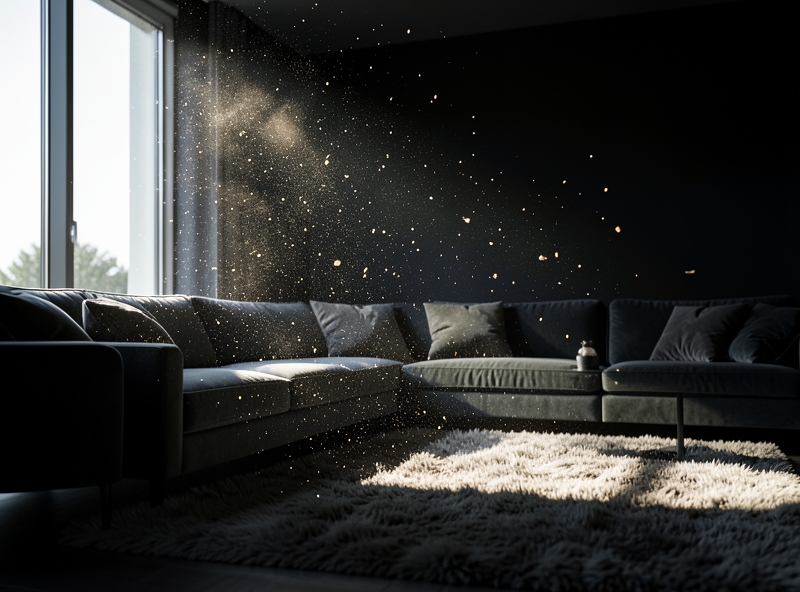
When breathing in this space, nasal hair and the upper respiratory tract mucosa are rendered completely ineffective against PM2.5 particles. They go straight into the alveoli, enter the bloodstream, and trigger the body's natural inflammatory response. This is the main reason why many families frequently experience waking up with a stuffy nose, persistent cough, itchy eyes, or restless insomnia without a clear cause.
"Sweeping with a conventional broom or wiping with a traditional damp cloth only resuspends fine dust microparticles back into the air you breathe, rather than eliminating them completely."
Improper cleaning habits unintentionally turn the home into a pollutant-recirculating environment. Children with underdeveloped respiratory systems and the elderly are the most severely affected. Without establishing a comprehensive living environment control process—from cutting off intrusion sources and managing humidity to deep air purification—every effort to protect your family's health will be eroded daily.
2. Biological Solution: Selecting and Arranging Optimal Air-Purifying Plants
Breathing indoor air may seem safe, but it often harbors toxin concentrations 2 to 5 times higher than outdoors. Volatile organic compounds (VOCs) such as Formaldehyde and Benzene released from wall paint and engineered wood adhesives, along with PM2.5 fine particulate matter, are the silent culprits causing allergies, headaches, and respiratory decline. Instead of relying entirely on power-consuming air purifiers, establishing a plant-based biological filtration system for indoor plants is a cost-effective method that yields sustainable results.
The air-cleansing effectiveness of plants is not merely perceptual; it operates through a complex two-tier biological mechanism:
- Leaf Layer (Phyllosphere): Stomata on the leaf surface open during gas exchange, actively absorbing floating VOC molecules. Simultaneously, fine hairs and the wax layer (Cuticle) trap PM2.5 fine dust particles, preventing them from recirculating into the air.
- Root and Microbiome Layer (Rhizosphere): Toxins travel down to the roots through vascular tissues. Here, symbiotic bacterial and fungal communities metabolize Formaldehyde or Benzene into H2O, CO2, and organic nutrients that nourish the plant.
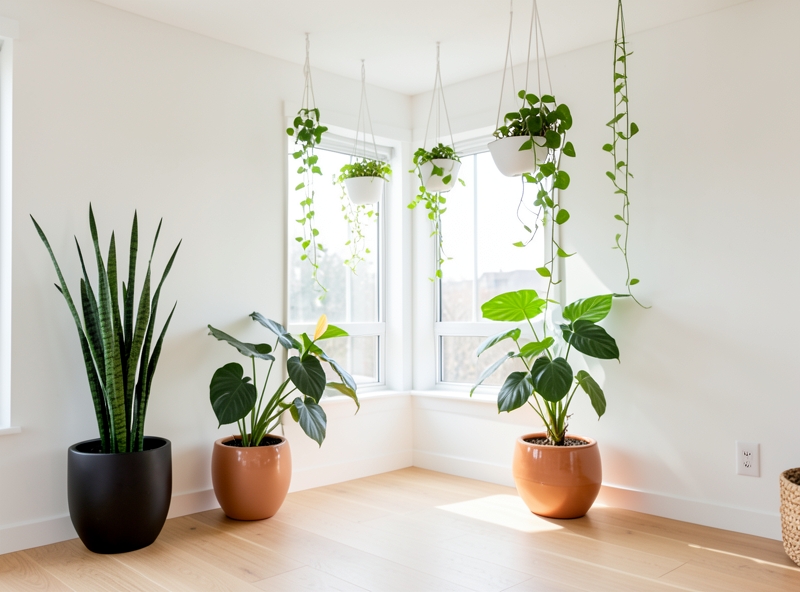
To achieve maximum purification efficiency, choosing the right plant species suited to the chemical characteristics of each space is a decisive factor:
| Plant Name | Key Targeted Pollutants | Special Mechanism | Recommended Location |
|---|---|---|---|
| Snake Plant (Sansevieria) | Formaldehyde, Xylene, Toluene | CAM photosynthesis mechanism (releases O2, absorbs CO2 at night). | Bedrooms, work areas. |
| Peace Lily (Spathiphyllum) | Ammonia, Trichloroethylene, Benzene | Increases air humidity by 5%, destroys mold spores. | Living rooms, areas near restrooms. |
| Golden Pothos (Epipremnum aureum) | Formaldehyde, CO, Cigarette smoke | Grows rapidly, large leaf surface area provides extremely high dust absorption. | On high living room shelves, top of the refrigerator. |
| English Ivy (Hedera helix) | Airborne mold spores, Benzene | Purifies 94% of airborne mold spores in just 12 hours. | Windows, shaded balconies, kitchens. |
"Plants are not merely decorative items. They are self-regenerating biological filters operating continuously to transform chemical toxins into energy that sustains life."
Arranging plants at the wrong density or location will reduce air purification capacity by 80%. Below is the accurate formula for calculation and arrangement for each area:
1. The Golden Density Rule: Apply a ratio of 1 medium-sized plant (pot diameter 15–20 cm) for every 9–10 m² of floor area. For newly renovated spaces or those with lots of engineered wood furniture, increase the density by 1.5 times.
2. Layout Strategy by Living Space:
- Living Room (Highest VOC emission area): Place a large Peace Lily pot next to the sofa (where Formaldehyde off-gasses from foam cushions) and a pole-climbing Pothos pot near the TV to neutralize electromagnetic radiation and suspended dust.
- Bedroom (Needs optimized nighttime oxygen): Place 2–3 small Snake Plant pots at the headboard or vanity table. Thanks to the CAM metabolic mechanism, the plants continuously release O2 and absorb CO2 throughout your sleep without competing for oxygen.
Important Note: Use a damp cloth to wipe dust off the leaf surfaces once every 2 weeks. Thick accumulated dust will clog stomata, reducing the plant's photosynthetic capacity and air purification efficiency by up to 50%.
3. Cleaning and Maintenance Procedure for Air Purifier Filters
An air purifier "neglected" without proper maintenance is no longer a health-protecting device, but precisely a breeding ground for bacteria and microscopic mold spores blowing directly into your family's respiratory system every day. When dirt clogs the filter gaps, airflow drops significantly, forcing the motor to overload and consume more electricity, while degraded filters release toxins back into your living space.
To optimize filtration efficiency up to 99.97% and extend device lifespan, you need to understand the functional "map" of each filter layer and follow the technical standards below.
| Filter Type | Core Function | Cleaning Method | Maintenance / Replacement Cycle |
|---|---|---|---|
| Pre-filter | Traps hair, pet dander, and large dust particles (>500 microns). | Rinse with cool water or vacuum clean. | Clean every 2–4 weeks. Permanent lifespan (unless torn). |
| HEPA Filter | Captures fine dust PM2.5, PM0.3, mold spores, and bacteria. | Use a vacuum cleaner with a soft brush attachment (Never use water). | Dry clean monthly; Replace every 6–12 months. |
| Activated Carbon Filter | Adsorbs odors, tobacco smoke, toxic formaldehyde gas, and VOCs. | Gently vacuum the surface, air-dry in a cool, dry place. Do not wash with water. | Dry clean every 1–2 months; Replace after 12 months. |
A standard 4-step technical maintenance procedure to keep your device operating in optimal condition:
- Step 1: Safely disconnect power. Unplug the device at least 10 minutes prior to cleaning so that static electricity on the filter completely dissipates, preventing fine dust from scattering.
- Step 2: Clean the pre-filter. Remove the outermost filter screen and spray gentle water pressure from the back to the front to flush out buildup. Use a soft cloth to gently wipe it, avoiding harsh scrubbing that could distort the mesh.
- Step 3: Dry clean the HEPA and Activated Carbon filters. Set your vacuum to the lowest suction setting, attach a soft bristle brush, and gently sweep vertically along the HEPA filter pleats. Maintain a distance of 1–2 cm so suction removes surface dust without tearing the delicate ultrafine fiberglass fibers.
- Step 4: Check the discoloration indicator. Place the HEPA filter under a strong light source. If the filter has turned from its original white color to a dark gray or black and light cannot penetrate the pleats, the HEPA fibers have reached toxic saturation—replace it immediately even if the replacement schedule has not yet arrived.
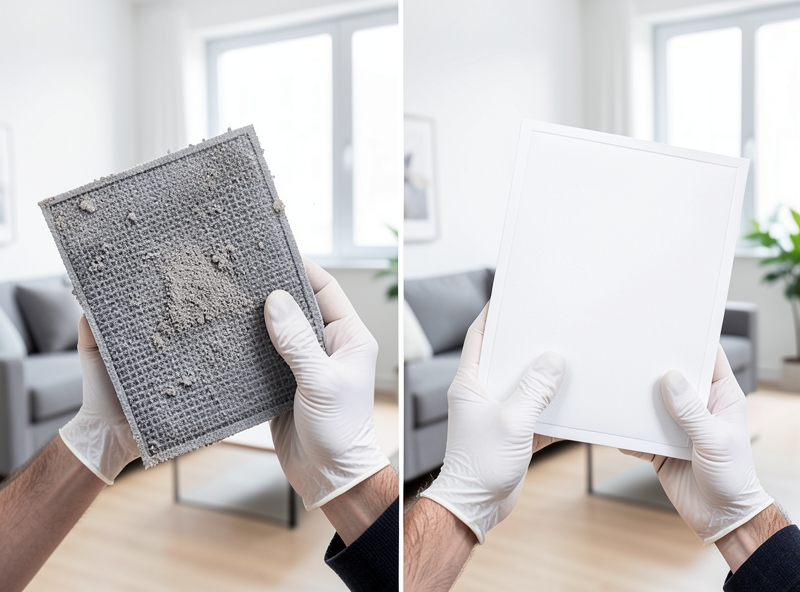
Many users inadvertently turn their air purifiers into indoor "bio-bombs" by making these serious mistakes:
- Washing HEPA or Activated Carbon filters with water: Water destroys the delicate micro-fiber structure of HEPA filters and clogs the adsorption micropores of activated carbon, rendering the filters permanently ineffective.
- Reinstalling the pre-filter while it is still damp: Residual moisture combined with the enclosed environment inside the machine creates a "paradise" for Aspergillus mold to proliferate in as little as 24 hours. When turned on, mold spores are released directly into the air.
- Drying filters with a high-heat blow dryer: High temperatures deform the plastic frame and melt the glue strips holding the HEPA pleats in place, creating large gaps that allow dirty air to pass through unfiltered (the bypass effect).
"Air filter maintenance is not merely about removing visible dirt and dust; it is a process of restoring standard air pressure differential for the device. A clean set of filters allows the motor to operate smoothly, saves up to 35% in energy consumption, and ensures absolute safety for your living space."
Set up a regular maintenance reminder schedule today. If an inspection reveals that the HEPA filter has changed color or a slight sour smell appears in the room while operating, it is an urgent warning signal requiring you to replace it with a genuine filter immediately to protect your whole family's health.
4. The "Green - Mechanical" Synergy Strategy for Effective Allergy Control
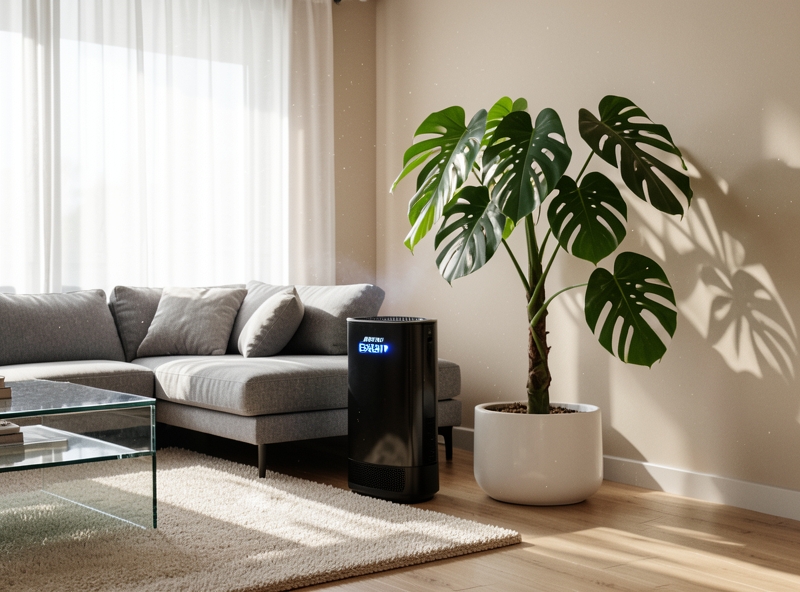
Did you spend thousands of dollars on expensive air purifiers, yet still wake up every morning with a stuffy nose, sneezing, and watery eyes? The reason is simple: Mechanical filters are overwhelmed by invisible allergens. Adding indoor plants is not purely for decoration, but for installing an auxiliary biological system that completely tackles the air quality gaps where HEPA filters are rendered powerless.
Imagine your living space as a battlefield. Mechanical filtration (HEPA & Activated Carbon filters) acts as a rapid response force, aggressively intercepting suspended particulate matter such as PM2.5 fine dust, pollen, and pet dander. However, machines cannot automatically regulate humidity and are slow to respond to volatile organic compounds (TVOCs) like Formaldehyde or Benzene, which continuously off-gas from wall paint and engineered wood furniture.
This is where biological filtration (plants) steps in. Through transpiration, plants maintain a golden humidity range of 40% to 60% — the threshold at which bacteria, mold spores, and dust mites are completely suppressed from reproducing. Meanwhile, the rhizosphere microorganism system absorbs and breaks down toxic gases into nutrients for the plant.
This synergy creates an extremely powerful closed-loop purification cycle:
- Plants increase humidity $\rightarrow$ Dust becomes heavy and settles quickly: Natural moisture from leaves increases the weight of ultrafine dust particles, pulling them down to lower levels so the purifier can suction them up completely.
- Purifier vacuums dust $\rightarrow$ Plant leaves "breathe" maximally: The mechanical filter traps coarse dust, preventing it from covering the stomata on the leaves, allowing plants to photosynthesize and filter toxic gases 3 times more effectively.
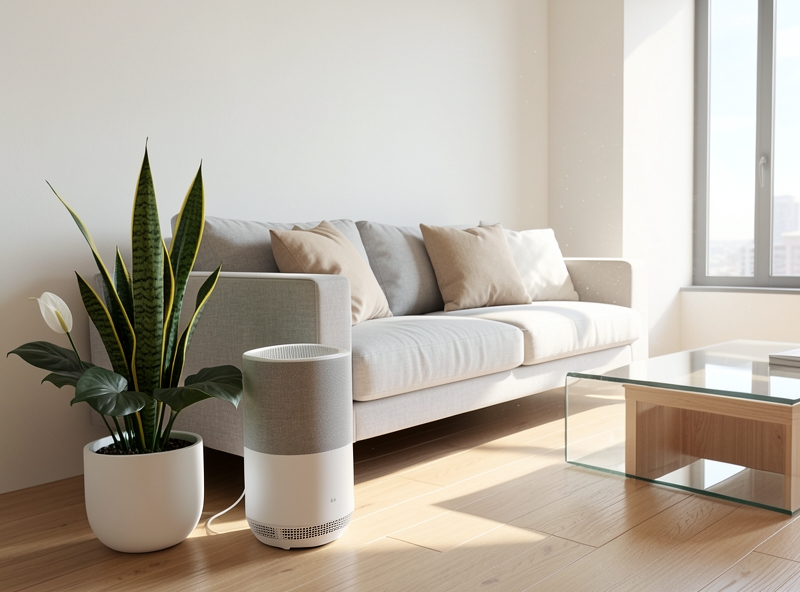
To optimize this strategy, spatial placement must adhere to precise aerodynamic principles rather than random, intuitive placement:
| Tactical Zone | Primary Allergens | Mechanical Solution | Biological Solution | Synergy Mechanism |
|---|---|---|---|---|
| Bedroom | Dust mites, bacteria, lack of O2, dry nasal mucosa. | Purifier equipped with a HEPA H13/H14 filter (placed at least 1.5m from the head of the bed). | Snake Plant, Philodendron selloum (CAM plants that release O2 at night). | Plants provide gentle moisture to prevent nasal passage dryness; the purifier collects all dust mites kicked up from bedding. |
| Living Room | PM2.5 fine dust, tobacco smoke, VOCs from paint and furniture. | High-capacity purifier with a pelletized activated carbon filter. | Peace Lily, Spider Plant, Money Tree. | Green plants break down toxic chemical bonds from wooden furniture; the purifier thoroughly processes coarse dust flowing in from the main entrance. |
This defense system operates perfectly only when you implement a synchronized seasonal maintenance schedule. A dirty purifier or a pot with moldy soil will instantly turn into a "breeding ground" releasing allergens back into your space:
- Dry Season (Air humidity below 40%, high levels of fine dust):
- Mechanical Action: Clean the pre-filter every 2 weeks. Inspect the HEPA filter to prevent airflow pressure drop.
- Biological Action: Use a soft, damp cloth to wipe leaf surfaces clean every 5 days. Lightly mist around the base of the plant to replenish humidity and stimulate stomata opening.
- Humid/Rainy Season (Air humidity exceeds 70%, mold breakout):
- Mechanical Action: Turn on dry mode or run the purifier continuously at a low level to prevent moisture and mold accumulation on the Carbon filter.
- Biological Action: Reduce watering by 50%. Top the pot surface with a layer of quartz pebbles or expanded clay pebbles to stop mold spores and fungus gnats from breeding in moist soil.
"A sustainable allergy-resistant living environment does not come from technology alone, but from the balance between mechanical dust extraction efficiency and nature's self-cleaning capacity."
Start your journey to improving your quality of life today by placing a Peace Lily right next to the air purifier in your bedroom. After just 72 hours, this combination will deliver a soothing, cool atmosphere, completely eliminating dry throat irritation and cutting off persistent sneezing fits upon waking up.
5. Frequently Asked Questions (FAQ)
Enclosed air in bedrooms or living rooms can accumulate toxin levels 2 to 5 times higher than outdoor air if not properly managed. A lack of scientific knowledge leads many families to rely on misguided hacks, inadvertently turning their living spaces into breeding grounds for bacteria and mold. Below are in-depth answers from toxicology and environmental biology perspectives to help you clean your living space most accurately.
5.1. Is keeping plants in the bedroom dangerous at night due to oxygen competition?
This is the most common myth when it comes to home care. Biologically, most plants perform photosynthesis during the day (absorbing CO2, releasing O2) and respiration at night (absorbing O2, releasing CO2). However, the amount of O2 that an average potted plant consumes at night is extremely minimal, completely insufficient to cause suffocation or affect human breathing.
An adult exhales about 200–500 ml of CO2 per minute. Meanwhile, an average potted plant releases less than 0.05 ml of CO2 per minute. You would need to cram a "jungle" of over 100 large potted plants into a closed bedroom to produce any noticeable change in CO2 levels.
"The amount of oxygen a plant consumes at night is far less than what a pet dog or a bed partner breathes in. The real threat to your respiratory system at night comes not from the plant itself, but from moldy, overwatered soil."
Specifically, you can have complete peace of mind when choosing CAM (Crassulacean Acid Metabolism) plants. This group of plants opens their stomata to absorb CO2 and release oxygen at night. Outstanding examples include:
- Snake Plant (Sansevieria): Filters xylene and formaldehyde while continuously releasing O2 at night.
- Aloe Vera: Signals air pollution levels through brown spots on its leaves.
- Peace Lily: Absorbs airborne mold spores and balances room humidity.
5.2. How often should HEPA filters be replaced in highly polluted urban environments?
The "12 to 24 months" lifespan printed on air purifier packaging is an ideal number under standard laboratory conditions. In cities with heavy traffic, fine particulate matter (PM2.5) and industrial emissions will clog HEPA filters 2 to 3 times faster than normal.
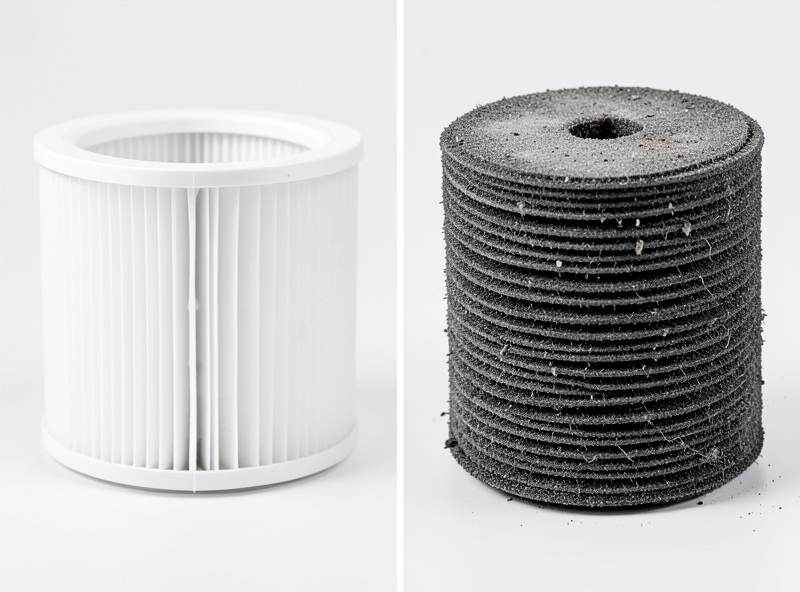
HEPA filters work by trapping microscopic dust particles within a network of fiberglass fibers. When these gaps become clogged, the air purifier not only experiences a drop in CADR (Clean Air Delivery Rate), but the motor also works under overload, consuming more electricity and generating loud noise. Below is an accurate replacement timeline based on the Air Quality Index (AQI):
| Environmental Pollution Level (AQI Index) | Actual HEPA Filter Lifespan | Pre-filter Cleaning Frequency |
|---|---|---|
| Low – Moderate (AQI 0 - 100) | 8 - 12 months | Every 2 weeks (Wash with water or vacuum) |
| High (AQI 101 - 150 – Heavy urban traffic) | 5 - 6 months | Every week |
| Very Unhealthy (AQI > 150 or near construction sites) | 3 - 4 months | Every 3 - 5 days |
Signs that you must replace the HEPA filter immediately: The filter turns dark gray or dark brown, the unit blows air with a slight sour odor (due to bacterial buildup), or the output airflow is noticeably weak even when set to Max mode.
5.3. Should people with pollen allergies and allergic rhinitis keep air-purifying plants?
In short: Yes, but you must choose the right species and modify your growing method. Plants help eliminate respiratory irritants such as formaldehyde from engineered wood or benzene from wall paint. However, if you choose the wrong plants, pollen and soil mold spores can become "enemies" that trigger asthma attacks or acute allergic rhinitis.
People with sensitive conditions should follow these 3 golden rules when arranging indoor plants:
- Strictly avoid plants with male flowers that release airborne pollen: Stay away from flowers like chrysanthemums, lilies, and daffodils. Prioritize foliage plants that either do not flower or produce flowers that do not release airborne pollen.
- Eliminate mold sources from potting soil: Mold thrives in damp organic soil and is a stronger allergen trigger than pollen. Switch to hydroponics or use sterile growing media such as LECA (expanded clay pebbles), perlite, or pumice.
- Prune flowers as soon as they bud: If you grow a Peace Lily for its superior air-filtering abilities, use scissors to snip off the yellow spadix as soon as the flower blooms to prevent pollen from spreading into your living space.