1. Why is time management not enough in the performance era?
Have you ever ended a workday with your to-do list almost entirely crossed off, but your mind is in a state of complete exhaustion and you don't feel like you've actually made progress? The fatal mistake most of us make is treating ourselves like a clock: running continuously and steadily. In reality, you don't lack time; you are having an energy crisis. Trying to cram 12 hours of work into a body with only 10% battery is the fastest recipe for stagnation and poor decision-making.
Traditional time management teaches you how to arrange "sandboxes" in your day, but it ignores a vital factor: the quality of presence within each of those boxes. One hour of work when the brain is sharp is worth five times more than four hours of work in a state of brain fog. The high-performance era no longer honors "busy people" who only know how to fill their schedules; it has shifted toward optimizing peak performance windows.
| Criteria | Time Management (Old Mindset) | Energy Management (Breakthrough Mindset) |
|---|---|---|
| Nature | Finite (24 hours per day) | Renewable and expandable |
| Focus | Quantity of tasks completed | Value and depth of results |
| State | Reactive to schedules | Proactive regulation of the body |
| Goal | Doing more things | Doing things at the right time |
"Time is a physical constant; energy is the variable of success. Don't try to manage what you cannot change; manage the power within to master what you have."
The core difference lies in their nature: Time is a finite resource and cannot be recovered. Conversely, energy is a renewable resource. When you focus too much on managing time, you inadvertently force yourself into an endless marathon where the only reward is burnout. Instead, leaders understand that sustainable performance comes from working in harmony with biological rhythms (Ultradian Rhythms) – cycles of peak focus lasting about 90 minutes, followed by a minimum recovery need of 15-20 minutes.
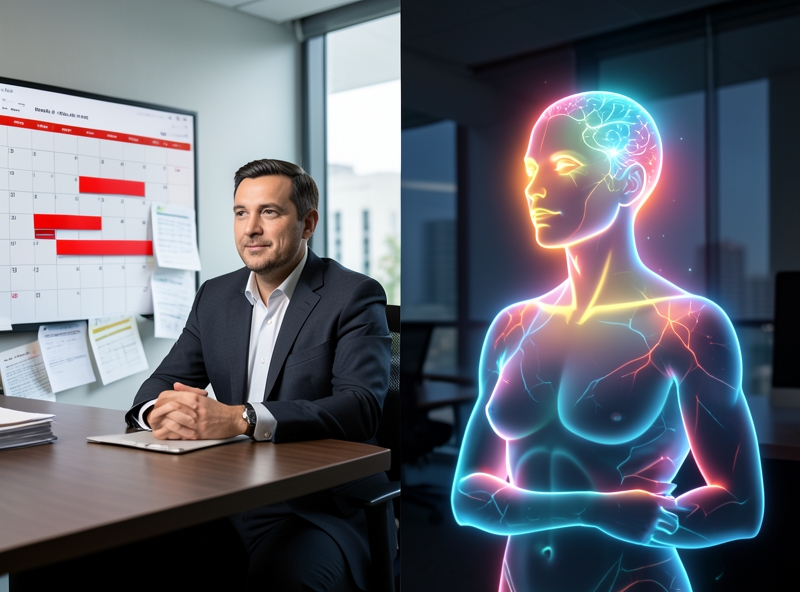
Look at the reality: You spend 1 hour answering emails at 3 PM – a time when the body falls into an energy trough. As a result, you waste 60 minutes on a task only worth 15 minutes if performed in the morning. This is the invisible waste. Energy management requires you to clearly understand your personal biological map: When are you most creative? When should you only perform administrative tasks? When do you need to disconnect completely to recover? It's time to stop counting the hours you sit at your desk and start measuring the impact you create in each of those moments.
- Focus: The ability to concentrate all intellectual resources on a single goal without distraction.
- Stamina: Maintaining high work intensity without harming long-term health.
- Recovery: The most important skill to maintain peak performance continuously.
As long as you view time as the biggest barrier, you will remain stuck in the "busy but ineffective" trap. The turning point occurs when you realize that: Energy management is the key to unlocking freedom. When energy is abundant, you solve problems faster, more creatively, and most importantly, you have enough clarity to enjoy life behind the revenue figures.
2. The mistake of forcing yourself to work during 'off-peak hours'
Have you ever sat "paralyzed" in front of your computer screen for 2 hours just to write a report that usually only takes 15 minutes? That’s not a sign of a lack of focus, but rather a punishment for forcing your biological rhythm. Forcing your brain to process complex tasks during a "low-energy valley" is the fastest way to kill your productivity and devastate your own mental health.
When energy is depleted, the critical and creative thinking abilities of the prefrontal cortex are nearly paralyzed. Instead of coming up with breakthrough solutions, you fall into the trap of silly mistakes: confusing data, misunderstanding clients, or worse, having to redo a single task over and over again. This is a terrible waste of resources. You are spending 200% effort only to gain 20% efficiency.

More terrifying than slowness is the phenomenon of "Positive Procrastination". This is a biological defense mechanism where the body rebels against the owner's oppression. When you force yourself to stay awake to tackle a "mountain" of work at 10 PM – the time when melatonin should be secreting to prepare for sleep – the brain triggers a state of stagnation. You start mindlessly scrolling social media, reading irrelevant news, or cleaning your desk... anything to escape the heavy lifting. This is not laziness; it is a cry for help from the nervous system when forced to overwork against natural laws.
"Effort in vain during off-peak hours doesn't prove you're hardworking, it only proves you are managing your energy like an amateur."
| Criteria | Working during "Peak Hours" | Forcing it during "Off-Peak Hours" |
|---|---|---|
| Psychological State | Flow, excitement | Inhibition, deadlock, irritability |
| Output Quality | Sharp, fewer errors | Many minor mistakes, lack of depth |
| Long-term Consequences | Confidence, maintained performance | Burnout, fear of work |
The ultimate consequence of this mistake is the Burnout spiral. When you constantly fail to complete difficult tasks during off-peak hours, guilt and self-doubt take over. You begin to doubt your own abilities, leading to chronic stress. Instead of trying to become a "machine" that operates 24/7, those in the top 1% understand that: Time management is actually energy management. They are willing to close the laptop, take a walk, or go to sleep when they notice their body falling into an energy trough, only to return with triple the strength the next morning.
- Stop glorifying staying up late: Darkness and silence do not compensate for the decline in brain function.
- Identify the "drop points": Record the times of day when you feel most sluggish and absolutely do not schedule important meetings or deep work during those times.
- Accept the resistance: If your body wants to rest, let it rest. Procrastination at this moment is a smart signal, not a flaw.
3. Understanding Circadian Rhythms and Personal Chronotypes
Why do you still feel sluggish even after drinking your third cup of coffee in the morning, while your colleagues handle dozens of reports with ease? The difference doesn't lie in effort, but in your Circadian Rhythm – the internal clock that controls your hormone levels, body temperature, and focus over a 24-hour period. Trying to manage your time while ignoring your biological rhythm is like trying to swim against a waterfall: exhausting but yielding zero results.
Each of us possesses a unique "biological time code" called Chronotypes. Instead of forcing yourself into the "5 AM wake-up" formula of billionaires, understanding which biological group you belong to will help you find your "Peak Performance" phase – the time when your brain functions at 200% capacity.

Dr. Michael Breus, a leading sleep expert, has categorized humanity into 4 common Chronotypes. Check to see which one you are on the list below:
- The Lion: Accounts for about 15% of the population. These are the morning "addicts." They wake up full of energy, tackle the most difficult tasks before 10:00 AM, but usually "shut down" around 9:00 PM.
Advice: Reserve your morning for strategy and important decisions. Don't schedule meetings for the late afternoon. - The Bear: The majority (about 55%). Their rhythm follows the solar cycle. They need a full 8 hours of sleep and reach peak productivity from mid-morning to early afternoon.
Advice: Take advantage of the time between 10:00 AM and 2:00 PM for Deep Work. This group is best at adapting to a standard office schedule. - The Wolf: True "night owls" (15%). They struggle immensely with waking up before 9:00 AM but explode with creative ideas after the sun goes down.
Advice: Push administrative tasks to the morning and save space for creative breakthroughs after 6:00 PM. - The Dolphin: Sensitive and intelligent (10%). They frequently suffer from insomnia, with their brains in a hyper-alert state. Their peak productivity usually falls between 10:00 AM and 2:00 PM but occurs in short bursts.
Advice: Break down your tasks and practice relaxation techniques to avoid burnout from anxiety.
| Chronotype | Peak Performance (Deep Work) | Low Energy Period (Routine Work) | Key Characteristics |
|---|---|---|---|
| Lion | 06:00 - 10:00 | 15:00 - 17:00 | Decisive, disciplined, natural early riser. |
| Bear | 10:00 - 14:00 | 14:00 - 16:00 | Sociable, team player, stable. |
| Wolf | 17:00 - 22:00 | 08:00 - 11:00 | Creative, impulsive, introverted. |
| Dolphin | 15:00 - 20:00 | After waking up | Perfectionist, intelligent, light sleeper. |
"Don't manage your time by the clock on the wall; manage it by the beat of your cells."
Forcing a "Wolf" to be creative at 8:00 AM is not only cruel to personal productivity but also a terrible waste of intellectual resources. Instead of trying to fix yourself to fit a rigid schedule, have the courage to redesign your work based on your biological rhythm. When you work in flow with your natural energy, focus is no longer something you have to force yourself to find; it will find you.
4. Scheduling Strategy Based on Energy Flow
The biggest mistake most people make is trying to manage 24 hours like a mindless machine. You don't lack time, you are in an energy crisis. Managing time without considering your biological rhythm (Chronotype) is like trying to drive a race car with an empty fuel tank. To reach top 1% performance, you must stop "filling slots" on your schedule and start optimizing peak energy periods.
The harsh reality is: One hour of work in your most lucid state is worth five times more than when you are tired. If you are still answering emails at 9 AM — when your brain is at its sharpest — you are throwing money out the window and trading your career for trivial tasks.
The secret of exceptional individuals lies in the ability to categorize work by cognitive intensity and match them with their internal energy chart:
- Deep Work (Important work requiring deep thinking): These are tasks that generate the greatest surplus value, such as strategizing, coding, content creation, or solving complex problems. Freeze at least 90-120 minutes during peak hours (usually early morning after waking up) to handle these. Absolutely no notifications, no social media, no meetings.
- Shallow Work (Administrative work, low mental effort): Responding to messages, organizing files, data entry, or routine meetings. Push this entire group of tasks into off-peak hours (usually the period after lunch or late afternoon) when your creativity is depleted.
| Criteria | Peak Hours | Valley Hours (Off-peak) |
|---|---|---|
| Brain State | Maximum focus, sharp analytical ability. | Easily distracted, tired, slow reactions. |
| Type of Work | Strategy, Creativity, Solving difficult problems. | Email, Meetings, Archiving, Repetitive tasks. |
| Priority Action | Disconnect completely for Deep Work. | Finalize administrative tasks. |
To maintain stamina in a career marathon, you cannot rely on willpower alone. Willpower is a finite resource and it will run dry by mid-day if you don't have an active recovery strategy. Don't wait until you are exhausted to rest; rest so that you never become exhausted.
"True productivity is not about how much more work you do, but how much energy you protect for the things that truly matter."
Below are 3 pillars to help you maintain energy flow throughout:
- Active Recovery: Instead of scrolling through your phone (an action that fatigues vision and the brain), apply the NSDR (Non-Sleep Deep Rest) technique or take a 10-minute brisk walk. This helps the nervous system escape the "fight or flight" state and naturally recharges dopamine.
- Smart Nutrition Management: Avoid energy "crashes" caused by sudden spikes and drops in blood sugar. Prioritize low-GI foods and maintain continuous hydration. The brain consumes 20% of the body's energy; even a small drop in water levels makes your decision-making abilities terrible.
- Sleep Hygiene: Treat sleep as a mandatory investment project. A full 90-minute sleep cycle determines the brain's ability to flush out toxins. Sleep deprivation is the fastest way to turn a genius into an average employee.
Start observing yourself for the next 3 days: When do you feel most inspired? When do you start staring at the screen without getting anything done? That is your own productivity genetic code. Schedule based on it, instead of forcing yourself into someone else's mold.
5. Summary
Don't let the clock fool you. The brutal truth is: You can own a perfect 24 hours on paper but still end the workday in a state of exhaustion and soullessness. Time management is just a numbers game, but energy management is the game of leaders. Peak performance doesn't come from trying to cram more tasks into a suffocating schedule; it comes from knowing exactly when to "push" and when to "recover."
The consequence of worshipping "hard work" regardless of biological rhythms is prolonged burnout and a decline in creativity. To break free from that downward spiral, change your mindset: Stop managing every minute and start optimizing every breath of your energy flow.

The difference between a smart worker and a busy "machine" lies in the ability to understand oneself through actual data. Instead of rigidly applying others' success formulas, initiate a personal management revolution today with the following roadmap:
- Keep an energy log: For the next 7 days, record your alertness levels every 2 hours. Are you an enthusiastic "early bird" in the morning or a thriving "night owl" at dawn?
- Classify work by neurological "difficulty": Reserve tasks requiring strategic thinking and deep creativity for your Peak time, and push administrative tasks or checking emails to your Trough time.
- Establish recovery boundaries: Treat short breaks as a mandatory investment, not laziness. A brain rested for 15 minutes at the right time can handle the workload of 3 hours of fatigue.
| Criteria | Working Hard (Old School) | Working Smart (High Performance) |
|---|---|---|
| Focus | Number of hours at the desk | Quality of output results |
| Mindset | Trying to complete everything | Focusing on the 20% of tasks creating 80% of the value |
| Health | Frequently sacrificing sleep | Prioritizing recovery to maintain performance |
"Working more is never a sustainable answer. Working at the right time with total focus is the key to freedom."
Remember, energy is finite, but the ability to manage it is infinite. When you master your own rhythm, you not only achieve work goals but also protect your life balance. Don't wait until you're depleted to start changing. Pick up a pen, observe, and redesign the way you live and work from this moment forward.