1. Light - The Core Life Source of Indoor Ecosystems
In plant biology, light does not play a supporting role but is the sole primary energy source that initiates the process of photosynthesis. Through chlorophyll, plants absorb photons to convert water and carbon dioxide (CO2) into glucose – the essential organic compound that provides energy for all vital activities and forms cellular structures. For artificial ecosystems in interior spaces, light plays a decisive role in maintaining a stable state or leading to the depletion of plant biomass.
"Light for plants is not a decorative element; it is food. In low-light environments, plants consume their own energy reserves to survive before entering a state of growth stagnation."
A common reality in current interior arrangement is the tendency to prioritize visual aesthetics over the physiological needs of plants. Many individuals tend to place ornamental plants in secluded corners, windowless hallways, or areas with only low-intensity fluorescent lighting. This creates a paradox: plants are brought in to improve the living space, but they themselves are placed in a severely energy-starved environment. Standard indoor artificial lighting (usually below 500 Lux) rarely reaches the Photosynthetically Active Radiation (PAR) intensity required for most tropical indoor plants.
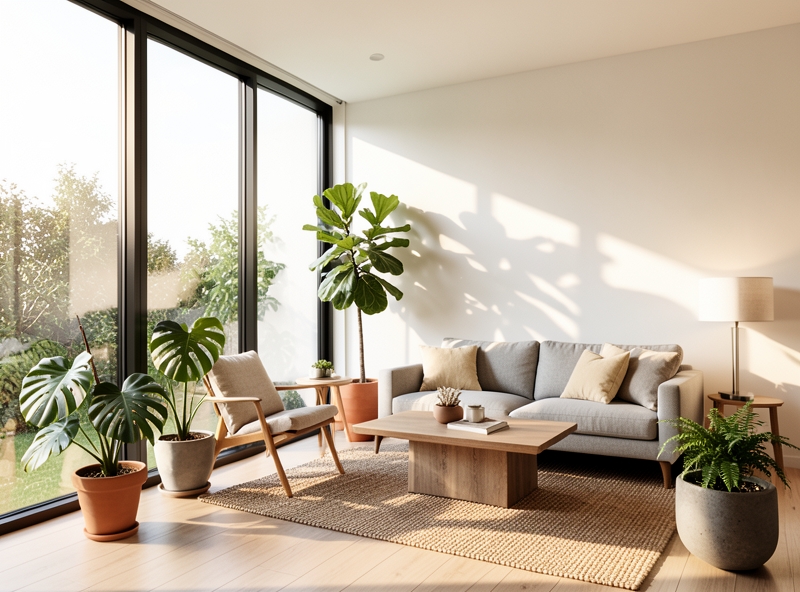
Misperceptions about light lead to common pathological symptoms in indoor plants, such as "etiolation" – when the plant weakly stretches its stem to find a light source, or the mass dropping of old leaves as the plant must redistribute limited energy resources to new parts. To optimize an indoor ecosystem, classifying light intensity at each specific location is a mandatory technical step.
| Light Level | Intensity (Lux) | Typical Location | Suitable Plant Group |
|---|---|---|---|
| Bright Direct | > 10,000 | Next to South-facing windows or balconies | Cactus, Echeveria, Succulents |
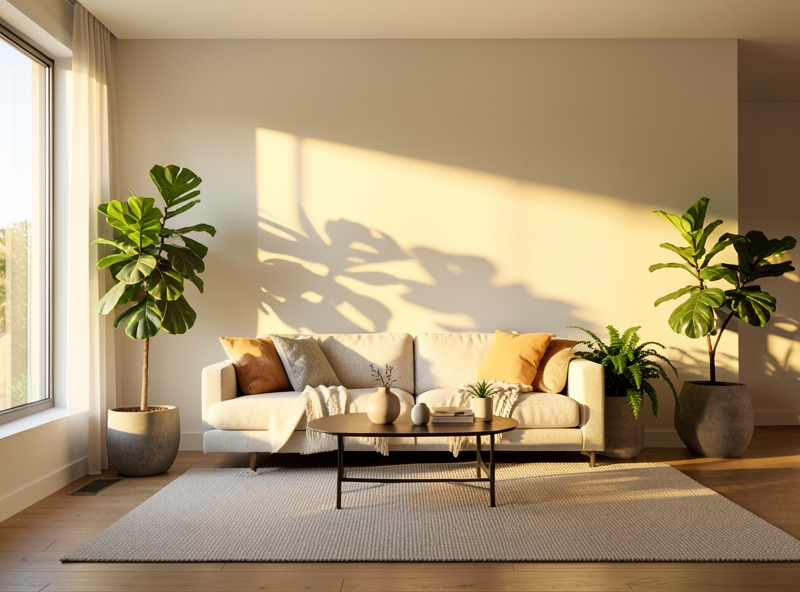
| Bright Indirect | 2,000 - 5,000 | 1-2m from windows, scattered light | Monstera, ZZ Plant, Fiddle Leaf Fig |
| Low Light | 500 - 1,000 | Room corners, areas far from natural light sources | Snake Plant, Peace Lily, Pothos (survives but grows slowly) |
It should be noted that the distance from the light source to the plant follows the inverse square law. A potted plant placed 2 meters from a window will receive only 1/4 of the light compared to when placed right next to the window. Therefore, understanding light specifications and the actual sun exposure of the house is the foundational factor for establishing a sustainable indoor garden, rather than relying solely on aesthetic intuition.
- Spectrum Misconception: Not every white light source has a spectrum suitable for plants. Standard LEDs often lack the blue and red wavelengths necessary for photosynthesis.
- Acclimatization: Plants need time to adjust their leaf structure when moving from a greenhouse environment (high light intensity) to an indoor environment (low light intensity).
- Surface Cleanliness: Dust accumulation on leaf surfaces can reduce light absorption by up to 20-30%, directly hindering photosynthetic efficiency.
2. Decoding Light Intensity Metrics and Plant Needs
In botany and professional horticulture, light quantification is not based on human visual perception but on precise physical measurement units. Light intensity directly determines the rate of photosynthesis, pigment formation, and the growth cycle of plants.
The two most common units used are Lux (SI system unit) and Foot-candle (fc - common unit in North America). One Foot-candle is equivalent to the amount of light from one candle illuminating a one-square-foot surface, approximately 10.76 Lux. Using a specialized Light meter allows gardeners to accurately determine these metrics instead of estimating by eye—which naturally adjusts the pupils to adapt to darkness, leading to inaccuracies in assessment.
| Light Classification | Intensity (Foot-candle) | Intensity (Lux) | Typical Indoor Location |
|---|---|---|---|
| Direct light | > 2,000 fc | > 21,500 lux | Right by a South-facing window, with no obstructions or curtains. |
| Bright indirect light | 400 - 1,000 fc | 4,300 - 10,700 lux | Shaded areas near a bright window or through sheer curtains. |
| Medium light | 100 - 400 fc | 1,000 - 4,300 lux | About 2-3 meters from a window or near a North-facing window. |
| Low light | 25 - 100 fc | 250 - 1,000 lux | Room corners, hallways, or far from natural light sources. |
"The Light Compensation Point is the intensity threshold at which the rate of photosynthesis equals the rate of respiration. If the light intensity remains below this threshold for an extended period, the plant will consume its stored energy to survive and eventually become exhausted."
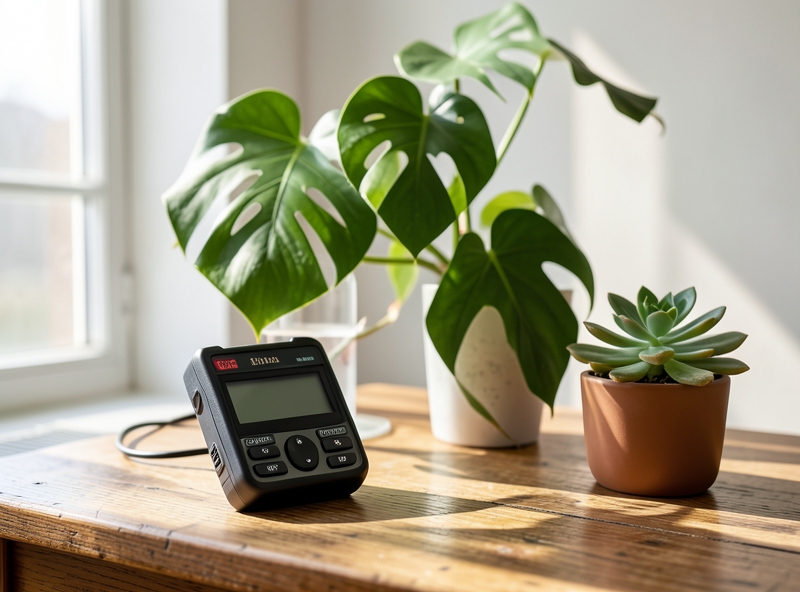
Plants have evolved morphological characteristics to adapt to different light intensities. Observing leaf structure provides critical data for identifying the ecological needs of each species:
- High-intensity light-loving plants: Typically possess small, thick leaf blades or a thick waxy layer (cuticle) to limit transpiration. Some species store water in stems or leaves (like succulents) and have lighter colors or a layer of fine hairs to reflect light.
- Low-light adapted plants: Leaf blades are often broad, thin, and dark green. Chlorophyll content in cells is higher, and chloroplasts are often distributed widely to capture maximum photons in low-light conditions.
- Adaptive response (Phototropism): When light is insufficient, plants tend to stretch their stems (etiolation), with long distances between leaf nodes, and leaves may show signs of shrinking, losing color, or shedding older leaves to prioritize energy for the growing tip.
This classification helps growers establish a care regimen based on scientific data rather than subjective experience, thereby ensuring optimal photosynthetic efficiency for flora in artificial environments.
3. Window-Oriented Plant Placement Strategies for Spectral Optimization
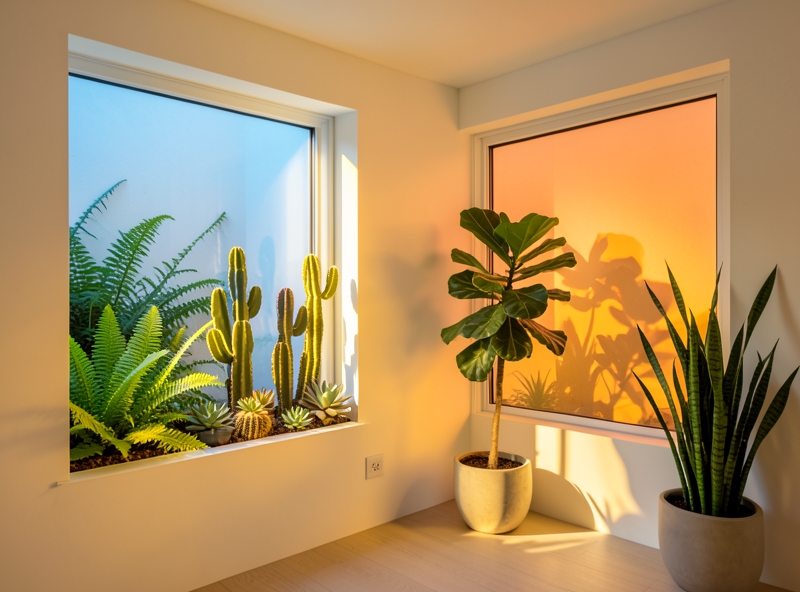
In applied botany, determining plant placement based on window orientation is not merely an aesthetic choice but a photobiological challenge. Light intensity (measured in lux or PAR) and photoperiod duration vary significantly across geographic directions, directly dictating photosynthetic rates and the sustainable development of indoor flora.
South-Facing Windows: Peak Spectral Intensity
This location receives the highest and most consistent solar radiation throughout the day, particularly in the Northern Hemisphere. The spectrum here typically includes a full range of wavelengths, providing abundant energy for metabolic processes. However, leaf surface temperatures can spike at midday, causing rapid transpiration.
- Characteristics: Direct light, high intensity, with illumination lasting 6 to 8 hours.
- Recommended Plant Groups: Succulents, Cacti, Sago Palms (Cycas revoluta), or small fruiting plants like lemons and ornamental peppers.
North-Facing Windows: Stable Diffuse Light
In contrast to South-facing orientations, North-facing windows rarely receive direct sunlight. Instead, they provide a weak but extremely stable amount of ambient (scattered) light. This is an ideal environment for plant species originating from the floor of tropical rainforests, where light is filtered through multiple canopy layers.
- Characteristics: Indirect light, cool, no risk of leaf scorch.
- Recommended Plant Groups: Snake Plants (Sansevieria), Ferns, Peace Lilies (Spathiphyllum), and Pothos (Epipremnum aureum).
"Understanding the Photosynthetic Photon Flux Density (PPFD) at each window location is key to maintaining plant circadian rhythms in artificial environments."
East and West-Facing Windows: The Contrast Between Morning and Afternoon
East-facing windows catch the first rays of the day. This light flow has a high color temperature but low thermal energy, causing minimal heat stress to plant cells. Conversely, West-facing windows receive afternoon sunlight with harsh intensity and significant heat accumulation after a long day, requiring plants to have good drought tolerance.
| Window Orientation | Light Characteristics | Peak Impact Time | Recommended Plants |
|---|---|---|---|
| East | Mild, cool | 07:00 - 11:00 | Phalaenopsis Orchids, Nerve Plants, Calathea |
| West | Harsh, high temperature | 14:00 - 17:00 | Aloe Vera, Air Plants, Heat-tolerant Orchids |
To optimize spectral absorption, gardeners should implement physical adjustments such as using sheer curtains (voile) for West-facing windows to filter intense UV rays, or installing reflective mirrors for North-facing windows to increase light density. Periodically rotating pots by 90 degrees every week is also a vital technique to ensure all sides of the foliage receive equal radiation, preventing phototropism from distorting the plant's form.
4. Lighting Fine-tuning and Regulation Techniques for Ornamental Plants
In botany, light is not merely a source of energy but also a regulating agent for complex physiological processes. Light management requires an understanding of optical physics and the biological characteristics of each plant species to optimize photosynthetic efficiency without causing heat stress or leaf scorch.
One of the most fundamental principles to apply is the Inverse Square Law. According to this law, light intensity is inversely proportional to the square of the distance from the light source to the leaf surface. When the distance from the plant to a window doubles, the light intensity received by the plant drops to one-fourth (25%), rather than halving as common intuition might suggest. Precisely calculating the pot placement distance is decisive for maintaining the plant's light compensation point.
| Distance from Light Source (Window) | Available Light Intensity (%) | Suitable Plant Groups |
|---|---|---|
| 0.5 meters | ~100% | Full-sun plants (Cacti, Succulents) |
| 1.5 meters | ~25% - 30% | Medium-light plants (Fiddle-leaf Fig, Corn Plant) |
| 3.0 meters | < 10% | Shade-tolerant plants (Pothos, Snake Plant, ZZ Plant) |
To fine-tune light quality, utilizing sheer curtains is an effective technical method. The curtains act as a diffuser, converting direct, high-intensity, short-wavelength light rays into soft, scattered light. This helps prevent chlorophyll degradation in partial-shade species while still ensuring the necessary spectrum for energy metabolism is provided.
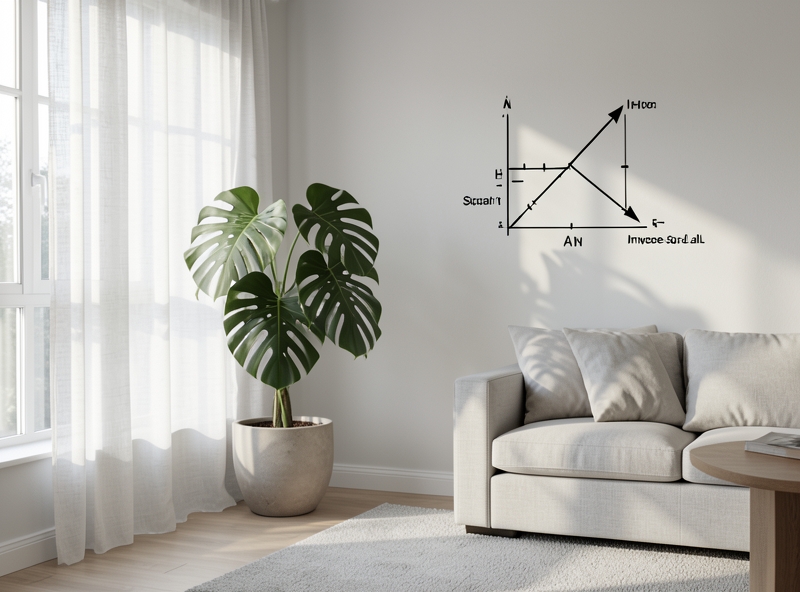
In addition to intensity, growth uniformity is maintained through periodic pot rotation. Due to phototropism, plants tend to grow toward the strongest light source because of the uneven distribution of the hormone auxin in the stem. Rotating the pot 90 degrees once a week helps balance the development of the foliage system, preventing the plant from leaning or overextending branches, which would compromise its original aesthetic form.
"Dust accumulation on the leaf surface is a significant physical barrier that can reduce photon absorption by 20% to 35%, while also clogging stomata and hindering the plant's gas exchange process."
Periodic leaf cleaning is a technical step that is often overlooked but is essential. Use a soft cloth dampened with warm water or a specialized diluted solution to clean both the upper and lower surfaces of the leaves. This action not only optimizes the surface area exposed to light but also allows gardeners to detect early signs of pests or micronutrient deficiencies that often first appear on the leaf epidermis.
- Leaf Cleaning: Perform in the early morning so leaves dry before intense sunlight, avoiding rot caused by stagnant water.
- Reflection Control: Utilize light-colored wall surfaces to enhance indirect light for dark corners in interior spaces.
- Growth Monitoring: If the distance between nodes (internodes) becomes abnormally long, it is a signal that the plant is light-deprived and needs to be moved closer to the light source.
5. Frequently Asked Questions (FAQ)
In the process of studying and practicing urban botany, issues related to light regulation always account for a large proportion of gardeners' inquiries. Below are science-based answers regarding light management for ornamental plants.
5.1. Can regular LED bulbs be used to completely replace sunlight?
Physically, standard household LED bulbs can provide a portion of the spectrum necessary for photosynthesis, but they are not designed to completely replace sunlight. These types of lights typically focus on luminous efficacy (lumens) for human vision, whereas plants require Photosynthetically Active Radiation (PAR) within the wavelength range of 400 to 700 nm.
| Feature | Household LED Bulbs | Specialized Grow Lights |
|---|---|---|
| Spectrum | Limited, focused on white/yellow light. | Full spectrum, focused on blue and red. |
| PAR Intensity | Low, decreases rapidly with distance. | High, optimized for cell development. |
| Growth Efficiency | Plants can maintain but grow slowly. | Promotes flowering and sustainable biomass production. |
5.2. What are the signs of a plant suffering from "sunburn" or "light starvation"?
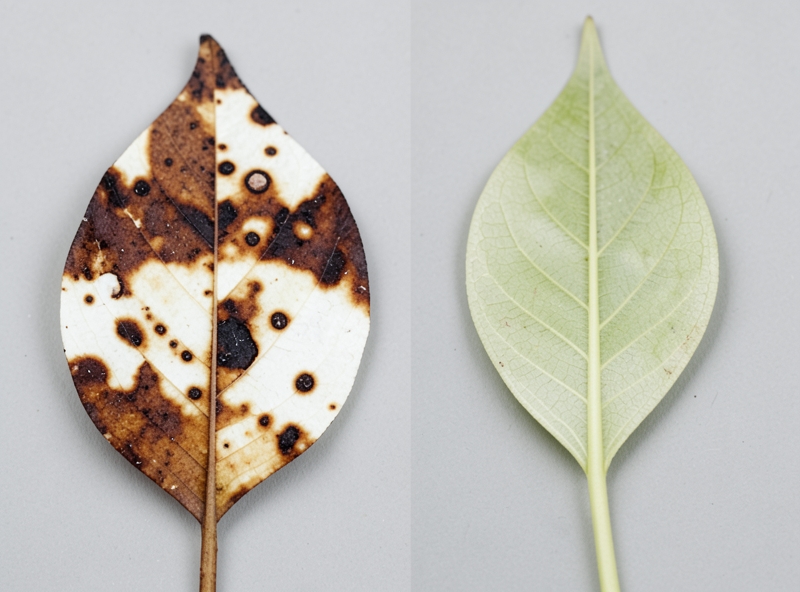
A plant's biochemical response to inappropriate light intensity is often clearly manifested through leaf morphology. Identifying these signals correctly is the prerequisite for adjusting the plant's placement reasonably.
- Sunburn: White or silvery patches appear on the leaf surface (chlorophyll bleaching phenomenon), which then turn dry brown and brittle. This often occurs when a plant is suddenly moved from shade to direct sunlight.
- Light Starvation (Etiolation): Stems tend to become elongated, spindly, and weak toward the single light source. The distance between nodes (leaf axils) becomes sparse, new leaves are smaller than normal and lose their characteristic green color or variegated patterns.
5.3. How to maintain light for plants during winter or in windowless apartments?
Under conditions of natural light deficiency, establishing a calculated artificial lighting system is a mandatory solution. For windowless apartments, the photoperiod should be maintained for 12 to 16 hours per day using specialized lights.
"Using highly reflective materials such as mirrors or light-colored wall paint around the plant area can increase light utilization efficiency by 20-30% by scattering excess photons."
In winter, when UV intensity drops sharply, growers should move pots close to South-facing windows (in the Northern Hemisphere) and regularly clean leaf surfaces. Dust layers on leaves can block up to 50% of the light reaching the photosynthetic organelles within the cells.