1. Introduction: Jump Rope - The Minimalist Discipline with Maximum Results
Are you wasting hours on a monotonous treadmill, or pouring millions of dong into expensive gym memberships yet still not reaching your fitness goals? In reality, the ultimate solution for burning fat and building endurance does not lie in bulky equipment, but is packed into an extremely minimalist tool: the jump rope.
Once misunderstood as a simple children's game, jump roping is actually an extremely high-intensity full-body workout trusted by boxers and professional athletes to build a cardiovascular system of steel, speed up reflexes, and optimize the ability to burn excess energy. With a space of less than 2 square meters and a quality rope, you own a "portable gym" that works anytime, anywhere.

"Jumping rope continuously for 10 minutes can burn calories equivalent to 30 minutes of jogging, while minimizing negative pressure on the knee joints thanks to the forefoot landing mechanism."
To understand why this minimalist discipline delivers superior performance compared to traditional forms of cardio, look at the comparison table below:
| Comparison Criteria (In 10 Minutes) | Jumping Rope (Moderate Speed) | Running (Speed 8 km/h) | Cycling (Moderate Intensity) |
|---|---|---|---|
| Calories Burned | 100 - 140 kcal | 80 - 100 kcal | 70 - 90 kcal |
| Activated Muscle Groups | Full body (Calves, thighs, glutes, core, shoulders, arms) | Mainly lower body (Thighs, calves) | Lower body (Quadriceps, hamstrings) |
| Initial Investment Cost | Extremely low (Only requires 1 rope) | Medium to high (Specialized running shoes) | Very high (Bicycle, protective gear) |
| Space Requirement | Minimal (Indoors, balcony, park) | Large (Running track or treadmill) | Very large (Outdoor travel route) |
The magic of jumping rope lies in the continuous movement pressure. When you jump, your heart rate is quickly pushed into the optimal fat-burning zone (Fat Burn Zone) after just the first 2 minutes. This process not only trains cardiovascular endurance but also activates the motor nervous system, improving balance and effectively increasing bone density. For those looking for a workout method that optimizes time, releases mental pressure, and protects the skeletal system in the long term, jumping rope is the golden key to opening a new fitness revolution.
2. Outstanding Benefits of Jump Rope for Endurance and the Cardiovascular System
Are you spending hours on a tedious treadmill while stubborn fat remains "immobile," and your knee joints begin to make cracking sounds? The truth is, trying to prolong low-intensity workouts is not the key to breaking through physical limits. Modern sports medicine has proven: jump rope is the most underrated "ultimate weapon" to optimize endurance and restructure the cardiovascular system in the shortest time possible.
From a biomechanical perspective, jump rope is a continuous, closed-kinetic chain exercise. When you jump, every muscle group from your calves, quadriceps, glutes, to your core, shoulders, and forearms must activate simultaneously to maintain rhythm. This synchronized coordination pushes the body's oxygen demand to its peak, forcing the heart and lungs to work at full capacity to supply energy.
| Activity (Duration: 30 minutes) | Average Calories Burned (kcal) | Impact on Knee Joints | Primary Target Muscle Groups |
|---|---|---|---|
| Jump Rope (Fast pace - 120 bpm) | 350 - 450 kcal | Low to Moderate (Shock absorption through toes/balls of feet) | Full body (Calves, thighs, core, shoulders, forearms) |
| Jogging (Moderate pace - 8km/h) | 250 - 300 kcal | High (Continuous heel strike impact) | Lower body (Quads, hamstrings, calves) |
| Swimming (Moderate intensity freestyle) | 220 - 280 kcal | Very low | Upper body, lats, shoulders |
Looking at biochemical data, jump rope helps burn up to 30% more calories than jogging in the same amount of time. This is due to the mechanism of activating fast-twitch muscle fibers, a type of muscle fiber that consumes an extreme amount of energy but helps sculpt lean, defined muscle lines.
"Jumping rope is one of the few disciplines capable of pushing the heart rate into the anaerobic zone in just 60 seconds. This process creates the EPOC effect (excess post-exercise oxygen consumption), helping the body continue to burn fat automatically even after you have showered and gone to bed."
Cardiovascularly, continuous jump rope stimulates the development of the capillary network around muscle fibers. Regular training with a jump rope increases VO2 Max (maximum oxygen uptake) faster than most conventional cardio exercises. As VO2 Max increases, your heart pumps more blood per beat, helping to lower your resting heart rate and reduce pressure on arterial walls, preventing the risks of stroke and heart failure.

In addition to upgrading the internal "mechanical engine," jump rope also brings three outstanding structural health benefits:
- Increases bone density (Osteogenesis): Unlike running, which puts uneven pressure on one leg at a time, the jump rope motion creates small, consistent vibrations across both legs. This gentle plyometric impact stimulates osteoblasts, helping to prevent osteoporosis extremely effectively without overloading the joints.
- Develops ankle and Achilles tendon flexibility: Jumping rope forces the small muscle groups around the ankles and feet to constantly adjust to maintain balance. This builds a solid "shield" against common ankle sprains or rolled ankles in daily life.
- Reprograms the motor nervous system: The rhythmic coordination between your eyes, hands turning the rope, and feet jumping requires high concentration from the cerebellum. After a period of training, you will notice your balance and spatial reflexes become significantly sharper.
To start reaping these benefits, you don't need an expensive gym membership. With just a quality jump rope and about 15 minutes a day, you already own a portable, highly effective, and durable cardiovascular workout station right beneath your feet.
3. Technical Guide: From Basic Jumps to Advanced Techniques
Over 90% of beginners give up after the first week due to shin splints, constant tripping, or exhaustion after just 2 minutes. The reason does not lie in your stamina, but in systematic errors in movement technique. Jump rope is not simply about jumping over a rope; it is the art of minimalism, rhythm, and body control.
The Right Start: The Foundation of Endurance
To achieve smoothness in every jump, you need to standardize two core elements: equipment and posture.
- Measure personalized rope length: Step one foot in the middle of the rope and pull both handles straight up. The connection point between the rope and the handles should reach your armpits. A rope that is too long will slow down your speed and cause easy tripping; a rope that is too short forces you to hunch over, putting negative pressure on your spine.
- Release your shoulders, tuck your elbows: Keep your elbows close to your sides, pointing your forearms outward at about a 45-degree angle. Remember: the rope's rotation force comes entirely from the wrists, not from the shoulder joints or forearms. Swinging your entire arms will only make you quickly exhausted after a few dozen jumps.
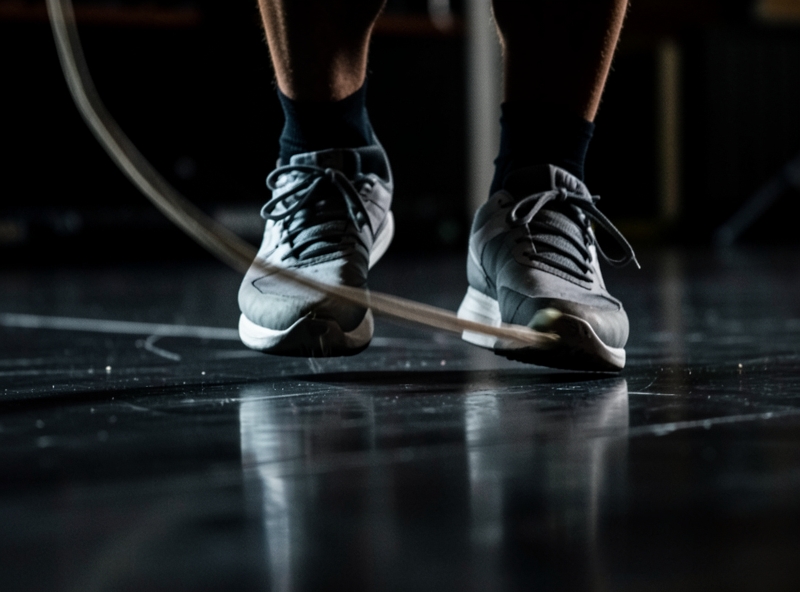
- Land on the balls of your feet: Never land flat-footed or on your heels. Lift yourself off the ground by a maximum of 2 to 3 cm. Jumping too high only wastes energy and increases negative impact on your knee and ankle joints. Let your calf muscles act as a natural shock absorption system.
Breaking Limits: Advanced Techniques to Master the Rhythm
Once you have mastered the basic jump at a pace of 100 skips/minute without tripping, it is time to upgrade your motor nervous system and burn double the calories with the challenging techniques below:
| Advanced Technique | Core Benefit | Key Technical Point |
|---|---|---|
| Single-leg Hops | Corrects muscle imbalances, increases unilateral strength. | Jump alternately 2-3 reps on each foot. Keep the knee of the non-jumping leg slightly bent to avoid impact. |
| Criss-Cross | Extreme core activation, enhances spatial reflexes. | Cross your arms in front of your stomach as the rope passes over your head. Open your arms back to the starting position as soon as your feet clear the rope. |
| Double Unders | Burns stubborn fat rapidly, develops explosive power. | Jump slightly higher, combined with a wrist flick that is twice as fast. The flicking force must be decisive and synchronized. |
"The difference between an ordinary jump roper and a professional athlete lies in the sound of landing. Perfect technique always produces extremely soft, almost silent landings."
Start integrating these techniques into your workouts using the interval method (HIIT): 30 seconds of basic jumping alternated with 15 seconds of challenging advanced techniques. This is the golden key to stimulating metabolism for hours after the workout ends.
4. Secrets to Maintaining Rhythm and Preventing Injuries During Training
Have you ever had to stop training for an entire month just because of a bad landing, or felt out of breath and lost your rhythm right when the most energetic beat came on? In movement, rhythm is the flow, while joints are the support system. If either of these elements is out of sync, your body will pay the price with lingering, dull pain. To protect your body and optimize training performance, you need to master the three core pillars below.
Synchronize Movements with Music Frequency (BPM)
Music is not just for entertainment; it is a biological metronome that helps optimize oxygen consumption. When you move in sync with the right music frequency, your body automatically enters a state of "flow," reducing mental pressure and increasing endurance by up to 15%. Apply the formula below to choose music based on your training goals:
- Warm-up music (100 - 115 BPM): Activates the central nervous system, gradually increasing heart rate without causing early muscle fatigue.
- High-intensity training music (130 - 145 BPM): Suitable for cardio workouts, modern dance, or fast, decisive movement sequences.
- Cool-down music (under 90 BPM): Brings the heart rate back to a resting state, activating the parasympathetic nervous system to begin the recovery process.
"Do not try to force yourself to chase the beat of the music. Let your body react naturally by emphasizing the downbeats - that is the perfect time to land or generate power."
Clinically Proven Ankle and Knee Joint Activation Routine
The mistake of 90% of trainees is only rotating their joints casually before high-intensity exercise. The ankle and knee joints are two areas that bear extreme compression forces, requiring a specialized neuromuscular activation routine to increase joint fluid secretion:
- Ankle activation with a 3D movement sequence: Instead of passive circular rotations, stand tall, lift one foot, and draw letters of the alphabet with your toes. This exercise forces all the small muscle groups around the ankle to work, increasing active range of motion (active ROM).
- Wall Tibialis Raise: Lean your back against a wall, place your feet forward, and continuously lift your toes upward. This is an isolation exercise that helps activate the tibialis anterior muscle - a natural shield protecting the knee joint from injuries like patellar tendonitis when jumping or running.
Choosing "Armor" for Your Feet and the Ideal Training Surface
Each jump or step generates a ground reaction force equivalent to 3 to 5 times your body weight. If you train on a surface that is too hard with improper shoes, this entire impact force will travel straight up to your kneecaps, hip joints, and spine.
| Training Surface | Injury Risk Level | Optimal Solution |
|---|---|---|
| Hard Concrete / Asphalt Road | Very High (Causes plantar fasciitis, stress fractures) | Absolutely avoid for high-intensity training. If mandatory, air-cushioned (Air) or thick foam-cushioned shoes must be used. |
| Packed Earth / Natural Grass | Medium (Slippery, uneven surface) | Choose shoes with good grip, pay attention to the terrain to avoid ankle sprains. |
| Studio Wooden Floor / Specialized Shock-absorbing Mat | Low (Recommended - Maximum shock absorption) | Use highly flexible, specialized shoes that support multi-directional movement (Cross-trainers). |
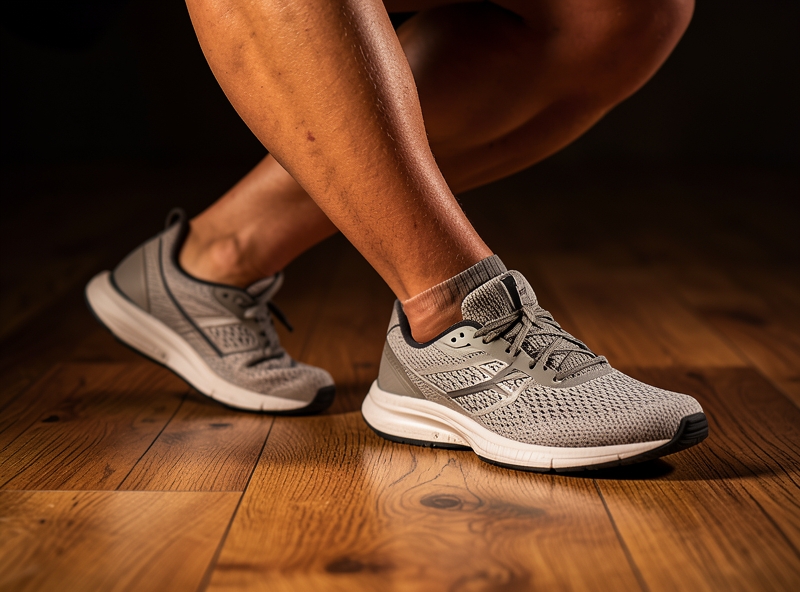
When choosing shoes, ditch the habit of using running shoes for dance workouts or multi-directional movement disciplines. Running shoes are only designed for forward linear movement. To perform pivots, jumps, and land safely, you need a pair of cross-training shoes with a flat sole, wide toe box to increase contact area, and a stable heel counter to prevent ankle rolls.
5. Summary
The truth is, you don't need an expensive gym membership or bulky workout equipment to get back in shape. The biggest obstacle between you and a toned, energetic body is not time, but procrastination right at the starting line. Jump rope is the key that simplifies all those barriers.
"Don't wait until tomorrow to start a healthy lifestyle. Real change only happens when you decide to pick up the rope and take that first jump today."
When integrating jump rope into your daily routine, you are not only burning calories optimally but also building a resilient movement system, protecting cardiovascular health, and effectively increasing bone density. Look at the practical values this habit brings after just a few weeks of serious discipline:
- Maximum time savings: Just 15 minutes of jumping rope is equivalent to 30 minutes of continuous running, freeing you from the pressure of a busy schedule.
- Absolute flexibility: Whether it's a small corner of the yard, a park, or your living room, you can turn any place into a high-quality personal workout space.
- Long-term resilience: The rhythm of the rope helps train mental focus, reduce stress, and create a positive flow of energy for the entire workday.
Your body is a miraculous biological machine; it will respond immediately to any positive movement stimulus. Don't hesitate to look for a perfect formula or a more ideal time. Pick up the rope, step into the open space, and start your first jump right now to feel the powerful transformation of both body and mind for yourself.