1. Jade – A Symbol of Heritage and Oriental Nobility
In the world of gemstones, if Diamonds represent the eternity of the West, then Jade is the soul, a living heritage spanning thousands of years of Oriental history. Have you ever wondered why ancient emperors and aristocrats would rather give up fine silks than ever let go of their jade pieces? It is not just jewelry; it is a protective amulet, a status identifier that no other material can replace.
The classic saying "Gold has a price, but Jade is priceless" is by no means an exaggeration to inflate commercial value. Gold can be quantified by weight, by purity, and can be easily recycled. But with Jade, each block of stone is a unique entity, carrying within it the flow of time and the energy of heaven and earth. There are never two pieces of jade exactly alike, just as there are never two souls in absolute harmony. When you own a piece of Jade, you are holding a legacy asset—the more it is worn, the brighter it becomes; the more it is passed down through generations, the more its value increases.
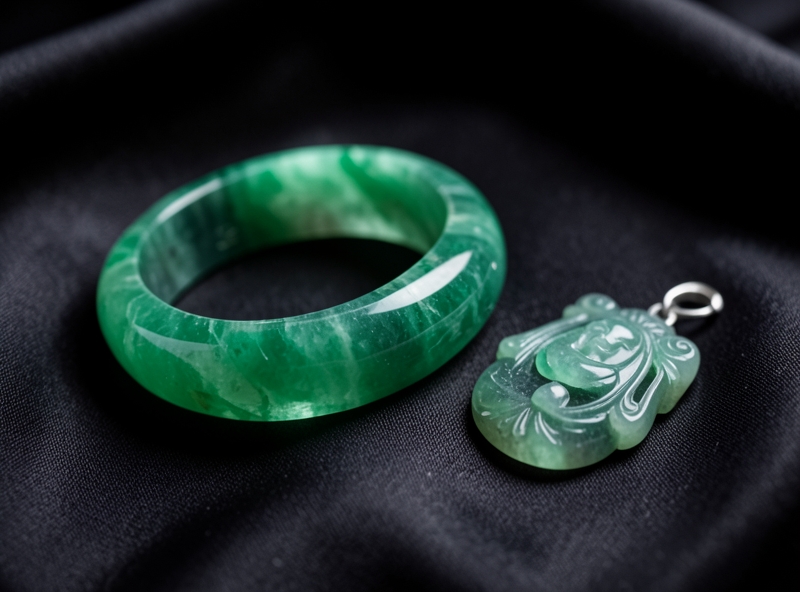
To deeply understand this "Imperial Stone," it is necessary to clearly distinguish between the two main minerals commonly referred to as Jade:
| Characteristics | Jadeite (Fei Cui Jade) | Nephrite (Hetian Jade) |
|---|---|---|
| Hardness | 6.5 - 7 (Mohs Scale) - Very durable and tough. | 6 - 6.5 (Mohs Scale) - Extremely durable, difficult to crack. |
| Color | Diverse: Emerald green, lavender, white, orange, black. | Mainly dark green, creamy white (mutton fat jade). |
| Spiritual Value | Symbol of wealth, prosperity, and power. | Symbol of purity, virtue, and longevity. |
The greatest fear for Feng Shui enthusiasts is the worry of buying "dead jade"—stone that has been treated with chemicals or hard resins. Real jade must have translucency and living energy. A standard piece of Jade does not stop at just being beautiful; it acts as a filter for negative energy. Science has proven that trace elements in jade, when in contact with the skin, create slight electrical impulses that help balance biological rhythms and reduce nervous system stress.
"Jade nourishes the person, and the person nourishes the Jade. Over time, the friction between the body and the stone creates a magical luster, as if the jade is truly breathing and absorbing the essence of its owner."
Owning Jade is the most subtle way to assert social status without being ostentatious. It represents calmness, wisdom, and a profound cultural foundation. In Feng Shui, this is the premier item for attracting wealth, neutralizing negative energy, and protecting the owner from unexpected mishaps. When you wear jade, you are not just carrying a piece of jewelry; you are carrying a legacy that endures through time.
2. Classifying Grade A, B, and C Jade: The Key to Accurate Selection
Are you paying thousands of dollars for a thousand-year-old treasure, or actually just a sophisticatedly disguised block of "chemical waste"? In the world of high-end Feng Shui collecting, the line between true value and deception often lies in three characters: A, B, and C. Failing to distinguish between these types of jade not only causes you to lose money pointlessly but also completely eliminates the energetic benefits that a Feng Shui item must have.
| Criteria | Grade A Jade (Natural) | Grade B Jade (Bleached) | Grade C Jade (Dyed) |
|---|---|---|---|
| Nature | 100% Natural, no chemical intervention. | Acid-bleached, polymer/resin injected. | Artificially dyed. |
| Durability | Eternal, becomes brighter with wear ("patina"). | Prone to cracking, dulls after 1-2 years. | Fades quickly under sunlight/sweat. |
| Value | Very high, retains value and appreciates over time. | Low, no collectible value. | Very low, strictly for fashion purposes. |
| Feng Shui | Strong energy, supports the wearer's destiny. | Energy is neutralized by chemicals. | No Feng Shui value. |
Grade A Jade (Type A) is "Living Jade." It only undergoes mechanical processing: cutting, grinding, and manual polishing with beeswax. The crystal structure of Grade A jade remains completely intact, allowing energy flows to circulate naturally. This is the only type recommended by Feng Shui experts due to its ability to interact with the wearer's vital energy, creating the phenomenon where "jade nurtures the person, and the person nurtures the jade."
Conversely, Grade B Jade (Type B) consists of low-quality stones with many black impurities or cloudiness. They are soaked in strong acid to "eat away" impurities, leaving the stone structure completely hollow like a honeycomb, then injected with polymer resin to create artificial transparency and hardness. Grade C Jade (Type C) is even worse, as dye is injected into fractures to fake rare emerald green or "blood dragon" red hues. When you wear Grade B or C jade, you are not wearing a gemstone, but a mixture of acid, resin, and toxic chemicals on your body.
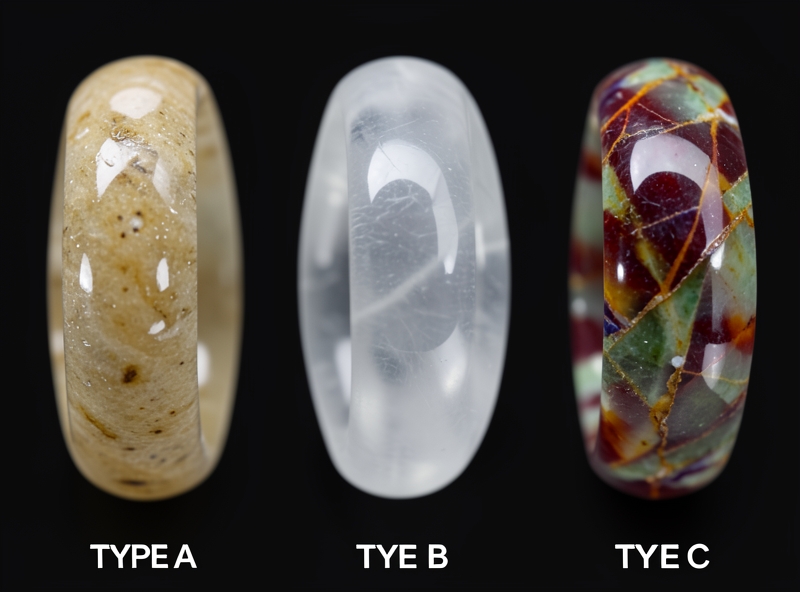
"In Feng Shui, the crystal structure is the 'vein' that conducts energy. A jade stone destroyed by acid (Type B) or filled with dye (Type C) is essentially a 'dead' stone, completely devoid of spiritual significance."
Be wary of advertisements for "Cheap Jadeite" that boast absolute transparency and vibrant colors. An immutable rule in the market: If the jade looks perfect but the price is cheap, it is definitely not Grade A. To protect your interests, always request a certification report from reputable gemological centers and double-check the product ID. Do not let temporary artificial beauty deceive your intuition and harm your own Feng Shui journey.
3. The Significance of Wearing Jadeite for Health and Destiny
Jadeite (Jade) is not merely a luxury piece of jewelry; it is a "living entity" capable of directly interacting with the owner's energy. If you have ever wondered why heirloom jade pieces become brighter the longer they are worn, the answer lies in the biological interaction between rare minerals and the human body's magnetic field.
From a scientific perspective, Jadeite is composed of trace elements such as Zinc, Magnesium, Iron, and Copper. Upon contact with the skin, these ions permeate through the pores, supporting electrolyte balance and promoting blood circulation. Wearing jade close to the wrist – where important acupressure points are concentrated – helps regulate heart rate, reduce nervous system stress, and enhance the detoxification capabilities of the liver and kidneys. This is why long-term jade wearers often possess a calm demeanor and a healthy, radiant complexion.
"Jade nurtures the person, and the person nurtures the jade. The millions of years of geological crystallization within the stone are awakened by the warmth and moisture of the body, creating an energy shield for comprehensive health protection."
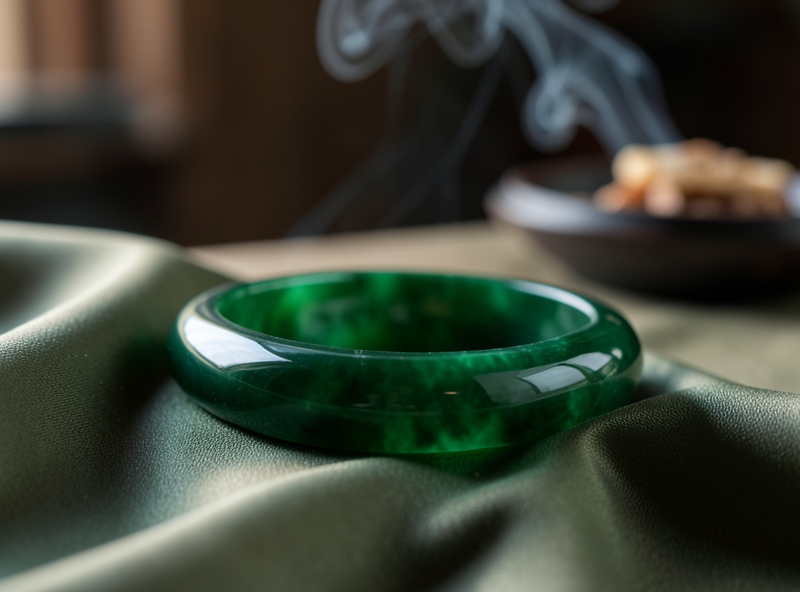
However, the feng shui value of Jadeite is only truly unleashed when the color of the jade harmonizes or aligns with the owner's destiny according to the Five Elements law. Choosing the wrong jade color not only diminishes its effectiveness but can also cause internal energy conflicts.
| Jade Color | Corresponding Element | Core Feng Shui Meaning |
|---|---|---|
| Green | Wood, Fire | Clears the flow of wealth, promotes growth, and neutralizes negative energy. |
| White | Metal, Water | Purifies the mind, enhances concentration, and brings inner peace. |
| Lavender | Fire, Earth | Heals relationships, brings luck in romance and career. |
| Yellow/Brown | Earth, Metal | Strengthens confidence, attracts prosperity, and protects the owner from negative energy. |
Possessing a piece of jade that matches your destiny is like finding the "energy key" to unlock the door to success. Those with the Wood element wearing green jade will see smooth workflows and overflowing ideas. Those with the Water element seek white jade to restrain impulsiveness, making investment decisions more lucid. Do not just choose jade for its sparkling appearance; choose the stone with a vibration frequency identical to your destiny to turn it into a protective amulet, wishing for a life of peace, prosperity, and longevity.
4. Secrets to Evaluating Quality and Maintaining Jade Jewelry
Don't let the glamorous appearance of showroom lights deceive your eyes. In the world of feng shui jewelry, Jade is not just an accessory; it is a "living object" capable of exchanging energy with its owner. However, the line between a premium piece of Jade and a piece of chemically treated stone is extremely thin. If you don't master the core standards, you can easily fall into the trap of wasting money on low-quality products.
Connoisseurs and long-time gemstone experts always uphold the principle of "Rarity first, refinement second" to determine the grade of Jade. "Rarity" here refers to its scarcity, the unique cloud veins, and color shades that cannot be found in a second stone. "Refinement" refers to the finishing, the exquisite carving craftsmanship, and the absolute smoothness of the polish. A valuable piece of Jade jewelry must be a perfect fusion between a gift from nature and the talented hands of an artisan.
| Evaluation Criteria | Characteristics of High-End Jade | Warning Signs (Risks) |
|---|---|---|
| Clarity | Transparent or semi-transparent, with depth like clear water. | Opaque, blurry, with air bubbles or coarse impurities inside. |
| Color | Naturally distributed color with harmonious tonal transitions. | Unnaturally vibrant colors, concentrated in cracks or fissures. |
| Sound | Emits a clear, resonant, and crisp sound when tapped lightly. | Dull, short thud (a sign of cracked stone or resin treatment). |
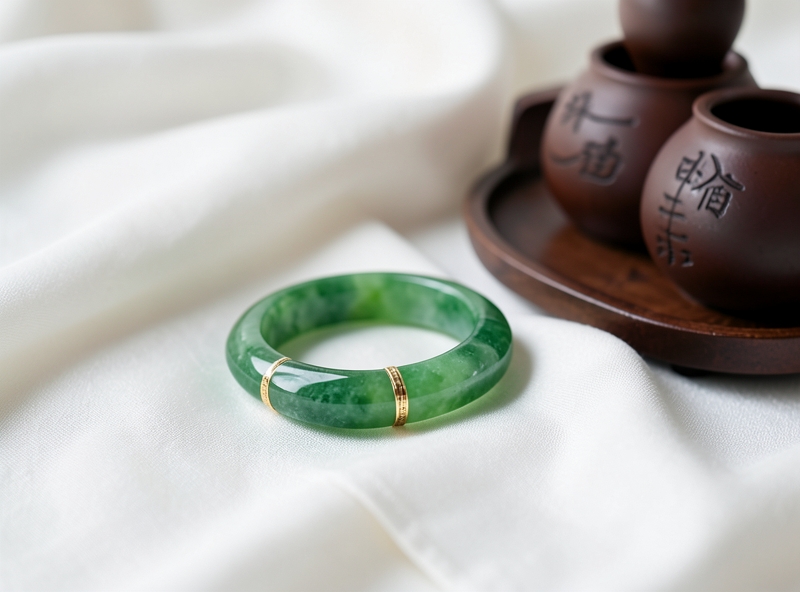
A secret that sophisticated Jade collectors always apply is checking the "resonance of the stone." When lightly touching two jade bangles together or using a silver coin to tap them, genuine Jade will emit a high-pitched, elegant sound like a ringing bell. Conversely, fake or resin-treated stones will produce a dull and truncated sound. This is a way to check the strong crystalline bond inside the stone that is difficult to distinguish with the naked eye.
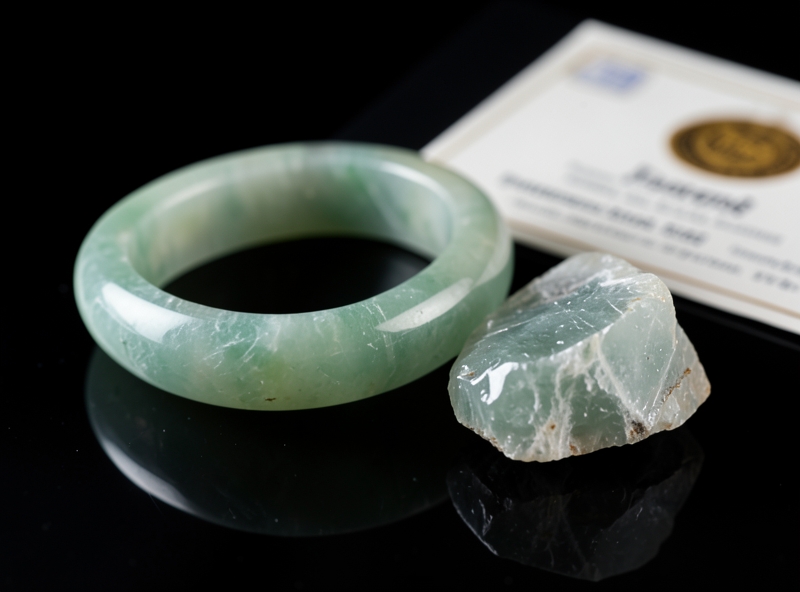
However, all personal perceptions can be flawed in the face of sophisticated counterfeiting technology. Gemstone certification from independent labs is the most powerful "ID card." Refuse any transaction if the jewelry lacks verification of the type, treatment method (A, B, or C), and specific weight. Don't gamble your budget on promises without scientific basis.
"Jade nurtures the person, and the person nurtures the Jade. But only pure Jade truly brings a flow of healing energy and prosperity to its owner."
Owning precious Jade is difficult, but maintaining its "lush" beauty over time requires even more finesse. The biggest mistake users make is using harsh cleaning chemicals or ultrasonic waves to clean Jade. This inadvertently strips away the natural oil layer and its inherent gloss. The best way to "nourish" Jade is to wear it frequently. Friction with human skin and the absorption of natural oils from the body will make the Jade increasingly shiny and develop a more beautiful luster.
- Periodic Cleaning: Use only warm water and a soft, lint-free cloth to gently wipe the surface.
- Avoid Thermal Shock: Do not expose Jade directly to intense sunlight or sudden temperature changes, which can easily cause internal cracks.
- Separate Storage: Always wrap Jade in velvet cloth to avoid scratches when colliding with harder jewelry such as Diamonds or Rubies.
Remember, every small scratch on the surface not only reduces its economic value but also affects its ability to converge feng shui energy. Carefulness in selection and preservation is how you show respect for nature's treasure.
5. Frequently Asked Questions (FAQ)
The world of feng shui items is not only filled with the aura of luck but also riddled with classic traps and myths. To protect your wallet and your faith, here are the most direct and sharpest answers from an expert perspective.
1. Does jade really "improve" in luster over time?
The answer is YES, but it is not magic. The essence of this phenomenon is the absorption of sweat and sebum from human skin into the microstructure of the jade. Over time, these molecules fill microscopic gaps, making the jade clearer, shinier, and deeper. However, this only happens with completely natural jade (Type A). If you own a piece of jade that has been chemically treated or dyed, it will gradually become dull and lose its original vitality.
2. How to quickly distinguish real vs. fake jade at home without machinery?
Do not believe in folk tips like burning it with fire or tapping to hear the sound, as modern counterfeiting technology can deceive even your hearing. Apply these 3 "golden" rules:
- Thermal conductivity: Press the jade against a thin area of skin (like your cheek or wrist). Real jade always provides an initial icy cold sensation and retains that temperature longer than plastic or glass.
- Inspect the stone grain: Use your phone's flashlight to backlight it. Natural jade always has impurities, natural fractures, or inconsistent stone grains. A flawless jade piece at a cheap price is definitely man-made.
- Weight: Natural jade has a very high specific gravity. When holding it in your hand, you should feel it is heavier, denser, and more solid than its visual size suggests.
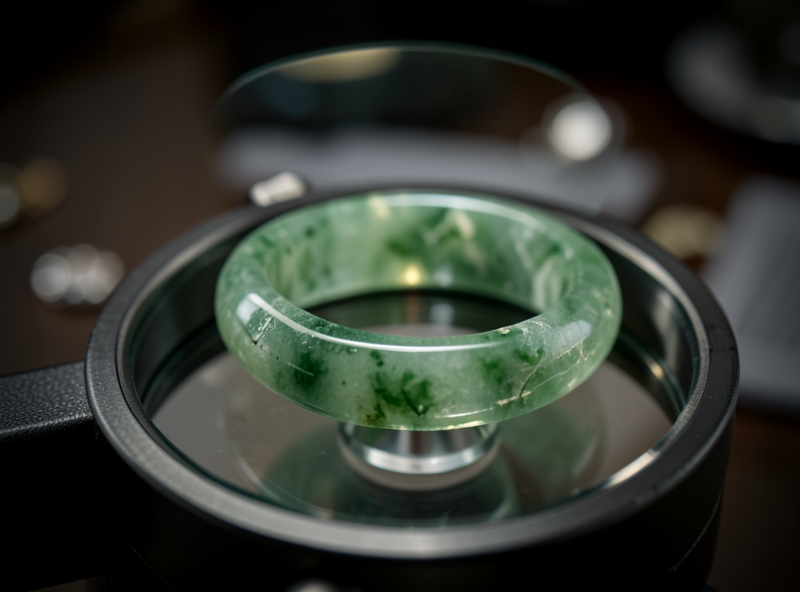
3. Should I continue wearing a jade bracelet that is cracked or broken?
This is the biggest fear of feng shui practitioners. Let's look at it from two perspectives:
- Spiritually: A common belief is that broken jade acts as a "substitute" bearing the misfortune for its owner. Once the item has fulfilled its protective mission, its energy is fractured. Wearing a cracked item can create chaotic energy flows, which is not good for the user's state of mind.
- Aesthetically and Safety-wise: Cracks are structural weaknesses that can cause skin injury or cause the bracelet to shatter at any time.
"Feng shui is not about stubbornness. If a piece of jade is cracked, cherish its journey with you and choose to recycle or store it rather than forcing its use."
4. Quick Comparison: Natural Jade vs. Chemically Treated Jade
| Criteria | Natural Jade (Type A) | Treated Jade (Type B, C) |
|---|---|---|
| Color | Unevenly distributed, has depth within the stone base. | Unusually vibrant colors, often concentrated in cracks. |
| Durability | Extremely high, becomes shinier the more it is worn. | Becomes brittle and cracks after some time of environmental exposure. |
| Value | Increases over time (high collectability). | Loses value immediately after purchase. |
5. What to do when you feel a feng shui item is "not working"?
The energy of an item requires a two-way interaction. If you don't find it effective, check two factors: Purification and Mindset. Items need to be "consecrated" or purified periodically with agarwood or sea salt to remove negative energy. More importantly, feng shui is a catalyst, not a magic wand. You need to maintain a positive vibration frequency and take practical actions so the item can resonate and activate the best luck.