
1. Growth Mindset: The Key to Unlocking Infinite Potential
If you think of yourself as a million-dollar "start-up" project, then a Growth Mindset is the most critical software update you need to install immediately. This concept is not empty rhetoric, but a classic research work by Professor Carol Dweck from Stanford University. Understood most simply: It is the strong belief that intelligence and talent are not fixed numbers pre-installed at birth, but rather "muscles" that can absolutely flourish through practice and perseverance.

The difference between someone "standing still" and a career "warrior" doesn't lie in the starting point, but in how they perceive challenges. While a Fixed Mindset makes you fear mistakes for fear of being judged as incompetent, a Growth Mindset urges you to see every "stumble" as a valuable lesson to optimize your development path. It turns pressure into motivation and transforms criticism into precious "insights" for you to upgrade yourself into a better version every day.
"Becoming great is not about proving how talented you are, it's about how much effort you are willing to put in to push past your own limits."
| Characteristics | Fixed Mindset | Growth Mindset |
|---|---|---|
| Facing Challenges | Avoids them for fear of failure or losing face. | Willingly embraces them to upgrade skills. |
| Encountering Obstacles | Gives up easily and blames circumstances. | Persists to the end, finding new creative solutions. |
| Effort | Sees effort as a sign of weakness. | Sees effort as the path to mastery. |
| Feedback/Criticism | Feels personally attacked, ignores it. | Filters for practical value to modify and progress. |
| Success of Others | Feels threatened, envious (FOMO). | Feels inspired (JOMO). |
Cultivating a Growth Mindset helps you escape the trap of "illusory perfection." Instead of saying "I can't do this," add a magic keyword at the end: "Yet". "I can't do this yet" opens up an infinite space for learning. When you believe that ability can be developed, the brain automatically activates a solution-seeking mode instead of complaining, turning inherent limitations into milestones waiting to be conquered.
- Embrace imperfection: Don't wait until you're good to start; start to become better.
- Focus on the process: Appreciate the small daily efforts instead of solely obsessing over the final result.
- Learn from all sources: A critique from a boss or an educational video on social media can all be a new "vibe" that helps you improve yourself.
2. Self-Learning and Proactivity: The Engine for Sustainable Growth
In a natural ecosystem, life never stands still; a seed always proactively reaches out from the dark soil to seek sunlight. Similarly, personal development is not a fixed destination, but a continuous evolutionary process where a growth mindset acts as the lifeblood nurturing the ability to self-learn. When we believe that intelligence and skills can be cultivated through perseverance, every challenge becomes a valuable nutrient rather than a barrier blocking the way.
Those with a growth mindset perceive knowledge as a lush primary forest—where each new discovery opens paths leading to higher canopy layers. A proactive spirit in self-learning does not stop at absorbing information; it is also the conscious choice of "clean," selective sources of knowledge, much like how we prioritize organic food for our bodies. This helps us avoid information overload and focus on core values, bringing balanced and sustainable development to the mind.
"Self-learning is like planting a tree; it requires patience, the healthy water of curiosity, and a space quiet enough for the seeds of thought to take deep root in practice."

Proactively seeking solutions and new skills is the "green action" in the personal development roadmap. Instead of passively waiting for guidance, we equip ourselves with the ability to adapt to changes in the living and working environment. The relationship between a growth mindset and self-learning is clearly demonstrated through the following aspects:
- Curiosity as a motivator: Viewing knowledge as a never-ending journey of discovery, urging individuals to constantly ask "why" regarding environmental and social issues.
- Sustainability in method: Building small but steady learning habits, like watering a plant every day, instead of extreme cramming that leads to burnout.
- Practical application: Self-learning is not just to know, but to change behavior. For example, proactively learning about minimalism helps reduce pressure on natural resources and frees up mental space for new creativity.
| Characteristic | Fixed Mindset | Growth Mindset & Self-Learning |
|---|---|---|
| Facing difficulties | Gives up easily, viewing them as personal limitations. | Views them as opportunities to practice and find new solutions. |
| Source of knowledge | Relies entirely on existing training programs. | Proactively seeks, filters, and self-researches from multiple sources. |
| Environmental impact | Consumes knowledge passively, with little concern for green application. | Prioritizes sustainable knowledge, minimizing waste of time and resources. |
When the spirit of self-learning is driven by a proactive mindset, we not only grow professionally but also enhance our awareness of responsibility toward the community and the planet. A lifelong learner will soon realize that their personal growth is always linked to the health of the surrounding ecosystem. From there, they choose skills that not only enrich themselves but also contribute to protecting and regenerating the living environment, creating a cycle of prosperous and peaceful development.
3. Transforming Fear of Failure into Lessons Learned
In the journey of self-development, the fear of failure often exists like an invisible wall, preventing us from stepping out of our comfort zones. Much like a tree that fears the winter winds and refuses to bud, humans inadvertently suppress their inherent potential when dominated by fear. This mindset not only causes nervous tension but also creates barriers that make us miss opportunities to "reinvent" ourselves, similar to how we hesitate to change fast-consuming habits for fear of inconvenience, even though we know they are putting pressure on the ecosystem.
The fear of making mistakes stems from an instinct to protect the ego from hurt. However, if we observe the processes of nature, nothing is wasted. Fallen leaves are not the end of a life cycle; they become organic mulch, providing precious nutrients to make the soil more fertile. Failure is the same—it is not a dead end, but a form of vital raw "data" for us to adjust our methods and perfect ourselves.
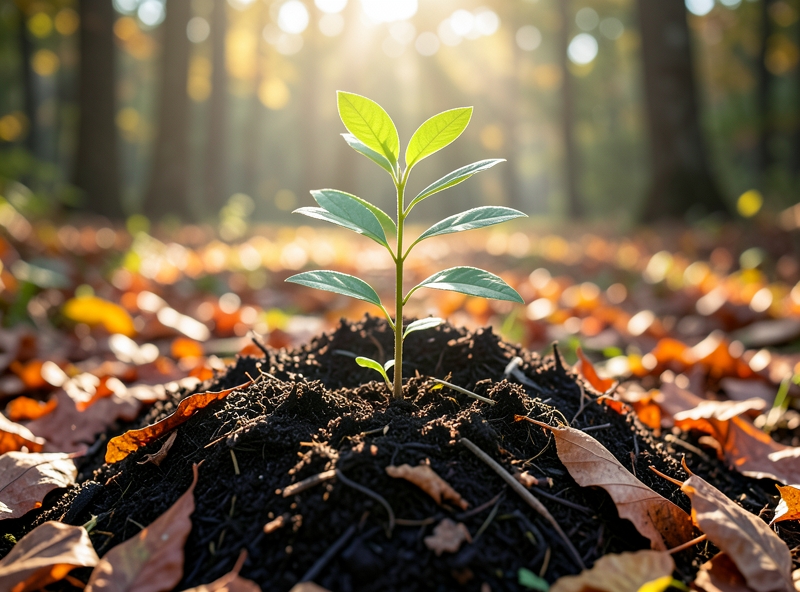
To change our perspective and turn fear into motivation, we need to practice "decoupling the outcome" thinking. Instead of equating failure with our personal value, consider it as factual feedback from the environment. This approach helps us maintain composure and self-compassion, much like how a gardener patiently investigates why a seed has not yet sprouted to adjust the water or light.
| Aspect | Old Mindset (Fear) | New Mindset (Transformation) |
|---|---|---|
| View of Mistakes | As weakness, something shameful. | As factual data to adjust direction. |
| Reaction to Difficulties | Avoidance or giving up early. | Observation, analysis, and re-experimentation. |
| Target Goal | Momentary perfection. | Sustainable and harmonious progress. |
"Failure is essentially a form of renewable energy. If you know how to transform it, it will provide you with the resilience and wisdom that easy successes can never offer."
Cultivating the habit of recording lessons after each setback is a safe and effective solution for maintaining mental health. Instead of self-torment, ask yourself: "What is this data pointing to?" or "What friendlier and more effective option can I replace this method with next time?". When the mind is no longer shackled by fear, you will find yourself as free as a stream, always finding a way through the rocky crevices to flow into the vast ocean of understanding.
- Accept Imperfection: Every living entity needs time to adapt and grow.
- Analyze Instead of Judge: Use logical thinking to deconstruct causes instead of letting negative emotions overwhelm you.
- Nurture Compassion: Treat yourself with the same kindness as you would care for a fragile sprout.
4. Practical Steps to Cultivate a Growth Mindset Every Day
Building a Growth Mindset is not a temporary psychological state, but an operating system that needs constant upgrading through disciplined practice protocols. To transition from a fixed mindset to a growth mindset, users need to implement the following optimization steps in their daily life and work.
Step 1: Self-talk Refactoring
Language is a tool that shapes perception. Affirmations that frame abilities, such as "I have no talent in this area," create psychological barriers that block effort. Replacing them with the keyword "Yet" is a simple but neurophysiologically effective technique that helps expand the space for development.
| Fixed Mindset (Limiting) | Growth Mindset (Expanding) | Practical Value |
|---|---|---|
| "I can't do this." | "I can't do this right now." | Creates expectations for future progress. |
| "This is too hard for me." | "This needs more time and a new strategy." | Stimulates problem-solving thinking. |
| "I failed." | "This experiment did not yield the desired result yet." | Views failure as data to adjust the process. |
Step 2: Focus on Process instead of Result Metrics
In the digital age, we are often obsessed with Vanity Metrics such as final achievements or external recognition. However, a true growth mindset focuses on the "Compiler Process" – the process of compiling effort into skills. Start keeping a work log based on effort: How many ways did you try to fix a bug? How many hours did you spend researching new documentation? When you focus on the process, results will be the inevitable consequence of a sound workflow.

Step 3: Integrate Feedback Loops
A system without feedback is a dead system. People with a growth mindset view contributions, and even harsh criticism, as valuable data sources to "debug" themselves. Instead of a defensive mechanism, learn to ask investigative questions:
- "What specific point in my presentation did you find unconvincing?"
- "If it were you, what process would you use to handle this situation more optimally?"
- "What knowledge gaps do I need to fill to reach this standard?"
"The difference between an expert and a beginner lies not in the number of times they succeed, but in the speed and attitude with which they handle feedback from failures."
Step 4: Periodically Challenge the Safety Threshold
A growth mindset will become rigid if it is not "exercised" with new challenges. Proactively take on projects that are about 10-20% outside of your current comfort zone. This helps maintain a state of "neuroplasticity" (the brain's ability to adapt), ensuring that you are always ready for the constant fluctuations of the labor market and technology.
5. Conclusion
The journey of cultivating a growth mindset is not a short-term destination, but a persistent process of nurturing the soul, much like fostering a primary forest. Real change does not come from momentary leaps but crystallizes from persistence and patience through the challenges of time. When we accept that every mistake is a layer of nutrient-rich humus for the seeds of experience, that is when we begin to live in harmony with our own laws of sustainable development.
"Human development, much like the functioning of an ecosystem, requires a balance between strong inner strength and harmony with the surrounding environment to create enduring values."
| Core Value | Positive Impact on Self and Environment |
|---|---|
| Unlocking Potential | Overcoming self-imposed limits, finding freedom in thought and action. |
| Persistent Effort | Cultivating steadfastness, minimizing wasted energy on vague fears. |
| Mindful Lifestyle | Increasing empathy, promoting consumption choices and behaviors that are friendly to nature. |
Self-improvement is inherently linked to the responsibility of protecting the surrounding living environment. When the mindset is open enough, we realize that personal development is only truly complete when it contributes to creating a green community and a healthy planet. The smallest efforts in self-study, self-discipline, or simply changing a habit harmful to the environment are all important links creating a better version of yourself.
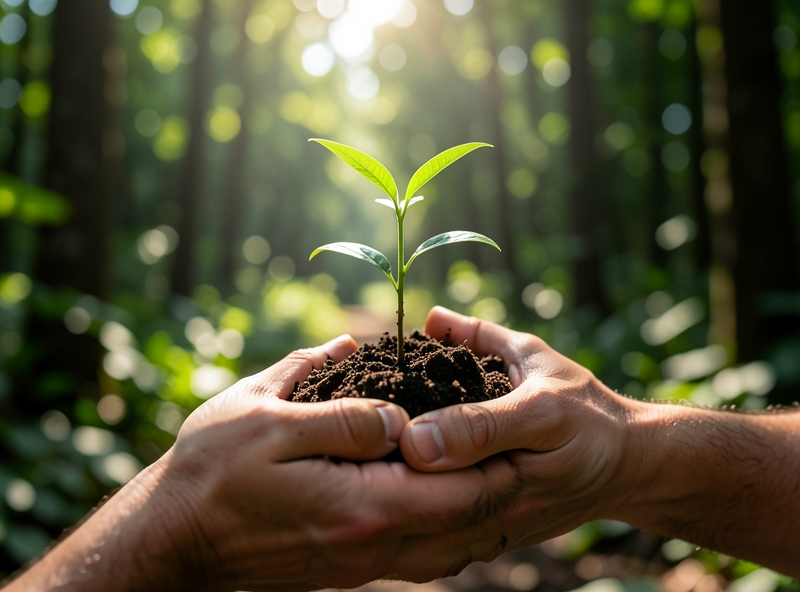
Don't wait for a perfect moment to start. Change can originate right now from simple yet practical actions:
- Spend 15 minutes a day reading a book about skills or the environment instead of aimlessly scrolling through social media.
- Replace single-use plastic products with sustainable solutions like cloth bags and personal water bottles to practice discipline and responsibility.
- Record lessons learned from failures in a recycled notebook, viewing them as invaluable assets of the growth journey.
Remember that a sturdy ancient tree also once started from a tiny seed deep in the dark earth. As long as you keep striving and maintain faith in your infinite capacity for growth, you will reap sweet fruits not only for yourself but also for the entire ecosystem we inhabit together.