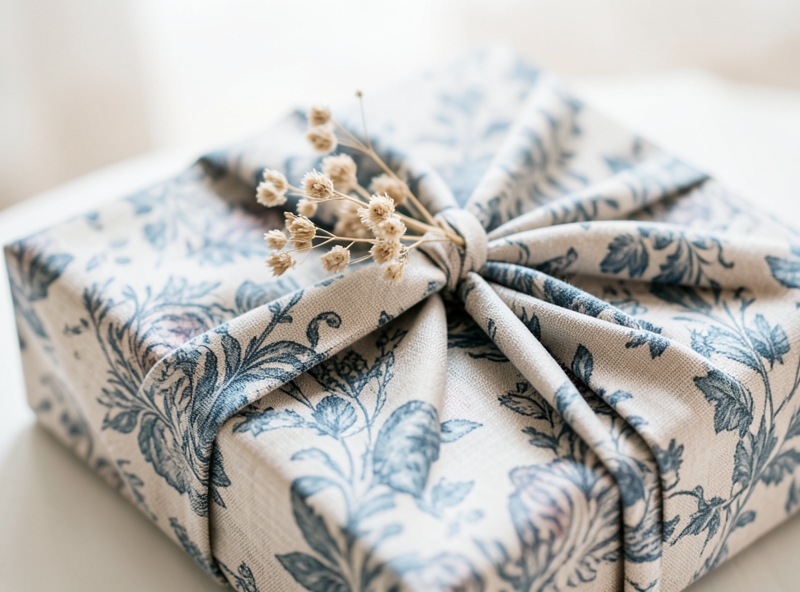
1. What is Furoshiki? The Revival of the Traditional Japanese Fabric Wrapping Art
With every holiday season or anniversary that passes, millions of tons of plastic-coated metallic wrapping paper and thousands of miles of plastic tape are torn open and thrown straight into landfills after just a few brief seconds in the name of "prestige." This mindless waste is a headache for anyone pursuing a sustainable lifestyle. But a minimalist, elegant solution has existed for over 1,200 years, ready to completely solve this problem: Furoshiki - the traditional Japanese art of fabric wrapping.
Furoshiki is not merely a square piece of cloth. It is a mindset of smart resource management. Tracing back in history to the Nara period (710–794), the predecessor of Furoshiki was called Tsutsumi (meaning wrapping or bundling), used to protect imperial treasures. By the Edo period (1603–1867), as public bathhouses (Sento) became popular, the name "Furoshiki" was officially born. In Japanese, "Furo" means bath, and "Shiki" means to spread. People used this cloth to spread under their feet while changing, then wrapped their wet clothes to carry home. From a bathhouse item, Furoshiki evolved into an art of wrapping everything from wine bottles and Bento boxes to luxury gifts.
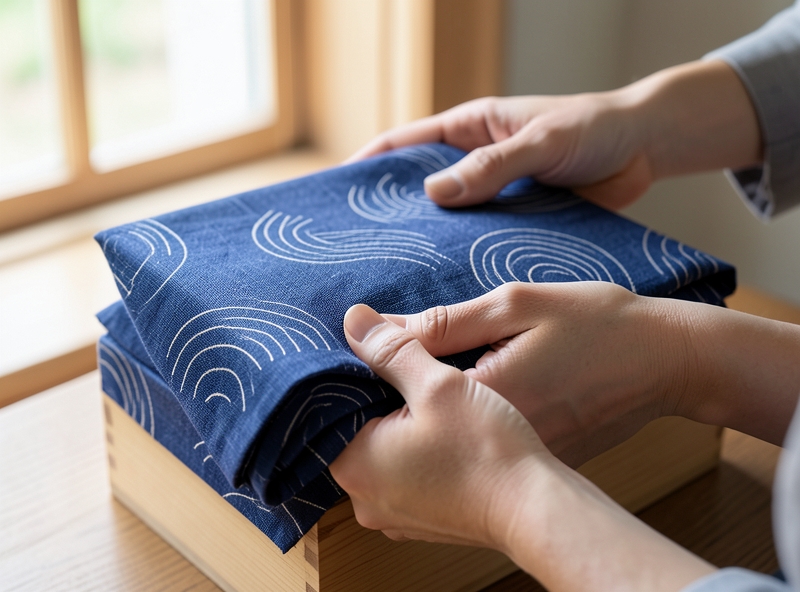
In the era of fast consumerism, Furoshiki is rising strongly as a revolutionary green living statement. It shatters the misconception that sustainable living requires sacrificing aesthetics. Instead of using glossy wrapping paper containing non-recyclable microplastics and rolls of permanently non-biodegradable adhesive tape, a Furoshiki cloth made of cotton, linen, or silk can be reused thousands of times with a virtually infinite lifespan.
| Comparison Criteria | Single-use Wrapping Paper | Traditional Furoshiki Wrapping Fabric |
|---|---|---|
| Lifespan | Single use (A few minutes from unwrapping to disposal) | Hundreds, thousands of times (Infinite reuse) |
| Biodegradability | Extremely difficult (Due to plastic coating, glitter layer, chemical glue) | Easily biodegradable (100% natural fibers) |
| Included Accessories | Plastic tape, nylon ribbon, adhesive glue | None required (Uses only knotting techniques) |
| Added Value | Becomes waste immediately | The fabric itself is part of the gift (Scarf, handbag, wall hanging) |
"Furoshiki is the embodiment of the Mottainai philosophy – the spirit of regret over useless waste and absolute appreciation for everything around us."
The global revival of Furoshiki is not just a passing trend. It is a profound shift in awareness. When you give someone a gift wrapped in Furoshiki, you are not only giving the material object inside but also sending a message of civilized cultural behavior toward the environment. The recipient can use the fabric itself to wrap another gift to pass along, or transform it into a fashionable street handbag, proudly extending its green lifecycle.
2. The Outstanding Benefits of Furoshiki: When Aesthetics Go Hand in Hand with a Sustainable Lifestyle
Each year, millions of tons of gift wrap coated in premium polymer are discarded immediately after the brief moment of giving and receiving. This luxurious waste not only drains personal budgets but also places suffocating pressure on our living environment. Furoshiki emerges as a solution to reverse this reality, transforming the act of wrapping a gift from a waste-generating activity into a work of art capable of infinite rebirth.
"Furoshiki is not merely a piece of gift-wrapping cloth; it is the ultimate ritual of expressing respect without leaving any carbon footprint."
| Comparison Criteria | Traditional Gift Wrap | Furoshiki Wrapping Cloth |
|---|---|---|
| Lifecycle | Single-use (Often torn when opened) | Infinite (Reused dozens or hundreds of times) |
| Biodegradability | Hard to decompose due to plastic coatings and chemical inks | Natural and eco-friendly (cotton, linen, silk) |
| Long-term Cost | Incurred continuously for each gift-giving occasion | One-time investment, depreciation reduces to zero after a few cycles |
| Repurposing Capability | None (Becomes waste immediately) | Transforms into scarves, handbags, picnic mats |
Infinite Lifecycle: When Waste Returns to Zero
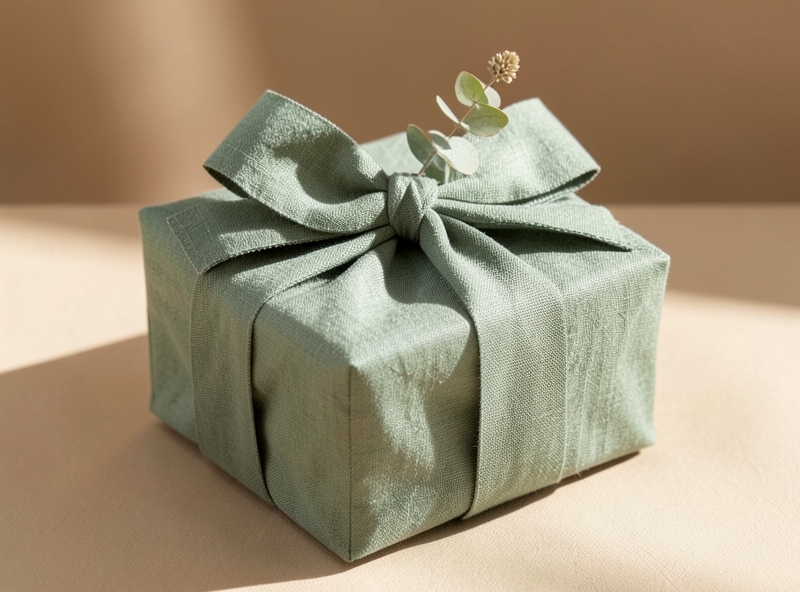
The core difference of Furoshiki lies in its infinite reuse capability. Unlike common wrapping paper that easily tears after being ripped open, a high-quality Furoshiki cloth made from natural fibers like linen, cotton, or silk can last for decades. After fulfilling its mission of wrapping a gift, the cloth begins a new lifecycle: becoming a fashionable scarf, an elegant tablecloth, or being reused by the recipient to wrap another gift to send. This is a miniature model of a circular economy, where the concept of "waste" is completely eliminated.
A Smart Economic Calculation from Long-Term Thinking
Many worry that the initial cost of a Furoshiki cloth is higher than a pre-made roll of wrapping paper. However, when looking at the long-term financial equation, Furoshiki offers an outstanding return on investment (ROI). Instead of continuously spending money on wrapping paper, tape, and plastic ribbons—items that are used once and thrown away—owning a collection of Furoshiki cloths allows for rotational reuse within the family for all festive occasions, birthdays, or daily gatherings. Investing in Furoshiki is a one-time investment for a lifetime of value.
The Pinnacle of Personalization and the Art of Respecting the Recipient
A gift wrapped in Furoshiki always brings a completely different emotion. It conveys a powerful message of dedication and sophistication from the giver. The wrapper must take the time to choose the right fabric, meticulously smooth out each fold, and tie each knot without the aid of chemical adhesive tape. This act shows deep respect for the recipient, turning the outer wrapping into a valuable part of the gift itself, elevating the giving and receiving experience to an emotional artistic dimension.
3. Guide to choosing the right material and size of Furoshiki fabric
The boundary between an artistic Furoshiki gift wrap and an "awkward bundle" lies in just two factors: fabric material and size. Choosing the wrong thickness causes knots to loose, or miscalculating the size makes folds short, which are the most common mistakes that make your green living effort look unappealing. To achieve absolute sophistication, you need to clearly understand the characteristics of each fiber and the precise ratio formula.
Choosing fabric material: The intersection of functionality and emotion
There is no single fabric for every gift. Each material tells its own story and serves a distinct weight-bearing purpose:
- Cotton Fabric (Natural cotton fibers): This is the "king" of Furoshiki art thanks to its high grip, which prevents slipping when tying knots. Cotton has a moderate thickness, making it extremely suitable for beginners to wrap square gift boxes, books, or documents.
- Linen Fabric (Linen): Features a rustic texture with distinct natural fiber ridges. Linen holds folds extremely well, bringing a nostalgic, minimalist beauty. This material is the perfect choice for wrapping fruits, bread, or organic products.
- Silk/Satin Fabric: Soft, with a gentle drape and luxurious shine. Silk reflects light extremely well, elevating high-end gifts such as expensive cosmetics, jewelry, or partner gifts. Note: Silk is quite slippery, requiring a firmer knotting technique.
- Canvas Fabric (Light canvas): Outstanding durability and high load-bearing capacity. Prioritize canvas when wrapping glass wine bottles, heavy items, or using it as an everyday shopping bag.
"Green living is not actually about buying a brand new piece of Furoshiki fabric. Start by rummaging through your wardrobe and reviving existing old items."
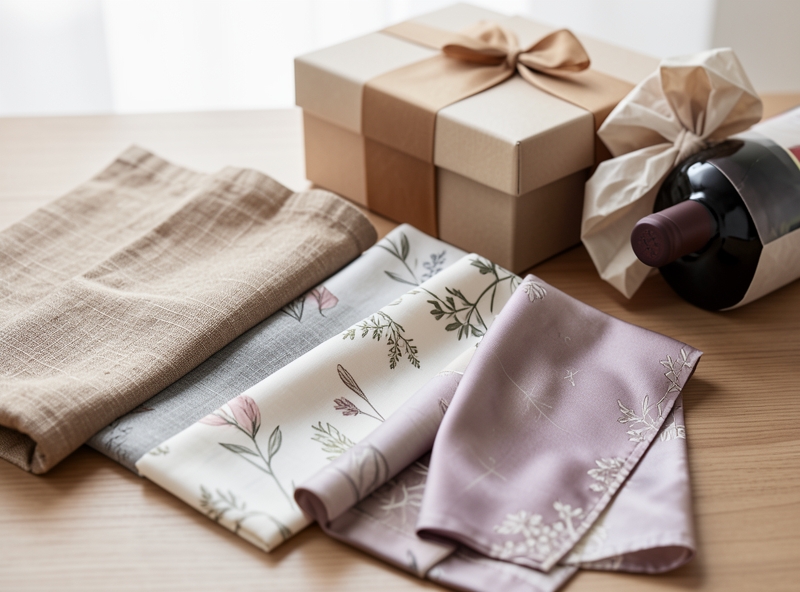
Before deciding to buy new fabric, apply smart recycling (Upcycling) thinking. An unused cotton handkerchief, an old satin silk scarf that has gone out of style, or even an old linen shirt cut squarely and overlocked - all can be turned into unique, highly personalized Furoshiki sheets with their own historical stories.
The golden size formula: Accurate conversion for each gift
The core principle of Furoshiki is: The diagonal length of the fabric sheet must be 3 times the largest size of the gift. If the fabric sheet is too small, you cannot tie a knot; if it is too large, the excess fabric will clutter the shape.
Below is the standard size conversion table optimized for you to apply easily:
| Edge size (Square) | Traditional name | Optimal application for specific gifts |
|---|---|---|
| 45 - 50 cm | Chou-haba | Suitable for envelopes, gift money, lucky money envelopes, small tea boxes, or wrapping a pocket book. |
| 68 - 70 cm | Nihaba | The most versatile size. Perfect for standard books, medium-sized square/rectangular gift boxes, or a 750ml wine bottle. |
| 90 - 100 cm | Nishaba | Suitable for wrapping double wine bottles, small fruit baskets, laptops, or tying into a convenient handbag when going to the market. |
| 110 - 120 cm | Sanshababa | Reserved for bulky items: wrapping clothes when traveling, wrapping yoga mats, or making a super-light picnic backpack. |
Once you have mastered the secret of choosing materials and this size formula, you are ready to elevate your green living action into a true work of art, where the recipient not only treasures the gift inside, but also cherishes the sophisticated outer wrap.
4. Basic Furoshiki Gift Wrapping Techniques Without Tape
With every holiday season that passes, millions of tons of plastic tape and glossy plastic-coated wrapping paper are discarded, piling up in landfills and taking hundreds of years to decompose. That is an "ecological scar" in the name of sincerity. Furoshiki emerges as a saving solution: no tape, no waste, with just a square piece of cloth and a few clever knots, you can create a unique work of art. The wrapping cloth is no longer waste after opening the gift, but is itself a practical gift that can be reused infinitely.
To begin this artistic green living journey, get familiar with the three classic knotting techniques below. With just a little patience, your hands will completely replace all types of chemical adhesives.
| Technique | Most Suitable Items | Optimal Fabric Size | Difficulty |
|---|---|---|---|
| Otsukai Tsutsumi | Flat boxes, books, flat tea trays | Side length 3 times the box's long side | Easy (For beginners) |
| Yotsu Musubi | Thick square boxes, cube gift boxes | Side length 4 times the box height | Medium |
| Bin Tsutsumi | Glass bottles, wine bottles, water flasks | Minimum 70cm x 70cm | Intermediate |
4.1. Otsukai Tsutsumi – Basic wrap for flat boxes
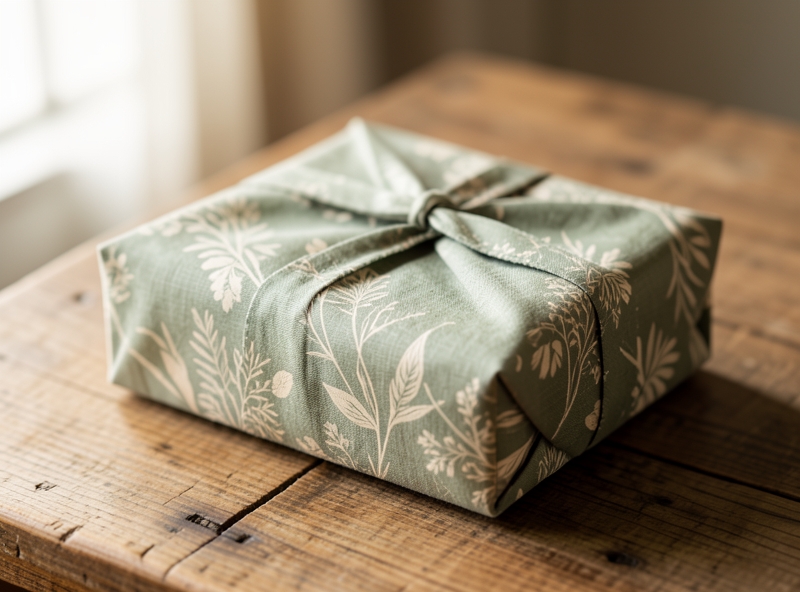
This is the introductory technique, extremely suitable for flat rectangular gifts such as books, jewelry boxes, or flat pastry trays. The delicate flat knot on top is the highlight that makes the gift look neat and elegant.
- Step 1: Lay the cloth flat in a diamond shape (wrong side facing up). Place the gift box right in the center of the fabric.
- Step 2: Pull the bottom corner of the fabric (closest to you) over the gift box, folding the excess fabric under the edge of the box to create a smooth, tight fit.
- Step 3: Pull the opposite top corner down, covering the gift box and pleating it neatly.
- Step 4: Take the left and right corners, pull them tight towards the center, smoothing the folds along the sides of the box.
- Step 5: Tie these two corners together with a double knot (Maimusubi) right on top of the box. Adjust the knot so it sits symmetrically and neatly.
4.2. Yotsu Musubi – Four-knot wrap for thick square boxes
When dealing with tall or heavy gift boxes, the regular Otsukai technique can easily become loose. Yotsu Musubi uses all 4 corners of the fabric to create two crossing knots, resulting in an extremely sturdy load-bearing structure and a very eye-catching appearance.
- Step 1: Place the square box in the center of the diamond-shaped cloth, similar to the basic wrap.
- Step 2: Take the bottom corner and top corner, pull them to the center, and tie a single knot (the first knot) close to the surface of the box.
- Step 3: Next, take the left and right corners, pull them to the center, overlapping the first knot, and tie a second single knot perpendicular to the first.
- Step 4: Tighten both pairs of corners to form a beautiful four-petal double knot in the center of the gift box. Adjust the fabric ears to flare out evenly in all directions.
4.3. Bin Tsutsumi – Elegant bottle wrapping technique
Wrapping a glass bottle in paper is always a nightmare because the curves easily tear the wrapping paper. Bin Tsutsumi completely solves this pain point by hugging the curves of the bottle, while creating an extremely convenient carrying handle for easy transport.
- Step 1: Place the glass bottle standing upright right in the center of the Furoshiki cloth.
- Step 2: Take two opposite corners (bottom and top), pull them to the top of the bottle, and tie a single knot right near the neck of the bottle.
- Step 3: Pull the remaining two corners (left and right) around the back of the bottle body, cross them, and bring them back to the front of the bottle body.
- Step 4: Tie a tight double knot at the front of the bottle body to secure it.
- Step 5: Return to the two corners at the top of the bottle (from step 2), twist the two ends together slightly, and tie a small knot at the tip to form a rounded, sturdy carrying handle.
"Furoshiki is not merely about covering an object. It is how you use the softness of fabric to embrace, respect the gift, and send a message of Earth protection to the recipient."
5. Conclusion
Every holiday season, millions of tons of glossy, plastic-coated wrapping paper head straight to landfills, leaving behind a century-long legacy of pollution. This meaningless waste is often disguised in the name of politeness and neatness. It is time for us to redefine the concept of a complete gift.
Furoshiki is not merely a fabric folding technique; it is the physical embodiment of the Mottainai philosophy – a deep appreciation for the core value of all things and a profound regret over any form of waste. When you replace a single-use wrapping paper with a soft strip of silk, cotton, or linen, you are not just protecting the gift inside. You are sending a powerful message of respect for nature, turning the act of gift-giving into a flawless green cycle.
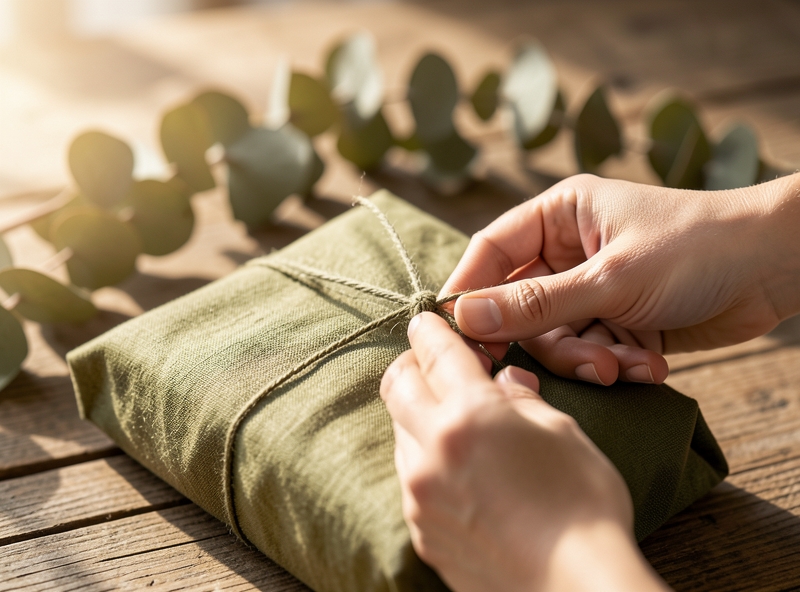
"Wrapping a gift in Furoshiki fabric means you are wrapping kindness for the Earth."
Let's start today with the smallest changes:
- Utilize available fabric sources: An old silk scarf, a piece of raw linen, or even a stylish bandana can become the perfect "outfit" for your gift.
- Spread the message indirectly: The recipient not only keeps the gift, but they also own a piece of Furoshiki fabric to continue passing on this green living journey.
- Create a zero-waste lifestyle: Turn every special occasion into an opportunity to educate environmental awareness, turning beautiful actions into sustainable daily habits.
Change does not need to start with grand things. A delicate Furoshiki knot right now is the strongest statement for a lifestyle of respecting nature and responsibility for the future.