
1. Digital Minimalism: The Solution to the Distraction Pandemic
In the philosophy of living in harmony with nature, balance is always the North Star for all sustainable development. However, in the digital age, we are facing a new kind of "pollution": the pollution of attention. Digital Minimalism is not merely about deleting apps; it is a philosophy of using technology with intention. Much like tending a garden, removing the "weeds" of spam notifications, redundant data, and aimless browsing habits creates space for the seeds of creativity and inner peace to flourish.
Current reality shows that humans are besieged in a digital ecosystem full of distractions. Every "ping" from a phone or a push notification acts as an interruptor to the flow of thought. Excessive data consumption not only causes mental burnout but also indirectly impacts the environment through the massive energy consumption of global data centers. We are living in a paradox: the more connected we are, the more isolated we feel, losing the ability to be fully present in every moment of real life.
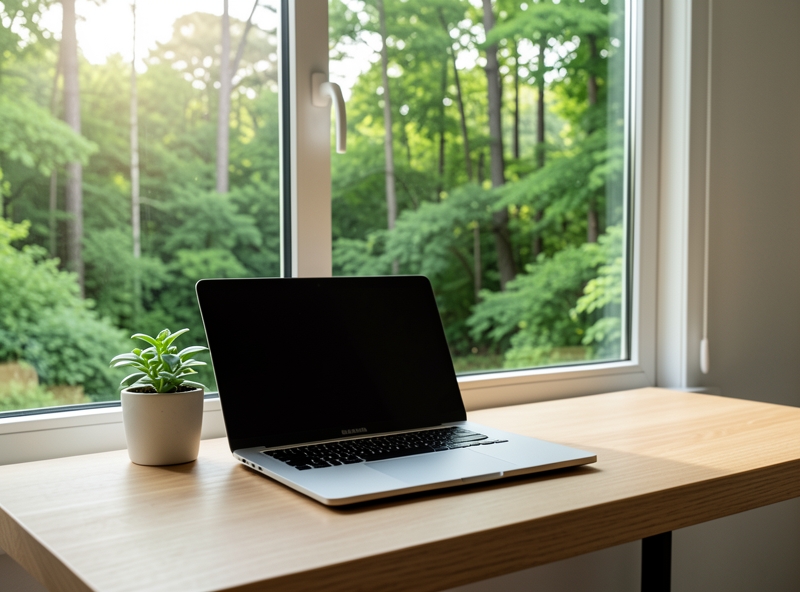
When practicing digital minimalism, we are clearing the "soil of our mind." A tidy, low-disturbance digital space is the prerequisite for achieving a state of Deep Work. This is the ability to work in a state of high concentration without distraction, allowing us to solve complex problems and achieve superior performance. Just as a stream can only flow swiftly and clearly when not blocked by debris, human cognitive ability only peaks when liberated from the fragmenting effects of technology.
"Digital minimalism is not about turning your back on technology, but about how we selectively choose tools that support our core values, instead of letting them master our lives."
| Aspect | Digital Overload State | Digital Minimalism State |
|---|---|---|
| Mental Health | Anxiety, insomnia, information burnout. | Calmness, clarity, increased resilience. |
| Work Performance | Shallow multitasking, prone to errors. | Deep focus, creativity, and breakthroughs. |
| Environmental Impact | Wasted energy storing digital junk. | Reduced digital carbon footprint, living more sustainably. |
To begin this journey, view digital devices as supporting tools rather than extensions of your body. Establishing tech-free periods during the day — much like allowing land to rest after each harvest — is how we regenerate energy and preserve the refinement of our perception. When the mind is no longer besieged by digital noise, we will begin to hear the voice of nature and the most authentic impulses from within ourselves.
- Turn off unnecessary notifications to protect the "ecosystem" of your attention.
- Prioritize face-to-face meetings and connecting with nature over virtual interactions.
- Regularly clean up files and emails to reduce the load on personal memory and global digital infrastructure.
2. Why Digital Distraction Prevents You from Succeeding?
Imagine your brain as a super-powered processor (CPU) with a high-performance multi-core architecture. However, instead of allocating all resources to a single critical "process" to achieve success (Deep Work), you are allowing a series of "background processes" from social media to hijack your bandwidth. This is not just a matter of willpower; it is a direct attack on the operational structure of your nervous system!
The first and most devastating mechanism is the "Context Switching Cost". In computer science, every time a CPU switches from one task to another, it must save the current state and load the new state into the cache memory. The human brain works exactly the same way! When you are writing a strategic report but glance at a "Like" notification on Facebook, you don't just lose those few seconds. In reality, the brain needs an average of 15 to 23 minutes to re-establish the original "flow state." This fragmentation of attention causes your "throughput" (output efficiency) to drop by up to 40%, turning you into a chronically bottlenecked processor.
| Technical Specifications | Deep Work | Digital Distraction (Fragmented) |
|---|---|---|
| Memory State (Cache) | Optimized, fully loaded with deep data | Constantly "overwritten" by junk data |
| Cognitive Bandwidth | 100% priority for core goals | Split across dozens of tabs and notifications |
| Latency | Ultra-low, sharp reflexes | High, due to time spent "reloading" context |
"Distraction is not just the enemy of productivity; it is a virus that attacks the ability for high-level logical thinking, transforming us from system 'designers' into 'hostages' of the algorithm."
Next, let's dissect Virtual Dopamine. Social media applications are designed based on "Variable Reward Schedules" – a highly sophisticated psychological technique to hack into the brain's reward system. Every "ding" triggers a short-term wave of Dopamine, causing the brain to "overclock" in momentary excitement. The consequence? The Prefrontal Cortex – the area responsible for long-term planning and decision-making – is weakened. You gradually lose the ability to persist with difficult goals because your brain has become accustomed to "cheap rewards" with zero latency.

Finally, digital distraction leads to the loss of Root Access over one's own mind. Instead of using technology as a "toolset" to serve personal goals, we unintentionally switch to "Passive Mode," allowing AI algorithms to navigate our behaviors, thoughts, and emotions. When you no longer control your attention – the most valuable asset in the knowledge economy – you are installing a pre-programmed failure script for yourself. To succeed, you must reclaim "priority" for the most important processes in the operating system of your life!
3. The 'Purification' Process of Digital Space to Regain Initiative
Have you ever felt like you just woke up, intended to pick up your phone just to check the time, and then suddenly "woke up" to find yourself scrolling through a total stranger's profile for 30 minutes? That feeling is like walking into a room full of dust, noise, and advertisements plastered all over the walls. We aren't just physically tired; our "digital minds" are becoming overloaded. Purifying your digital space isn't about extreme measures like deleting everything, but rather how we tidy up this "second home" to regain control of our own time.
"Attention is your most valuable asset. Don't let algorithms spend it wastefully for you."
Let's join me in refreshing this space through 4 extremely simple practical steps that bring about immediate and noticeable changes:
- Inventory and boldly "break up": Open the Screen Time settings on your phone. Which apps take up more than 2 hours of your day without providing real value? If there's a photo editing app or a game you haven't touched in 3 months, delete it. Seeing fewer icons on the home screen helps the brain reduce the pressure of choice.
- Establish a "Green Zone" without technology: I usually set an ironclad rule: the first 60 minutes after waking up and the last 60 minutes before going to bed are "offline" time. Instead of letting negative news cycles or work notifications flood my head as soon as I open my eyes, I choose to listen to light music or simply brew a cup of coffee.
- Optimize notifications - The "Only What Matters" Rule: Don't let your phone vibrate every time someone likes a photo or a shopping app sends a discount code. I have turned off notifications for most social networks. Only calls, messages from loved ones, or priority work apps are allowed to "knock on the door" of my mind.

In addition to organizing apps, cleaning up the "visual environment" on your computer is equally important. A desktop cluttered with files is like a desk covered in trash. You can refer to the comparison table below to see the difference between a chaotic digital space and a purified one:
| Category | Before Purification | After Purification |
|---|---|---|
| Notifications | Appearing constantly, causing immediate distraction. | Only show urgent messages/calls. |
| Home Screen | Full of apps, unnamed folders, cluttered wallpapers. | Minimalist, leaving only core work tools. |
| Social Media | Following hundreds of strangers, junk groups. | Only follow inspirational and educational sources. |
| Inbox (Email) | Thousands of unread promotional emails. | Unsubscribed from unnecessary newsletters. |
Cleaning your digital environment is actually cleaning your own mind. When the "pings" no longer bother you, you'll be surprised at how deeply you can focus. That is when creativity begins to return, because it finally has enough space to breathe.
4. Cultivating Deep Focus in a Minimalist Environment
In journeys along the Himalayas or while observing silk weavers in the ancient village of Kyoto, I realized a truth that has endured for centuries: Greatness never arises from distraction. Native masters always perform their work in a near-meditative state, where the surrounding space is filtered to the maximum to make room for the flow of creativity. Practicing "Deep Work" skills in a minimalist environment is how we re-establish internal order amidst an era of information fragmentation.
When redundant items are removed, the living and working space becomes a "sacred void." Here, the mind no longer has to expend energy processing noise signals from the environment. This is when we leverage the purity of space to achieve core goals, transforming time from a linear quantity into moments of absolute depth.

To establish a high-intensity focus session, you can apply the ritual of "thought explorers" through the following steps:
- Zoning boundaries: Define a fixed time slot in the day – ideally when your circadian rhythm is at its most alert – to enter a state of focus. Treat this as an important appointment with yourself that no one has the right to violate.
- Startup ritual: Just as a tea master performs the steps of brewing tea before enjoying it, create a brain-triggering signal for yourself: a hot cup of coffee, ten minutes of meditation, or simply clearing your desk.
- Eliminating digital noise: Disconnect all notifications. In a world of addictive algorithms, turning off the phone is not just a time-saving action, but a fierce resistance to protect freedom of thought.
"Concentration is the most precious currency of the new age. He who masters attention, masters his own destiny."
| Characteristics | Shallow Work | Deep Work |
|---|---|---|
| Environment | Highly distracted, multitasking. | Minimalist, single-tasking, quiet. |
| State of Mind | Reacting to external stimuli. | Proactively creating and solving difficult problems. |
| Value Created | Easily replaceable, low surplus value. | Unique, carrying a deep personal and intellectual imprint. |
Maintaining mindfulness in a world full of digital "Siren calls" requires the courage of a warrior. Algorithms are designed to exploit human psychological weaknesses, turning us into beggars seeking validation through every "like" or notification. To resist, we need to build the habit of "observing the craving." When the urge to check your phone arises, stand from the perspective of an anthropologist observing yourself, recognize it as a conditioned reflex, and smile as you let it pass. That is the moment you reclaim control from machines, to truly live and thrive in pure stillness.
5. Sustainable Benefits of Mastering Technology
After a period of persistently performing a "detox" of the virtual world, I realized an interesting truth: Mastering technology is not about learning how to use the most complex features, but knowing when to press the stop button. It is like clearing a room full of clutter to make way for light and fresh air. The result of this process is not just a change on your phone screen, but a profound transformation from within the mind.
The first benefit you will feel most clearly is a clear mind. Imagine our brain is like a computer with too many tabs open at once. Digital minimalism helps you close unnecessary tabs, freeing up "RAM" to focus on deeper thoughts. Instead of being constantly interrupted by notification sounds, you begin to rediscover the ability to focus long-term – a "superpower" that is gradually becoming a luxury in this day and age.
| Aspect | Before Mastering Technology | After Digital Minimalism |
|---|---|---|
| Mind | Always anxious, easily distracted, information overload. | Calm, clear, deep thinking. |
| Work | Virtual productivity (busy but ineffective). | Actual productivity, reaching "Flow" state easily. |
| Emotions | Easily influenced by social media comparisons. | Content with reality, truly connected with oneself. |
When the mind has calmed down, your work productivity will automatically skyrocket without needing any overly sophisticated productivity "hacks." You work not because of the pressure of rushing deadlines, but because of the excitement of truly immersing yourself in the task. One hour of high-intensity focused work will bring many times more value than eight hours of working while unconsciously scrolling through Facebook. You will be surprised to find that you have much more free time to read a book, take a walk, or simply sit and sip a cup of coffee without feeling restless.

"Digital minimalism is not about giving up technology, but about using tools intentionally to serve your core human values."
And perhaps, the most precious gift I received is a clear improvement in mental health. We escape the trap called FOMO (fear of missing out) to switch to JOMO (joy of missing out). You no longer feel the pressure to update every trend, no longer feel insecure when looking at other people's sparkling photos. Instead, you spend that time nurturing real relationships and listening to your inner voice.
- Presence: You are truly there when talking to loved ones, instead of talking while glancing at the screen.
- Deeper sleep: Staying away from blue light before bed helps the body recover naturally and wake up full of energy.
- Natural creativity: When not stuffed with borrowed information, your own original ideas have the opportunity to sprout.
Finally, remember that the phone or applications are only servants; don't let them become the master. When you learn how to use technology as a supporting tool – using it at the right time, stopping at the right place – you will see that this life is much vaster and more worth living than what is displayed on a few-inch screen.
6. Summary
A digital minimalist lifestyle is not merely a passing trend, but a natural human response to the overload of the technological age. Just as we choose organic food to protect our bodies or plant more trees to purify the air, setting boundaries with electronic devices is a way to preserve our mental energy. This philosophy guides us toward a sustainable balance: using technology as a supporting tool for growth, rather than letting it become an "invasive species" that hijacks our time and inner peace.
"Mastering your tools is the key to mastering your life. When we stop chasing mindless notifications, we begin to hear the heartbeat of nature and the true values we have always been seeking."
Every small action, such as turning off unnecessary notifications or dedicating an hour to "unplugging" each day, contributes to minimizing your digital footprint and the wasted energy consumption of massive data servers worldwide. This is a green living solution for the intellect, helping you free your brain space from information clutter, thereby focusing on the most important goals: health, relationships, and connection with the natural world.

The digital detox journey does not require you to completely reject convenience, but rather serves as an invitation to become more mindful. Start today with the smallest step to clean up the "living environment" on your devices. When digital space is restored to order, you will find your mind more open and your eyes sharper to see the beauty of a branch, a flower, and most importantly, to see your truest path of self-development. Do not let algorithms decide for you how to use your time – which is the most precious gift that nature has bestowed.
- Identify 3 essential apps and eliminate distractions.
- Establish a tech-free "green zone" in your home, especially in the bedroom and at the dining table.
- Spend at least 30 minutes a day connecting directly with nature instead of through a screen.