
1. Overview: The Importance of Body Language in Online Communication
The world has changed. The shift from face-to-face communication to the digital space is no longer a temporary trend but has become a new standard in work performance. In this environment, body language does not lose its value; on the contrary, it becomes the filter that determines your professionalism and credibility. You cannot rely solely on flashy presentation slides to persuade partners when your face and demeanor through the camera lens exude fatigue or lack of focus.
"In online communication, the digital frame is your only stage. Every small movement is magnified, and every lapse in attention becomes obvious."
Why does body language hold absolute dominance? Look at the classic Mehrabian rule: 55% of communication effectiveness comes from non-verbal elements (gestures, facial expressions, posture), 38% from tone of voice, and only 7% from the words themselves. When communicating through a screen, you are stripped of 3D space, making mastering this 55% more challenging than ever. If you do not proactively regulate your non-verbal behavior, your message will be diluted and lack weight immediately.

The biggest challenge lies in the "frame limitation." You have only a narrow space from the chest up to express all your energy and reliability. The limited field of view makes it difficult for others to catch small cues, leading to "Zoom fatigue." This requires high self-discipline in adjusting posture and eye contact to maintain a continuous connection.
| Element | Face-to-Face Communication | Online Communication (Challenges) |
|---|---|---|
| Eye Contact | Easy face-to-face connection. | Must look into the camera, not the screen. |
| Hand Gestures | Natural, wide range of motion. | Easily cut off from the frame, needs to be raised higher. |
| Posture | The whole body expresses energy. | Only focused on the upper body and shoulders. |
Don't let the digital frame become a cage that traps your abilities. Turn it into a tool to assert your confidence. To truly master this game, you need specific and decisive actions right now.
Action Plan:
- 1. Eye contact discipline: Stick a small decal next to the webcam to remind yourself to always look there instead of looking at your own image on the screen. This is the only way to create a real connection.
- 2. Frame optimization: Adjust the computer position so the camera is at eye level. Sit straight with shoulders open to create a Power Pose even when sitting.
- 3. Intentional gestures: When you want to emphasize a point, bring your hands into the frame clearly but not too abruptly to compensate for the lack of physical presence.
- 4. Expression control: Always maintain a cheerful facial expression and nod slightly when listening to confirm your active presence in the conversation.
2. Setting Up Space and Framing: The Foundation of Professionalism
In online communication, your frame is your "virtual office" and the first impression you project to your partners. Imagine setting up your frame as choosing a neat outfit before meeting a client; if that outfit is wrinkled or messy, your message, no matter how good, will easily be overlooked.
To build a professional presence, start with the smallest details in your space:
- Eye-level perspective: Position your camera so the lens is right at your eyebrow level. If the camera is too low, the other person will feel like you are "looking down" on them or staring at your chin. Conversely, a camera that is too high makes you appear small and indecisive. A laptop stand or simply a few stacked books can be a powerful "assistant" in creating a face-to-face dialogue as authentic as sitting at the same coffee table.
- Mastering the lighting: Lighting in communication acts as an emotional "filter." Prioritize a light source that shines directly on your face (such as sitting across from a window or using an LED light) instead of having light behind your back. Sitting against the light turns you into a "mysterious dark figure," making it impossible for listeners to observe your eyes and expressions—two key elements for building trust.
- The "Golden Distance" rule: Don't sit too close to the screen, causing your face to fill the entire frame and creating a suffocating feeling. Lean back so that the frame captures you from the chest up. This distance allows you to use body language (hand gestures) naturally, making your story more vivid and persuasive.
"In the digital world, your frame is your professional demeanor. A tidy space and clear lighting tell the other person: I respect you, and I am serious about this conversation."
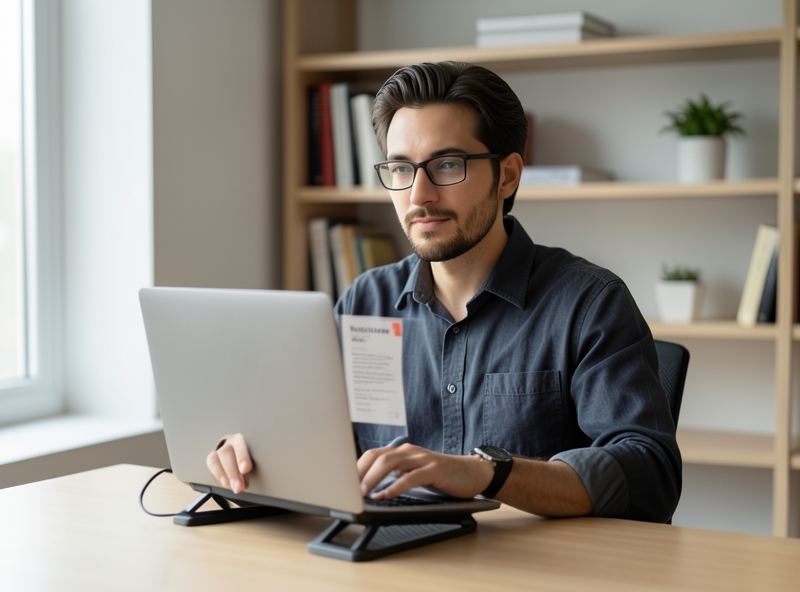
Finally, choose a simple and tidy background. The background doesn't need to be a massive library or a luxurious office; it just needs to be clean and free of distracting details (like unfolded laundry or people walking behind you). A neutral background acts as a visual acoustic panel, helping the person opposite you focus entirely on the content you share instead of being preoccupied with what's happening behind you.
| Element | Common Mistakes | Professional Solutions |
|---|---|---|
| Camera Angle | Placing the device low, showing the ceiling. | Eye-level, parallel to the face. |
| Lighting | Sitting against the light (window behind your back). | Light source in front or at a 45-degree angle. |
| Background | Cluttered belongings, causing distraction. | Flat wall, tidy bookshelf, or blurred background. |
3. The Art of Eye Contact and Facial Expressions Through the Lens
In the era of online meetings, connection is no longer measured by physical distance but by how we present ourselves within the frame. A person pursuing a minimalist lifestyle understands that there is no need for elaborate lighting equipment or extravagant backdrops to make an impression; the core value lies in the sincerity conveyed through the eyes and the most natural expressions.
The most important yet often forgotten technique is looking directly into the camera lens instead of at the other person's image on the screen. When you look at the screen, the other person sees your eyes looking downward, creating an invisible gap. Conversely, focusing on the tiny "black dot" of the camera is how you look straight into the eyes of the person opposite you, establishing a deep soulful connection and showing absolute respect for them.

Beside eye contact, smiles and micro-expressions serve as the most powerful non-verbal language. Within a limited frame, every small facial movement is amplified. A gentle smile, stemming from inner peace, is worth more than a thousand flowery words. It dissolves the coldness of technology and builds trust naturally.
| Element | Common Habits | Refined Technique (Minimalist approach) |
|---|---|---|
| Point of Focus | Looking at the image on the screen. | Looking directly into the camera lens. |
| Expression | Over-expressing or being stiff. | Keeping a relaxed face and a natural smile. |
| Presence | Easily distracted by computer notifications. | Removing all distractions, focusing on the conversation. |
Controlling micro-expressions does not mean hiding emotions. Instead, it is the observation and adjustment so that the face always reflects a calm attitude and active listening. When you eliminate anxieties about your appearance and focus on the true purpose of the communication, your expression will become more graceful and trustworthy than ever.
"The most authentic connection does not come from what we try to show, but from the stillness and sincerity in our eyes when we are truly present for others."
Practice looking into the camera as a mindfulness habit. This not only helps you communicate information effectively but is also a way for you to save energy for both yourself and the listener, creating a quality dialogue space with minimal noise and full of understanding.
4. Optimizing Hand Gestures and Seating Posture to Increase Persuasion
If words are notes, then hand gestures and seating posture are the framework that helps the music resonate with depth. Imagine watching a movie where the picture and sound don't match; you'd feel incredibly uncomfortable. In communication, it's the same: when the body "says" one thing but the mouth "says" another, the listener will immediately feel doubtful.
Your hands are not just for gripping; they are "highlighting tools" for the content you are conveying. To optimize hand gestures, consider the space in front of you as a small photo frame from your chest to your waist. This is the most effective "impact zone":
- Bring your hands into the frame: When in an online meeting or face-to-face, keep your hands within the other person's line of sight. Don't hide them under the table as if you're concealing something. Open hands with palms facing up are like an invitation to trust.
- Illustrate with imagery: When talking about growth, move your hands in an upward direction. When discussing two opposing views, use both hands to define the space. This helps the listener's brain "see" your thinking, turning abstract concepts into concrete shapes.
- Avoid "closed" gestures: Crossing your arms over your chest or interlocking your fingers often creates an invisible wall, making your message feel distant and defensive.

Along with your hands is your seating posture – the "antenna" that transmits and receives your energy. A proper seating posture not only makes you look more professional but also directly impacts your internal confidence. Apply the "leaning slightly forward" rule:
Keep your back straight as if an invisible string is gently pulling the top of your head upward. When you lean slightly toward the other person (about 10-15 degrees), you are sending a non-verbal signal: "I am truly listening, and this content is very important to me." This is like pressing the "Zoom" button on a camera lens to focus entirely on the subject.
| Factor | Negative Gestures (Avoid) | Persuasive Gestures (Do) |
|---|---|---|
| Hands | Tapping a pen, shaking legs, constantly touching your face. | Open palms, moving rhythmically with speech. |
| Back & Shoulders | Leaning back excessively or slouching. | Keep back straight, shoulders relaxed but not slumped. |
| Orientation | Turning away from the other person. | Lean slightly forward to show receptivity. |
Small gestures like shaking legs, spinning a pen, or constantly adjusting your clothes are "noise" that dilutes your message. They betray nervousness or impatience. Instead, the stillness of the body combined with purposeful hand gestures creates a calm, weighty presence.
"Our bodies tell the truth even when our lips try to hide it. A steady seating posture and open hands are the keys to opening the door of trust from the other person."
5. Common mistakes and how to fix them to maintain engagement
Communication is not just about conveying information; it is a battle for attention and trust. In a fast-paced work environment, even a small mistake is enough to destroy all your relationship-building efforts. It's time to face the silent "killers" that are stifling engagement and destroying your professionalism.
"Engagement doesn't come from mere words; it comes from the discipline of presence and consistency in demeanor."
The Multitasking Trap: Don't let your eyes betray you
Many people mistakenly believe that texting while listening is a sign of efficiency. Wrong! When you multitask, your gaze becomes distracted and lack direction. In communication, especially via video call, the camera is the other person's eyes. Looking down at your phone or glancing at another tab on the screen sends a silent message: "You're not important enough for me to focus on." This destroys connection faster than any argument.

Handling technical issues with a leader's demeanor
Network lag, frozen images, or audio delays are real tests of your character. Unprofessional people often panic, get flustered, or show clear discomfort on their faces. In contrast, a master communicator maintains their composure. If an issue occurs, pause for 2-3 seconds to stabilize, smile gently, and briefly announce the status instead of trying to talk over static. Poise in the face of adversity is how you assert your credibility.
The misalignment between tone and body language
You cannot inspire with an enthusiastic voice while your shoulders are slumped and your face is expressionless. The correlation between tone and body language must be 1:1. If you are talking about an important goal, your body must lean forward, and your voice must be sharp and decisive. Any misalignment makes the listener feel you are being fake or lack confidence in the content you are presenting.
| Common Mistakes | Consequences | Solutions |
|---|---|---|
| Multitasking | Loss of connection, the other person feels disrespected. | Turn off all notifications, look directly into the camera/the other person's eyes. |
| Overreacting to technical issues | Disrupts the emotional flow, shows a lack of self-control. | Use smart pauses, smile, and reconfirm the information. |
| Voice and body language inconsistency | Causes doubt about honesty and competence. | Adjust to a straight sitting posture, use hand gestures to emphasize words. |
Action Plan: Discipline for Breakthroughs
Don't just read, act immediately to upgrade your skills:
- 1. 5-Minute Mirror Exercise: Perform a short speech in front of a mirror, observing the correlation between facial expressions and voice tone. Adjust until they merge into one.
- 2. "Camera First" Principle: In every online meeting, place a small sticker right next to the camera to remind yourself to always look there instead of at your own image on the screen.
- 3. Issue Response Script: Prepare 2 polite phrases to handle connection loss (Example: "I just had a signal interruption; I will summarize the previous point so we don't miss any information").
- 4. Absolutely No Touching the Phone: During the entire communication time, place your phone face down or keep it out of sight to eliminate all multitasking temptations.
6. Summary
The journey of human communication, from the flickering flames in the Altamira caves to cross-continental binary codes, has never stopped evolving. Optimizing your online presence is not merely a technological trick, but a continuation of the instinct to build community in a new era. For each individual to truly "be present" amidst the vast digital space, we must remember core archetypes:
- Transparency in identity: Much like how ancient travelers carried tokens, your online profile must be the most authentic translation of your capabilities and life attitude, not a soulless mask.
- Subtlety in digital etiquette: Every email, every message carries the "atmosphere" of the sender. Respecting the time and privacy of colleagues is the highest expression of professionalism.
- Consistency in messaging: Trust is built through steady responses, creating a stable "heartbeat" in a remote working environment.
In the labyrinth of liquid crystal screens, "Digital Body Language" is the warmth that helps humans recognize one another. It is the sensitivity in choosing words, the rhythm of punctuation, or the empathy hidden behind emojis. This is not an innate talent but a "craftsmanship" of the soul, requiring patient and continuous practice.
"In a world of physical distances, digital body language is the only bridge that helps us reach the resonance of our fellow humans."
History has proven that the most successful individuals or tribes are always those who adapt fastest to new modes of communication. In a remote work environment, where the boundaries between time zones and cultures are blurring, mastering online communication skills not only helps you advance, but also helps you maintain the thread of human connection – which has essentially been the soul of every civilization from the dawn of time until now.