1. The Power of Environment and the Limits of Willpower
How many times have you promised yourself to wake up at 5 AM, give up sweets, or focus on work without touching your phone, only for everything to go back to the way it was after just a few days? Do not be quick to blame your own laziness or lack of discipline. The biggest mistake most people make when trying to develop themselves is relying too much on willpower.
Willpower is not an eternal moral quality. Biologically, willpower is a finite physiological resource, operating much like a phone battery. Every decision you make throughout the day—from choosing clothes, suppressing anger with a colleague, to turning down a pastry—drains this battery. This phenomenon is referred to by psychologists as "Ego Depletion". When night falls, your mental energy hits rock bottom, and that is when all disciplined commitments completely collapse.
"We do not rise to the level of our goals, we fall to the level of our systems."
Instead of turning life into an endless internal war against temptation, the most successful people choose a smarter strategy: Environmental Design. Designing your environment means proactively arranging your living and working space so that good behaviors become as easy as possible, and bad behaviors become as difficult as possible.
To clearly understand the fundamental difference between relying on willpower and mastering your environment, look at the comparison table below:
| Comparison Criteria | Relying on Willpower | Designing the Environment |
|---|---|---|
| Operating Mechanism | Forcing oneself to make an effort to carry the burden and resist temptation. | Automating behavior by eliminating distractions. |
| Energy Consumption Level | Extremely high, easily leading to burnout and mental stress. | Nearly zero, actions happen as naturally as breathing. |
| Long-term Sustainability | Fails when facing life pressures or physical fatigue. | Maintained permanently because it does not depend on emotional states. |
| Real-life Example | Leaving the phone right on the desk and promising "not to open social media." | Putting the phone in another room or using a phone-locking app while working. |
If you want to change your behavior, stop forcing yourself to try harder. Instead, restructure the world around you through two core principles:
- Reduce friction for good habits: If you want to drink more water, place a large water bottle right on your desk within arm's reach. If you want to exercise tomorrow morning, lay out your workout clothes next to your bed the night before.
- Increase friction for bad habits: If you want to scroll through your phone less pointlessly, set a complex password and hide it deep in a locked cabinet. If you want to stop snacking, absolutely do not buy sweets to stock in the fridge.
The environment is always stronger than willpower. When you build a living space that supports your goals, personal development is no longer a self-inflicted torment, but becomes an inevitable consequence.
2. Core Principle: The Law of 'Friction' in Behavior
Have you ever wondered why clicking "Confirm Order" on your phone takes only 3 seconds, while opening a book to read costs you an hour of mental struggle? The harsh truth: The human brain is incredibly lazy. It is biologically programmed to always choose the path of least resistance. This invisible resistance is "Friction" — the core variable that determines whether you will build an outstanding habit or continue to sink deeper into self-destructive ones.
"Don't try to change your willpower when your surrounding environment hasn't changed. Redesign the friction, and behavior will automatically follow."
Willpower is a finite resource, and it depletes by the end of the day. The most disciplined people are actually not those with iron willpower, but those who are masters in designing their living environment to minimize friction for productive tasks, while building giant walls of friction in front of temptations.
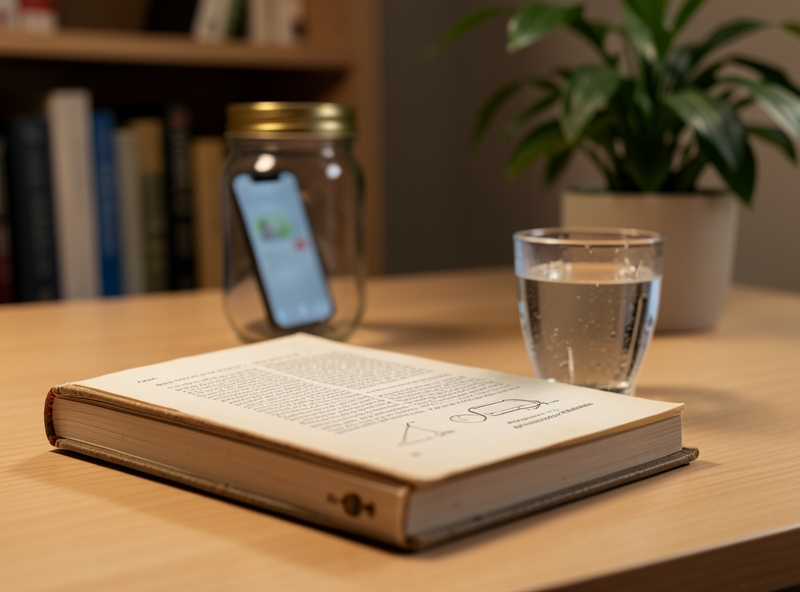
To break the inertia of procrastination and reshape yourself, you need to operate both the push and pull mechanisms below simultaneously:
| Operating Mechanism | Core Goal | Psychological Impact | Optimal Practical Example |
|---|---|---|---|
| Minimize Friction | Make good habits as easy as possible. | Eliminate procrastination from the very first second (The 2-Second Rule). | Lay out workout clothes right next to the bed before going to sleep. |
| Maximize Friction | Make bad habits as troublesome and difficult as possible. | Create a cognitive pause to prevent impulsive behavior. | Leave your phone in another room or use an app locker after 10 PM. |
Mechanism 1: Reduce Friction for Good Habits — Make Good Actions as Easy as Possible
Every buffer step, every second of thinking, every preparatory action is a friction point. If you want to exercise in the morning but your running shoes are tucked deep in the closet, your clothes are unwashed, and the weather outside is cold — you have created a massive chain of friction. The brain will immediately surrender and choose to stay in bed.
Apply the minimalist flow principle: Remove all obstacles between you and the behavior you want to perform. If you want to drink more water, place a large water bottle right on your desk, right in your line of sight. If you want to write every day, always keep the text editor tab open on your computer screen. When friction approaches zero, action happens as a natural reflex.
Mechanism 2: Increase Friction for Bad Habits — Make Bad Actions Extremely Troublesome
Conversely, the only way to eliminate a bad habit is not through vows or self-blame, but by weaponizing inconvenience. You need to insert as many extra steps, physical, and psychological barriers as possible between you and that bad behavior.
If you are addicted to mindlessly scrolling social media, turning off notifications is still not enough — the friction is too low. Log out of your accounts, delete apps from your home screen, or even change your password to an extremely long and complex string of characters stored somewhere else. When the craving arises, the hassle of having to retype a long password will activate the rational part of your brain, helping you stop in time. You don't have to fight temptation; you just need to make accessing temptation so exhausting that your brain automatically gives up.
3. Restructuring your living space to nurture a healthy lifestyle
You fail to maintain a healthy lifestyle or exercise not because you lack discipline. The truth is you are fighting a losing battle against your own living environment. When mental energy is depleted at the end of the day, the brain automatically selects the behavior that requires the least effort. If the first thing you see when you open the fridge is a can of soda, and your yoga mat is gathering dust deep in the back of the closet, you are bound to fail.
If you want to change your behavior naturally and sustainably, stop relying on willpower. Instead, become a choice architect of your own life by redesigning your physical space according to the core principle: Decrease friction for good habits and maximize friction for bad habits.
"We do not change our lives by first changing our thoughts; we change our lives by changing the structure of the space that surrounds us."
| Area | Old Setup (Triggering bad habits) | New Restructuring (Creating good habits) |
|---|---|---|
| Kitchen | Fast food and sweets placed right on the dining table or at eye level in the refrigerator. | Place a basket of fresh fruit in the most visible spot. Put sweet treats in opaque containers placed deep in a hidden corner. |
| Bedroom | Keeping the phone on the bedside table, a messy room, and a TV facing the bed causing sleep difficulty. | Minimalizing clutter, moving electronic devices outside, and laying out a yoga mat right next to the bed. |
| Workspace | Keeping too many entertainment browser tabs open with your phone screen constantly lighting up nearby. | Keep only work-related items, turn off all notifications, and place a large water bottle right at your right hand. |
To begin this living space revolution, immediately apply these three strategic changes below:
1. The kitchen: Reverse the visual stimulation system. The human brain operates heavily on visual cues. Place a vibrant basket of fresh fruit right at the center of the dining table or kitchen island—where you always pass by whenever you are hungry. Conversely, gather all fast food, instant noodles, and processed foods into an opaque, closed container and store it in the highest or deepest cabinet. Adding a few seconds of "friction" (having to get a chair, open the box) will effectively curb emotional cravings.
2. The movement corner: Set the "activation threshold" to zero. Procrastination often occurs in the gap between when you intend to workout and when you actually start. Eliminate this gap by laying out your yoga mat right next to your bed the night before, placing your running shoes and workout clothes right in your path. When you step out of bed in the morning, the first thing you touch is the workout mat. The brain will automatically bypass the mental struggle of "should I work out or not" and move straight into action mode.
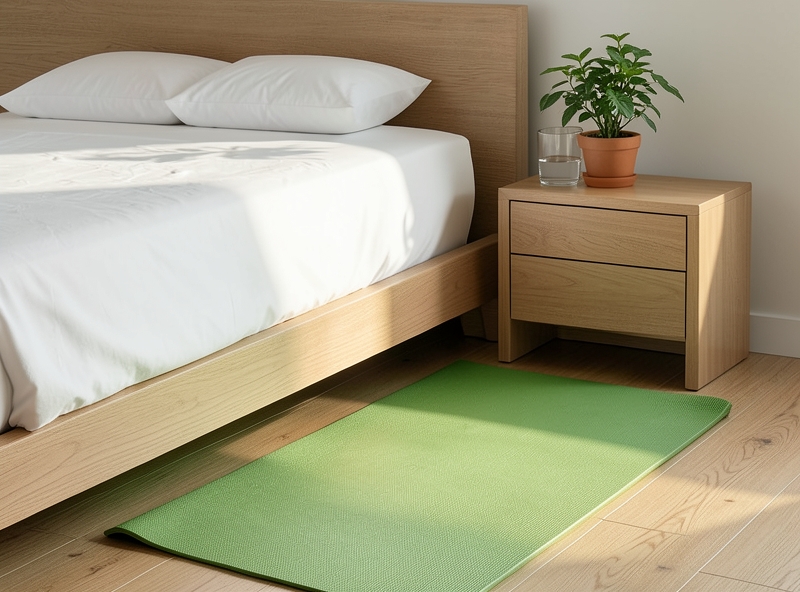
3. The minimalist bedroom: A sanctuary for recovery. Sleep quality determines up to 80% of your focus and emotional control the next day. Turn your bedroom into a tech-free "oasis" by removing the TV, computer, and absolutely not charging your phone by the bed. Use total blackout curtains and clear all unnecessary clutter from table surfaces to reduce the information processing burden on your prefrontal cortex before sleep. When the surrounding space is quiet and minimalist, your nervous system will automatically understand that: It is time to turn off survival mode and enter a phase of deep recovery.
4. Designing a Workspace That Triggers Deep Focus
You sit down at your desk with high determination, but just 5 minutes later, your fingers are unconsciously scrolling through Reels or tidying up a stack of old papers. This is not a failure of willpower, but rather a failure in environmental design. Our brains operate on ancient biological mechanisms: prioritizing tasks that consume less energy and offer instant dopamine rewards. If a distraction is within sight, it will win.
To trigger a flow state in under 90 seconds, you need to restructure both your physical and digital spaces according to this principle: Increase friction for distractions and decrease friction for important tasks.
"We don't need more discipline. We need a smarter environment where focus is the default option."
1. Set Physical Boundaries: Shaping Conditioned Reflexes
The brain is an incredibly sensitive association machine. If you work in bed, your brain confuses the hormones melatonin (which induces sleep) with cortisol (which induces focus). As a result, you end up working inefficiently while suffering from insomnia. Apply the "One Area - One Goal" rule immediately:
- Absolute Boundary: Only work at your desk. When you stand up to take a break, scroll on your phone, or eat, leave that chair. Turn your work chair into a "sanctuary" where, when you sit down, your brain automatically understands: It is time to produce.
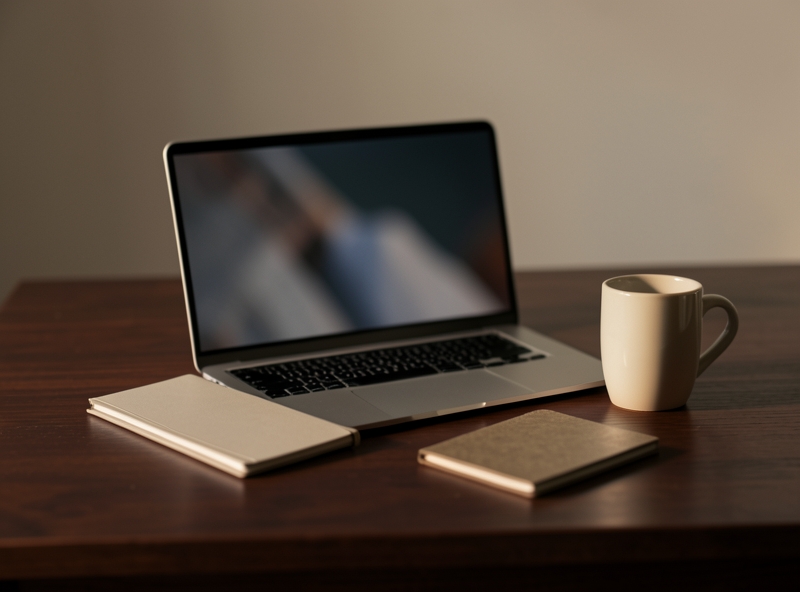
- Visual Minimalism: Only 3 things are allowed on your desk: a computer, a glass of water, and a quick note-taking tool (a notebook or a sketchpad). Everything else, such as bills, keys, and snacks, must be cleared away or stored in a closed cabinet. What the brain cannot see, it will not process.
2. Set Digital Filters: Disarming the Dopamine Casino
The smartphone was designed by the world's top engineers with a single goal: to hijack your attention. To regain control, you must weaponize your technology settings:
- Hide Addictive Apps Deeply: Delete social media icons from your home screen. Move them deep inside an unnamed folder on the third page. Having to tap 3-4 more times to open an app creates "mental friction," which is enough for your conscious mind to intervene and stop the unconscious behavior.
- Enable Grayscale Mode: Removing all vibrant colors makes red notifications or short videos lose 80% of their visual appeal. The phone will now become as boring as an old print newspaper.
- Restructure the Notification Bar: Turn off all notifications from shopping apps, social media, and news. Only keep urgent calls from family or important partners during work hours.
| Impact Factor | Distracted State (Easy to Give Up) | Deep Focus State (Flow State) |
|---|---|---|
| Desk | Cluttered with old papers, empty cups, phone right next to your hand, messy cables. | Only a computer, a notebook, and water. Phone kept in a drawer or another room. |
| Phone Screen | Vibrant colors, continuous push notifications from Facebook, TikTok, Shopee. | Grayscale mode, all entertainment apps hidden, Do Not Disturb mode turned on. |
| Ambient Sound | TV noise from the other room, pop music with lyrics grabbing the brain's attention. | Instrumental music (Ambient, Lo-fi, Binaural Beats) or white noise at 50% volume. |
By synchronizing both your physical and digital environments, you no longer have to struggle against temptation every day. Smart space design is the most effective lever to make your productivity surpass 99% of those around you.
5. Summary: Be the Architect of Your Own Behavior
You do not lack discipline. You only lack an environment designed for success. Trying to use willpower to resist the temptation of constant phone notifications, a fridge full of sugary treats, or a cozy bed is a battle you are bound to lose.
The highest performers do not possess extraordinary superpowers. Their secret lies in this: they design their surroundings to make positive behaviors as easy as possible, and bad habits as difficult as possible. Instead of being a victim of your circumstances, it is time to step up and become the architect of your own life.
| Victim of Circumstance (Reactive) | Behavioral Architect (Proactive Design) |
|---|---|
| Leaving the phone right on the desk and hoping not to touch it. | Keeping the phone in another room or locked in a drawer when deep focus is needed. |
| Waiting for inspiration or motivation to strike before starting to work. | Setting up a dedicated workspace, turning on a focus playlist to trigger the brain. |
| Buying snacks and keeping them in plain sight, then blaming yourself for lacking self-control. | Not stocking processed foods, keeping only fresh fruit on the kitchen counter. |
Willpower is a finite resource, and it depletes by the end of the day. When you are tired, your brain always tends to choose the path of least resistance. Therefore, setting up visual environmental cues is the only way to help you maintain iron discipline without spending mental energy on internal struggles.
To create long-term, effortless self-discipline, start today with tiny changes based on the principle of adjusting behavioral friction:
- Increase friction for bad habits: Unplug the TV after every use, set an extremely long password for social media apps, or delete them from the home screen.
- Decrease friction for good habits: Leave the book you want to read open to the next page right on your pillow, fill a water bottle and place it in front of you before sitting at your desk.
- The 2-Minute Rule: When starting a new habit, structure it so that it takes less than two minutes to do. Don't force yourself to run 5km, just start by putting on your running shoes.
"Don't try to change who you are, change the environment in which you operate."
The journey of breaking your own limits does not begin with grand vows. It starts with you rearranging the world around you so that every right decision becomes the most obvious choice. Stop fighting yourself and start creating a new behavioral structure right now.