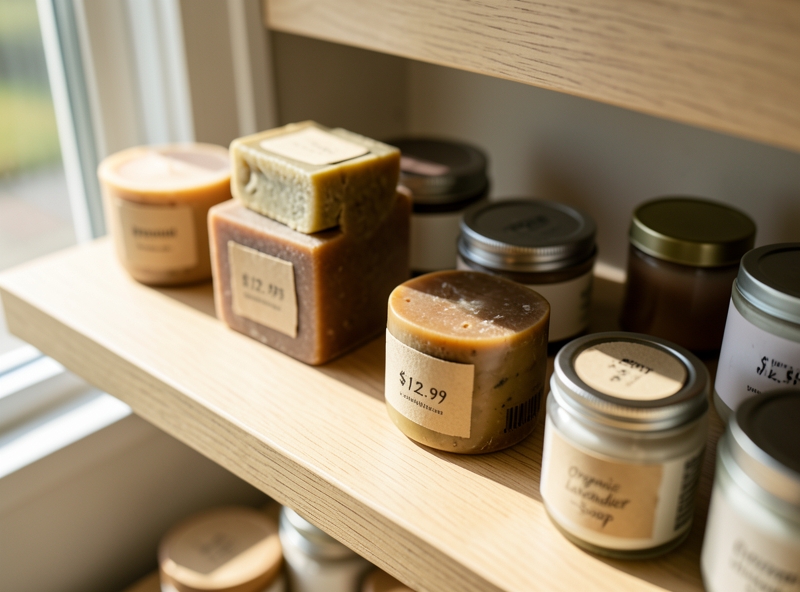
1. What is an In-store Customer Journey Map?
Do you know why hundreds of customers walk into your store every day, but only a few make it to the checkout counter? They aren't complaining about high prices, nor do they lack need. They leave empty-handed because they hit an "emotional bottleneck" in some hidden corner of your retail space that you aren't even aware of. This is when small businesses need a practical tool: an In-store Customer Journey Map.
In the most practical terms, an in-store customer journey map is a diagram that visualizes the buyer's entire experience. It doesn't just record physical movements from the entrance inward; more importantly, it deconstructs the customer's thoughts, emotions, pain points, and behaviors at each specific touchpoint.
"In a physical retail space, every square foot must pay for itself with revenue. A journey map is the microscope that helps you clearly see where cash flow is moving or where it is getting stuck."
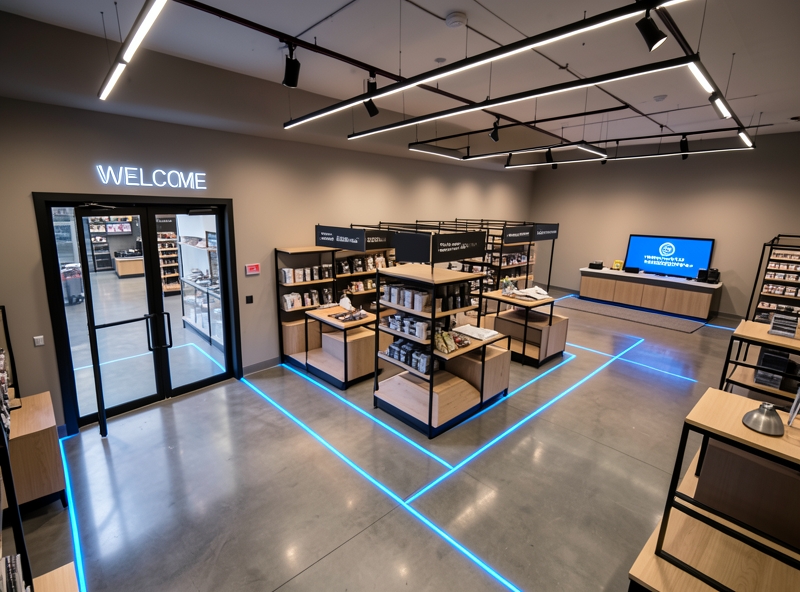
To optimize revenue, you cannot manage your store by intuition. Clearly identifying the touchpoints directly determines the conversion rate of a retail shop:
- Storefront Touchpoint (Facade & Mannequins): The decisive point where customers choose to walk in or bypass. The visual experience here must spark curiosity within the first 3 seconds.
- Navigation Touchpoint (Aisles & Layout): The way you arrange shelves guides customers along your desired route. Aisles that are too narrow or cluttered will cause frustration, making customers want to exit faster.
- Interaction Touchpoint (Product Experience & Sales Assistants): Where customers touch, try, and evaluate quality. A poorly-timed smile from a staff member or a dimly lit fitting room can instantly kill a transaction.
- Decision Touchpoint (Checkout Counter): The final but most vulnerable touchpoint. Long queues and slow payment processes will make customers regret their purchasing decisions.
| Journey Stage | Common Bottleneck (Pain Point) | Impact on Revenue |
|---|---|---|
| Approach (Parking & Entrance) | Inconvenient parking, heavy entrance doors, or creating an intimidating feel. | Losing 20% - 30% of foot traffic right from the outer ring. |
| Discovery (Display Area) | Best-sellers placed too high or too low, pricing tags are unclear. | Customers fail to find what they need, reducing average order value. |
| Consideration (Fitting Room/Experience) | Cramped fitting rooms, unflattering mirrors, lack of staff assistance for sizing. | Cart abandonment rate spikes even though customers had a clear purchase intent. |
| Checkout | Long queues, lack of diverse transfer/card payment options. | Customers leave products right at the cashier counter due to impatience. |
Mastering the customer journey map is not the exclusive privilege of large corporations. For small businesses with limited resources, optimizing even the smallest touchpoints is the shortest lever to double conversion rates without burning more money on advertising.
2. The Approach Phase: Attracting Customers Before They Enter the Shop
Are you spending tens of millions of dong on online advertising yet your physical store remains empty? Hundreds of passersby walk past every day, glancing and then sweeping right by like a gust of wind. The harsh truth is: Customers decide to enter your shop within the first 3 seconds, even before they know what you sell inside. If the storefront fails, all subsequent operational efforts are meaningless. Stop wasting resources and start optimizing every millimeter of the exterior approach area.
The Window Display is not a place to dump excess products; it is a storytelling stage. A mannequin dressed in outdated clothes or a dusty glass cabinet will instantly brand your label as "obsolete." The golden rule here is "One Focal Point": Focus high-intensity lighting and arrange your Hero Product at the eye level of passersby (around 1.5m - 1.7m from the ground). Instead of cramming items in, leave negative space so that the customer's eyes have a place to rest and are drawn to the core message.
Signage and storefront lighting act as a guiding lighthouse. Faded signs, missing letters, or overly complex fonts only confuse passersby, causing them to walk right past. The storefront lighting system needs to achieve a minimum contrast ratio of 3:1 compared to the surrounding environment at night. Warm light (3000K) creates a luxurious, welcoming feel for fashion and cosmetics shops; while natural white light (4000K - 5000K) stimulates a modern, clean vibe for convenience and technology stores. Never cut operational costs on storefront lighting unless you want your shop to look like it has closed down.

The parking lot is the biggest physical barrier stopping purchasing decisions. Customers are incredibly lazy and dislike inconvenience. A narrow entrance, no room to turn vehicles around, or the lack of a friendly security guard to help park will make them immediately abort their plan to enter your shop and head to a more convenient competitor instead. The actual shopping experience begins the moment the customer's tires touch the parking line, not when they step through the glass door. Ensure that the parking area is always clear, clearly marked, and closely secured.
"Customers do not buy your product at the very first step; they buy the peace of mind and convenience that the storefront promises to deliver."
To optimize comprehensively, businesses need a visual comparison between a weak operational model and an optimized model for approach touchpoints:
| Touchpoint Element | Common Mistakes (Losing Customers) | Optimal Solutions (Increasing Conversions) |
|---|---|---|
| Signage & Lighting | Dark, hard-to-read fonts, old or broken/incomplete signs. | Bright, high contrast, clearly stating the business category right on the sign. |
| Window Display | Cluttered with too many items, dusty, lacking a clear theme. | Displayed according to periodic concepts, focusing on 1 "hook" product. |
| Parking Area | Messy, no guider, creating a feeling of insecurity. | Clearly marked lines, security guards proactively assisting with parking and shading motorcycle seats. |
| Online Synchronization | Incorrect Google Maps information, actual storefront looks far different from online photos. | Synchronized location, accurately updated opening hours, and consistent real-life photos. |
Finally, the disconnect between the online and offline experience is a silent killer of trust. Most customers search for locations on Google Maps or follow promotional campaigns on social media before deciding to travel to the store. Imagine their anger when the GPS leads to the wrong address, the shop is closed even though it says "open" online, or the actual storefront is run-down and looks completely different from the sparkling photos on social media. Keep real-time information synchronized, update sharp facade photos on your Google Business Profile and online media channels to create a seamless, flawless customer journey.
3. The Experience Stage: Interacting and Driving Purchase Decisions Inside the Store
More than 80% of small business owners make a fatal mistake: spending their entire budget to pull customers into the store, only to let them leave empty-handed because of terrible in-store experiences. The moment a customer steps through the door, a silent psychological battle begins. If the designed space is too suffocating, if staff follow them around like a "stalker", or if the aisles are too confusing, customers will immediately activate their defense mechanism and leave.
To turn a physical space into an automated "sales machine", small businesses need to optimize precisely the following 5 experience touchpoints.
The Art of Navigation: Designing a "Flow" to Retain Customers
When customers walk in, they need the first 3 to 5 seconds to adapt to the lighting and atmosphere. This is called the Decompression Zone. Absolutely do not place any key products or promotional signs in this area because customers will completely ignore them. Instead, guide them with a scientifically designed path.
- The Right-Turn Rule: The majority of customers tend to turn right after entering. Place your highest-margin products or newest collections on the right side of the entrance.
- Eliminating the "Butt-Brush Effect": If aisles are too narrow, causing customers to be bumped from behind while browsing, they will leave immediately. The minimum aisle width must be 1.2 meters to create a sense of safety and comfort.
- Focal Points at the End of Aisles: Place visually appealing products at the end of each shelf row to stimulate customers to keep walking deeper into the store.

Sensory Stimulation: Sound, Scent, and Sight
Customers shop with emotions, and emotions are triggered directly by the senses. A well-designed space has the ability to increase sales by up to 40% without the need for discounts.
Visual Merchandising: Apply the Rule of Three. The human brain tends to remember and be attracted to groups of three products placed next to each other in ascending height. At the same time, use warm yellow light (3000K) shining directly on the target products to create a sense of luxury and stimulate the desire to own them.
Sound Frequency and Scent: Fast-paced music makes customers move faster and buy less. Conversely, slow-tempo instrumental music (under 60 BPM) keeps them 18% longer. Combining this with a signature gentle scent like cedarwood or white tea will create a memory anchor, keeping your brand top-of-mind.
"Customers may forget what you said, forget what you did, but they will never forget how your space made them feel."
Abandoning the "Predatory" Mindset in Sales Consulting
The biggest mistake of sales staff at small businesses is constantly asking: "How can I help you find today?" as soon as the customer walks in. This question accidentally creates huge psychological pressure. Shift from a "predatory" mindset (forcing a purchase) to a "guide" mindset (helping).
Train staff to apply the "Respectful Distance" rule: Let customers explore freely for the first 2 minutes. When you see a customer stop in front of a product for more than 10 seconds or touch the label, that is the time for staff to approach with a story or an interesting piece of information about the product, instead of trying to close the sale immediately.
| Experience Touchpoint | Common Mistakes That Lose Customers | Optimal Solutions for Conversion |
|---|---|---|
| Aisles & Layout | Winding, narrow aisles, displaying too much merchandise causing overwhelm. | Apply an open, clear traffic flow layout, keeping a minimum distance of 1.2m. |
| Product Display | Arranging merchandise flatly and uniformly like in a warehouse. | Display according to the Rule of Three, layering heights, and using spotlighting. |
| Sound & Scent | Playing loud trending music, neglecting musty odors. | Slow-tempo instrumental music (under 60 BPM), using natural essential oil diffusers. |
| Staff Attitude | Following customers closely, asking rapid-fire questions, or being indifferent and browsing phones. | Observe from a distance, approach at the right moment when customers signal deep interest. |
By synchronizing all touchpoints from sight and sound to staff behavior, your store will no longer be a mere product showroom. It will be a premium experience space where customers voluntarily open up and make purchase decisions in the most natural way.
4. The Payment and Post-Purchase Stage: Touchpoints for Retention and Loyalty
Have you ever calculated how many customers silently abandon your store right at the checkout step, or never return simply because of indifference after money has changed hands? Most small businesses pour their entire budget into advertising to attract new customers, but let revenue leak severely at the final yards of the shopping journey. The cashier counter is not just a place to collect money; it is where the customer's final memory of the brand is shaped.
A delayed payment process, a lack of modern payment methods, or an unintentional frown from a cashier can wipe out all previous image-building efforts. To optimize this sensitive touchpoint, businesses need to synchronize three core elements at the checkout counter.
| Impact Factor | Bottlenecks Causing Customer Loss | Solutions for Optimizing Conversion |
|---|---|---|
| Payment Speed | Waiting in lines, laggy POS systems, manual operations taking 3-5 minutes per transaction. | Apply automatic barcode scanning technology, upgrade to cloud-based POS software, and limit processing time to under 1 minute per customer. |
| Payment Methods | Only accepting cash or manual bank transfers by entering troublesome account numbers. | Integrate multi-channel payments: Dynamic QR Codes that auto-fill the amount, contactless payments (NFC), credit cards, and e-wallets. |
| Cashier's Attitude | Cold, lack of eye contact, using phones, or showing fatigue when customers ask additional questions. | Proactively communicate using standardized scripts: welcome with a smile, re-confirm the invoice, thank them, and say goodbye using the customer's personal name. |
"Customers will forget what you said, forget what you did, but they will never forget how you made them feel at the moment they pulled out their wallets."
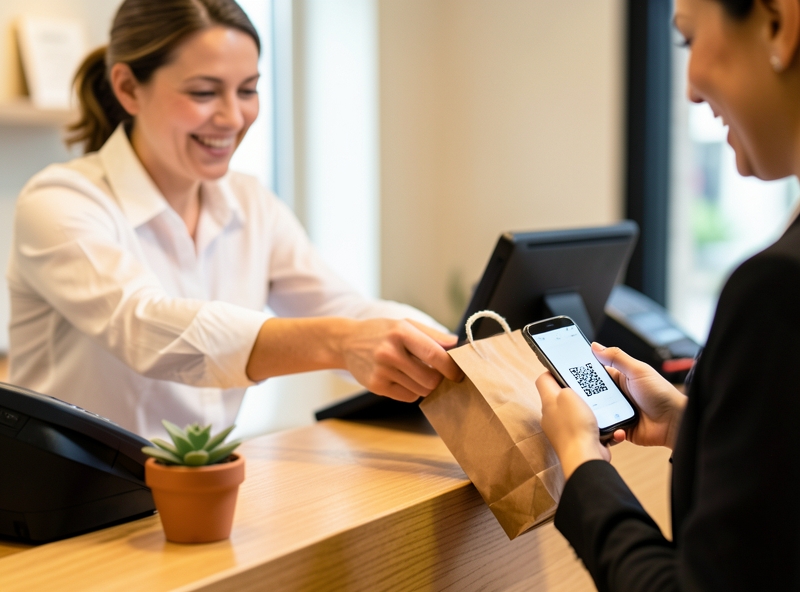
Once the transaction is complete, the battle for customer retention truly begins. The definition of a sustainable small business lies in the frequency of repeat purchases, not just the volume of new customers reached each day. To turn a casual buyer into a loyal brand ambassador, the post-purchase operation system needs to be activated automatically and consistently through three specific action strategies:
- Minimalist Loyalty Program: Eliminate paper cards that are easily lost. Digitalize your loyalty program using phone numbers. Each purchase accumulates a small percentage (e.g., 3-5%) to be deducted directly from the next purchase. This creates an "invisible chain" urging customers to return to spend their remaining accumulated balance.
- Automated Care Script via SMS/Zalo Brandname: Do not abandon customers as soon as they walk out the door. Set up a system to automatically send a thank-you message 2 hours after purchase, along with detailed instructions for use. After 7 days, send a survey message to gauge satisfaction with the product. On the customer's birthday, gift them a uniquely tailored exclusive discount code. This personalization makes customers feel valued like a close friend.
- "Risk-Free" Return Policy: The biggest fear of buyers is choosing the wrong defective product or being unsatisfied but denied support. Courageously apply a free return policy within 7 to 30 days with an extremely simple process. When you completely eliminate risk for customers, they will not hesitate to spend more and more frequently at your store.
5. Frequently Asked Questions (FAQ) about Customer Journey Mapping in Stores
Many small store owners often give up as soon as they hear the phrase "customer journey map," thinking it is a luxury reserved only for large corporations with huge budgets. The reality is quite the opposite. Understanding the paths, stops, and psychological bottlenecks of customers at the point of sale is the golden key that helps small shops optimize revenue per square meter of floor space. Below are the most practical answers to help you remove all mental barriers and take action immediately.
❓ Question 1: My store is very small, under 50m², do I really need to build a customer journey map?
Yes, and you actually need to do this more urgently than larger stores. When space is limited, every square meter of floor space must carry operating costs. You have no room for dead zones or incorrectly placed display shelves that cause customers to pass by without noticing.
A journey map for a small shop does not need to be overly complicated. It is simply about observing and recording: Do customers turn right or left first when they walk in? How long do they stand in the promotional area? At what point do they frequently turn around and leave? Optimizing the journey in a small space helps you increase the impulse buying rate and maximize the value of each display position.

❓ Question 2: How can I measure the effectiveness of each physical touchpoint in the store without spending a lot of money?
Measuring behavior at a physical point of sale is not as difficult as you think. Instead of investing in expensive sensor systems, you can completely apply the following manual but highly effective methods:
- Zone Conversion Rate: Count the number of customers who stop at a specific shelf divided by the total number of customers entering the store. If this rate is too low—below 15%—that area is out of sight or poorly displayed.
- Indirect Interaction Actions: Place unique QR codes (with slight discount codes) at different touchpoints (such as fitting rooms, consultation tables, checkout counters). The number of scans at each location is an accurate measure of customer interest in that touchpoint.
- Sample Observation Method: Spend 2 hours during peak hours each week recording the behavior of the first 20 customers. You will discover unexpected patterns that sales report data can never show.
❓ Question 3: Which tools support collecting customer behavior data that are both cheap and easy to use for small shops?
No need for thousand-dollar enterprise solutions, shop owners can immediately take advantage of the following technology tools "tailored" specifically for small and medium scales:
| Tool | Collected Data | Estimated Cost |
|---|---|---|
| Low-cost AI-integrated surveillance camera | Counts incoming/outgoing visitors, identifies traffic density (heat map) to know which areas customers stand in the longest. | Very low (Only requires a software upgrade on the existing IP camera system). |
| Free Wifi Marketing System | Collects contact information (Phone number/Email) when customers connect to wifi, measures how often customers return to the shop. | Free to very cheap (Integrates directly into the current network router). |
| Dynamic QR Code | Tracks the number of scans, scan times, and devices used at each product display point to assess attractiveness. | Almost 0 (Using free QR creation platforms). |
| Quick survey board at the counter (Tablet/Mini-form) | Measures instant satisfaction (NPS) right when customers have just completed the checkout process. | Investment cost of an old tablet placed at the cashier counter. |
"Customer behavior data at the point of sale does not lie in dry end-of-month report figures. It lies in how customers turn away from a display shelf, how they hesitate in front of the cashier counter, or how they touch a sample product."
Starting to map your customer journey does not require you to be perfect right from the start. Start by observing, recording, and testing small changes each week. It is these continuous improvements at the smallest touchpoints that will create a major leap in revenue and customer shopping experience at the shop.