1. Eco-Friendly Living: Repurposing Kitchen Waste as Bio-Cleaners
In journeys along the riverbanks from the Mekong Delta to remote villages in Chiang Mai, I realized a simple yet profound truth: indigenous people never viewed fruit peels or vegetable scraps as waste. They see them as the remaining breath of Mother Earth. The concept of Garbage Enzyme (GE) – or enzyme from organic waste – is actually a revival of indigenous knowledge, systematized by Dr. Rosukon Poompanvong. This is a solution created through the fermentation process of a mixture of fruit peels, sugar, and water, opening a new chapter for sustainable living in the heart of modern urban areas.
"Turning waste into lifeblood, turning decomposition into cleansing power – that is how we repay the rivers that nourished our ancestors."
The current state of water pollution is a painful scar in the history of industrial development. Chemical detergents containing phosphates and synthetic surfactants are silently poured into sewage systems every day, causing eutrophication and stifling the life of aquatic species. Looking deeply into the structure of industrial dish soap bottles, we see a convenience traded for the silence of dead rivers. Switching to bio-enzymes is not just a household hack, but a profound anthropological act – re-establishing the symbiotic relationship between humans and nature.
| Comparison Criteria | Chemical Detergents | Bio-Enzymes (GE) |
|---|---|---|
| Main Ingredients | Synthetic surfactants, fragrances, preservatives. | Natural organic acids, amylase, lipase, protease enzymes. |
| Impact on Skin | Easily causes irritation, dryness, and erodes the protective lipid layer of the skin. | Benign, harmless, with the ability to naturally soften hands. |
| Biodegradability | Difficult to decompose, accumulates toxins in the aquatic food chain. | Completely biodegradable, helps clean the drainage system. |
The power of the GE solution lies in the natural enzymes produced during the anaerobic fermentation process. These "tiny warriors" have the ability to break down protein and fat structures clinging to dishes or floors gently yet effectively. For sensitive homemakers, GE is a salvation for the hands – the sacred tools used to care for the home. Instead of being exposed to toxic cleaning chemicals, the skin comes into contact with the purity of organic acids, similar to how ancient women used rice water or soapberry to wash their hair.
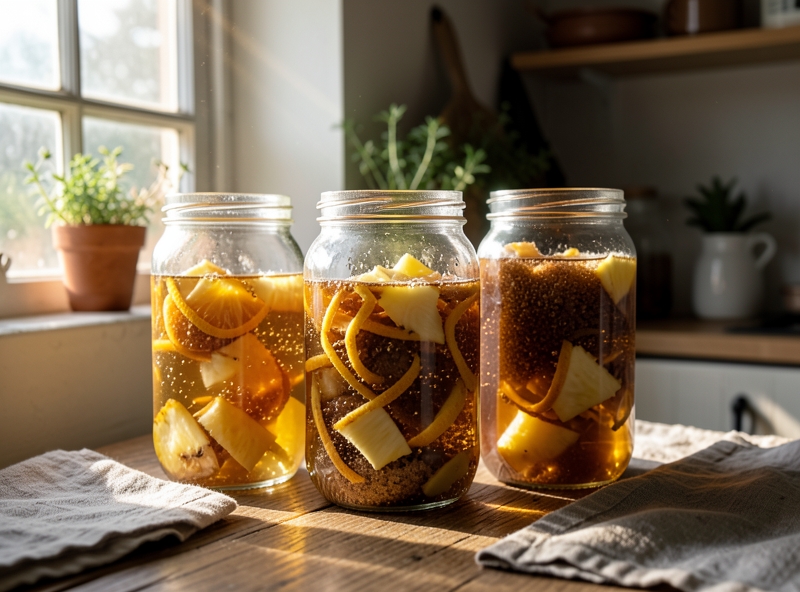
In terms of sustainability, making your own bio-cleaners at home is a way to minimize single-use plastics and cut down on the amount of organic waste sent to landfills – where they often decompose and produce methane (a potent greenhouse gas). When we use GE, we are participating in a circular cycle: from the fruits of the earth, through human hands, becoming a cleaning agent, and finally returning to the water source without leaving any toxic traces. That is the hidden beauty of a nature-compliant lifestyle that ancient civilizations always respected.
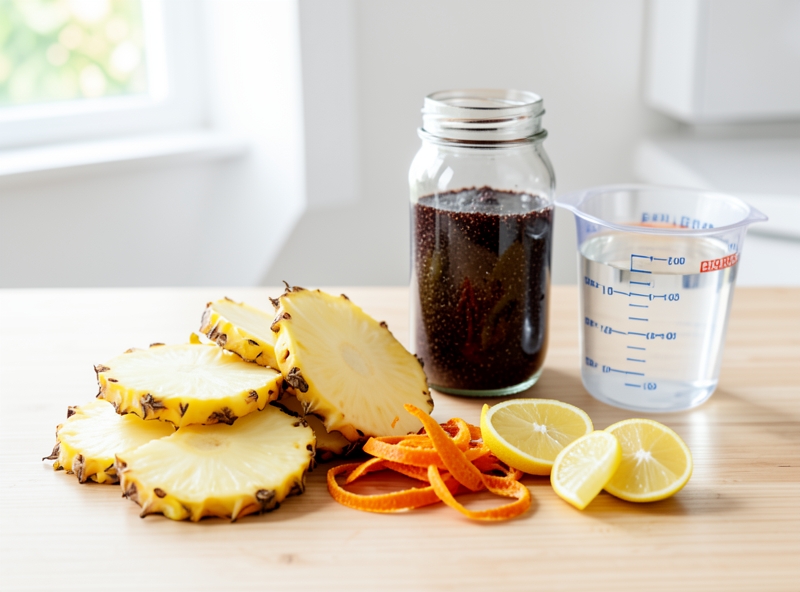
- Basic formula: 1 part brown sugar/molasses + 3 parts fruit peels (orange, lemon, pineapple) + 10 parts clean water.
- Fermentation time: 3 months in a sealed container, kept in a cool place to reach optimal enzyme concentration.
- Versatile applications: Washing dishes, mopping floors, cleaning toilets, and even as a liquid fertilizer for plants.
2. Ingredient Preparation and Standard Mixing Ratios for Enzyme Solutions
To jumpstart a mini "bioreactor" right in your kitchen, selecting the raw material "input" is not merely about collecting organic waste, but a process of selecting optimal secondary compounds. We are aiming to extract hydrolytic enzymes and natural essential oils through anaerobic fermentation. The best "candidates" are fruit peels with high Terpene and organic acid content:
- Pineapple peels: Contain Bromelain, an extremely powerful enzyme for breaking down proteins and stubborn organic buildup.
- Orange, lemon, and grapefruit peels: These are a treasure trove of D-limonene – a natural solvent with superb grease-dissolving capabilities, while also creating a highly refreshing aromatic profile.
- Other complementary peels: You can mix in apple or mango peels to diversify the microbial system, but pineapple and citrus remain the "core" for cleaning power.
| Component | Ratio (Weight) | Technical Role |
|---|---|---|
| Brown Sugar / Molasses | 1 part | Carbon source (Energy source) to activate microorganisms. |
| Fruit Peels (Organic Waste) | 3 parts | Substrate providing enzymes and essential oils. |
| Clean Water | 10 parts | Solvent medium for the hydrolysis reaction. |
The 1:3:10 ratio is not just a random number; it is a balancing "algorithm" between substrate concentration and osmotic pressure. If there is too much sugar, bacteria will enter a state of "thermal shock" due to high concentration; too little, and the fermentation process will be sluggish and easily invaded by mold. Brown sugar or molasses should be prioritized as they contain unrefined minerals that support the speed of microbial blooming.
An extremely important detail regarding "hardware": Absolutely only use plastic containers (PE or HDPE) with tight screw-on lids. Why not elegant glass? During the first 30 days of the fermentation phase, microorganisms are extremely productive, releasing a large amount of CO2 gas.
"The gas pressure building up in a glass bottle can turn it into a literal 'explosive device' if you forget to release the gas. Plastic bottles have a certain elasticity, allowing the walls to deform slightly to withstand pressure before you perform periodic gas venting."
Ensure the container has about 20% empty space (headspace). This is the necessary "gas buffer zone" so that the solution does not overflow when pressure rises. Optimizing the storage space is how you control the stability of the entire enzyme system throughout the 3-month duration.
3. Implementation Process and Safe Fermentation Rules
Discipline is the foundation of all success, and in the art of natural fermentation, discipline means precision. Do not expect a perfect result if you work half-heartedly. The process below requires absolute focus on every detail to ensure optimal efficiency and the highest level of safety.
"The difference between a successful batch of ferment and a pile of organic waste lies in the practitioner's sense of responsibility in the smallest steps."
To begin, you must strictly adhere to the golden rule of ratios and implementation sequence:
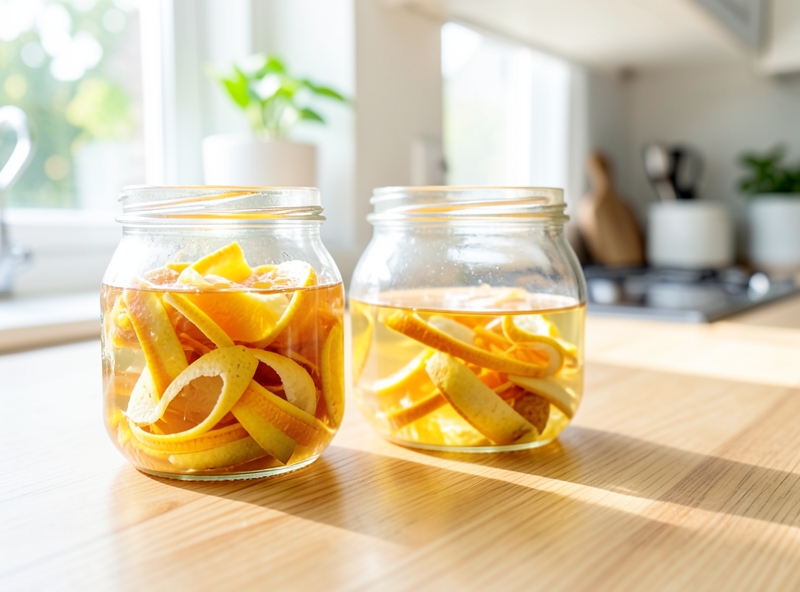
- Ingredient Preparation: Wash fruit peels (orange, lemon, grapefruit, or pineapple) to remove impurities. Finely chop the ingredients to increase surface area, helping the enzyme release process occur more vigorously.
- Dissolving Sugar: Use clean water (preferably boiled and cooled) to completely dissolve brown sugar or molasses according to the standard ratio. Never use hot water directly on the ferment.
- Layering Peels in the Jar: Place the prepared peels into a plastic or glass jar (leave at least 20-30% empty headspace to contain gas). Pour the dissolved sugar solution in until all ingredients are completely submerged.
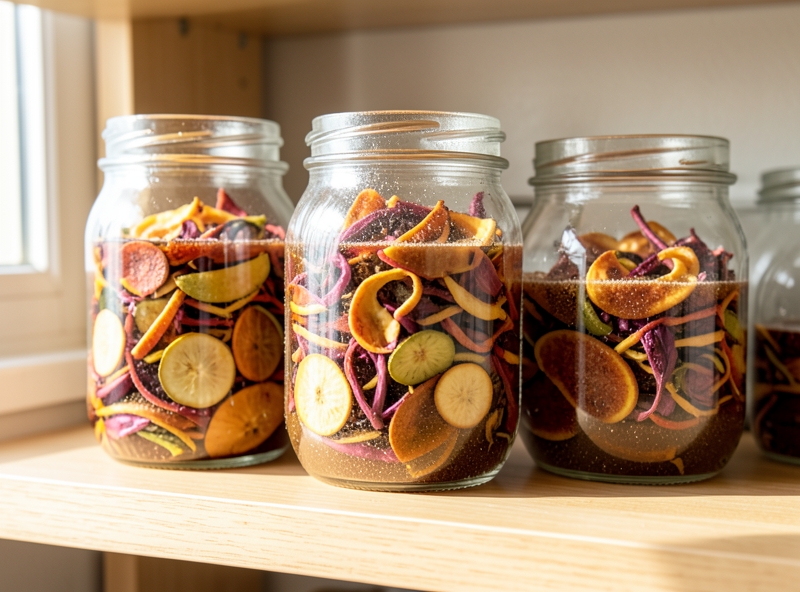
The first month phase is a true test of your persistence. This is the time when CO2 gas is generated most strongly. You MUST perform the periodic gas release technique: Once a day, gently unscrew the jar lid to let the gas escape, then close it tightly immediately. Forgetting to release gas can lead to excessive pressure causing deformation or jar explosion, destroying all your hard work.
The standard fermentation time to obtain a quality product is at least 3 months. Do not be impatient, do not open the lid arbitrarily except during gas release. Patience will reward you with a concentrated and pure solution.
To know if your batch is a victory or a failure, compare it immediately with the standard table below:
| Criteria | SUCCESSFUL Batch (Victory) | FAILED Batch (Discard) |
|---|---|---|
| Scent | Characteristic mild sour fragrance, natural essential oil scent. | Putrid smell, stinking, or unpleasant moldy odor. |
| Surface State | A thin white film may appear (good yeast). | Black, green, or red mold appears. |
| Color | Golden brown or dark brown, the solution gradually clears over time. | Dull black, unusually cloudy solution. |
"Never compromise with failure. If the batch shows signs of black mold, discard it immediately and start over with higher discipline!"
ACTION PLAN - ACT NOW:
- Step 1: Prepare a 5-liter container and 1.5kg of clean fruit peels today.
- Step 2: Set an alarm on your phone for a fixed time every day for the next 30 days to release gas.
- Step 3: Label the jar clearly with the start date and the expected harvest date (after 90 days) to monitor progress.
4. Guide to Applying Enzyme Solutions in House Cleaning
Biological enzyme solutions (Garbage Enzyme - GE) operate on the principle of biological catalysis, in which functional protein molecules accelerate the decomposition of complex organic matter. Applying enzymes in the household is not only an alternative to chemicals but also a method to protect the material surface structures and the microbial ecosystem in the living area.
| Purpose of Use | Dilution Ratio (Enzyme : Water) | Technical Notes |
|---|---|---|
| Dishwashing | 1 : 10 or 1 : 20 | A small amount of organic foaming agent can be added to enhance the feeling of cleanliness. |
| Floor Mopping | 1 : 50 | Enzymes help remove the lipid film adhering to the floor; no need to rinse again with clean water. |
| Cleaning Glass and Glossy Surfaces | 1 : 100 | Use a fine mist spray bottle to avoid leaving water streaks after evaporation. |
| Cleaning Toilets and Sanitary Equipment | Undiluted or 1 : 5 | Allow direct contact for a minimum of 30 minutes for enzymes to decompose calcium scale and bacteria. |
The effectiveness of an enzyme solution depends significantly on its concentration and contact time. For stubborn grease stains on kitchen utensils, soaking in a 1:10 diluted solution for about 15-20 minutes will help break the polymer bonds of fats, making their removal easier using conventional mechanical methods.
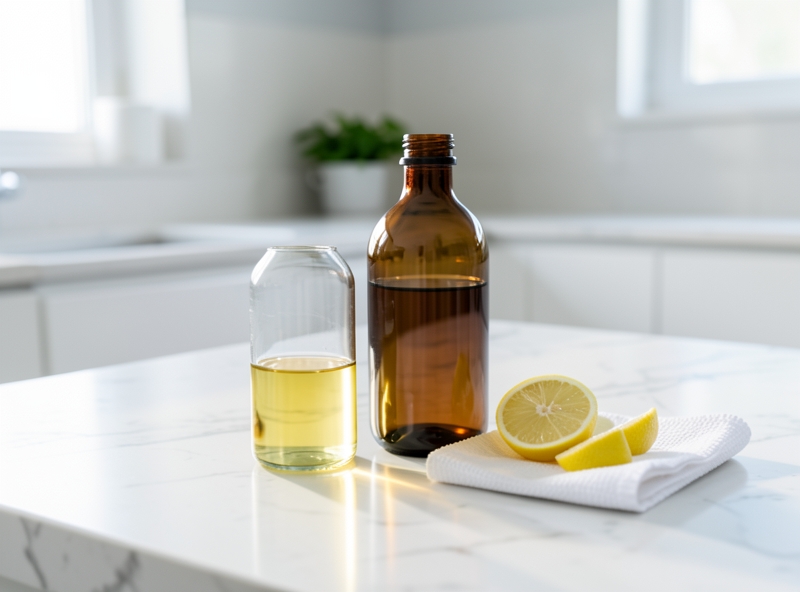
"The cleaning mechanism of enzymes is not based on strong acid-base reactions but on the biological cleavage of organic chains, helping to protect tile glaze and metals from chemical corrosion."
In the field of civil infrastructure treatment, enzymes act as natural deodorizers for drainage systems. Compounds such as sulfide (H2S) and ammonia (NH3) resulting from anaerobic decomposition in pipes often cause unpleasant odors. Periodically pouring 200ml of pure enzyme solution into drains helps provide beneficial microorganisms that compete with and inhibit odor-causing bacteria, while cleaning the biofilm adhering to the inside of the pipes.
Optimization of the enzyme usage process is also reflected in utilizing the organic residue after filtering the extract. This residue, having undergone fermentation, contains a large amount of cellulose-decomposing microorganisms and minerals in chelated form. When mixed into planting soil at a ratio of 1:10 (1 part enzyme residue, 10 parts soil), they act as a slow-release organic fertilizer, helping to improve soil fertility and supporting sustainable root development through enhanced ion exchange capacity.
- Space Deodorizing: Dilute at a 1:200 ratio to spray in the air to help neutralize musty odors and cigarette smoke.
- Carpet Cleaning: Enzymes help decompose organic stains from spilled food without damaging the fabric fibers.
- Environmental Preservation: Wastewater after cleaning containing enzymes continues the water purification process as it enters the public drainage system.
5. Frequently Asked Questions (FAQ) and Notes on Creating Eco-Enzymes
Fermenting your own batch of eco-enzyme is like caring for a group of tiny "pets." Although they don't bark or meow, they are extremely sensitive to their environment. Below are some answers to help you better understand the temperament of these tiny "friends."
Why is it essential to use brown sugar (molasses) instead of white sugar?
Imagine sugar as "food" for the bacteria. Refined white sugar is like a fast food meal stripped of most nutrients, while brown sugar is a lavish "buffet" full of minerals and trace elements. Bacteria need these minerals to grow vigorously and produce the highest quality enzymes. If you use white sugar, your batch can still be successful, but the process will be slower and the cleaning power won't be as "top-tier" as with brown sugar.
"Brown sugar is not just food; it is the life force that helps microorganisms work tirelessly like worker bees in a hive."
Can I mix different types of fruit peels together?
Absolutely! This is like making a multi-vitamin smoothie. Each type of peel contributes its own "superpower": pineapple peels contain bromelain, which breaks down proteins very effectively, while citrus peels provide essential oils for deodorizing and disinfecting. However, for the most pleasant scent, you should keep the ratio of orange, lemon, and grapefruit peels at about 60-70% of the total organic waste.
How to store the solution after filtering for long-term use
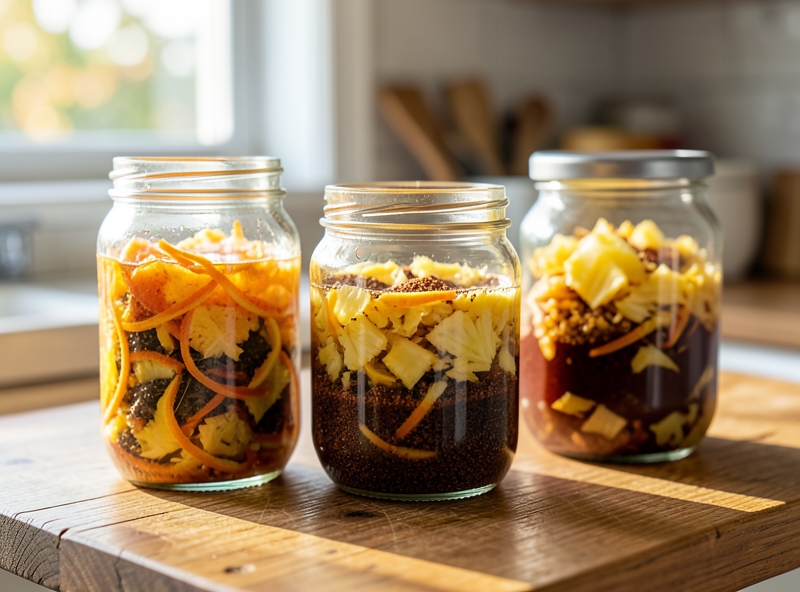
After straining the liquid (usually after 3 months), treat it like a fine bottle of wine. Eco-enzymes "hate" direct sunlight because UV rays can alter the chemical structure and kill remaining microorganisms. Store it in dark-colored plastic or glass bottles and place them in a cool, airy spot. A successful batch of enzyme can be kept for 6 months to 1 year without any loss in quality.
Common mistakes that cause a batch to fail
Sometimes "love" for the environment isn't enough if you make these basic technical errors:
| Signs | Cause | How to fix |
|---|---|---|
| Strong foul odor (like decomposing trash) | Sugar ratio is too low or the lid is not airtight, allowing harmful bacteria to enter. | Add more sugar according to the ratio, stir well, and monitor for another week. |
| Black or green mold appears | The fermentation container was dirty or the organic waste was contaminated with grease or salty food. | In this case, discard the batch, clean the jar thoroughly, and start a new, cleaner batch. |
| The jar bulges or slightly explodes | Gas pressure built up too much without being released. | During the first month, remember to "let the jar breathe" by gently opening the lid every day. |
- Pro tip: If you see a white film on the surface, don't worry! Those are "beneficial bacteria" working hard, signaling a very high-quality enzyme batch.
- Note: Always leave about 20% empty space in the jar so the gas has room to "move," avoiding pressure overload.