1. Pet Ownership Trends in Apartments and Spatial Challenges
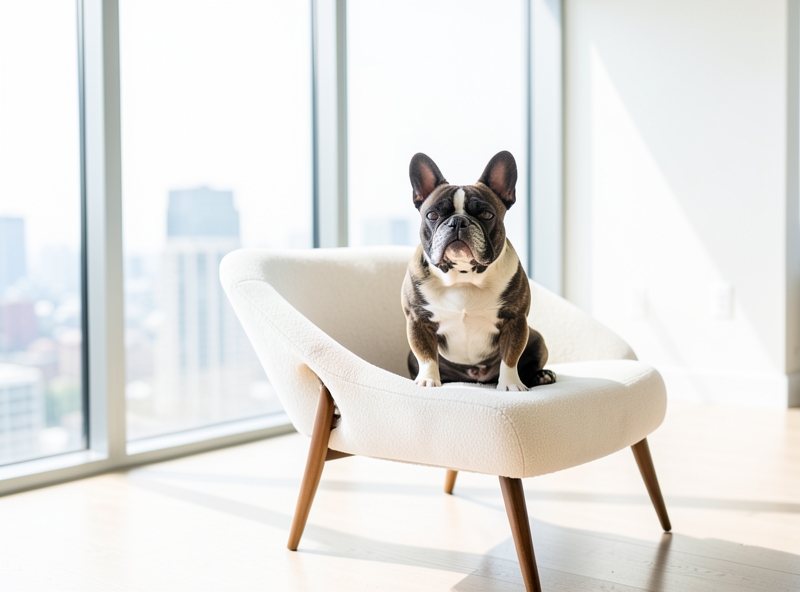
In the journey of observing the evolution of living patterns, I have recognized a fascinating shift: the rise of "vertical villages" – where soaring concrete blocks are gradually replacing traditional courtyards. In major urban centers, keeping pets, especially dogs, is no longer merely a habit of guarding the house. It has evolved into an intense spiritual need, an effort to find a primal connection in the heart of the digital age. These four-legged friends now act as "soul healers," helping to fill the void of loneliness within closed apartments.
"In the silence of concrete walls, the wagging tail of a dog is the most vivid breath reminding us of nature's existence right in the heart of the city."
However, when bringing a living entity that naturally belongs to open spaces into the limited area of an apartment, we face a challenging cultural experiment. The intersection between the instinctive needs of pets and the rules of modern civilized living creates complex puzzles regarding space and coexistence.

These challenges do not stop at the issue of square footage but also lie in the multi-dimensional interaction between individuals and the community. An apartment ecosystem requires absolute harmony to maintain a miniature social order:
- Territorial limits: Apartment spaces often lack transition zones between indoors and outdoors, making pets prone to "spatial stress" if not properly exercised.
- High population density: Sharing elevators, lobbies, and common walkways sets strict requirements for behavioral control and the safety of pets regarding those around them.
- Acoustic pressure: Apartment construction structures often have a certain resonance. An impromptu bark at night can become "noise pollution" for adjacent units, breaking the community's necessary silence.
- Hygiene and scents: In air-conditioned and enclosed environments, hygiene management becomes an art that requires meticulousness to avoid affecting the general air quality.
| Spatial Characteristics | Impact on Pets | Management Requirements |
|---|---|---|
| Limited area | Restricts movement instincts, easily causes stress. | Optimize interior design, arrange a fixed walking schedule. |
| Enclosed environment | Lack of natural light and fresh air. | Arrange areas near windows, use air purifiers. |
| Strict regulations | Pressure to comply with common terms. | Early behavioral training, use of hygiene support accessories. |
Keeping pets in apartments is a humane compromise between the desire for nature's companionship and the harsh reality of urban development. For this journey to be complete, every owner needs to deeply understand the spatial limitations to create a happy living environment for both humans and pets.
2. Three Golden Criteria When Choosing Dog Breeds for Small Spaces
Integrating a "biological ecosystem" – a canine companion – into a limited footprint such as an apartment or studio is not merely about choosing a breed that is small in terms of physical form factor. It is a multi-variable optimization problem where behavioral parameters and biological mechanisms hold absolute dominance. To ensure the system operates smoothly without causing conflicts with neighbors or "overloading" the living space, we need to deeply analyze the following three core technical specifications.
First: Energy Management System. Do not confuse small size with low energy! A Jack Russell Terrier may be compact but possesses a hyperactive "processor" with an extremely high clock speed, ready to blow up your room. The golden criterion here is to prioritize breeds with "Low-Energy" or "Moderate-Energy" ratings. These candidates have smart energy heat dissipation mechanisms: they can burst with energy at the park but immediately switch to "Standby" mode (calm, resting) upon entering the home. These breeds do not require a large spatial "bandwidth" for constant running, helping to minimize the risk of collisions with expensive furniture.
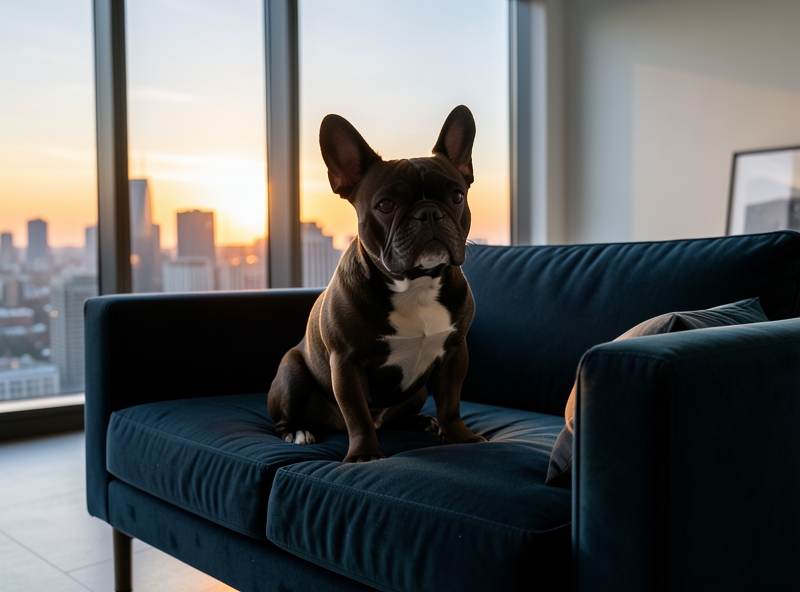
Second: Acoustic Output Control. In a high-density population environment, "noise pollution" is a critical system error. A dog prone to constant alert barking at high decibel levels will cause unnecessary conflicts with surrounding "nodes" (neighbors). We need to look for lineages with stable "firmware," less sensitive to audio stimuli from hallways or elevators. Highly rated breeds are those with a high barking trigger threshold or the ability to quickly learn the "Silent Mode" command through positive training algorithms.
"Barking is not just sound; it is a signal reflecting the interaction between the dog's nervous system and its environment. A 'low-noise' dog is an invaluable asset for every urban resident."
| Specification | Preferred Configuration for Apartments | Technical Reason |
|---|---|---|
| Barking Frequency | Low / Very Low | Avoids audio interference for the neighborhood area. |
| Exercise Intensity | Low to Medium | Fits within the limitations of the floor area. |
| Self-Recovery Ability | High (Psychological Stability) | Minimizes "System Crash" (stress) when home alone. |
Third: Psychological Buffer Capacity. This is the dog's ability to process psychological data when confined to an indoor space for long periods. A good "psychological architecture" means the dog does not easily fall into a "Buffer Bloat" state – an accumulation of stress leading to destructive behavior. Breeds with a relatively independent personality or the ability to self-regulate emotions will adapt extremely well to the owner's busy lifestyle. They view the apartment as a "safe zone" to recharge energy rather than a restrictive cage, thereby maintaining system stability for both the owner and the pet.
3. Best Dog Breeds for Apartment Living
When I first moved into an apartment, I spent a whole month wondering: "Is this 50m2 flat too cramped for a four-legged friend?". The truth is, the size of the space doesn't matter as much as whether your friend's personality fits the high-rise lifestyle. There are large breeds that are incredibly well-behaved, and conversely, tiny dogs that can be a "neighbor's nightmare" due to their barking. Below are the names I believe will make your apartment life much easier and warmer.
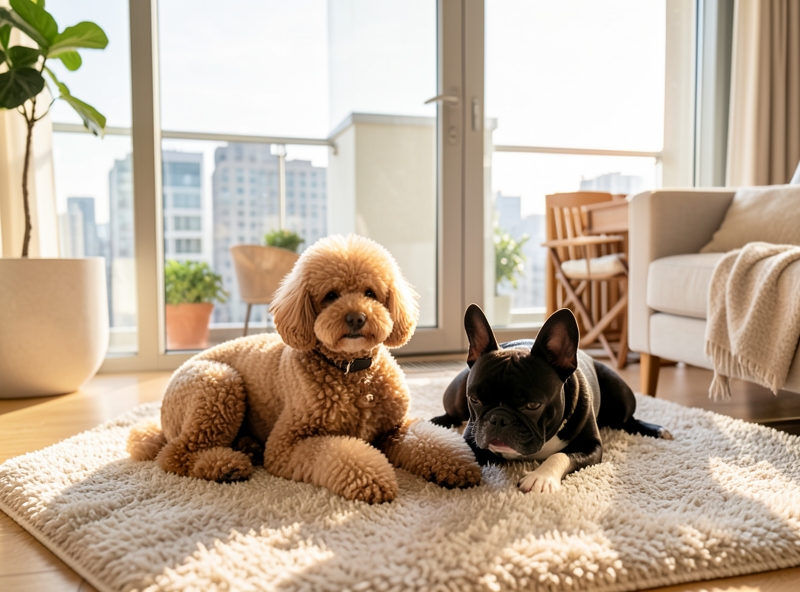
First, we must mention the Poodle – the "pageant queen" of small apartments. The biggest advantage that makes the Poodle a top choice is its nearly non-shedding coat. You won't have to deal with dog hair clinging to the sofa or flying into your meal. Furthermore, Poodles are extremely intelligent; they learn house rules like potty training or the "quiet" command so fast that you'll feel like a master trainer.
If you're the type who prefers enjoying a peaceful evening on the sofa over jogging for hours in the park, the French Bulldog (Frenchie) is your soulmate. This breed has incredibly low "energy levels." A short walk around the apartment lobby is enough to keep them satisfied and spend the rest of the day snoring at their owner's feet. They bark very little and have a calm temperament, making them perfect for places that require high levels of quiet.
Another name that often causes misunderstanding is the Greyhound. Don't let their tall appearance and long legs that run as fast as the wind fool you. Among dog lovers, Greyhounds are known as "45mph couch potatoes." Despite their large size, they are extremely lazy indoors and tend to curl up quietly in a corner, rarely causing noise or bumping into furniture.
And if you want a "clown" to relieve stress after work? Choose a Pug. Pugs are absolutely friendly with both children and strangers in the elevator. However, be prepared for their characteristic "snoring" due to their short muzzle structure, and remember to control their diet as Pugs easily gain weight if they only hang around in tight spaces.
"Choosing a dog for an apartment isn't about picking the smallest breed, but about picking the breed with the quietest soul between four walls."
To give you a more visual perspective, I have systematized the most important criteria when living with these four dog breeds in an apartment environment:
| Dog Breed | Energy Level | Noise Level (Barking) | Biggest Plus Point |
|---|---|---|---|
| Poodle | Medium | Low - Medium | No shedding, very intelligent |
| French Bulldog | Low | Very Low | Low exercise needs, extremely quiet |
| Pug | Low - Medium | Low | Friendly, affectionate, humorous |
| Greyhound | Medium (Loves to sleep) | Very Low | Calm, gentle despite large size |
Regardless of which breed you choose, remember that every individual has its own personality. A Poodle can still bark loudly if not trained, and a Greyhound can become restless if kept inside too long without a walk. The real secret lies in understanding and how you establish discipline from the very first days they step into your "territory" in the sky.
4. Secrets to Managing Your Dog's Energy and Behavior in an Apartment
Living in an apartment is not a barrier; it is a test of your discipline and management skills. A destructive or incessantly barking dog is not the result of a cramped apartment, but rather their energy not being channeled correctly. To maintain absolute harmony between your pet, your living space, and your neighbors, you need a professional operating system.
"A tired dog is a happy dog. A mentally challenged dog is an obedient dog."
1. Iron Discipline in Walking Schedules: Complete Energy Release
Don't view walking as an impulsive stroll. In an apartment setting, this is a mandatory "mission" to vent accumulated pressure. Dogs need environmental changes and olfactory stimulation to balance their psychology.
- Early Morning (15-30 minutes): Activates metabolism, helping the dog release energy before you go to work.
- Evening (30-45 minutes): A walk combined with training to maximize energy expenditure after a long day of being indoors.
- Quality over Quantity: Allow your dog to "read the newspaper" (sniff around) for the first 10 minutes to stimulate the brain, then transition to a brisk walk for physical conditioning.
Action Plan: Set your alarm 30 minutes earlier each day. Commit to the schedule regardless of the weather. If you cannot go out for several days, use a dog treadmill or the building's stairs as a high-intensity workout.
2. Mental Stimulation: On-site Brain Training
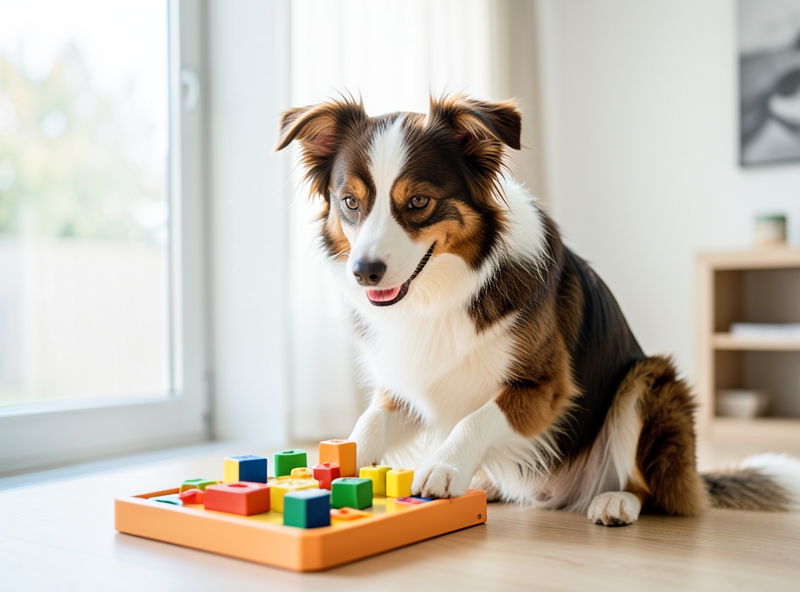
Physical fatigue is only half the game. Mental stimulation is what truly helps a dog drift off to sleep in an apartment. 15 minutes of brain training is equivalent to 1 hour of high-intensity walking.
| Method | Practical Benefits | Implementation Time |
|---|---|---|
| Basic Command Training | Increases focus and bonding with the owner | 10 minutes/day |
| Puzzle Toys | Encourages independent work, reduces stress | While you are away |
| Nose Work (Search Games) | Activates natural olfactory instincts | 15 minutes in the evening |
Action Plan: Stop feeding from a traditional bowl. Use a snuffle mat or food-stuffed toys (like a Kong) to turn every meal into a cognitive challenge.
3. Barking Control: Rules of Community Respect
Barking is the biggest barrier between you and your neighbors. You must control the "volume" of the apartment by understanding the causes of barking: fear, boredom, or territorial protection.
- Desensitization: Get your dog used to the sound of footsteps in the hallway or the elevator by rewarding them immediately when they remain silent.
- "Quiet" Command: Train by rewarding the dog as soon as they stop barking after the cue. Absolutely do not yell back, as they will think you are "barking" along with them.
- Create a Safe Space: Place their bed away from the main door – where many strange noises can cause stimulation.
Action Plan: Record the sounds that trigger your dog's barking. Play them back at a very low volume while playing with your dog and gradually increase the loudness over time, accompanied by rewards for calmness. If excessive barking persists, install a surveillance camera to monitor behavior while you are out and make timely adjustments.
5. Conclusion
After long discussions about nutrition or grooming routines, I want to sit down with you for a moment to talk about the "root" of pet ownership. Choosing a dog is actually like choosing a roommate or a pair of shoes; it doesn't necessarily have to be the most expensive or the best-looking breed, but most importantly, it must be a "perfect fit." An energetic Husky would be a "disaster" if you are a peace-loving person living in a cramped apartment. Conversely, sedentary dog breeds will feel out of place if their owner is a devotee of morning jogging routes. Don't let a momentary whim turn a decade-long journey into a burden for both of you.
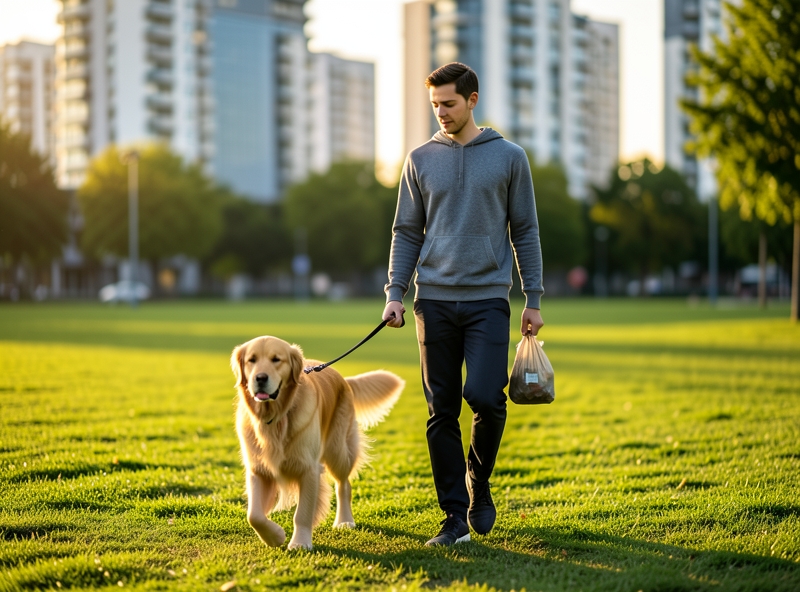
Raising an animal at home, especially in today's crowded apartment complexes or urban areas, has never been a private matter. I always believe that a true dog lover is not just someone who buys their pet gorgeous outfits, but is reflected in how they respect shared spaces. Training a dog not to bark and disturb neighbors, always carrying waste bags, or using a muzzle in public places is the key for the community to have a more sympathetic view of our "four-legged friends."
"Responsibility is not a barrier to freedom, but the most sustainable foundation for the love between humans and pets to flourish in peace."
To ensure your pet care journey is always filled with happy diary entries, keep these three core pillars in mind:
- Compatibility: Always consider your lifestyle, living space, and personal time before deciding to adopt any dog breed.
- Civilized Living Environment: Ensure pets are fully vaccinated and always adhere to hygiene and safety rules in your living area.
- Long-term Commitment: Pets are not seasonal toys; they need your patience and companionship through every stage, from health to old age.
Ultimately, when you give responsibility and understanding, what you receive in return is not just a pet, but a pure soul, always waiting for you at the door after work with a tirelessly wagging tail. That is the priceless reward that only mindful owners can truly reach.